
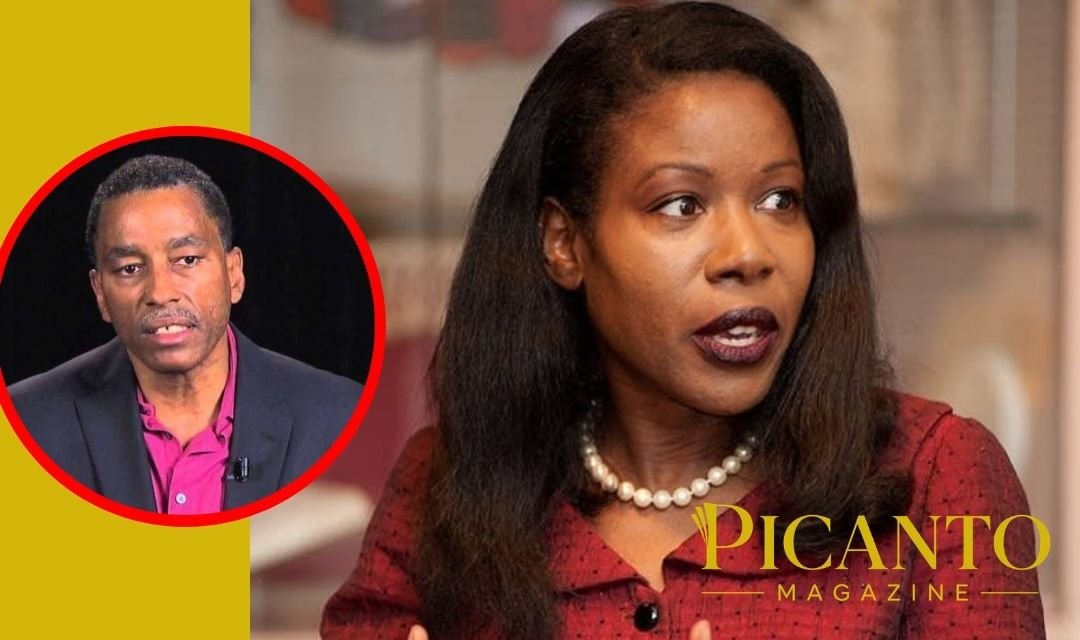
Roderick Jeffrey Watts is an American psychologist, professor, researcher, and social-justice scholar who studies how people learn to recognize inequality and take action against it. Outside academic circles, he is also known as the former husband of Pulitzer Prize-winning journalist and author Isabel Wilkerson. However, his own long career in community psychology, youth development, racial identity, and liberation studies deserves attention beyond that personal connection.
Quick Bio of Roderick Jeffrey Watts
| Detail | Information |
|---|---|
| Full name | Roderick Jeffrey Watts |
| Professional name | Roderick J. Watts |
| Nationality | American |
| Profession | Psychologist, professor, researcher and author |
| Academic status | Professor Emeritus at the CUNY Graduate Center |
| Fields | Psychology and Africana Studies |
| Education | Ph.D. from the University of Maryland, College Park |
| Specialization | Clinical-community psychology |
| Known for | Sociopolitical development and liberation psychology |
| Former wife | Isabel Wilkerson |
| Marriage year | 1989 |
| Children | Not publicly confirmed |
| Date of birth | Not publicly confirmed |
| Net worth | Not publicly documented |
The CUNY Graduate Center identifies Watts as Professor Emeritus in Psychology and Africana Studies. His listed research interests include youth sociopolitical development, civic engagement, African American men’s development, liberation psychology, social identity, and action research.
Who Is Roderick Jeffrey Watts?
Roderick Jeffrey Watts is a scholar whose work connects psychology with real social conditions.
Traditional psychology often focuses on an individual’s emotions, behavior, personality, and relationships. Watts has spent much of his career asking a broader question: How are people affected by racism, inequality, political systems, community conditions, and unfair social structures?
His research pays special attention to young people and marginalized communities. He studies how people become aware of injustice, believe in their ability to create change, and participate in community or political action.
This approach makes his work valuable beyond universities. Teachers, youth leaders, psychologists, activists, and community organizations can use his ideas to help young people develop knowledge, confidence, and leadership skills.
Watts has taught at several respected institutions and worked with nonprofit and community organizations. His professional story is much larger than the short online description of “Isabel Wilkerson’s former husband.”
Roderick Jeffrey Watts’ Age and Birthday
Roderick Watts’ exact birth date and age have not been reliably confirmed in major public sources.
Some modern biography websites estimate that he was born around the mid-1950s. However, an estimated year should not be presented as a verified birthday.
An archived 1977 college program reportedly lists Roderick Jeffrey Watts among candidates for a Bachelor of Arts degree. This information can help place his early academic career on a timeline, but it does not reveal his precise age.
A responsible biography should therefore say that Watts’ date of birth remains private. Claims about an exact age need an original record or direct statement before they can be treated as fact.
Is Roderick Jeffrey Watts Still Alive?
Yes, current institutional and scholarly records indicate that Roderick J. Watts is alive and professionally connected with academic work.
Some biography websites incorrectly claim that he died in 2015. That claim conflicts with clear evidence. Watts published research in 2022, is listed by CUNY as Professor Emeritus, and appears in current Pacifica Graduate Institute faculty information.
The confusion may come from Isabel Wilkerson’s second husband, Brett Kelly Hamilton, who died in July 2015. A poorly researched article may have transferred that event to Watts.
This is an important correction: no reliable evidence shows that Roderick Jeffrey Watts died in 2015.
His Early Life and Family Background
Only limited information about Watts’ childhood is available through dependable institutional sources.
Several biography websites describe his parents’ professional lives, but these details do not appear in his main university profile. His birthplace, siblings, childhood home, and early schools are also not clearly documented.
What his later career demonstrates is an enduring interest in identity, inequality, human development, and community life.
People are often drawn to particular research questions because of personal experiences. However, it would be wrong to invent childhood events to explain Watts’ academic interests when he has not provided those stories publicly.
His professional record should speak for itself. It shows a scholar committed to understanding how people are shaped by both personal experiences and larger social systems.
Roderick Jeffrey Watts’ Education
Watts earned a Ph.D. in psychology from the University of Maryland, College Park.
CUNY describes his training more specifically as clinical and community psychology.
Clinical psychology examines mental health, emotional difficulties, behavior, assessment, and treatment. Community psychology looks at how neighborhoods, organizations, cultures, institutions, and social systems affect well-being.
Combining these two areas allows a psychologist to study a person without ignoring the world around that person.
For example, anxiety or frustration may not come only from an individual’s thoughts. It can also be connected to discrimination, unsafe housing, poor schools, financial pressure, or a lack of political power.
Watts’ education prepared him to connect individual psychology with these wider community conditions.
What Is Community Psychology?
Community psychology studies the relationship between people and the environments in which they live.
Instead of asking only, “What is wrong with this person?” a community psychologist might ask:
- What difficulties exist in this neighborhood?
- Are young people being treated fairly?
- Do residents have access to useful resources?
- How does discrimination affect mental health?
- Can community programs give people greater control?
- What social changes could prevent problems before they begin?
This field does not reject personal therapy or individual support. It adds another layer by recognizing that people live inside families, schools, workplaces, cultures, governments, and economic systems.
Watts’ work fits strongly within this wider approach.
His Work at the CUNY Graduate Center
Roderick Watts became a professor at the Graduate Center of the City University of New York.
CUNY currently lists him as Professor Emeritus in Psychology and Africana Studies. The title “emeritus” is normally given to a retired professor whose scholarship and service remain respected by the institution.
His work at CUNY brought together research, teaching, mentorship, and community engagement.
The university profile says he came to CUNY after working at Georgia State University, where he coordinated a joint clinical-community psychology program. It also records appointments at DePaul University and the Yale University School of Medicine, as well as a visiting professorship at Stellenbosch University in South Africa.
These positions demonstrate the wide reach of his career.
Teaching at Other Universities
Before and alongside his CUNY work, Watts taught at several major academic institutions.
DePaul University
At DePaul, Watts worked in psychology and developed research related to oppression, social development, and African American men.
A 1999 scholarly paper listed him in DePaul University’s Department of Psychology. The paper argued that psychological programs should not help people merely cope with injustice while leaving the unjust system untouched.
Georgia State University
Watts later worked at Georgia State University and coordinated its clinical-community psychology program.
A major 2003 publication on sociopolitical development listed him with Georgia State’s Department of Psychology.
Yale University School of Medicine
His CUNY biography also identifies him as a former faculty member at the Yale University School of Medicine.
Stellenbosch University
Watts held a visiting professorship at Stellenbosch University in South Africa. This international experience was especially relevant to a scholar studying race, power, identity, inequality, and liberation.
Pacifica Graduate Institute
Pacifica Graduate Institute currently lists Watts among its faculty and records his Ph.D. from the University of Maryland.
What Is Sociopolitical Development?
Sociopolitical development is one of the ideas most closely associated with Roderick Watts and his collaborators.
The term describes the process through which people learn to:
- Recognize unfair social conditions.
- Understand how power works.
- Analyze the causes of inequality.
- Develop confidence in their ability to help.
- Join community, civic, or political action.
- Work toward a fairer society.
In a widely cited 2003 paper, Watts and his coauthors explained that sociopolitical development includes the knowledge, emotional ability, analytical skills, and capacity for action needed to understand and resist oppression.
This idea is especially important for young people. A teenager who recognizes an unfair rule may initially feel powerless. Through education, discussion, mentorship, and community work, that teenager can learn how to organize, speak effectively, and help create change.
Why His Theory Matters
Watts’ theory helps explain that awareness alone is not enough.
A person may understand that discrimination exists but still feel unable to do anything about it. Another person may take action without fully understanding the deeper causes of a problem.
Sociopolitical development connects understanding with action.
It encourages people to study social conditions carefully, develop useful skills, work with others, and imagine alternatives to unfair systems.
Researchers continue to build upon Watts’ ideas. A 2023 psychology article honored Watts and his colleagues as pioneers of sociopolitical development rooted in Black liberation psychology.
That recognition shows that his work continues to influence newer generations of psychologists.
His Focus on Young People
Youth development forms an important part of Watts’ research.
Young people are often discussed as if they are only preparing to become future citizens. Watts’ work recognizes that they can understand their communities and contribute to social change now.
He has studied youth organizing, civic engagement, activism, and critical consciousness. His work considers how adults can support young leaders without controlling them.
In a 2007 paper, Watts and Constance Flanagan examined youth civic engagement through developmental and liberation psychology. They argued that civic participation should include social-justice action, not merely activities that maintain existing institutions.
This approach encourages adults to take young people’s ideas seriously.
Critical Consciousness Explained Simply
Critical consciousness means learning to recognize unfair conditions, understand their causes, and believe that change is possible.
Imagine that students notice their school has far fewer books and computers than a school in a wealthier neighborhood.
Basic awareness means noticing the difference.
Critical thinking means asking why the difference exists and who makes funding decisions.
Social action means organizing a meeting, gathering evidence, writing to officials, or building a community campaign.
Critical consciousness connects all three stages.
Watts’ research studies how people develop this combination of awareness, analysis, confidence, and action.
Liberation Psychology
Liberation psychology examines how oppression affects people’s minds, identities, relationships, and opportunities.
It also asks how psychology can help people challenge harmful systems rather than simply adjust to them.
For example, teaching someone to manage stress may be helpful. But if that stress is caused by constant discrimination, dangerous working conditions, or unfair treatment, personal coping skills alone will not solve the full problem.
Watts’ approach considers both personal healing and social change.
His CUNY and Pacifica profiles identify liberation psychology as one of his central research interests.
Research on African American Identity
Watts has devoted significant attention to African American cultural and racial identity.
Identity can affect how people understand themselves, how others treat them, and how they respond to unfair social conditions.
A strong and healthy identity can provide pride, connection, meaning, and resilience. At the same time, people may face stereotypes and discrimination connected to race.
Watts studies these experiences within a larger social context. He does not treat identity as a simple label. Instead, he examines its relationship with culture, history, power, development, and community.
Research on Men and Manhood
Another major area of Watts’ work is men’s development, particularly the development of African American men.
Ideas about manhood can affect emotions, friendships, family relationships, education, health, and behavior. Some traditional expectations tell boys and men that they must always appear strong, hide their emotions, or solve problems alone.
Watts’ research explores healthier and more thoughtful ideas of manhood.
CUNY states that he has been continuously involved in men’s group work for many years.
Group discussion can give men a place to examine identity, responsibility, relationships, social pressure, and emotional well-being.
Community Organizations and Action Research
Watts has worked with nonprofit and community-based organizations, especially those serving African American youth.
His research interests include action research. This approach involves working alongside communities instead of treating residents as distant subjects.
In a traditional model, researchers might enter a neighborhood, collect information, publish a paper, and leave.
Action research tries to create a more equal partnership. Community members can help identify questions, interpret information, design programs, and use the results.
This method respects local knowledge. People who live with a problem every day often understand important details that an outside researcher may miss.
Roderick Watts’ Books and Publications
Watts has written and contributed to numerous academic publications.
He coedited Human Diversity: Perspectives on People in Context, published in 1994. CUNY describes the book as offering practical guidance for diversity-conscious research and projects.
He also contributed to Beyond Resistance! Youth Activism and Community Change, a book connected to youth organizing and social action.
His journal articles have covered subjects including:
- Sociopolitical development
- Youth civic engagement
- Liberation psychology
- Social identity
- Critical consciousness
- Oppression and empowerment
- African American youth development
- Men and manhood
A 2022 article coauthored with Alexis Halkovic updated sociopolitical development theory and connected it with liberation-focused action.
Relationship With Isabel Wilkerson
Roderick Jeffrey Watts married Isabel Wilkerson in November 1989 in Fort Washington, Maryland.
Isabel became an important American journalist and author. In 1994, she became the first Black woman to win the Pulitzer Prize in Journalism and the first African American to win in the individual reporting category.
Her major books include The Warmth of Other Suns, about the Great Migration, and Caste: The Origins of Our Discontents, which examines social hierarchy and inequality.
The marriage between Watts and Wilkerson eventually ended, although dependable public sources do not provide a divorce date or detailed explanation.
Wilkerson married Brett Kelly Hamilton in 2009. That later marriage confirms that Watts should be described as her former husband, not her current husband.
Did Roderick Watts and Isabel Wilkerson Have Children?
There is no dependable public information confirming whether Watts and Wilkerson had children together.
Some biography websites make assumptions about their family, but a marriage does not automatically mean that a couple had children.
Neither Watts’ institutional biographies nor reliable summaries of Wilkerson’s career provide a clearly verified answer.
The appropriate response is that their parental status together remains private.
Is Roderick Watts Currently Married?
Watts’ present relationship status has not been publicly confirmed.
He was married to Isabel Wilkerson beginning in 1989, and that marriage later ended. However, reliable public records do not clearly state whether he remarried.
It would be wrong to use an old wedding record to describe him as currently married. It would also be wrong to assume that he is single.
His present personal life should therefore be treated as private.
Roderick Jeffrey Watts’ Net Worth
Roderick Watts’ net worth is not publicly known.
His career has included university teaching, research, writing, consulting, and community work. These activities may provide income, but they do not reveal his complete financial position.
Calculating a personal net worth requires information about income, property, investments, savings, debts, and other assets. None of those details are reliably available.
His former wife’s success also cannot be used to estimate his present wealth.
Any website offering an exact figure is providing speculation rather than a verified calculation.
Is Roderick Watts on Social Media?
Watts does not appear to maintain a major celebrity-style social-media presence.
His public identity is mainly found through university biographies, research publications, professional organizations, and academic events.
This limited online profile fits his career. Scholars often communicate through journals, lectures, classrooms, and professional networks rather than daily lifestyle posts.
Readers searching for his work should rely on institutional pages and research databases rather than unverified fan accounts.
Roderick Watts’ Lasting Influence
Watts’ influence can be found in the work of researchers, students, community leaders, and youth-development programs.
His scholarship helped psychology take youth activism and social awareness more seriously. It showed that healthy development includes more than personal achievement. It can also include understanding injustice and gaining the ability to improve society.
His work connects several important ideas:
- Mental health is influenced by social conditions.
- Young people can be thoughtful civic leaders.
- Identity can provide strength and connection.
- Psychology should examine systems as well as individuals.
- Communities should help guide research about their own lives.
- Awareness becomes more powerful when connected with action.
These ideas remain highly relevant in schools, community organizations, research centers, and public discussions.
Final Thoughts
Roderick Jeffrey Watts is much more than Isabel Wilkerson’s former husband. He is an influential psychologist whose career has connected human development, racial identity, community life, youth leadership, and social justice.
He earned his doctorate from the University of Maryland and taught at institutions including DePaul University, Georgia State University, Yale University’s School of Medicine, Stellenbosch University, and the CUNY Graduate Center.
His most important contribution may be his work on sociopolitical development—the process through which people recognize oppression, develop the skills to challenge it, and participate in creating change.
Personal details such as his exact age, children, current relationship, and net worth remain private. Contrary to incorrect online claims, current academic records do not support reports that he died in 2015.
Watts’ real legacy lives in ideas that encourage people to understand themselves, examine the society around them, and work with others to build fairer communities.
Frequently Asked Questions
Who is Roderick Jeffrey Watts?
Roderick Jeffrey Watts is an American psychologist, professor, researcher, and social-justice scholar.
What is Roderick Watts known for?
He is best known for his work on sociopolitical development, liberation psychology, youth activism, racial identity, and African American men’s development.
Where does Roderick Watts teach?
CUNY lists him as Professor Emeritus in Psychology and Africana Studies. Pacifica Graduate Institute also includes him in its faculty information.
Where did Roderick Watts study?
He earned a Ph.D. in psychology from the University of Maryland, College Park.
Was Roderick Watts married to Isabel Wilkerson?
Yes. They married in November 1989 and later separated or divorced.
Is Roderick Watts still Isabel Wilkerson’s husband?
No. He should be described as her former husband. Wilkerson married Brett Kelly Hamilton in 2009.
Did Roderick Watts and Isabel Wilkerson have children?
No reliable public source clearly confirms whether they had children together.
How old is Roderick Jeffrey Watts?
His exact birth date and age have not been publicly verified.
Is Roderick Jeffrey Watts still alive?
Yes. Current academic profiles and publications contradict unsupported claims that he died in 2015.
What is sociopolitical development?
It is the process through which people learn to recognize injustice, understand its causes, develop confidence, and take action to improve society.
What is liberation psychology?
Liberation psychology studies how oppression affects people and how psychology can support both personal well-being and social change.
What books has Roderick Watts written?
He coedited Human Diversity: Perspectives on People in Context and contributed to Beyond Resistance! Youth Activism and Community Change, in addition to publishing many academic articles.
What is Roderick Jeffrey Watts’ net worth?
His net worth has not been publicly verified.
Is Roderick Watts active on social media?
He does not appear to have a large verified public social-media presence. His work is mainly available through academic and institutional sources.
For more info, visit picantomagazine.com.