
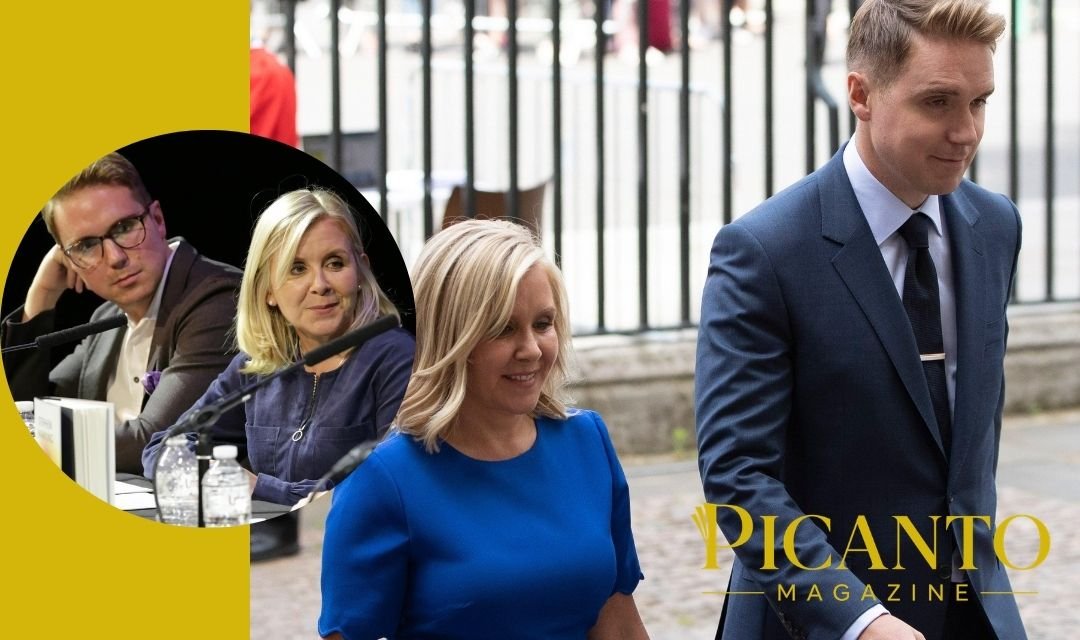
Timothy Hawking is the youngest son of Stephen Hawking and writer Jane Hawking. Often called Tim, he has shared memories that reveal the family side of a scientist known around the world. His story includes childhood jokes, a career connected to LEGO, and public involvement in keeping his father’s work accessible to new generations.
Timothy Hawking: Quick Bio
| Detail | Information |
|---|---|
| Full name | Timothy Hawking |
| Also known as | Tim Hawking |
| Born | April 1979 |
| Age | 47 as of September 2026 |
| Father | Stephen Hawking |
| Mother | Jane Hawking, née Wilde |
| Older brother | Robert Hawking |
| Older sister | Lucy Hawking |
| Professional background | Marketing and brand development |
| Previous employer | LEGO |
| Documented public involvement | Projects celebrating and preserving Stephen Hawking’s legacy |
| Recent public update | Statement supporting a Bremont collaboration in July 2026 |
| Personal net worth | No reliably verified public figure |
Family dates are documented in biographical sources. Career reporting and a recent company announcement establish his professional background and continued involvement in projects honoring his father.
Who Is Timothy Hawking?
What is it like to have a father whose name appears in science books around the world?
Timothy Hawking’s public memories offer a small but valuable answer. They show that behind Stephen Hawking’s famous voice and scientific achievements was a parent who shared everyday family experiences.
Tim is the youngest of three siblings. Robert and Lucy were already older children when he was born, so his earliest experiences of their father belonged to a different stage of Stephen’s life.
Today, Tim’s public appearances often connect with his father’s books, memory, and lasting influence. He has taken part in conversations about how future generations can encounter that work, including through museums and commemorative projects.
Early Life in the Hawking Family
Timothy was born in April 1979. His brother Robert was born in 1967, and his sister Lucy arrived in 1970. That makes Tim roughly 12 years younger than Robert and eight years younger than Lucy.
His birth came during an important period in his father’s academic life. In 1979, Stephen became the Lucasian Professor of Mathematics at Cambridge, a position previously held by Isaac Newton.
Those dates create an interesting contrast. To the academic world, Stephen was an increasingly important scientific thinker. To a newborn child, he was simply Dad.
Tim did not grow up remembering a time before his father’s illness. That shaped one of the most personal parts of his childhood story: learning how to communicate with him.
Learning to Understand His Father
In comments reported around the 2015 BBC programme Dara O’Briain Meets Stephen Hawking, Tim described struggling to understand his father’s natural speech when he was very young.
Stephen could still speak during Tim’s early childhood, but his words were difficult for a small child to follow. Tim explained that their conversations became easier after his father began using a voice synthesizer.
The electronic voice became one of Stephen Hawking’s most recognizable features. People heard it in interviews, lectures, and television appearances.
For Tim, however, it had a much more personal meaning. It helped make conversations with his father possible.
That difference is easy to overlook. A piece of technology remembered by millions as part of a public image was also part of a family’s daily communication.
The Childhood Pranks That Showed Another Side of Stephen Hawking
Tim’s memories were not all serious.
He also recalled programming swear words into his father’s speech machine and using his wheelchair as a go-kart when he was a child. These stories were reported in connection with the same BBC programme.
They offer a very different picture from the formal photographs of a scientist receiving awards or addressing an audience.
Here was a child finding opportunities for mischief in the objects around him. The stories are memorable because they feel so recognizably human.
They also help explain why family recollections matter. A list of books and scientific discoveries can describe a career. A small childhood memory can reveal something about the life surrounding it.
His Mother, Jane Hawking
Jane Hawking is an author whose writing has offered her own account of life within the family.
Her books include Music to Move the Stars and Travelling to Infinity: My Life with Stephen. The latter became the basis for the 2014 film The Theory of Everything, in which Felicity Jones portrayed Jane.
Jane and Stephen divorced in 1995. She later married Jonathan Hellyer Jones.
For readers learning about the family through a film, it helps to remember that a screen story compresses many years into a short running time. It can introduce the people involved, but it cannot capture every part of their lives.
Jane’s identity also extends beyond being Stephen Hawking’s former wife. Her writing is an important part of how the family’s history has been told.
Timothy’s Siblings: Robert and Lucy Hawking
Timothy is the youngest member of a three-child family. His older siblings have their own lives and interests, and Lucy has developed a particularly visible public career.
Lucy is a writer and science educator. She worked with her father on children’s books designed to make scientific ideas exciting and easier to understand.
That work provides an interesting family connection. Stephen explored difficult questions about the universe, while Lucy helped bring scientific ideas into stories for younger readers.
Tim’s public contributions have taken a different form. His appearances around commemorative projects and archives often concern how his father’s name, belongings, and achievements are presented.
The siblings have also spoken together. A government announcement about the Stephen Hawking Fellowships included a joint statement from Lucy, Robert, and Tim welcoming support for research and public engagement with science.
Education and a Career Outside Physics
Timothy did not become publicly known through a career in theoretical physics.
Secondary biographical reporting describes him as having studied French and Spanish at the University of Exeter before completing postgraduate study in marketing at the University of Birmingham. These education details are less directly documented in the sources reviewed than his public appearances and statements.
The same reporting describes a professional path through account management and marketing, followed by work at LEGO.
Languages and marketing may sound far removed from black holes, but they involve their own forms of communication. A marketer needs to understand an audience, explain an idea, and help people connect with a product or organization.
Those are general features of the profession, rather than a complete description of Tim’s personal duties. Still, they help readers understand the kind of work associated with his career.
Timothy Hawking’s Work at LEGO
The LEGO connection is more than a detail repeated on recent celebrity blogs. Reporting published in 2015 identified Tim as an employee of the toy company.
Later biographical coverage described his work in loyalty and brand development before a move into work associated with the Hawking Estate.
This part of his biography is worth recognizing on its own terms. It shows a professional history beyond his famous surname.
Working for a familiar company can make a biography easier to picture, but it should not invite invented details. The available reporting does not justify claiming that Tim personally designed a particular LEGO set or led a specific campaign.
His established connection is with the company’s business and marketing side.
Remembering Stephen Hawking After His Death
Stephen Hawking died in March 2018. His death brought worldwide attention to his achievements and to the family who knew him personally.
A memorial service took place at Westminster Abbey on June 15, 2018, when his ashes were interred there.
For the public, such occasions marked the loss of an influential scientist. For Tim and his siblings, they also concerned the death of their father.
That distinction matters when looking at photographs from memorial events. They record public moments, but they cannot explain everything the people pictured were experiencing.
Tim’s later participation in projects about his father provides a more direct way to understand what he has chosen to share publicly.
Appearing at the Launch of His Father’s Final Book
In October 2018, Tim and Lucy took part in a discussion at London’s Science Museum connected with Brief Answers to the Big Questions.
The panel brought together family members and scientists who had worked with Stephen. The book drew on questions he had addressed, with his family and collaborators helping bring the final collection together after his death.
The event illustrates why family participation can add something valuable to a scientific discussion.
Researchers can explain the development and significance of an idea. Family members can contribute memories of the person who kept thinking about it.
Those perspectives do different jobs. Together, they can give an audience a fuller picture without suggesting that a relative shares the same professional expertise.
Helping Preserve Stephen Hawking’s Archive
One of Tim’s most meaningful public statements concerned the preservation of his father’s archive.
Cambridge reported the transfer of Stephen Hawking’s papers to Cambridge University Library and the contents of his office to the Science Museum. Tim welcomed the arrangements on behalf of the family and emphasized his father’s wish to make science available to a broad audience.
Why does an archive matter?
A finished book shows readers what an author chose to publish. Drafts, letters, and working papers can reveal how ideas developed before reaching that stage.
Personal objects add another layer. They help visitors picture the surroundings in which someone worked, communicated, and spent their days.
Preserving these materials gives future researchers and museum audiences opportunities that a short biography cannot offer. Tim’s statement connected that practical work with his father’s interest in public understanding.
The Bremont Connection and a 2026 Update
Tim has also spoken publicly about projects honoring his father outside museums and publishing.
In July 2026, Bremont announced its Supernova Hawking limited-edition watch. The company described it as a second collaboration celebrating Stephen Hawking, following an earlier collection introduced in 2020.
The announcement included a statement from Tim welcoming the tribute and discussing his father’s fascination with black holes, discovery, and the universe.
This provides a dated, verifiable update about Tim’s public activity in 2026.
It also shows one way a famous scientific name can reach audiences beyond science books. A commemorative object may encourage someone to ask about the person and ideas behind it.
That does not mean Tim designed the watch or owns the company. His documented involvement in the announcement is as Stephen Hawking’s son, speaking about a project celebrating his father.
His Private Life and Net Worth
Reliable public information about Timothy Hawking’s marriage, children, and personal finances is limited in the sources reviewed for this article.
That means there is no sound basis here for naming a spouse, describing his household, or assigning him a precise net worth.
An often-repeated estimate does not become verified simply because several websites publish it. The same applies to figures based on a parent’s income, an estate’s value, or a previous employer’s size.
What can be described more confidently is Tim’s documented professional background and the projects in which he has appeared publicly.
Final Thoughts
Timothy Hawking’s story offers a personal view of a family usually associated with enormous scientific questions.
His memories of childhood communication and mischief make that history easier to relate to. His professional background and later public statements show how his own life has extended beyond those early experiences.
The strongest account of Tim is built around those details: what he has said, where he has worked, and the projects he has supported. They reveal a person helping future audiences encounter his father’s work while maintaining a life that is only partly public.
Frequently Asked Questions
Who is Timothy Hawking?
Timothy Hawking, often called Tim, is the youngest son of Stephen Hawking and Jane Hawking. His older siblings are Robert and Lucy.
How old is Timothy Hawking?
He was born in April 1979, making him 47 as of September 2026.
Did Timothy Hawking work for LEGO?
Yes. Reporting from 2015 identifies him as working for LEGO. Later coverage describes a background in marketing and brand development.
Is Timothy Hawking a physicist?
The sources reviewed describe a marketing and brand-development career rather than a professional career in physics.
What is Timothy Hawking doing in 2026?
A July 2026 Bremont announcement includes his statement supporting a collaboration celebrating his father. This confirms continued public involvement in commemorative projects, without establishing his complete current work schedule.
What is Timothy Hawking’s net worth?
There is no reliably verified public figure in the sources reviewed. Online estimates should not be treated as established financial information.
For more info, visit Picanto Magazine.