
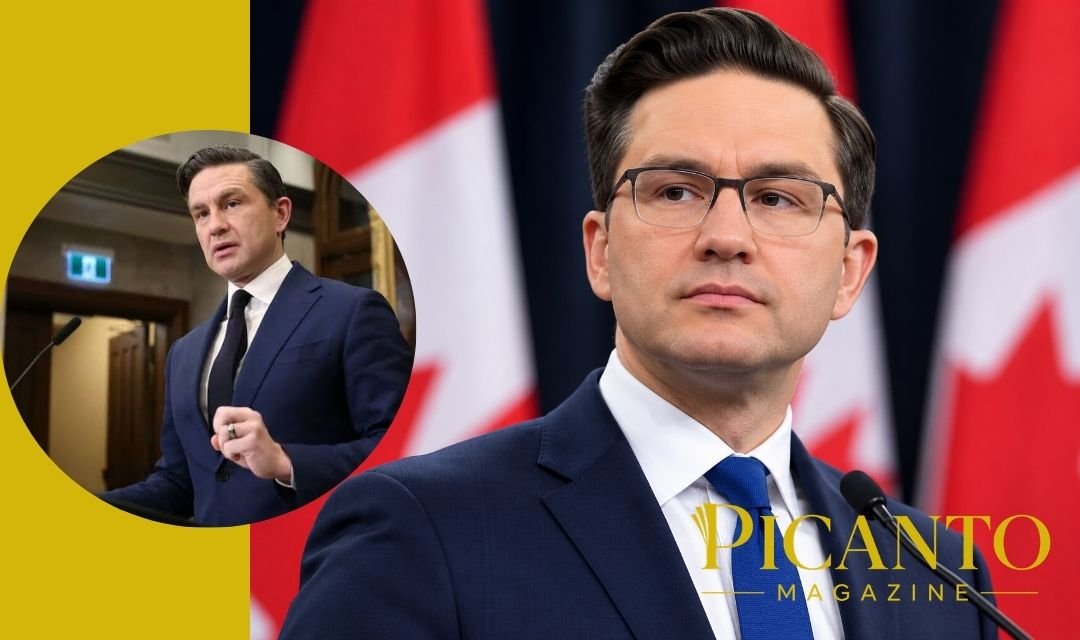
Pierre Poilievre is a Canadian politician, leader of the Conservative Party of Canada, and Leader of the Official Opposition. He has become one of the country’s most recognizable political figures through his speeches about economic affordability, taxation, housing, government spending, and public safety. According to the House of Commons of Canada, he currently represents the Alberta riding of Battle River—Crowfoot.
Born on June 3, 1979, in Calgary, Alberta, Poilievre entered federal politics at a young age. He was first elected to Parliament in 2004 and later served in several positions under former Prime Minister Stephen Harper.
He became Conservative Party leader in September 2022. Although he lost his parliamentary seat in the April 2025 federal election, he returned to the House of Commons after winning an Alberta by-election in August 2025.
In 2026, Poilievre continues to lead the Conservatives against Prime Minister Mark Carney’s Liberal government. His political message focuses on lowering living costs, increasing housing supply, improving economic competitiveness, and strengthening public safety.
Quick Bio: Pierre Poilievre
| Detail | Information |
|---|---|
| Full name | Pierre Marcel Poilievre |
| Date of birth | June 3, 1979 |
| Age in 2026 | 47 years |
| Birthplace | Calgary, Alberta, Canada |
| Nationality | Canadian |
| Profession | Politician |
| Political party | Conservative Party of Canada |
| Current position | Conservative leader and Leader of the Official Opposition |
| Current constituency | Battle River—Crowfoot, Alberta |
| First elected to Parliament | 2004 |
| Became Conservative leader | September 10, 2022 |
| Wife | Anaida Poilievre |
| Marriage year | 2017 |
| Children | Two |
| Daughter | Valentina |
| Son | Cruz |
| Education | University of Calgary |
| Degree | Bachelor of Arts in International Relations |
| Net worth | Not independently verified |
Who Is Pierre Poilievre?
Pierre Poilievre is a Canadian conservative politician who has spent more than two decades in federal politics.
He became known for his direct speaking style, frequent criticism of Liberal economic policies, and focus on government accountability.
His political career began in 2004, when he was elected as a Member of Parliament for Nepean—Carleton in Ontario.
Over time, he became an important member of Stephen Harper’s Conservative government.
He later served as a senior opposition politician before winning the Conservative leadership in 2022.
As party leader, he has emphasized economic growth, lower taxes, housing construction, and reducing government spending.
Supporters see him as a politician willing to challenge established institutions. Critics question some of his policy proposals, political rhetoric, and explanations of complex economic problems.
Pierre Poilievre’s Early Life
Pierre Poilievre was born on June 3, 1979, in Calgary, Alberta.
He was adopted as an infant by Donald and Marlene Poilievre, who were teachers.
He grew up in a family that valued education and public discussion.
His adoptive parents later separated.
Poilievre developed an interest in politics while he was still young.
During his teenage years, he became involved in conservative political activities.
His early experiences helped shape his views on individual responsibility, economic freedom, and government.
Pierre Poilievre’s Age in 2026
Pierre Poilievre is 47 years old in 2026.
He celebrated his 47th birthday on June 3, 2026.
He was only 25 when he first won a seat in Canada’s Parliament in 2004.
His relatively young entry into politics helped him build a long parliamentary career before becoming party leader.
Pierre Poilievre’s Parents and Family
Poilievre was adopted by Donald and Marlene Poilievre.
Both worked as teachers.
He has spoken publicly about his upbringing and the opportunities his adoptive family provided.
His family background became part of his political story, particularly during his Conservative leadership campaign.
He often refers to the importance of family, education, and opportunity in his speeches.
Pierre Poilievre’s Education
Poilievre attended the University of Calgary.
He studied international relations and earned a Bachelor of Arts degree.
During his university years, he remained interested in political ideas and public policy.
His education helped him develop knowledge of government, international affairs, and economic debates.
He also became active in conservative political organizations.
Pierre Poilievre’s Early Political Career
Poilievre began working in politics before becoming an elected representative.
He was involved with the Canadian Alliance and conservative political campaigns.
In 2004, he ran for Parliament in the Ontario riding of Nepean—Carleton.
He defeated Liberal incumbent David Pratt.
His victory brought him into the House of Commons at the age of 25.
It was the beginning of a long career in Canadian federal politics.
Pierre Poilievre Under Stephen Harper
Stephen Harper became Canada’s prime minister in 2006.
Poilievre was part of Harper’s Conservative parliamentary team.
During those years, he held several parliamentary secretary positions.
These included responsibilities connected to the Treasury Board, the prime minister, transportation, and economic development.
He became known for defending government policies and challenging opposition parties during parliamentary debates.
His work helped him gain experience in government administration.
Pierre Poilievre as Minister for Democratic Reform
Poilievre became Minister of State for Democratic Reform in July 2013.
He held the position until February 2015.
One of the most controversial initiatives associated with his time in this role was the Fair Elections Act.
The government argued that the legislation would improve election rules and strengthen public confidence.
Critics, including election experts and opposition politicians, raised concerns about restrictions affecting voter identification and Elections Canada’s activities.
The debate became an important part of Poilievre’s ministerial record.
Pierre Poilievre as Employment Minister
In February 2015, Poilievre became Minister of Employment and Social Development.
He served until the Conservative government lost power later that year.
His responsibilities included employment-related programs and federal social development policies.
The role gave him additional cabinet experience.
Official parliamentary records confirm his service in these ministerial positions.
Pierre Poilievre and the Conservative Leadership
After the Conservatives lost the 2015 federal election, Poilievre continued serving as an opposition MP.
He became a prominent critic of the Liberal government.
His speeches often focused on federal deficits, inflation, taxes, and government accountability.
In 2022, he entered the Conservative Party leadership contest.
He won decisively on September 10, 2022.
His victory established him as the party’s national leader and Canada’s Leader of the Official Opposition.
Pierre Poilievre’s Political Views and Policies
Poilievre is associated with several major policy priorities.
Economic Affordability
One of his central political messages concerns the cost of living.
He argues that government spending, taxation, and regulatory decisions can contribute to economic pressure on households.
He has called for greater fiscal restraint and policies intended to encourage private investment.
Economists and political opponents disagree over the extent to which federal spending explains inflation and whether his proposed solutions would deliver the promised results.
Housing Affordability
Housing has become a major issue in Canadian politics.
Poilievre has argued that government regulations and delays can restrict housing construction.
He supports encouraging municipalities to approve more residential development.
His approach emphasizes increasing supply and reducing barriers to construction.
Critics argue that housing affordability also requires attention to infrastructure, rental protections, financing, and local market conditions.
Taxes and Carbon Pricing
Poilievre has strongly opposed federal consumer carbon pricing.
He argues that higher energy costs affect transportation, food, and household expenses.
Supporters of carbon pricing argue that it can reduce emissions by encouraging cleaner energy choices, particularly when household rebates or other compensation are included.
This disagreement has been a defining issue in Canadian political debate.
Immigration
Poilievre has advocated connecting immigration levels more closely to Canada’s housing supply, employment opportunities, and public services.
His approach reflects broader concerns about population growth and infrastructure capacity.
Immigration policy remains contested because it also affects economic growth, family reunification, education, and Canada’s long-term workforce.
Crime and Public Safety
Poilievre has supported tougher responses to repeat violent offenders.
He has criticized aspects of Canada’s bail and sentencing systems.
His proposals emphasize stronger enforcement and public safety.
Critics argue that lasting crime reduction also requires prevention, rehabilitation, and attention to underlying social conditions.
Pierre Poilievre and the 2025 Federal Election
The April 28, 2025, federal election was an important turning point in Poilievre’s career.
He led the Conservatives against the Liberal Party, headed by Mark Carney.
Although the Conservatives increased their representation in Parliament, they did not win government.
Poilievre also lost his longtime Carleton seat to Liberal candidate Bruce Fanjoy.
This result attracted significant attention because party leaders usually seek to maintain their own parliamentary seats.
However, Poilievre remained Conservative leader.
Pierre Poilievre’s Return to Parliament
After losing in Carleton, Poilievre sought another opportunity to return to the House of Commons.
A by-election was held in Battle River—Crowfoot, Alberta, on August 18, 2025.
He won the election and returned to Parliament.
The constituency had been represented by Conservative MP Damien Kurek, who stepped aside to create the opportunity.
Poilievre resumed his role as Leader of the Official Opposition.
Pierre Poilievre’s Wife: Anaida Poilievre
Pierre Poilievre is married to Anaida Poilievre, formerly Anaida Galindo.
She was born in Venezuela and later moved to Canada.
Anaida has a background in political communications and public affairs.
The couple married in 2017.
She has occasionally appeared alongside her husband during political events and campaigns.
Her Venezuelan background has also attracted attention because of Poilievre’s discussions about socialism and economic policy.
Pierre Poilievre’s Children
Pierre and Anaida have two children.
Their daughter is named Valentina, and their son is named Cruz.
The family lives in Ottawa.
Poilievre frequently discusses family responsibilities when explaining his political priorities.
However, his children are minors, and their private lives should be respected.
Pierre Poilievre’s Net Worth
Pierre Poilievre’s exact personal net worth is not independently verified.
As a federal politician, he receives compensation connected to his parliamentary responsibilities.
However, parliamentary salary information does not establish the complete value of his personal assets.
His investments, liabilities, property interests, and household finances cannot be fully determined from public salary records.
Online estimates of his wealth should therefore be treated cautiously.
Pierre Poilievre in 2026: Latest Political Developments
In October 2026, Poilievre remains Conservative Party leader and Leader of the Official Opposition.
His recent political activity has concentrated on affordability, employment, Canadian industry, and trade.
On October 9, 2026, he visited Burlington, Ontario, to announce proposals intended to protect Canadian steel jobs. His proposals included measures concerning trade, industrial investment, and the steel sector.
During parliamentary proceedings in October, he also challenged Prime Minister Mark Carney’s government over economic policy and the use of Canadian materials in infrastructure projects.
These developments show that Poilievre continues to emphasize economic issues while preparing his party for future electoral contests.
Pierre Poilievre’s Political Timeline
| Year | Major event |
|---|---|
| 1979 | Born in Calgary, Alberta |
| 2004 | First elected to Parliament |
| 2006 | Conservatives form government under Stephen Harper |
| 2013 | Appointed Minister of State for Democratic Reform |
| 2015 | Became Minister of Employment and Social Development |
| 2015 | Conservatives lose federal election |
| 2022 | Elected Conservative Party leader |
| 2025 | Lost Carleton seat in federal election |
| August 2025 | Won Battle River—Crowfoot by-election |
| 2026 | Continues as Conservative leader and Official Opposition leader |
Interesting Facts About Pierre Poilievre
-
He was born on June 3, 1979.
-
He was adopted by two teachers.
-
He grew up in Alberta.
-
He graduated from the University of Calgary.
-
He entered Parliament at age 25.
-
He served in Stephen Harper’s government.
-
He became Conservative leader in September 2022.
-
He is married to Anaida Poilievre.
-
They have two children.
-
He lost his Carleton seat in April 2025.
-
He returned to Parliament through an Alberta by-election.
-
He is known for his strong parliamentary debating style.
-
His political priorities include affordability, housing, taxation, and public safety.
-
He remains Leader of the Official Opposition in October 2026.
Final Thoughts
Pierre Poilievre has become one of the central figures in modern Canadian politics.
His career began when he entered Parliament at just 25 years old.
Over the following two decades, he served in government, held ministerial responsibilities, and developed a reputation as a forceful Conservative spokesperson.
His election as party leader in 2022 brought him national attention.
Although the 2025 federal election ended in defeat for the Conservatives and cost him his parliamentary seat, he returned to the House of Commons later that year.
In 2026, Poilievre continues to challenge the Liberal government over economic affordability, jobs, housing, and taxation.
His future political success will depend on how Canadian voters assess his proposals, his leadership, and the performance of the governing Liberals.
Frequently Asked Questions About Pierre Poilievre
1. Who is Pierre Poilievre?
Pierre Poilievre is a Canadian politician and leader of the Conservative Party of Canada.
2. How old is Pierre Poilievre in 2026?
He is 47 years old.
3. When was Pierre Poilievre born?
He was born on June 3, 1979.
4. Where was Pierre Poilievre born?
He was born in Calgary, Alberta, Canada.
5. Is Pierre Poilievre Canada’s prime minister?
No. Mark Carney is Canada’s prime minister as of October 2026. Poilievre leads the Official Opposition.
6. Which political party does Pierre Poilievre lead?
He leads the Conservative Party of Canada.
7. When did Pierre Poilievre become Conservative leader?
He became leader on September 10, 2022.
8. Who is Pierre Poilievre’s wife?
His wife is Anaida Poilievre.
9. When did Pierre Poilievre get married?
He married Anaida in 2017.
10. How many children does Pierre Poilievre have?
He has two children, Valentina and Cruz.
11. Was Pierre Poilievre adopted?
Yes. He was adopted as an infant.
12. Where did Pierre Poilievre study?
He attended the University of Calgary.
13. When was Pierre Poilievre first elected?
He was first elected to Parliament in 2004.
14. Did Pierre Poilievre work under Stephen Harper?
Yes. He served in several parliamentary and ministerial roles during Harper’s government.
15. Did Pierre Poilievre lose the 2025 election?
His Conservative Party did not form government, and he personally lost his Carleton seat.
16. How did Pierre Poilievre return to Parliament?
He won the Battle River—Crowfoot by-election in August 2025.
17. What constituency does Pierre Poilievre represent in 2026?
He represents Battle River—Crowfoot in Alberta.
18. What are Pierre Poilievre’s main political priorities?
His priorities include economic affordability, lower taxes, housing supply, employment, and public safety.
19. What is Pierre Poilievre’s net worth?
His exact personal net worth is not independently verified.
20. What is Pierre Poilievre doing in 2026?
He continues leading the Conservative Party and serving as Canada’s Leader of the Official Opposition.
For more political biographies, public figures, and trending stories, visit Picanto Magazine.