
Introduction
Neighborhood businesses often share the same customers, streets, events, and seasonal challenges. A café, bookstore, florist, bakery, gym, boutique, or local service provider may all depend on the same community rhythm. Instead of competing for attention separately, these businesses can often benefit by working together.
Local promotions are especially powerful when they feel natural. A collaboration should not look like a random discount exchange. It should create a better experience for customers while helping each business reach people who are already nearby.
Start With Shared Customer Behavior
The best collaborations begin by understanding how customers move through the neighborhood. Someone may buy coffee before visiting a bookstore. A parent may stop at a bakery after a children’s class. A shopper may visit a florist before going to a gift shop.
When businesses understand these patterns, they can build promotions that feel useful. For example, a café and bookstore might create a weekend reading bundle. A gym and juice bar might offer a post-class discount. A bakery and florist might collaborate around holidays or gift occasions.
A practical shared item, such as Custom Tote Bags, can also help connect multiple businesses under one neighborhood campaign.
Create Promotions That Help Customers Explore
A good local promotion should encourage discovery. Customers may know one business but not another. A collaboration gives them a reason to explore more of the area.
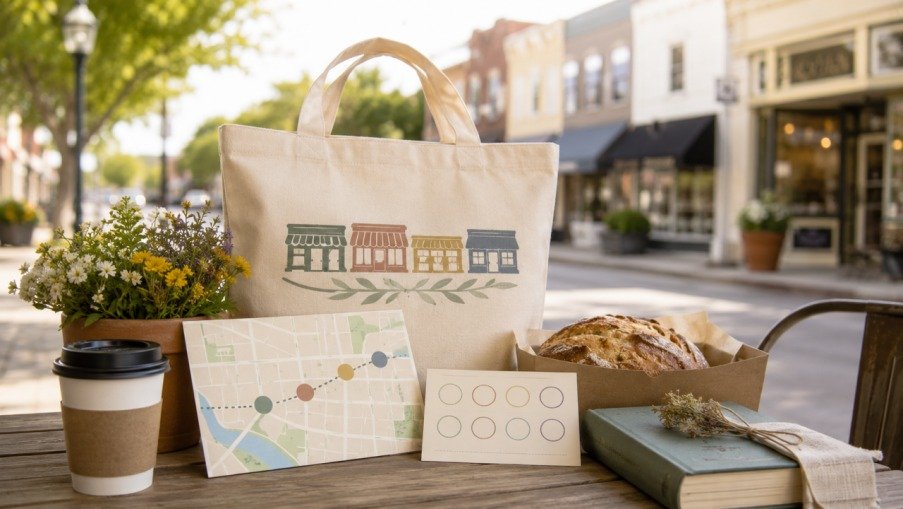
Ideas might include a neighborhood shopping passport, shared event map, seasonal gift trail, local loyalty card, or collaborative weekend market. These promotions work best when customers receive something useful or enjoyable in return for visiting multiple places.
The key is to make participation simple. If the promotion requires too many rules, customers may ignore it.
Use Materials That Feel Consistent
Collaborative promotions need clear visual identity. Flyers, signs, maps, packaging, and giveaway items should look connected even if each business keeps its own personality.
This is where material choices matter. If businesses create shared bags, printed cards, or event materials, the quality should feel reliable. A Canvas Bag Weight Guide can help organizers understand how different fabric weights affect the look and feel of reusable campaign items.
A well-made item reflects positively on every participating business.
Share Responsibilities Fairly
Local collaborations work best when responsibilities are clear. One business might design the flyer, another might manage social media, another might host the launch event, and another might handle customer sign-ups.
If one business does all the work, the partnership may not last. A simple planning document can help clarify tasks, deadlines, and costs.
It is also important to agree on how success will be measured. This could include foot traffic, sales, email sign-ups, coupon redemptions, or social engagement.
Keep the Promotion Human
Neighborhood promotions should feel personal. Customers often support local businesses because they value relationships. Highlighting the owners, staff, makers, or community stories behind the promotion can make it more meaningful.
A short message such as “Five local shops teamed up to make your weekend easier” can feel warmer than a generic advertising line.
Conclusion
Neighborhood businesses can collaborate on local promotions by focusing on shared customer behavior, simple discovery experiences, consistent materials, and fair planning. When done well, collaboration helps customers see the neighborhood as a connected place rather than separate storefronts.
The strongest local promotions do more than drive sales. They build community habits, strengthen relationships, and give customers more reasons to return.