
Introduction
Most factories treat water as a one-way trip. It comes in through the meter, does its job in cooling, washing or processing, and then leaves through the drain. Every step of that journey costs money: buying the water, treating it, heating or cooling it, and finally paying to dispose of it.
Industrial water recycling breaks that cycle. Instead of sending used water away, manufacturers clean it and put it back to work. The result is lower freshwater consumption, smaller utility bills and a more resilient operation, which matters even more in water-scarce regions like the UAE and the wider Gulf.
In this article, we look at why recycling makes sense, where it fits inside a typical plant, the technology that makes it possible, and how to get started with the help of a trusted Water Treatment Equipment Supplier.
Why Manufacturers Should Recycle Water
Water is one of the largest hidden costs in many factories. It rarely appears as a single big line item, but it shows up in purchase bills, energy for pumping and heating, chemicals for treatment and fees for wastewater discharge. Recycling reduces all of these at once.
Here are the main reasons manufacturers are investing in it:
- Lower water bills. Reusing water means buying less fresh supply, often cutting intake by 30 to 70 percent depending on the process.
- Reduced discharge costs. Less wastewater leaving the site means lower disposal fees and less strain on municipal treatment plants.
- Supply security. Plants that recycle are less exposed to supply interruptions, price increases or future restrictions on water use.
- Regulatory compliance. Authorities across the GCC are tightening rules on industrial discharge and encouraging reuse.
- Sustainability goals. Customers, investors and partners increasingly expect manufacturers to show real reductions in water footprint.
In short, recycling turns water from a cost that only goes up into a resource the plant can control.
Where Water Can Be Recycled in a Plant
Not every water stream needs to be treated to drinking quality. The key is matching the level of treatment to the next use. Common opportunities include:
- Cooling tower blowdown. Instead of sending it to drain, blowdown can be treated and returned as make-up water.
- Rinse and wash water. In metal finishing, food processing and textiles, rinse water is often only lightly contaminated and easy to clean for reuse.
- Steam condensate. Returning condensate to the boiler saves water, energy and treatment chemicals.
- RO reject water. Concentrate from one RO system can sometimes be used for floor washing, scrubbers or landscape irrigation.
- Process wastewater. With the right treatment, effluent from production lines can be recycled back into the same process or used in utilities.
A simple water audit, mapping where water comes in, where it is used and where it leaves, usually reveals several streams that can be reused straight away.
The Technology Behind Industrial Water Recycling
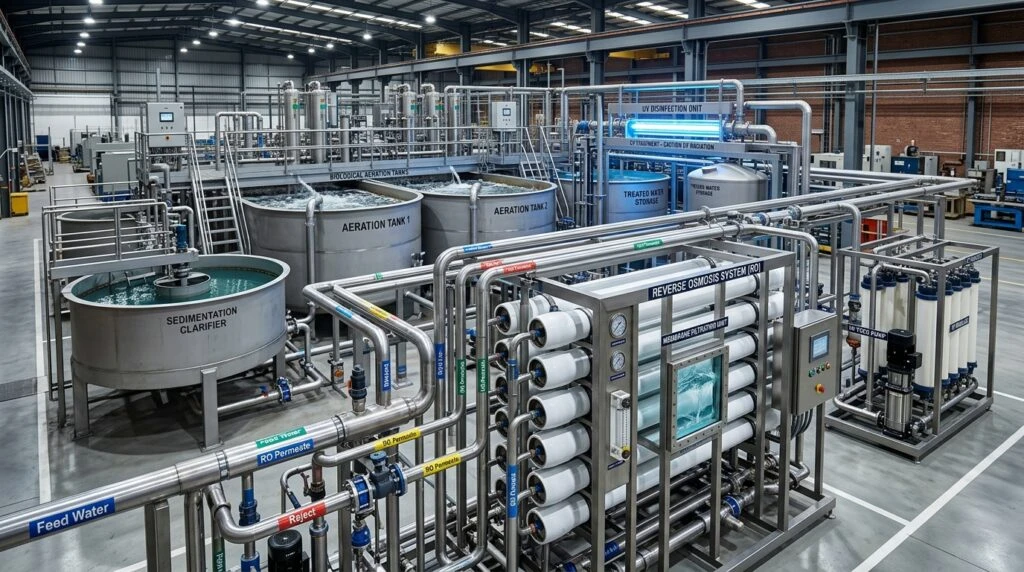
Most recycling systems combine several treatment stages. The exact setup depends on what is in the water and how clean it needs to be for reuse.
Pre-Treatment
The first step is removing what is easy to remove. Screens, settling tanks, multimedia filters and cartridge filters take out suspended solids, oil, grease and debris. Good pre-treatment protects everything downstream and keeps the rest of the system running smoothly.
Biological and Membrane Filtration
For water with organic contamination, biological treatment or membrane bioreactors break down dissolved organics. Ultrafiltration (UF) can then remove fine particles, bacteria and colloids, producing clear water ready for the final stage.
Reverse Osmosis
Reverse osmosis is what turns recycled water into high-quality process water. RO membranes remove up to 99 percent of dissolved salts, along with metals and trace contaminants. This makes the water suitable for boiler feed, cooling towers, rinsing and many production processes.
Because recycled water is tougher on membranes than clean feed water, membrane choice is critical. Fouling-resistant elements designed for wastewater applications last longer and need fewer cleanings. Partnering with an experienced RO Membranes Supplier helps you choose the right elements for your water and keep replacements on hand when you need them.
Pressure Vessels
RO membranes are installed inside pressure vessels, which hold them securely and contain the high operating pressure. A good vessel ensures tight sealing, prevents bypass and protects the membranes from mechanical damage. Choosing a reliable RO Pressure Vessel Supplier gives you vessels with the correct pressure rating, size and port configuration for your system, along with the durability to handle years of continuous operation.
Disinfection and Polishing
Finally, UV, chlorination or other disinfection methods ensure the recycled water is free of harmful microorganisms before it returns to use.
How to Start a Water Recycling Program
You do not need to transform your entire plant overnight. Many successful programs start small and grow.
- Carry out a water audit. Measure how much water each process uses and identify the biggest streams going to drain.
- Test the water. Analyse each stream for TDS, suspended solids, oil, organics and other contaminants to understand what treatment it needs.
- Match quality to use. Decide where recycled water will go. Cooling towers and washing need less treatment than boiler feed or product water.
- Start with quick wins. Condensate return and cooling tower blowdown recovery often pay back fastest.
- Choose quality equipment. Reliable filters, membranes and vessels reduce downtime and keep operating costs low. Work with a supplier who offers local stock and technical support.
- Monitor and improve. Install meters and online sensors to track savings and catch problems early. Use the data to expand recycling to more streams over time.
Most plants find that once the first project proves its value, scaling up becomes an easy business decision.
Conclusion
Industrial water recycling is one of the most practical ways for manufacturers to cut freshwater consumption, lower costs and protect themselves against future supply risks. By treating and reusing water from cooling towers, rinse lines, condensate and process streams, plants can dramatically reduce how much fresh water they buy and how much wastewater they discharge.
The technology is proven and widely available. With the right combination of pre-treatment, quality RO membranes, durable pressure vessels and careful monitoring, recycled water can meet even demanding industrial standards. For manufacturers in the UAE and the GCC, where every drop of fresh water has a high price, recycling is no longer just an environmental choice. It is a smart business strategy.
Frequently Asked Questions (FAQs)
1. What is industrial water recycling?
It is the process of treating water that has already been used in a manufacturing plant so it can be used again, either in the same process or in another part of the facility.
2. How much water can a factory save by recycling?
It depends on the industry and processes, but many plants reduce freshwater intake by 30 to 70 percent. Some advanced systems recover even more.
3. Is recycled water good enough for industrial use?
Yes. With proper treatment, including filtration and reverse osmosis, recycled water can meet the quality needed for cooling, boiler feed, rinsing and many production processes.
4. Why is reverse osmosis important in water recycling?
RO removes dissolved salts, metals and trace contaminants that other methods cannot. Without it, salts would build up each time water is reused, eventually making it unsuitable.
5. What does an RO pressure vessel do?
It houses the RO membranes and contains the high pressure needed to push water through them. A quality vessel keeps the system sealed, safe and efficient.
6. Which water streams are easiest to recycle first?
Steam condensate, cooling tower blowdown and lightly contaminated rinse water are usually the easiest and quickest to recycle, often with a fast return on investment.