
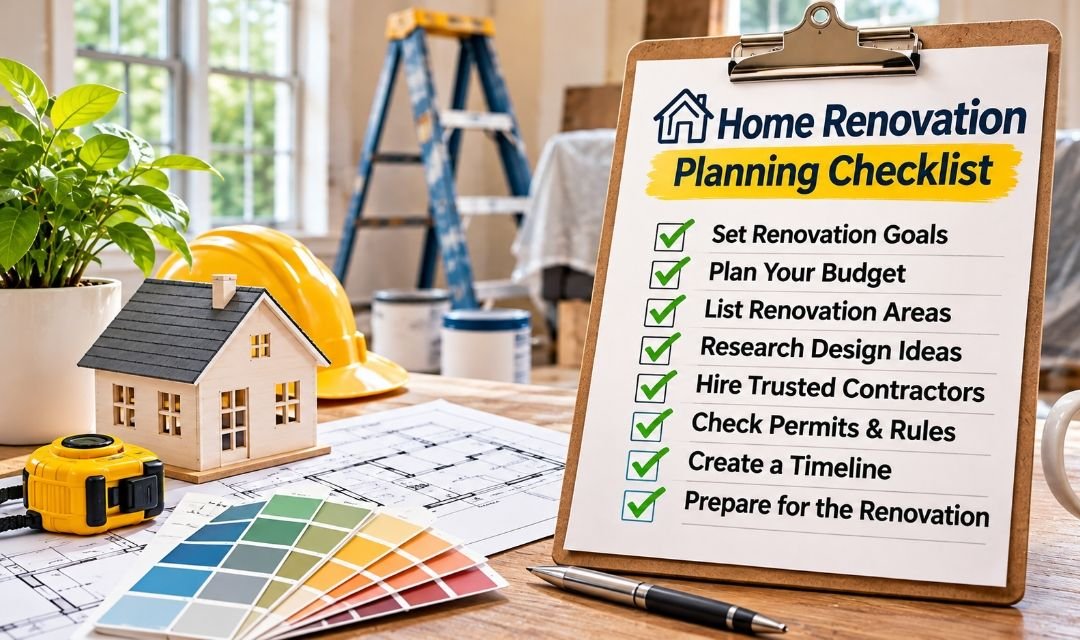
Home renovation planning checklist is an essential tool for homeowners who want to remodel their property without unnecessary expenses, delays, or construction problems. Whether you are updating a kitchen, renovating a bathroom, improving bedrooms, or planning a complete house makeover, a clear checklist can help you organize every stage of the project. Renovation is an important part of home improvement, which includes repairing, upgrading, and improving residential properties.
| Category | Details |
|---|---|
| Main topic | Home Renovation Planning Checklist |
| Main purpose | Organize a successful renovation project |
| Suitable projects | Kitchen, bathroom, bedroom, whole-house remodeling |
| First step | Inspect the property and define goals |
| Budget planning | Materials, labor, permits, contingency |
| Recommended contingency | Often 10–20%, depending on project risks |
| Important professionals | Contractors, electricians, plumbers, designers |
| Key documents | Contracts, permits, drawings, quotations |
| Common challenges | Delays, hidden damage, unexpected costs |
| Project stages | Planning, demolition, construction, finishing |
| Final stage | Inspections, cleaning, documentation |
| Main goal | Complete renovation safely and efficiently |
Planning a home renovation can feel overwhelming, especially when several rooms need improvements. Homeowners must make decisions about budgets, materials, layouts, contractors, and project schedules.
Without a proper plan, even a small remodeling project can become stressful. Materials may arrive late, expenses may increase, and important repairs may be overlooked.
The good news is that most renovation projects become easier to manage when divided into clear steps.
This guide provides a detailed home renovation planning checklist, covering everything from the first inspection to the final walkthrough.
Why a Home Renovation Planning Checklist Is Important
A renovation checklist helps homeowners stay organized.
It provides a clear record of tasks that need to be completed before, during, and after construction.
For example, you may need to inspect plumbing before installing new bathroom tiles.
You may also need to confirm kitchen appliance dimensions before ordering cabinets.
A checklist reduces the chance of forgetting important details.
It also makes communication with contractors easier.
Most importantly, it helps homeowners understand how different renovation activities depend on one another.
1. Define Your Home Renovation Goals
The first step is understanding why you want to renovate.
Some homeowners want a modern appearance.
Others need more storage, improved accessibility, or better energy efficiency.
Write down the problems with your current home.
For example, your kitchen may lack counter space.
Your bathroom may have poor ventilation.
Your living room may feel dark.
Once you understand the problems, you can choose improvements that provide real benefits.
Renovation Goals Checklist
2. Inspect the Entire Property
Before choosing decorative materials, inspect the condition of the home.
Look for roof leaks, moisture damage, cracks, and damaged flooring.
Check windows and doors.
Review plumbing and electrical systems.
Older homes may contain hidden problems.
A qualified home inspector or relevant specialist can help identify concerns.
Necessary repairs should be addressed before cosmetic improvements.
For example, repainting a damp wall without repairing the leak may lead to repeated damage.
Property Inspection Checklist
3. Set a Realistic Renovation Budget
Budget planning is one of the most important renovation tasks.
Start by estimating the cost of each room.
Include materials, labor, permits, delivery, and waste disposal.
Do not focus only on visible finishes.
Electrical work, plumbing repairs, and structural changes may require significant spending.
Keep a contingency fund for unexpected expenses.
A reserve of approximately 10–20% is a common planning starting point, although older properties and complex projects may need more.
Budget Planning Checklist
4. Decide Which Rooms to Renovate First
Not every room needs to be renovated at the same time.
If your budget is limited, prioritize the areas that require urgent attention.
Safety concerns should come first.
For example, damaged wiring should be addressed before decorative painting.
A leaking bathroom may require repairs before new flooring is installed elsewhere.
After essential repairs, focus on rooms that provide the greatest everyday benefits.
Kitchens and bathrooms are common priorities.
However, the best order depends on the property’s condition and household needs.
5. Create a Room-by-Room Renovation Plan
A room-by-room plan helps organize the project.
List the work required in each area.
For example, the kitchen may need new cabinets, countertops, and lighting.
The bathroom may require waterproofing, a new vanity, and ventilation improvements.
Bedrooms may need painting and storage upgrades.
This approach makes it easier to estimate costs.
It also helps contractors understand the scope of work.
| Room | Possible renovation tasks |
|---|---|
| Kitchen | Cabinets, countertops, lighting, flooring |
| Bathroom | Shower, vanity, waterproofing, ventilation |
| Living room | Painting, flooring, lighting |
| Bedroom | Wardrobes, flooring, decoration |
| Dining room | Lighting, furniture arrangement |
| Hallway | Storage, painting, flooring |
| Exterior | Roofing, painting, drainage |
| Outdoor area | Patio, landscaping, lighting |
6. Choose Your Home Renovation Style
Selecting a design style early can prevent unnecessary changes.
Popular choices include modern, minimalist, farmhouse, Scandinavian, and traditional interiors.
Modern homes often use clean lines and practical storage.
Minimalist interiors focus on simplicity.
Farmhouse designs may include natural wood and classic details.
However, you do not need to follow one style strictly.
Choose colors, materials, and finishes that complement the property’s architecture.
A consistent design can make the entire home feel more connected.
7. Measure Every Room Carefully
Accurate measurements are essential.
Incorrect dimensions can create expensive installation problems.
Cabinets may not fit.
Furniture may block doorways.
Appliances may require additional clearance.
Measure room dimensions, ceiling heights, doors, windows, and existing fixtures.
Confirm the location of electrical outlets and plumbing connections.
For custom cabinets, countertops, and windows, professional measurements are often worthwhile.
Always verify measurements before placing orders.
8. Research Renovation Materials
Materials influence the appearance, durability, and cost of a renovation.
Compare different flooring products.
Research countertop materials.
Choose suitable paint finishes.
Consider maintenance requirements.
For example, bathrooms require materials designed for moisture exposure.
Kitchen countertops should suit everyday cooking habits.
Avoid selecting products based only on photographs.
Check specifications, warranties, and installation requirements.
Durable materials may provide better long-term value.
9. Hire Qualified Contractors
The right contractor can make a major difference.
Start by researching professionals with relevant experience.
Ask for references and examples of completed projects.
Check applicable licenses and insurance.
Request detailed written quotations.
Compare the work included rather than looking only at the final price.
A low quotation may exclude important tasks.
Choose professionals who communicate clearly and understand your renovation goals.
Contractor Selection Checklist
10. Check Building Permits and Regulations
Some renovation projects require permits.
Requirements depend on local regulations and the type of work.
Structural changes, electrical upgrades, plumbing modifications, and extensions may require approval.
Before construction begins, confirm which permits apply.
Ask who will obtain them.
Keep copies of approvals and inspection records.
Ignoring permit requirements can create safety and compliance problems.
It may also complicate future property transactions.
11. Create a Realistic Renovation Timeline
A renovation schedule helps coordinate work.
Start by listing major project stages.
Include design, permits, demolition, technical work, installation, and finishing.
Allow time for materials to arrive.
Consider contractor availability.
Unexpected damage may also create delays.
Avoid scheduling important events immediately after the expected completion date.
A flexible timeline is often more realistic than an overly ambitious one.
12. Plan Temporary Living Arrangements
Some homeowners remain in their property during renovation.
Others need temporary accommodation.
The best choice depends on the amount of construction.
Major electrical work, plumbing shutdowns, demolition, and dust may make daily living difficult.
If you plan to stay, identify which rooms will remain usable.
Consider cooking, bathing, sleeping, and working arrangements.
Protect children and pets from construction areas.
For extensive projects, temporary accommodation may be safer and more comfortable.
13. Prepare the Home Before Construction
Before workers arrive, remove personal belongings from renovation areas.
Protect furniture and floors that will remain.
Store valuable items securely.
Create clear access routes.
Discuss dust control and waste removal with the contractor.
Confirm where materials will be delivered and stored.
Take photographs of the property’s condition before construction.
These records may be useful if questions arise later.
14. Plan Demolition Carefully
Demolition should follow a clear plan.
Removing old cabinets, flooring, or walls can reveal hidden problems.
However, demolition can also damage plumbing, electrical wiring, and structural elements.
Never remove a potentially load-bearing wall without professional assessment.
Older homes may contain hazardous materials requiring specialist handling.
Before demolition, identify utilities and relevant safety requirements.
Dispose of construction waste according to local regulations.
15. Complete Structural Repairs First
Structural work should generally be completed before decorative finishes.
Examples include repairing damaged supports or making approved layout changes.
Structural modifications require qualified professionals.
Necessary permits and inspections should be completed.
Do not install expensive flooring or cabinetry before unresolved structural problems are addressed.
A safe and stable building provides the foundation for the rest of the renovation.
16. Plan Electrical Upgrades
Electrical systems should be reviewed before walls and ceilings are finished.
Consider where outlets, switches, and lighting fixtures will be needed.
Kitchens may require circuits suitable for major appliances.
Home offices may need additional outlets.
Bathrooms require appropriate electrical protection and fixture placement.
A qualified electrician should assess the existing system.
Electrical work must follow applicable safety standards.
17. Plan Plumbing Improvements
Plumbing work should also be coordinated early.
Check existing pipes and fixtures.
Identify leaks or drainage problems.
If you plan to move sinks, toilets, or showers, understand the additional cost.
Keeping existing plumbing locations may reduce expenses.
However, damaged systems should be repaired properly.
Use qualified professionals for significant plumbing changes.
Test completed work before covering pipes with walls or flooring.
18. Improve Insulation and Ventilation
Renovation provides an opportunity to improve home comfort.
Insulation can help reduce unwanted heat transfer.
Air sealing may reduce drafts.
Ventilation helps manage indoor air quality and moisture.
However, these systems should be planned together.
Poorly coordinated changes can create condensation problems.
Consider a professional energy assessment when planning major efficiency upgrades.
Choose improvements suitable for the local climate and building design.
19. Plan Kitchen Renovation Tasks
Kitchen remodeling involves several connected activities.
Cabinets, countertops, appliances, plumbing, and lighting must work together.
Start by finalizing the layout.
Confirm appliance dimensions.
Plan electrical outlets and plumbing locations.
Choose durable materials.
Make sure there is enough counter space.
Storage should be practical and accessible.
Kitchen Renovation Checklist
20. Plan Bathroom Renovation Tasks
Bathroom renovations require special attention to water protection.
Start by inspecting plumbing and drainage.
Choose suitable fixtures.
Plan ventilation.
Select flooring with appropriate slip resistance.
Waterproofing must be completed correctly before tiling.
Do not rely on tiles and grout alone to prevent leaks.
Bathroom Renovation Checklist
21. Plan Flooring and Painting
Flooring and painting are important finishing stages.
However, their exact order depends on the project and materials.
Protect completed surfaces from damage.
Before flooring installation, inspect the subfloor.
Choose materials suitable for each room.
For painting, prepare surfaces properly.
Repair cracks and damaged areas.
Use appropriate primers and finishes.
Allow sufficient drying or curing time.
Rushing these steps can affect the final appearance and durability.
22. Track Materials and Deliveries
Material delays can interrupt renovation schedules.
Order long-lead products early when appropriate.
Confirm delivery dates with suppliers.
Check that products match the agreed specifications.
Inspect materials for visible damage.
Store them according to manufacturer instructions.
Keep receipts and warranty documents.
A simple materials tracking sheet can help prevent confusion.
| Material | Quantity | Supplier | Delivery date | Status |
|---|---|---|---|---|
| Flooring | To be confirmed | Selected supplier | Planned date | Pending |
| Cabinets | To be confirmed | Selected supplier | Planned date | Pending |
| Paint | To be confirmed | Selected supplier | Planned date | Pending |
| Tiles | To be confirmed | Selected supplier | Planned date | Pending |
| Lighting | To be confirmed | Selected supplier | Planned date | Pending |
23. Monitor Renovation Progress
Regular progress checks help identify problems early.
Compare completed work with the agreed plans.
Review upcoming activities.
Confirm that materials match the specifications.
Discuss concerns promptly.
Keep important decisions in writing.
For larger projects, scheduled meetings may help.
Avoid making informal changes without documenting their cost and schedule impact.
Good communication supports a smoother renovation.
24. Complete Final Inspections
Before considering the renovation complete, inspect the work carefully.
Check doors, windows, cabinets, and flooring.
Test plumbing fixtures.
Review lighting and electrical installations.
Look for damaged finishes.
Confirm that required inspections and approvals are complete.
Create a written list of unfinished or defective items.
Agree on how they will be corrected.
Do not overlook small problems that may become more serious later.
25. Organize Renovation Documents
After construction, collect all important records.
Keep contracts, receipts, permits, and inspection documents.
Save warranties and product manuals.
Record paint colors and material details.
Store contact information for contractors and suppliers.
These documents can help with future repairs and maintenance.
They may also be useful when selling the property.
A well-organized renovation file makes long-term home management easier.
Complete Home Renovation Planning Checklist
Use this interactive checklist to track your project.
Your renovation progress
0 of 27 completed
Before renovation
During renovation
After renovation
Example Home Renovation Budget
The following example shows how a hypothetical $50,000 renovation budget might be allocated.
| Renovation category | Example budget |
|---|---|
| Kitchen | $12,000 |
| Bathrooms | $9,000 |
| Flooring | $6,000 |
| Painting | $3,000 |
| Electrical work | $4,000 |
| Plumbing | $3,000 |
| Lighting and fixtures | $2,000 |
| Other improvements | $3,000 |
| Contingency | $8,000 |
| Total | $50,000 |
This example is for planning purposes only.
Actual costs vary according to the property, location, labor rates, and project scope.
Home Renovation Timeline Example
A renovation timeline depends on project complexity.
The following example illustrates a possible schedule for a moderate renovation.
| Stage | Illustrative duration |
|---|---|
| Initial planning | 1–3 weeks |
| Design and contractor selection | 2–6 weeks |
| Permits and approvals | Varies by location |
| Demolition and preparation | 1–2 weeks |
| Structural and system work | 2–6 weeks |
| Installation and finishing | 3–8 weeks |
| Final inspections and corrections | 1–2 weeks |
Some activities overlap, while others depend on previous work being completed.
Major renovations may take considerably longer.
Common Home Renovation Planning Mistakes
One common mistake is starting construction before finalizing the design.
Another is underestimating costs.
Some homeowners also hire contractors without checking qualifications.
Poor scheduling can create additional delays.
For example, installing new flooring before completing major plumbing work may lead to damage.
Another mistake is failing to plan storage.
A room may look attractive but become difficult to use.
Careful planning helps prevent these problems.
How to Save Money During Home Renovation
Saving money does not always mean choosing the cheapest materials.
Instead, focus on value.
Keep existing fixtures when they are in good condition.
Avoid unnecessary plumbing changes.
Compare detailed contractor quotations.
Choose durable materials with reasonable maintenance requirements.
Plan purchases carefully.
Avoid changing designs repeatedly during construction.
Most importantly, never reduce spending by ignoring necessary safety work.
Final Thoughts
A home renovation planning checklist can make remodeling projects easier to organize and manage.
Whether you are renovating one room or updating an entire property, careful preparation can reduce unnecessary expenses and delays.
Start by inspecting your home.
Set a realistic budget.
Choose qualified professionals.
Plan materials, permits, and schedules before construction.
During the renovation, monitor progress and maintain clear communication.
After completion, inspect the work and organize important documents.
The most successful renovation projects combine attractive design with safety, functionality, and long-term durability.
With a clear checklist and thoughtful planning, you can transform your home into a more comfortable, practical, and welcoming space.
Frequently Asked Questions About Home Renovation Planning
1. What is a home renovation planning checklist?
It is a list of tasks that helps homeowners organize renovation activities from planning through completion.
2. What should I do first when renovating a house?
Start by inspecting the property and identifying the improvements you need.
3. How do I create a renovation budget?
Estimate materials, labor, permits, delivery, and unexpected expenses.
4. How much contingency money should I keep?
Approximately 10–20% is a common starting point, although complex projects may need more.
5. Should I hire a contractor?
Qualified contractors are especially important for structural, electrical, plumbing, and other technical work.
6. Do I need permits for renovation?
Some projects require permits depending on local regulations and the work involved.
7. How long does home renovation take?
Small projects may take days or weeks, while extensive renovations can require several months.
8. Should I renovate the kitchen or bathroom first?
Prioritize urgent repairs and the rooms that provide the greatest practical benefit.
9. Can I live at home during renovation?
Sometimes, but extensive construction may require temporary accommodation.
10. What should be included in a contractor agreement?
The scope of work, materials, payment terms, timeline, responsibilities, and change procedures.
11. How can I avoid renovation delays?
Plan early, confirm materials, obtain permits, and communicate regularly with contractors.
12. What is the most expensive part of home renovation?
Structural changes, kitchens, bathrooms, and major system upgrades can be costly.
13. Should I buy materials before hiring a contractor?
Coordinate purchases with the contractor to confirm specifications and installation requirements.
14. How can I save money on renovation?
Reuse suitable materials, avoid unnecessary layout changes, and compare quotations.
15. What is the best order for renovation?
Generally, complete structural and technical work before decorative finishes.
16. Do I need an architect?
An architect may be helpful for major layout changes, additions, or complex designs.
17. Why are accurate measurements important?
They help ensure cabinets, appliances, doors, and other products fit correctly.
18. What documents should I keep?
Contracts, permits, receipts, warranties, inspection records, and product information.
19. How do I choose renovation materials?
Consider durability, maintenance, suitability, appearance, and budget.
20. Can I renovate my house myself?
Simple cosmetic work may be suitable for DIY, but technical work often requires professionals.
21. What should I inspect after renovation?
Check fixtures, flooring, doors, windows, plumbing, electrical work, and completed finishes.
22. How can I plan a small home renovation?
Focus on efficient layouts, practical storage, lighting, and affordable improvements.
23. Is home renovation a good investment?
It can improve comfort and property appeal, but financial returns depend on project costs and local market conditions.
24. What is the biggest renovation planning mistake?
Starting without a clear plan and realistic budget is one of the most common problems.
25. What is the most important renovation planning tip?
Prioritize safety, define your goals, and organize the work before construction begins.
For more home improvement guides, renovation planning advice, interior design inspiration, and affordable remodeling ideas, visit Picanto Magazine