
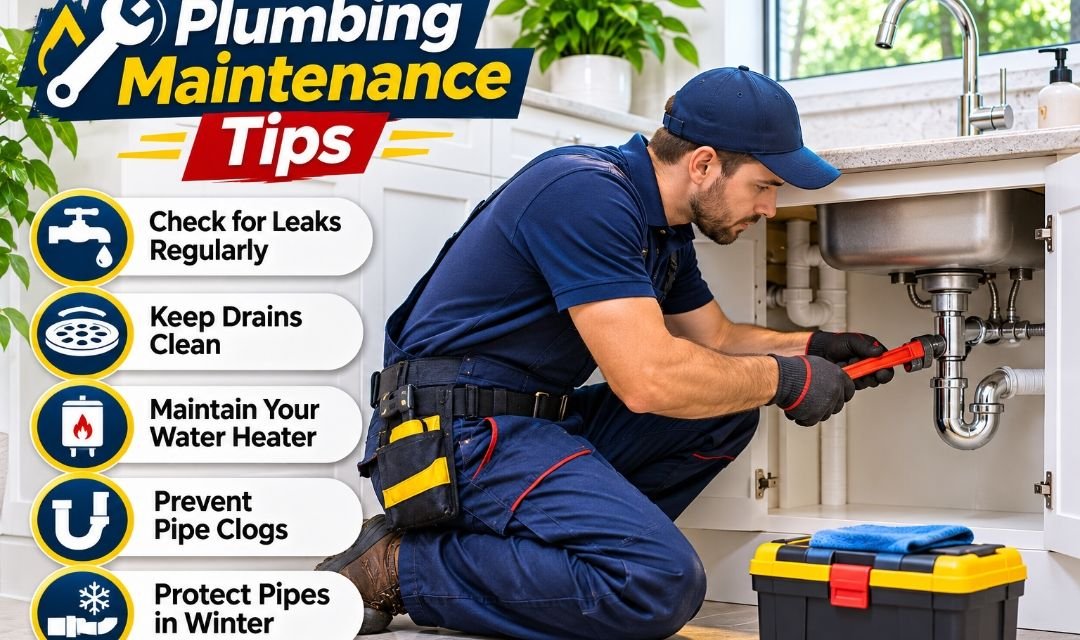
Plumbing maintenance tips can help homeowners prevent water leaks, clogged drains, damaged pipes, and unexpected repair expenses. Your home’s plumbing system supplies clean water to kitchens, bathrooms, and appliances while carrying wastewater away safely. Regular maintenance helps keep these systems working properly and reduces the risk of expensive water damage. Understanding the basics of plumbing can also help you recognize warning signs and know when to contact a qualified professional.
Quick Overview of Plumbing Maintenance Tips
| Category | Details |
|---|---|
| Main topic | Plumbing Maintenance Tips |
| Main purpose | Prevent leaks, blockages, and water damage |
| Important areas | Kitchen, bathroom, laundry, water heater |
| Common problems | Leaky faucets, clogged drains, running toilets |
| Basic maintenance | Leak inspections, drain care, fixture cleaning |
| Inspection frequency | Monthly visual checks and periodic professional inspections |
| Water pressure | Follow local plumbing and appliance requirements |
| Drain maintenance | Prevent grease, hair, and debris buildup |
| Water heater maintenance | Follow manufacturer instructions |
| Emergency preparation | Know the main water shutoff location |
| Professional assistance | Required for complex or unsafe plumbing work |
| Main goal | Improve plumbing reliability and reduce repair costs |
A home’s plumbing system works every day, often without receiving much attention.
Water flows through pipes whenever you wash dishes, take a shower, or use the washing machine.
However, small plumbing problems can develop gradually.
A dripping faucet may waste water. A leaking connection can damage cabinets. A blocked drain may eventually cause wastewater to overflow.
The good news is that many plumbing problems can be reduced through simple preventive habits.
Regular inspections, careful drain use, and prompt attention to warning signs can help protect your home.
This guide explains 25 practical plumbing maintenance tips, room-by-room checklists, common plumbing problems, maintenance schedules, and ways to avoid costly repairs.
What Is Plumbing Maintenance?
Plumbing maintenance involves inspecting, cleaning, and caring for the water supply and drainage systems in a building.
It includes checking visible pipes, faucets, toilets, drains, valves, and water-using appliances.
Some maintenance activities are simple enough for homeowners.
For example, you can inspect under sinks for visible leaks or clean removable drain strainers.
Other tasks require professional knowledge.
Repairs involving concealed pipes, water heaters, sewer lines, and major plumbing connections should be handled by qualified professionals.
The purpose of maintenance is to identify problems early and keep plumbing systems functioning safely.
Why Regular Plumbing Maintenance Is Important
Regular plumbing maintenance offers several benefits.
It can help reduce unnecessary water waste.
It may prevent damage to walls, floors, and cabinets.
It can improve the reliability of plumbing fixtures.
Maintenance also helps homeowners recognize problems before they become emergencies.
For example, a small leak beneath a sink may be easier to address before it damages surrounding wood.
However, maintenance cannot prevent every plumbing failure.
Pipes and fittings can deteriorate over time.
Unexpected blockages and equipment failures may still occur.
The goal is to reduce avoidable problems and respond quickly when something goes wrong.
25 Essential Plumbing Maintenance Tips for Homeowners
1. Check for Water Leaks Regularly
Water leaks are among the most common household plumbing problems.
Inspect visible pipes and connections.
Look beneath kitchen and bathroom sinks.
Check around toilets and water-using appliances.
Watch for damp patches, stains, or unusual odors.
However, not every leak is visible.
A sudden increase in water consumption may also indicate a hidden problem.
If you suspect a concealed leak, contact a qualified plumber.
2. Fix Dripping Faucets Promptly
A dripping faucet can waste water over time.
Common causes include worn seals, damaged cartridges, or loose components.
However, faucet designs vary.
Some repairs involve replacing a simple part.
Others require specialized components.
Turn off the appropriate water supply before attempting any suitable minor repair.
If you are unsure about the fixture, use a professional plumber.
3. Avoid Pouring Grease Down Kitchen Drains
Cooking grease and oil can contribute to drain blockages.
Grease may cool and accumulate inside pipes.
Food particles can become trapped in the buildup.
Instead of pouring grease into the sink, allow it to cool and dispose of it according to local waste guidelines.
Use a sink strainer to collect food scraps.
These simple habits can help reduce kitchen drain problems.
4. Use Drain Strainers
Drain strainers can catch hair, food particles, and other debris.
They are especially useful in showers, bathtubs, and kitchen sinks.
Clean strainers regularly.
However, do not force debris into the drain while cleaning.
A simple strainer can reduce the amount of material entering the drainage system.
This may help prevent some blockages.
5. Never Flush Unsuitable Items
Toilets are designed to handle human waste and appropriate toilet paper.
Items such as wipes, cotton products, sanitary products, and paper towels can cause blockages.
Even products labeled flushable may create problems in some plumbing systems.
Dispose of unsuitable items in the trash.
Teach household members proper toilet use.
This can help reduce plumbing emergencies.
6. Check Toilets for Continuous Running
A running toilet may waste significant amounts of water.
Possible causes include a faulty fill valve, worn flapper, or incorrect adjustment.
Listen for water running after flushing.
Check whether the tank refills normally.
However, toilet mechanisms vary.
If you cannot identify the problem safely, contact a plumber.
Repairing a running toilet can help reduce unnecessary water use.
7. Monitor Household Water Pressure
Water pressure affects plumbing fixtures and appliances.
Excessively high pressure may place additional stress on some plumbing components.
Low pressure may indicate supply problems, blockages, or leaks.
However, suitable pressure ranges depend on local plumbing standards and equipment specifications.
Do not adjust pressure-regulating equipment without understanding the system.
A qualified plumber can measure pressure and recommend appropriate changes.
8. Know Where Your Main Water Shutoff Valve Is Located
Knowing how to stop the water supply is important during plumbing emergencies.
Locate the main water shutoff valve.
Make sure responsible household members know its location.
However, do not force a stuck or damaged valve.
A valve that has not been operated for years may require professional servicing.
Being familiar with the shutoff location can help reduce damage during a major leak.
9. Inspect Pipes Beneath Sinks
Under-sink plumbing connections can develop leaks.
Check for water droplets, damp cabinet surfaces, and stains.
Look for corrosion or visible damage.
However, avoid disturbing connections unnecessarily.
Some older fittings may become damaged when moved.
If you find a leak, arrange suitable repair before moisture spreads.
10. Maintain Your Water Heater
Water heaters require maintenance according to their design and manufacturer instructions.
Some systems need periodic inspection of safety devices and other components.
Sediment may accumulate in certain storage water heaters.
However, flushing procedures and maintenance requirements vary.
Water heaters can contain dangerously hot water, electricity, or gas.
Do not attempt unfamiliar maintenance.
Use a qualified technician when appropriate.
11. Check Washing Machine Hoses
Washing machines use water supply connections that can deteriorate.
Inspect accessible hoses for visible cracks, swelling, or leaks.
Check for dampness around connections.
However, do not pull or twist hoses unnecessarily.
Follow the appliance manufacturer’s replacement recommendations.
A damaged supply hose can cause significant water damage if it fails.
12. Inspect Dishwasher Connections
Dishwashers have water supply and drainage connections.
Leaks may occur around hoses, fittings, or appliance components.
Check for water beneath or around the dishwasher when safely accessible.
However, avoid removing electrical panels or disturbing concealed connections.
A qualified technician or plumber should investigate suspected internal leaks.
13. Prevent Hair Buildup in Bathroom Drains
Hair can collect in shower and bathtub drains.
Over time, it may contribute to blockages.
Use a suitable drain cover.
Remove collected hair regularly.
However, avoid pushing debris farther into the drain.
If water drains slowly despite basic cleaning, professional assessment may be necessary.
14. Avoid Overusing Chemical Drain Cleaners
Some chemical drain cleaners contain corrosive substances.
Incorrect use can cause injuries and may damage certain plumbing components.
Never mix drain-cleaning chemicals.
Do not combine them with bleach or other household cleaners.
If a drain is blocked, a suitable mechanical method may be preferable.
However, persistent or severe blockages should be handled by a professional.
15. Watch for Slow Drains
A slow drain may indicate partial blockage.
Common causes include hair, grease, soap residue, or other debris.
However, several slow drains may suggest a larger drainage problem.
Do not ignore repeated blockages.
A plumber can determine whether the issue is local or affects a main drain.
Early attention may prevent wastewater backups.
16. Check Outdoor Faucets
Outdoor faucets are exposed to weather and temperature changes.
Inspect them for dripping, corrosion, or visible damage.
Check connections to garden hoses.
In cold climates, outdoor plumbing may require winter protection.
However, the correct method depends on the plumbing design.
Follow local guidance and product instructions.
17. Protect Pipes From Freezing
In regions with freezing temperatures, exposed pipes may be vulnerable to freezing.
Frozen water can expand and damage plumbing components.
Appropriate insulation and winter preparation may reduce the risk.
However, not every insulation product is suitable for every installation.
Never use open flames to thaw frozen pipes.
If a pipe is frozen or damaged, seek professional help.
18. Check for Hidden Moisture Damage
Hidden leaks can damage building materials.
Look for peeling paint, swollen cabinets, and damp patches.
Musty odors may also indicate moisture problems.
However, moisture can come from several sources.
Roof leaks, condensation, and plumbing failures may produce similar symptoms.
A professional investigation can help identify the cause.
19. Keep Plumbing Access Areas Clear
Plumbing valves and equipment should remain accessible.
Avoid blocking shutoff valves with heavy storage items.
Keep water heater service areas clear according to manufacturer requirements.
Do not cover important inspection openings.
Easy access can make maintenance and emergency repairs more practical.
20. Maintain Garbage Disposals Properly
Some kitchens have garbage disposal units.
These appliances require careful use.
Avoid placing unsuitable materials into the disposal.
Follow the manufacturer’s instructions.
Never place your hand inside a disposal.
Disconnect power appropriately before any authorized maintenance.
If the appliance becomes jammed or damaged, use a qualified technician when necessary.
21. Check Water Supply Lines for Corrosion
Some metal plumbing components may develop corrosion.
Visible rust, discoloration, or damaged fittings can indicate deterioration.
However, not every discoloration means a pipe is failing.
The condition should be evaluated based on material and installation.
A plumber can recommend whether repairs or replacement are necessary.
22. Monitor Your Water Bill
Unexpected increases in water use may indicate a leak.
Compare bills over time.
Consider changes in household activity.
If consumption increases without an obvious reason, investigate.
Some water meters can help identify possible continuous water use.
However, meter procedures vary by utility.
Contact your water provider or a plumber when necessary.
23. Check Plumbing Around Water Filters
Home water filters and treatment systems may have replaceable cartridges and seals.
Follow the manufacturer’s maintenance schedule.
Inspect accessible connections for leaks.
Replace filters as directed.
However, do not assume every filter removes all contaminants.
Choose systems appropriate for your water quality needs.
Improper maintenance may affect performance.
24. Schedule Professional Plumbing Inspections When Needed
Some plumbing problems are difficult to identify without specialized tools.
A qualified plumber can assess accessible pipework, fixtures, valves, and other components.
Older homes or properties with repeated leaks may benefit from more frequent professional attention.
However, inspection frequency depends on system age, condition, and local requirements.
Professional inspections can help identify risks before major failures occur.
25. Create a Plumbing Maintenance Schedule
A maintenance schedule helps homeowners remember important checks.
Inspect visible plumbing connections regularly.
Monitor drains and toilets.
Review appliance hoses.
Check for moisture.
Arrange professional service when required.
However, maintenance should remain practical.
Focus on activities that are appropriate for your plumbing system.
A simple routine can reduce the chance of overlooking developing problems.
Plumbing Maintenance Checklist
Use this interactive checklist for routine visual inspections around your home.
Home Plumbing Checklist
0 of 10 completed
Inspect under kitchen and bathroom sinks
Look for water droplets, stains, or damp cabinet surfaces
Check faucets for dripping
Watch for leaks around spouts, handles, and bases
Listen for running toilets
Check whether toilets stop refilling after flushing
Clean removable drain strainers
Remove collected hair and food debris
Inspect washing machine hoses
Look for cracks, swelling, or moisture
Check around the dishwasher
Watch for water beneath or beside the appliance
Locate the main shutoff valve
Make sure household members know where it is
Inspect visible pipes
Look for corrosion, damage, or moisture
Check outdoor faucets
Watch for dripping and damaged fittings
Review unusual water consumption
Compare usage with normal household patterns
These are homeowner-friendly visual checks. Repairs involving gas, electricity, concealed plumbing, or unsafe conditions require qualified professionals.
Kitchen Plumbing Maintenance Tips
Kitchen plumbing receives frequent use.
Food preparation, dishwashing, and cleaning all depend on reliable water supply and drainage.
Use sink strainers.
Avoid pouring grease into drains.
Inspect under-sink connections.
Check dishwasher hoses.
Keep garbage disposals clean according to manufacturer instructions.
However, avoid placing inappropriate materials into drainage systems.
A few simple habits can reduce common kitchen plumbing problems.
Bathroom Plumbing Maintenance Tips
Bathrooms contain several plumbing fixtures.
These include sinks, toilets, showers, and bathtubs.
Use drain strainers to reduce hair buildup.
Watch for slow drainage.
Check faucets for leaks.
Listen for running toilets.
Inspect visible connections.
However, moisture around bathrooms may also come from damaged waterproofing or condensation.
A qualified professional can help identify persistent problems.
Laundry Room Plumbing Maintenance Tips
Laundry areas often contain washing machines and utility sinks.
Inspect hoses regularly.
Watch for water beneath appliances.
Keep floor drains clear where present.
However, do not disturb electrical connections.
A leaking washing machine hose can release a large amount of water.
Prompt attention to visible deterioration is important.
Plumbing Maintenance for Older Homes
Older homes may contain plumbing materials that require special attention.
Some pipes may have corrosion or deterioration.
Connections may also be outdated.
However, age alone does not mean every pipe needs replacement.
A qualified plumber can evaluate the condition of the system.
Older homes may also have materials that require specific safety precautions.
Avoid disturbing unknown plumbing components without professional advice.
Common Plumbing Problems and Their Warning Signs
| Plumbing problem | Common warning signs | Recommended response |
|---|---|---|
| Leaky faucet | Persistent dripping | Arrange suitable repair |
| Clogged drain | Slow drainage, standing water | Remove accessible debris or call a plumber |
| Running toilet | Continuous refilling sounds | Inspect or repair the toilet mechanism |
| Hidden leak | Damp walls, unexpected water use | Professional leak investigation |
| Water heater problem | Unusual noises, leaks, unreliable hot water | Qualified technician assessment |
| Damaged supply hose | Cracks, swelling, moisture | Replace with a suitable approved component |
| Sewer blockage | Multiple backups, wastewater odors | Professional drainage service |
| High water pressure | Repeated fixture or connection problems | Professional pressure measurement |
How Much Does Plumbing Maintenance Cost?
Plumbing costs vary by location, labor rates, equipment, and repair complexity.
Routine visual inspections may involve little expense.
However, professional repairs and equipment replacement can cost more.
Illustrative Plumbing Maintenance Costs
| Service | Example cost range (USD) |
|---|---|
| Minor faucet repair | $75–$200 |
| Toilet component repair | $100–$300 |
| Professional drain clearing | $100–$350 |
| Supply hose replacement | $75–$200 |
| Leak investigation | $150–$500+ |
| Water heater service | $100–$300 |
| General plumbing inspection | $100–$300 |
These are broad illustrative planning ranges, not verified current market quotations. Actual prices may fall outside these amounts and vary significantly by location and job requirements.
How to Prevent Expensive Plumbing Repairs
Preventive habits can reduce avoidable plumbing problems.
Inspect visible connections.
Address dripping faucets.
Avoid putting grease and unsuitable items into drains.
Maintain water-using appliances.
Monitor unusual water consumption.
Keep shutoff valves accessible.
However, do not delay professional repairs when warning signs appear.
A small problem can become more expensive if water damage spreads.
Plumbing Maintenance During Winter
Cold weather can affect exposed plumbing.
Pipes in unheated areas may be vulnerable to freezing.
Follow local winter preparation guidance.
Use suitable insulation where required.
Disconnect outdoor hoses when appropriate.
However, do not attempt unsafe thawing methods.
If a pipe freezes or bursts, seek professional assistance.
Plumbing Maintenance During Summer
Summer can increase household water use.
Outdoor watering, washing, and other activities may place additional demand on plumbing systems.
Check outdoor faucets and hoses.
Watch for leaks.
Maintain irrigation equipment.
However, avoid unnecessary water waste.
Efficient watering and prompt leak repairs can help conserve water.
Plumbing Maintenance for Water Conservation
Water conservation is an important part of responsible home maintenance.
Fix dripping faucets.
Repair running toilets.
Use water-efficient fixtures where appropriate.
Avoid unnecessary water use.
Monitor consumption.
However, choose products that meet applicable plumbing standards.
A well-maintained plumbing system can support efficient water use without sacrificing comfort.
Common Plumbing Maintenance Mistakes to Avoid
One common mistake is ignoring small leaks.
Another is using unsuitable chemical drain cleaners.
Some homeowners also attempt complicated repairs without proper knowledge.
Incorrect repairs may cause additional damage.
Another mistake is overlooking appliance hoses.
Finally, avoid ignoring unusual sounds, odors, or changes in water pressure.
These symptoms may indicate developing plumbing problems.
Final Thoughts
Plumbing maintenance tips can help homeowners protect their property, conserve water, and reduce unexpected repair expenses.
Your plumbing system plays an essential role in everyday life.
However, pipes, fittings, drains, and appliances require attention over time.
Regular visual inspections can help identify leaks and other warning signs.
Simple habits such as using drain strainers, avoiding grease disposal, and monitoring water consumption can reduce common problems.
It is also important to know the location of your main water shutoff valve.
Choose suitable maintenance methods for your plumbing system.
Avoid unsafe repairs.
Most importantly, contact qualified professionals when problems involve concealed pipes, major leaks, gas, electricity, or specialized equipment.
Frequently Asked Questions About Plumbing Maintenance Tips
1. What are the best plumbing maintenance tips?
Check for leaks, keep drains clear, inspect appliance hoses, maintain fixtures, and know where the main water shutoff valve is located.
2. How often should plumbing be inspected?
Monthly visual checks are useful, while professional inspections depend on the system’s age and condition.
3. What causes plumbing leaks?
Worn seals, damaged fittings, corrosion, excessive pressure, and aging materials can contribute to leaks.
4. How can I prevent clogged drains?
Use strainers and avoid putting grease, hair, wipes, and unsuitable materials into drains.
5. Why is my faucet dripping?
Possible causes include worn seals, damaged cartridges, or other fixture problems.
6. What causes a running toilet?
A faulty flapper, fill valve, or incorrect adjustment may cause continuous running.
7. How can I detect hidden plumbing leaks?
Look for damp areas, unusual water consumption, and unexplained moisture.
8. Is high water pressure bad for plumbing?
Excessively high pressure can stress some plumbing components.
9. Should I use chemical drain cleaners?
Use caution. Some products are hazardous and may be unsuitable for certain plumbing systems.
10. How do I maintain my water heater?
Follow the manufacturer’s instructions and arrange qualified servicing when necessary.
11. What should I do during a major plumbing leak?
Keep people safe, shut off the water supply if safe, and contact a qualified plumber.
12. Can plumbing leaks damage walls?
Yes. Persistent moisture can damage walls, ceilings, floors, and cabinets.
13. What causes low water pressure?
Possible causes include supply issues, blockages, leaks, or fixture problems.
14. How can I maintain kitchen plumbing?
Avoid grease disposal, use strainers, inspect connections, and maintain appliances.
15. How can I maintain bathroom plumbing?
Clean strainers, monitor toilets, check faucets, and watch for moisture.
16. Are plumbing inspections necessary for new homes?
New plumbing systems can also develop problems, so appropriate checks remain useful.
17. How can I prevent frozen pipes?
Follow local winterization guidance and protect vulnerable pipes appropriately.
18. What are signs of a blocked sewer line?
Multiple drain backups, wastewater odors, and unusual drainage behavior may indicate a problem.
19. Can plumbing maintenance save money?
It can reduce unnecessary water waste and help identify problems before damage spreads.
20. How long do plumbing pipes last?
Service life varies by material, water conditions, installation, and maintenance.
21. Should I replace old plumbing pipes?
Replacement depends on condition, material, and professional assessment.
22. How do I know if my washing machine hose is damaged?
Look for cracks, swelling, corrosion, and visible leaks.
23. What plumbing maintenance should I do monthly?
Check visible connections, faucets, toilets, drains, and appliance areas.
24. When should I call a plumber?
Call a plumber for persistent leaks, major blockages, unsafe conditions, or repairs beyond your knowledge.
25. What is the most important plumbing maintenance tip?
Identify and address leaks early before they cause extensive water damage.
With a practical maintenance routine and prompt attention to problems, you can help keep your home’s plumbing system reliable for years.
For more home improvement guides, repair and maintenance advice, renovation ideas, and practical household tips, visit Picanto Magazine