
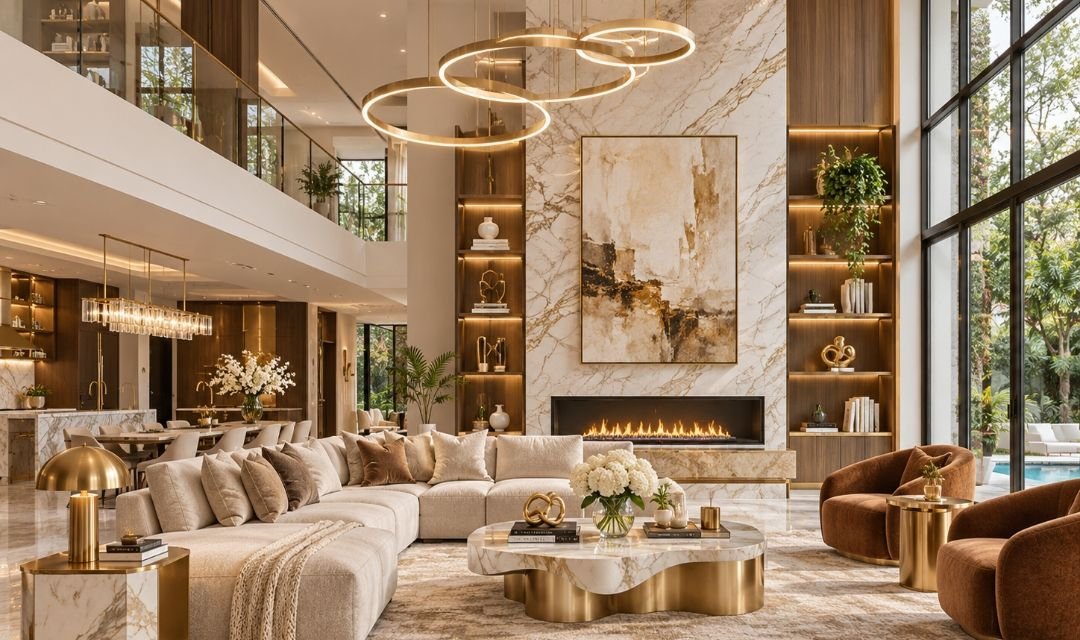
Luxury home interior design is about creating beautiful, comfortable, and sophisticated living spaces that combine elegant furniture, high-quality materials, thoughtful lighting, and personal style. A luxurious home does not always require expensive decorations or oversized rooms. Instead, it focuses on balance, comfort, craftsmanship, and carefully selected details. Through thoughtful interior design, homeowners can transform ordinary spaces into welcoming interiors that feel stylish, refined, and practical.
Quick Overview of Luxury Home Interior Design
| Category | Details |
|---|---|
| Main topic | Luxury Home Interior Design |
| Main purpose | Create elegant, comfortable, and refined living spaces |
| Popular styles | Modern luxury, contemporary, classic, minimalist luxury |
| Common colors | Cream, beige, white, charcoal, navy, emerald green |
| Accent finishes | Brass, bronze, brushed gold, matte black |
| Popular materials | Marble, natural wood, glass, stone, velvet, linen |
| Furniture style | Comfortable, well-proportioned, high-quality |
| Lighting | Chandeliers, pendant lights, wall sconces, layered lighting |
| Living room features | Statement sofas, large rugs, artwork |
| Bedroom features | Upholstered headboards, luxury bedding, soft lighting |
| Kitchen features | Custom cabinetry, stone countertops, organized storage |
| Bathroom features | Walk-in showers, elegant vanities, quality fixtures |
| Design goal | Combine beauty, comfort, durability, and functionality |
Luxury interior design has changed over the years. In the past, many people connected luxury with expensive furniture, heavy curtains, decorative ceilings, and shiny finishes.
Today, luxury can also mean simplicity, natural materials, comfortable furniture, and carefully planned spaces.
A modern luxury home may include a neutral living room, a beautifully designed kitchen, a peaceful bedroom, and elegant bathrooms.
However, expensive materials alone do not guarantee a beautiful result.
Good proportions, practical layouts, suitable lighting, and attention to detail are equally important.
In this guide, you will discover 30 luxury home interior design ideas, elegant color combinations, room-by-room inspiration, affordable upgrades, and practical decorating advice.
What Is Luxury Home Interior Design?
Luxury home interior design is an approach that focuses on quality, comfort, beauty, and carefully planned details.
It often includes durable materials, attractive furniture, custom features, and coordinated finishes.
However, luxury is not defined by price alone.
A well-designed room with comfortable seating, beautiful lighting, and thoughtful storage can feel more luxurious than an expensive room filled with unnecessary decorations.
Luxury interiors often share several characteristics.
They use balanced layouts, high-quality finishes, coordinated colors, and carefully selected accessories.
They also consider everyday living.
For example, a luxury kitchen should not only look attractive. It should provide enough storage, comfortable work surfaces, and practical appliance placement.
The best luxury home combines appearance with functionality.
Why Luxury Interior Design Is Popular
Many homeowners want their homes to feel comfortable, elegant, and personal.
Luxury design offers opportunities to improve both appearance and everyday living.
Thoughtful furniture arrangements can make rooms more welcoming.
High-quality materials may provide better durability when properly selected and maintained.
Layered lighting can create different atmospheres.
Custom storage can improve organization.
Luxury design can also help homeowners create interiors that reflect their preferences.
However, expensive renovation work should be planned carefully.
A beautiful home should remain practical, safe, and affordable to maintain.
30 Luxury Home Interior Design Ideas
1. Choose an Elegant Neutral Color Palette
Neutral colors are a popular foundation for luxury interiors.
Cream, beige, warm white, taupe, and soft gray can create a refined appearance.
These shades also work well with natural wood, stone, and metal accents.
For example, cream walls can complement a beige sofa and walnut coffee table.
A warm gray room may look attractive with brushed brass lighting.
However, neutral colors do not have to feel boring.
Different textures and finishes can create visual interest.
Choose colors that complement your furniture and natural lighting.
2. Add Natural Marble Features
Marble is often associated with elegant interiors.
It can be used for countertops, decorative walls, and selected furniture surfaces.
White marble with subtle veining creates a classic appearance.
Darker marble can create a dramatic focal point.
However, natural marble requires suitable maintenance.
Some varieties can stain or etch when exposed to certain substances.
Engineered stone and porcelain may provide alternatives depending on the application.
Choose materials based on appearance, durability, maintenance, and budget.
3. Invest in a Comfortable Statement Sofa
A sofa is often the main feature of a luxury living room.
Choose a design that fits the room properly.
Large sectional sofas may suit spacious family rooms.
Curved sofas can introduce softer shapes.
Neutral upholstery provides flexibility when decorating.
However, comfort should remain the priority.
Consider seat depth, support, fabric durability, and cleaning requirements.
A well-proportioned sofa can make a living room feel elegant without excessive decoration.
4. Install a Beautiful Chandelier
A chandelier can become a striking focal point.
Modern chandeliers often feature simple shapes and carefully arranged lighting elements.
Traditional designs may include decorative glass or crystal details.
Choose a fixture that suits the room’s dimensions.
A large chandelier may work well above a dining table or in a spacious entrance.
However, ceiling height and installation requirements matter.
Heavy fixtures need suitable structural support.
Use qualified professionals for electrical installation.
5. Use Natural Wood for Warmth
Natural wood can make luxury interiors feel welcoming.
Walnut, oak, and other wood finishes are popular for furniture and decorative panels.
A wooden dining table can create a beautiful gathering space.
Wooden wall panels may add texture.
Built-in cabinetry can provide practical storage.
However, wood requires appropriate care.
Choose finishes suitable for moisture exposure and everyday use.
Combining wood with stone and metal can create a balanced appearance.
6. Create a Luxury Living Room Layout
A luxury living room should support comfortable conversation and relaxation.
Start by identifying the main focal point.
This may be a fireplace, artwork, large window, or television.
Arrange seating around the main activities.
Use a suitable area rug to connect the furniture.
Add practical side tables.
Keep walking paths clear.
Avoid filling the room with unnecessary furniture.
A spacious appearance comes from thoughtful planning rather than simply having a large room.
7. Add Statement Wall Art
Artwork can give luxury interiors personality.
Large paintings can become focal points.
Abstract art often works well in contemporary spaces.
Photography can create a modern appearance.
Traditional artwork may suit classic interiors.
However, artwork does not need to be expensive.
Choose pieces that you genuinely enjoy.
Proper framing and placement can make a noticeable difference.
Avoid overcrowding walls with unrelated decorations.
8. Use Layered Lighting
Layered lighting combines different light sources.
General lighting provides overall brightness.
Task lighting supports activities such as reading and cooking.
Accent lighting highlights artwork or architectural features.
For example, a living room may include ceiling lights, floor lamps, and wall sconces.
Dimmable lighting can provide flexibility when compatible with the electrical system.
However, lighting should remain practical.
Choose suitable brightness and color temperature for each room.
9. Design a Luxury Master Bedroom
A luxury bedroom should feel peaceful and comfortable.
Choose a bed that fits the space.
An upholstered headboard can create a soft focal point.
Use comfortable bedding.
Add practical bedside tables.
Layered lighting can support reading and relaxation.
Choose curtains that provide privacy and suitable light control.
However, avoid overcrowding the bedroom with decorative furniture.
The best luxury bedroom supports rest while maintaining an elegant appearance.
10. Add Floor-to-Ceiling Curtains
Long curtains can create a refined appearance.
They can also make windows feel more prominent.
Choose fabrics that complement the room’s colors.
Linen provides a relaxed look.
Velvet can create a richer appearance.
Sheer curtains allow daylight while providing some privacy.
However, curtains should be measured carefully.
Choose suitable hardware and installation methods.
The best window coverings balance appearance, privacy, light control, and maintenance.
11. Create an Elegant Dining Room
A luxury dining room should feel welcoming and comfortable.
Choose a table that fits the space.
Natural wood, glass, and stone-look surfaces are popular options.
Dining chairs should provide suitable support.
A statement light fixture can create a focal point.
A sideboard may provide storage.
However, leave enough room for movement.
A beautiful dining room should make everyday meals and gatherings enjoyable.
12. Upgrade to a Modern Luxury Kitchen
Luxury kitchens often combine attractive finishes with practical layouts.
Custom or well-designed modular cabinets can provide organized storage.
Stone or engineered countertops may create a refined appearance.
Under-cabinet lighting improves visibility.
A kitchen island can provide additional preparation space when the room allows.
However, the kitchen should remain functional.
Choose appliances that meet your cooking needs.
Consider ventilation, cleaning, and safe work areas.
13. Add a Kitchen Island
A kitchen island can become a useful central feature.
It may provide additional preparation space.
Some islands include storage drawers.
Others offer seating.
However, kitchen islands are not suitable for every layout.
A large island can restrict movement in a compact kitchen.
Measure the available space carefully.
Consider appliance doors, cabinet access, and walking paths.
A practical island should improve the kitchen rather than overcrowd it.
14. Design a Spa-Inspired Bathroom
A spa-inspired bathroom can create a relaxing atmosphere.
Neutral tiles provide a calm background.
A walk-in shower may create a streamlined appearance.
A freestanding bathtub can become a focal point when space allows.
Soft lighting can add comfort.
However, safety and maintenance are essential.
Choose slip-resistant flooring suitable for wet areas.
Proper waterproofing and ventilation are important.
Major plumbing changes should be completed by qualified professionals.
15. Choose Elegant Bathroom Fixtures
Bathroom fixtures influence the appearance of the space.
Brushed nickel, chrome, matte black, and brushed brass are common finishes.
Choose a coordinated style.
However, appearance should not be the only consideration.
Check durability, water efficiency, and maintenance requirements.
A beautiful fixture should also work reliably.
Coordinated finishes can create a refined bathroom without excessive decoration.
16. Use Decorative Wall Panels
Wall panels can add depth and texture.
Wooden slat panels create a modern appearance.
Traditional molding may suit classic luxury interiors.
Textured panels can become accent features.
However, avoid using decorative panels on every wall.
Choose one or two suitable areas.
Consider cleaning and maintenance.
Panels should be installed according to the material’s requirements.
A carefully selected feature wall can make a room feel more sophisticated.
17. Add Custom Built-In Storage
Built-in storage can improve both appearance and organization.
Floor-to-ceiling wardrobes provide clothing storage.
Custom media cabinets can organize electronic equipment.
Built-in bookshelves may create attractive living room features.
However, custom furniture can be expensive.
Compare different materials and construction methods.
Choose designs that remain accessible and practical.
Good storage helps luxury interiors stay organized.
18. Create a Beautiful Entrance Hall
The entrance creates the first impression of a home.
A console table can provide a place for small belongings.
A mirror may reflect light.
A decorative light fixture can create a welcoming atmosphere.
A suitable rug can add texture.
However, keep walking paths clear.
Avoid placing oversized furniture in narrow entrances.
An elegant entryway should feel organized and practical.
19. Use Large Decorative Mirrors
Mirrors can make interiors feel brighter.
A large mirror may become a focal point in a hallway.
A decorative mirror can complement a dining room.
Mirrored wardrobe doors may be useful in bedrooms.
However, placement matters.
Avoid reflections that create uncomfortable glare.
Choose frames that match the room’s style.
Secure heavy mirrors properly.
20. Add Velvet and Textured Fabrics
Soft fabrics can make luxury interiors feel comfortable.
Velvet upholstery creates a rich appearance.
Linen curtains provide a relaxed elegance.
Woven rugs add texture.
Cotton and wool blends can create comfortable seating areas.
However, fabric selection should consider maintenance.
Some materials require special cleaning.
Choose upholstery suitable for children, pets, and everyday use.
Texture can create luxury without excessive decoration.
21. Create a Luxury Home Office
A luxury home office should combine comfort and productivity.
Choose a desk that fits the room.
A supportive chair is essential for regular work.
Built-in shelves can organize books and supplies.
Good lighting supports daily tasks.
A coordinated color palette can create a professional appearance.
However, avoid purchasing oversized furniture that restricts movement.
A comfortable workspace is more valuable than an impressive but impractical design.
22. Introduce Smart Home Technology
Smart technology can improve convenience.
Connected lighting may allow different room settings.
Smart thermostats can help manage heating and cooling where compatible.
Motorized window coverings can provide convenience.
However, not every smart product is necessary.
Choose devices that solve practical problems.
Check compatibility and maintenance requirements.
Keep software updated and use strong passwords.
Privacy and security should remain important considerations.
23. Use High-Quality Area Rugs
An area rug can connect furniture and add comfort.
Large rugs often work well in spacious living rooms.
Neutral designs provide flexibility.
Patterned rugs can add personality.
However, size matters.
Choose a rug that suits the furniture arrangement.
Consider cleaning requirements and durability.
A suitable rug can make a room feel complete without requiring expensive flooring changes.
24. Add Brass and Bronze Accents
Metal accents can create a refined appearance.
Brushed brass lighting may complement warm neutral interiors.
Bronze cabinet handles can add subtle detail.
Matte black fixtures provide contrast.
However, avoid combining too many unrelated finishes.
Choose one main metal finish and use others carefully.
A few coordinated accents often create a stronger result than excessive shiny decoration.
25. Create a Luxury Outdoor Living Area
Luxury design can extend beyond indoor rooms.
A covered patio may provide comfortable seating.
Outdoor lighting can create a welcoming evening atmosphere.
Weather-resistant furniture is important.
Plants can add natural texture.
However, materials must suit local weather conditions.
Choose furniture designed for outdoor use.
Consider drainage, shade, and maintenance.
An attractive outdoor area can provide additional space for relaxing and entertaining.
26. Add Indoor Greenery
Plants can soften luxury interiors.
A large indoor plant may work well beside a sofa.
Smaller plants can decorate shelves.
Natural greenery adds color to neutral spaces.
However, choose plants based on available light.
Check whether they are safe for pets and children.
Avoid overcrowding rooms.
A few carefully selected plants can make an elegant home feel more welcoming.
27. Use Elegant Ceiling Designs
Ceiling details can influence a room’s appearance.
Simple recessed lighting may suit contemporary interiors.
Decorative molding can complement classic spaces.
A carefully designed ceiling feature may create visual interest.
However, elaborate ceilings are not always necessary.
Consider room height, structural requirements, and maintenance.
A clean, well-finished ceiling can look elegant without excessive decoration.
28. Mix Modern and Classic Furniture
Luxury interiors do not need to follow one style completely.
A modern sofa can work with a traditional wooden side table.
Classic artwork may complement contemporary walls.
A vintage mirror can add character.
However, choose a consistent color palette.
Avoid combining too many unrelated furniture styles.
A thoughtful mix can create a personal and sophisticated appearance.
29. Focus on Quality and Craftsmanship
Luxury design is often connected to careful construction and durable materials.
Look at furniture joints, upholstery, hardware, and finishes.
Choose materials suitable for their intended use.
However, expensive products are not automatically better.
Compare durability, comfort, warranties, and maintenance requirements.
Well-made secondhand furniture may also be a good choice.
The goal is to select items that remain useful and attractive over time.
30. Personalize Your Luxury Interior
The most beautiful luxury homes reflect the people living in them.
Display meaningful artwork.
Include favorite books.
Choose furniture that supports your lifestyle.
Use colors that make you comfortable.
However, avoid filling every surface with decorative objects.
A few meaningful accessories can create a stronger impression.
Luxury should feel personal rather than artificial.
Luxury Home Interior Design Ideas by Room
Different rooms require different design priorities.
| Room | Luxury design idea | Main benefit |
|---|---|---|
| Living room | Statement sofa and layered lighting | Comfort and elegance |
| Bedroom | Upholstered headboard and soft bedding | Relaxing atmosphere |
| Kitchen | Quality cabinetry and stone countertops | Beauty and functionality |
| Bathroom | Walk-in shower and elegant vanity | Comfort and convenience |
| Dining room | Statement lighting and coordinated furniture | Welcoming dining space |
| Home office | Comfortable chair and custom storage | Productivity and organization |
| Entryway | Console table, mirror, decorative lighting | Attractive first impression |
| Outdoor area | Weather-resistant seating and soft lighting | Comfortable relaxation |
Each room should have its own purpose while maintaining a consistent overall design.
Best Luxury Home Interior Design Color Combinations
Color combinations can create different luxury interior styles.
| Color combination | Suitable room | Overall appearance |
|---|---|---|
| Cream and brushed gold | Living room | Elegant and warm |
| White and walnut | Dining room | Natural and refined |
| Charcoal and beige | Bedroom | Modern and sophisticated |
| Navy blue and brass | Home office | Rich and professional |
| Emerald green and cream | Living room | Bold and luxurious |
| Warm gray and white | Kitchen | Clean and contemporary |
| Terracotta and beige | Family room | Cozy and earthy |
| Black and natural wood | Modern interiors | Dramatic and balanced |
Choose colors based on natural light, furniture, and personal preferences.
Modern Luxury vs. Classic Luxury Interior Design
Modern and classic luxury styles share an emphasis on quality, but they have different appearances.
| Feature | Modern luxury | Classic luxury |
|---|---|---|
| Furniture | Clean lines and simple shapes | Decorative details and traditional forms |
| Colors | Neutral and muted palettes | Rich and traditional combinations |
| Lighting | Contemporary pendants and integrated lights | Decorative chandeliers and wall fixtures |
| Materials | Glass, wood, stone, metal | Wood, marble, decorative fabrics |
| Wall decoration | Simple panels and large artwork | Molding and traditional artwork |
| Overall feeling | Streamlined and refined | Formal and timeless |
You can also combine elements from both styles.
The best choice depends on your home and personal preferences.
Luxury Home Interior Design on a Budget
Luxury interiors do not always require expensive renovations.
Small improvements can create a refined appearance.
Start by organizing your furniture.
Remove unnecessary clutter.
Choose a coordinated color palette.
Update lighting.
Replace worn cushion covers.
Add a suitable rug.
Consider refinishing existing furniture.
Choose a few attractive decorative accessories.
The key is to focus on details that improve the overall room.
Example $1,000 Luxury-Inspired Room Makeover Budget
| Improvement | Example budget |
|---|---|
| Paint and supplies | $180 |
| Lighting upgrades | $180 |
| Area rug | $200 |
| Curtains | $140 |
| Cushions and throws | $80 |
| Artwork and mirror | $120 |
| Contingency | $100 |
| Total | $1,000 |
These figures are illustrative, not current retail quotations. Actual costs depend on location, room size, materials, and installation requirements.
Luxury Interior Design for Small Homes
Small homes can still feel luxurious.
Choose furniture that fits the available space.
Use coordinated colors.
Avoid unnecessary decoration.
Select a few quality materials.
Mirrors may help reflect light.
Built-in storage can reduce clutter.
Layered lighting can create a comfortable atmosphere.
However, avoid oversized furniture that blocks movement.
A compact home with thoughtful details can feel more refined than a larger space with poor organization.
Luxury Bedroom Interior Design Ideas
A luxury bedroom should prioritize comfort.
Start with a suitable bed and supportive mattress.
Choose coordinated bedding.
Add bedside lighting.
Consider an upholstered headboard.
Use curtains that provide privacy.
A soft rug can add comfort.
Keep storage organized.
Avoid excessive decorative furniture.
The best luxury bedroom feels peaceful and personal.
Luxury Living Room Interior Design Ideas
A luxury living room should provide comfortable seating and attractive surroundings.
Choose a well-proportioned sofa.
Add a suitable coffee table.
Use a large area rug when appropriate.
Include layered lighting.
Display selected artwork.
Keep electronic equipment organized.
Natural materials can add warmth.
Avoid filling every corner.
A balanced layout helps the room feel elegant and welcoming.
Luxury Kitchen Interior Design Ideas
A luxury kitchen should combine attractive finishes with practical features.
Choose durable countertops.
Plan cabinets carefully.
Consider pull-out drawers.
Use suitable task lighting.
Select appliances based on your cooking needs.
Keep preparation areas organized.
However, avoid sacrificing functionality for decorative trends.
A beautiful kitchen should remain easy to clean and comfortable to use.
Luxury Bathroom Interior Design Ideas
Luxury bathrooms often use coordinated tiles, elegant fixtures, and practical storage.
A large mirror can reflect light.
A well-designed shower can improve comfort.
Soft lighting can create a relaxing atmosphere.
However, waterproofing and ventilation remain essential.
Choose safe flooring.
Use durable materials suitable for wet areas.
A luxury bathroom should combine beauty with reliability.
Luxury Home Interior Design Trends for 2026
Several design directions are relevant to luxury interiors in 2026.
Warm modern luxury combines clean furniture with natural materials.
Earthy color palettes can create inviting spaces.
Statement lighting remains an important decorative feature.
Curved furniture can introduce softer shapes.
Integrated storage helps maintain organized interiors.
Natural stone and wood continue to offer timeless visual appeal.
Smart home features can improve convenience when chosen carefully.
However, trends change over time.
Choose designs that remain practical and comfortable rather than following every fashionable idea.
Common Luxury Interior Design Mistakes
One common mistake is purchasing expensive furniture without measuring the room.
Oversized pieces can make even large spaces feel crowded.
Another mistake is using too many decorative finishes.
Excessive gold accents, marble patterns, and shiny surfaces can create visual clutter.
Poor lighting is another problem.
Some homeowners also prioritize appearance over comfort.
A beautiful chair is not useful if it is uncomfortable.
Another mistake is ignoring maintenance requirements.
Natural stone, delicate fabrics, and specialty finishes may require additional care.
Finally, avoid copying luxury interiors without considering your own lifestyle.
The best design should work for the people who live in the home.
How to Plan a Luxury Home Interior Design Project
Start by identifying your goals.
Decide which rooms need improvement.
Measure each space.
Choose a general design style.
Create a coordinated color palette.
Set a realistic budget.
Select the main furniture pieces.
Plan lighting and storage.
Research materials carefully.
Consider maintenance and durability.
Consult qualified professionals for structural, electrical, and plumbing work.
Complete essential repairs before decorative improvements.
A clear plan can help create a beautiful result while reducing unnecessary expenses.
Frequently Asked Questions About Luxury Home Interior Design
1. What is luxury home interior design?
Luxury home interior design focuses on elegant materials, comfortable furniture, thoughtful layouts, and carefully selected details.
2. How can I make my home look luxurious?
Use coordinated colors, attractive lighting, comfortable furniture, quality finishes, and organized storage.
3. What colors are best for luxury interiors?
Cream, beige, white, charcoal, navy blue, emerald green, and warm earthy shades are popular choices.
4. Is luxury interior design expensive?
It can be, but affordable decorative changes can also create a refined appearance.
5. What furniture is best for luxury homes?
Comfortable, durable, and well-proportioned furniture often works best.
6. What is modern luxury interior design?
It combines clean lines, quality materials, sophisticated lighting, and practical layouts.
7. Can small homes have luxury interiors?
Yes. Thoughtful furniture selection, lighting, storage, and coordinated materials can create an elegant atmosphere.
8. What flooring works well in luxury homes?
Wood, suitable stone, porcelain tile, and quality engineered materials are common options.
9. Are chandeliers necessary for luxury interiors?
No. Well-designed pendant lights, floor lamps, and wall lighting can also create an elegant appearance.
10. What makes a bedroom feel luxurious?
Comfortable bedding, suitable lighting, attractive furniture, and practical storage can create a refined atmosphere.
11. What makes a living room look expensive?
Balanced furniture placement, coordinated finishes, suitable lighting, and carefully selected artwork can create a sophisticated appearance.
12. What is a luxury kitchen?
It is a kitchen that combines attractive materials, practical storage, suitable appliances, and a comfortable layout.
13. What is a spa-inspired bathroom?
It is a bathroom designed to create a calm atmosphere through coordinated materials, comfortable fixtures, and suitable lighting.
14. Is marble suitable for luxury interiors?
Yes. Marble can create an elegant appearance, but maintenance requirements should be considered.
15. Can I combine modern and classic luxury styles?
Yes. Coordinated colors and carefully selected furniture can help different styles work together.
16. What lighting is best for luxury homes?
Layered lighting that combines general, task, and accent lighting often works well.
17. Are indoor plants suitable for luxury interiors?
Yes. Plants can introduce natural color and texture.
18. How can I create a luxury home on a budget?
Start with painting, lighting, furniture arrangement, affordable artwork, and practical storage.
19. What is minimalist luxury design?
It combines simple furniture and uncluttered layouts with carefully selected materials and refined details.
20. What materials are common in luxury interiors?
Natural wood, stone, glass, metal, linen, and velvet are popular choices.
21. What luxury interior design ideas are relevant in 2026?
Warm modern luxury, natural materials, earthy colors, statement lighting, and integrated storage are useful design directions.
22. How can I make my dining room luxurious?
Choose a comfortable dining set, attractive lighting, coordinated colors, and practical storage.
23. Is smart technology important in luxury homes?
It can improve convenience, but it is not essential for an elegant interior.
24. What mistakes should I avoid in luxury interior design?
Avoid oversized furniture, excessive decoration, poor lighting, impractical layouts, and materials that are difficult to maintain.
25. What is the most important luxury interior design tip?
Focus on comfort, quality, balance, and personal style rather than price alone.
Final Thoughts
Luxury home interior design can transform ordinary living spaces into elegant, comfortable, and welcoming environments.
You do not need an enormous house or unlimited budget to create a sophisticated home.
Thoughtful furniture arrangements, coordinated colors, beautiful lighting, natural materials, and practical storage can make a noticeable difference.
The best luxury interiors balance appearance with everyday functionality.
Choose furniture that provides comfort.
Select materials that suit your lifestyle.
Use lighting to create different atmospheres.
Avoid unnecessary clutter.
Most importantly, design a home that reflects your personality.
Whether you prefer modern luxury, classic elegance, warm minimalism, or contemporary interiors, careful planning can help you create a beautiful home that remains stylish and comfortable for years.
For more home improvement guides, elegant decorating inspiration, modern interior design ideas, and affordable home makeover tips, visit Picanto Magazine.