
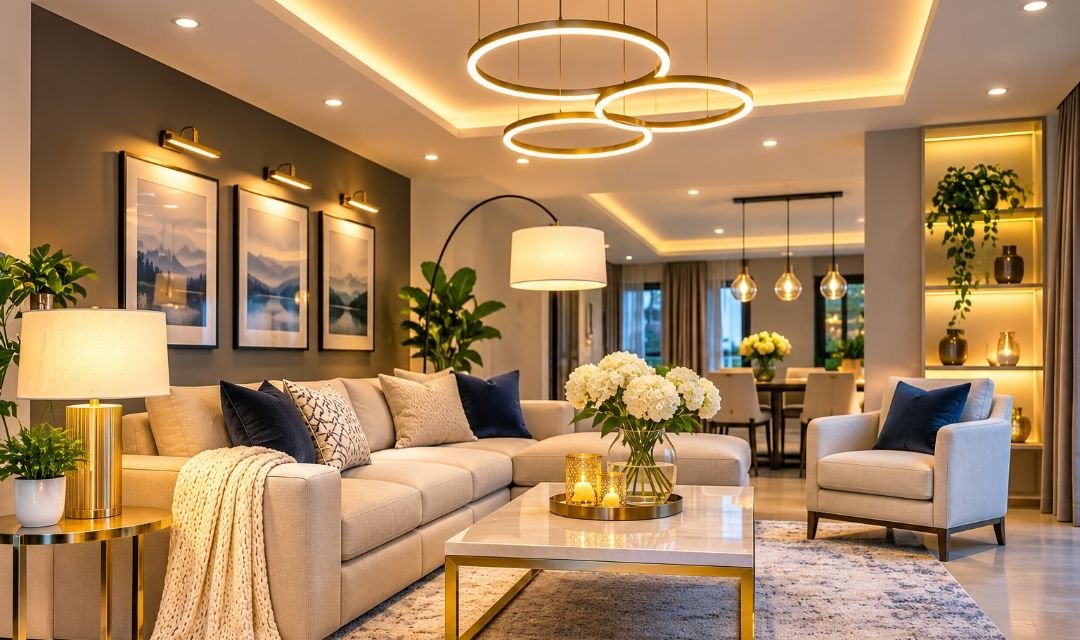
Home lighting ideas can completely change the way your house looks and feels. The right lighting can make a small room appear brighter, create a cozy atmosphere in your bedroom, improve visibility in the kitchen, and add elegance to your living room. Lighting is an important part of interior design because it combines decoration, comfort, and everyday functionality.
Quick Overview of Home Lighting Ideas
| Category | Details |
|---|---|
| Main topic | Home Lighting Ideas |
| Main purpose | Improve brightness, comfort, and appearance |
| Popular styles | Modern, minimalist, contemporary, industrial |
| Main lighting types | Ambient, task, accent, decorative |
| Popular fixtures | Chandeliers, pendant lights, wall sconces, floor lamps |
| Energy-efficient options | LED bulbs and compatible LED fixtures |
| Warm lighting | Often used in bedrooms and living rooms |
| Bright task lighting | Useful in kitchens, bathrooms, and offices |
| Smart lighting | App-controlled bulbs and compatible switches |
| Budget-friendly options | LED bulbs, table lamps, plug-in fixtures |
| Suitable rooms | Living room, bedroom, kitchen, bathroom, hallway |
| Main goal | Create a beautiful, comfortable, and practical home |
Lighting is one of the most overlooked parts of home decoration.
Many homeowners spend money on furniture, paint, flooring, and wall decorations but pay little attention to their lighting.
However, even a beautifully decorated room can feel uncomfortable when the lighting is poor.
A living room may look dull with only one ceiling bulb. A kitchen can become difficult to work in when countertops are poorly lit. A bedroom may feel too bright when harsh overhead lighting is the only option.
The good news is that improving your lighting does not always require major renovation work.
Simple changes such as replacing bulbs, adding floor lamps, installing suitable LED strips, or rearranging existing lights can make a noticeable difference.
In this guide, you will discover 30 practical home lighting ideas, room-by-room lighting inspiration, modern trends, affordable upgrades, and common mistakes to avoid.
Why Is Home Lighting Important?
Good lighting does much more than illuminate a room.
It helps people complete everyday activities comfortably.
Suitable kitchen lighting makes food preparation easier.
Bedroom lighting supports reading and relaxation.
Bathroom lighting improves visibility around mirrors.
Living room lighting creates a welcoming environment for family members and guests.
Lighting also influences how colors and materials appear.
For example, warm lighting may make beige walls feel cozy, while cooler lighting can create a different appearance.
A well-planned lighting design should consider brightness, placement, energy use, and personal comfort.
The best results usually come from combining different light sources rather than depending on one fixture.
Understanding the Four Main Types of Home Lighting
Before choosing fixtures, it helps to understand the main lighting categories.
| Lighting type | Purpose | Common examples |
|---|---|---|
| Ambient lighting | Provides general room illumination | Ceiling lights, recessed lights |
| Task lighting | Illuminates specific activities | Desk lamps, reading lights |
| Accent lighting | Highlights selected features | Picture lights, wall washers |
| Decorative lighting | Adds visual interest | Chandeliers, statement pendants |
Most rooms benefit from more than one lighting type.
For example, a living room may use ceiling lighting, a reading lamp, and accent lighting near artwork.
This combination is often called layered lighting.
30 Home Lighting Ideas for Every Room
1. Use Layered Lighting in Your Living Room
Layered lighting is one of the most effective ways to improve a living room.
Instead of relying on one ceiling fixture, combine several light sources.
Use a ceiling light for general brightness.
Add a floor lamp beside the sofa.
Place a table lamp on a side table.
Consider accent lighting near artwork or shelves.
This arrangement provides flexibility.
You can use brighter lighting for cleaning and softer lighting for relaxing.
Layered lighting can make a living room feel more comfortable and inviting.
2. Install Modern Pendant Lights
Pendant lights hang from the ceiling and can become attractive decorative features.
They work well above dining tables, kitchen islands, and suitable entryways.
Modern pendant lights are available in glass, metal, wood, and other finishes.
A simple black pendant can complement a minimalist room.
A glass pendant may create a lighter appearance.
However, placement matters.
Choose a fixture that provides suitable clearance and does not block movement or visibility.
Electrical installation should be completed safely by a qualified professional.
3. Add Warm Lighting to Your Bedroom
Bedrooms often benefit from soft, comfortable lighting.
Warm-white bulbs can create a relaxing atmosphere.
Bedside lamps are useful for reading.
Wall-mounted lights can save space on small bedside tables.
Dimmable fixtures may provide additional flexibility.
However, brightness should match your activities.
Reading requires enough light to see comfortably.
Choose fixtures that allow you to adjust the lighting when needed.
4. Use LED Strip Lighting
LED strip lighting can create subtle decorative effects.
It may be installed beneath suitable cabinets, behind furniture, or inside display shelves.
Some LED strips offer adjustable brightness and colors.
Warm-white strips can create a cozy appearance.
However, installation should follow the manufacturer’s instructions.
Use compatible power supplies and controllers.
Avoid placing strips near excessive heat or moisture unless the product is specifically designed for those conditions.
Proper installation helps maintain safety and performance.
5. Choose a Statement Chandelier
A chandelier can become the main decorative feature of a room.
Traditional chandeliers may include crystal or glass details.
Modern versions often feature simple geometric shapes.
Dining rooms and spacious living rooms are common locations.
However, ceiling height and room size are important.
A fixture that is too large may overwhelm the space.
Heavy chandeliers require appropriate structural support.
Choose a design that complements the room rather than dominating it.
6. Install Under-Cabinet Kitchen Lighting
Under-cabinet lighting can improve visibility on kitchen countertops.
It is particularly useful for food preparation.
LED light bars and suitable LED strips are common options.
Choose lighting that provides even coverage.
Avoid placing fixtures where they create uncomfortable glare.
Kitchen lighting should also be easy to clean.
Use products suitable for the installation location.
A well-lit countertop can improve both kitchen appearance and functionality.
7. Add Stylish Wall Sconces
Wall sconces provide lighting without occupying table or floor space.
They can work well in bedrooms, hallways, and living rooms.
Some designs direct light upward.
Others provide focused downward lighting.
A pair of sconces can create a balanced appearance beside a bed or mirror.
However, wall placement matters.
Choose suitable mounting heights.
Make sure fixtures do not obstruct movement.
Wall sconces can add elegance while providing practical illumination.
8. Use Floor Lamps in Empty Corners
Floor lamps are an easy way to improve lighting without changing ceiling fixtures.
They can fill unused corners.
A tall floor lamp may provide general illumination.
An adjustable floor lamp can support reading.
Choose a stable base.
Avoid placing cords across walking paths.
Consider the size of the room before selecting a design.
A simple floor lamp can refresh the atmosphere of a living room or bedroom.
9. Create a Cozy Reading Corner
A reading corner can become one of the most comfortable areas in your home.
Choose a supportive chair.
Add a small side table.
Use a reading lamp that directs light toward the book.
Position the lamp to reduce shadows and glare.
A soft throw can add comfort.
However, avoid using lighting that is too dim for comfortable reading.
A practical reading area should combine suitable brightness with a relaxing atmosphere.
10. Install Recessed Ceiling Lights
Recessed lights sit within the ceiling and create a streamlined appearance.
They are common in modern homes.
These fixtures can provide general lighting in living rooms, kitchens, and hallways.
However, recessed lighting requires careful planning.
Fixture spacing affects brightness and shadows.
Ceiling construction and insulation requirements also matter.
Use fixtures approved for the intended installation.
A qualified electrician should handle electrical work.
11. Use Smart Lighting Systems
Smart lighting can make home lighting more flexible.
Compatible smart bulbs may allow brightness and color adjustments.
Some systems support schedules.
Others can be controlled through mobile apps or voice assistants.
However, smart lighting is not essential for every home.
Choose features that provide genuine convenience.
Check compatibility before purchasing.
Keep connected devices updated and use secure account settings.
A simple smart bulb may be enough to begin.
12. Add Mirror Lighting in Bathrooms
Bathroom mirrors require suitable lighting.
Poor placement can create shadows across the face.
Wall lights positioned beside a mirror may provide more even illumination.
Some mirrors include integrated lighting.
However, bathroom electrical safety is especially important.
Choose fixtures rated for the installation location.
Follow applicable electrical requirements.
Professional installation is recommended for new wiring.
Good mirror lighting can improve everyday grooming activities.
13. Use Warm White Bulbs in Living Areas
Warm-white lighting is popular in bedrooms and living rooms.
It can create a comfortable and welcoming atmosphere.
Bulbs around 2700K to 3000K are common warm-white choices.
However, color temperature is a matter of preference.
Some homeowners prefer a more neutral appearance.
Try suitable bulbs before replacing every light in your home.
Consistency within a room can help create a balanced appearance.
14. Choose Bright Task Lighting for Kitchens
Kitchens require lighting that supports food preparation.
Countertops should be easy to see.
Work areas need suitable brightness.
Under-cabinet lights can help reduce shadows.
Ceiling fixtures provide general illumination.
However, avoid positioning lights where they create strong glare.
Choose bulbs with good color rendering when comparing food colors and ingredients.
Kitchen lighting should prioritize visibility and safety.
15. Add Decorative Table Lamps
Table lamps can provide both light and decoration.
They work well on bedside tables, consoles, and living room side tables.
Ceramic lamps can create a soft appearance.
Metal designs may suit modern interiors.
Wooden lamps can add natural warmth.
Choose shades that distribute light comfortably.
However, avoid placing lamps where they can be easily knocked over.
A carefully selected table lamp can make a room feel complete.
16. Highlight Artwork With Accent Lighting
Accent lighting can draw attention to paintings, photographs, and decorative walls.
Picture lights are one option.
Adjustable spotlights may also work.
Choose fixtures that provide suitable illumination without excessive glare.
However, delicate artwork can be sensitive to heat and light exposure.
Use appropriate low-heat lighting and avoid unnecessary exposure.
Accent lighting should highlight the artwork without distracting from it.
17. Create a Modern Dining Room Atmosphere
Dining room lighting should provide comfortable illumination for meals.
A pendant or chandelier above the table can create a focal point.
Choose a fixture that suits the table size.
Dimmable lighting may help adjust the atmosphere.
However, ensure that the table remains sufficiently illuminated.
Avoid fixtures that obstruct conversation or sightlines.
A well-designed dining area should feel welcoming for both everyday meals and special occasions.
18. Use Cove Lighting for a Soft Glow
Cove lighting uses concealed fixtures to create indirect illumination.
It is often installed near ceiling edges or architectural features.
The light reflects from nearby surfaces.
This can create a soft appearance.
However, cove lighting requires suitable construction and planning.
Consider maintenance access and electrical requirements.
Use compatible fixtures and power supplies.
Indirect lighting can add elegance when installed properly.
19. Improve Hallway Lighting
Hallways are often overlooked during home decoration.
However, suitable lighting is important for safe movement.
Ceiling lights can provide general brightness.
Wall sconces may add decorative interest.
Motion-activated lighting can be convenient in certain locations.
Avoid dark areas near steps or changes in floor level.
Choose fixtures that do not obstruct narrow pathways.
A well-lit hallway can make the home feel more welcoming.
20. Add Lighting Inside Wardrobes
Wardrobe lighting can make clothing and accessories easier to find.
LED light bars may be suitable for shelves.
Some systems use motion sensors.
Battery-powered lights can offer simple installation in certain situations.
However, choose products designed for enclosed storage spaces.
Follow heat and electrical safety instructions.
Avoid placing lights where clothing can interfere with them.
Practical wardrobe lighting can improve everyday organization.
21. Use Outdoor Wall Lighting
Outdoor lighting can improve visibility around entrances and patios.
Wall-mounted fixtures are common near doors.
Choose weather-resistant products suitable for the installation area.
Consider motion sensors for convenience.
However, avoid directing bright light into neighboring homes.
Use suitable brightness and positioning.
Outdoor lighting should balance visibility, appearance, and energy use.
22. Add Garden Pathway Lights
Pathway lighting can help people see outdoor walking areas.
Low-level fixtures are a popular option.
Solar-powered lights may be convenient in locations with sufficient sunlight.
However, performance depends on product quality, weather, and available sunlight.
Choose fixtures suitable for outdoor conditions.
Position them to illuminate changes in level and potential obstacles.
Pathway lighting should improve visibility without creating excessive glare.
23. Install Staircase Lighting
Staircases require good visibility.
Poor lighting can make steps difficult to see.
Wall-mounted lights may illuminate stair treads.
Some homes use integrated step lighting.
However, decorative lighting should not replace adequate general illumination.
Choose fixtures that provide clear visibility.
Avoid strong glare.
Electrical installation should follow safety requirements.
Good staircase lighting combines appearance with practical safety.
24. Use Minimalist Ceiling Fixtures
Minimalist ceiling fixtures can create a clean and modern appearance.
Simple flush-mount lights work well in rooms with lower ceilings.
Slim LED fixtures are another option.
Choose designs that complement the furniture.
However, brightness and light distribution matter more than appearance alone.
A small fixture may not provide enough light for a large room.
Check product specifications before purchasing.
25. Add Lighting Behind the Television
Lighting behind a television can create a decorative effect.
Some LED systems provide adjustable brightness.
A soft background glow may help reduce the contrast between a bright screen and a dark wall.
However, avoid overly bright or distracting colors.
Use compatible products.
Keep cords organized.
Follow installation instructions.
The goal is to create comfortable viewing conditions rather than excessive decoration.
26. Create a Luxury Bedroom Lighting Design
Luxury bedrooms often use several lighting layers.
A decorative ceiling fixture can provide general illumination.
Bedside lamps support reading.
Wall sconces may add elegance.
Indirect lighting can create a soft glow.
However, a luxury appearance does not require expensive fixtures.
Good placement and coordinated finishes can create a refined atmosphere.
Comfort should remain the main priority.
27. Use Energy-Efficient LED Bulbs
LED bulbs are commonly used because they generally consume less electricity than traditional incandescent bulbs for similar light output.
They are available in different brightness levels and color temperatures.
However, not all LED bulbs are identical.
Compare lumens, wattage, color temperature, and compatibility.
Check whether a bulb supports dimming before using it with a dimmer.
Choose reliable products that meet applicable safety standards.
Energy-efficient lighting can reduce electricity use while providing suitable illumination.
28. Add Lighting to Floating Shelves
Shelf lighting can highlight books and decorative objects.
Small LED strips or light bars may work well.
Choose a subtle brightness.
Avoid creating glare.
Keep wiring organized.
Use fixtures suitable for the shelf material and location.
A few illuminated shelves can create visual interest without making the room feel crowded.
29. Choose Adjustable Lighting
Adjustable fixtures provide flexibility.
A desk lamp with a movable arm can direct light toward work.
An adjustable wall light can support bedside reading.
Track lighting can highlight different areas.
However, fixtures should remain stable and easy to use.
Choose products that suit your activities.
Adjustable lighting can improve comfort without requiring many separate fixtures.
30. Combine Decorative and Practical Lighting
The best home lighting ideas combine appearance with functionality.
A beautiful chandelier should still provide suitable light.
A stylish bedside lamp should support reading.
Kitchen lighting should illuminate work surfaces.
Outdoor lighting should improve visibility.
Choose fixtures based on the room’s purpose.
Then consider color, material, and style.
This approach helps create a home that looks attractive and works well every day.
Best Home Lighting Ideas by Room
Different rooms have different lighting needs.
| Room | Recommended lighting | Main benefit |
|---|---|---|
| Living room | Ceiling lights, floor lamps, accent lights | Flexible atmosphere |
| Bedroom | Bedside lamps, warm ceiling lights | Comfort and relaxation |
| Kitchen | Ceiling lights, under-cabinet task lights | Better visibility |
| Bathroom | Mirror lights, suitable ceiling fixtures | Grooming and general visibility |
| Dining room | Pendant light or chandelier | Comfortable dining |
| Home office | Desk lamp and general lighting | Practical workspace |
| Hallway | Ceiling lights and wall sconces | Clear visibility |
| Staircase | General and step lighting | Safer movement |
| Outdoor patio | Weather-rated wall and decorative lights | Outdoor comfort |
| Wardrobe | Suitable LED cabinet lighting | Easier organization |
Understanding Light Color Temperature
Color temperature describes the appearance of white light.
It is measured in kelvin (K).
| Color temperature | Common description | Typical use |
|---|---|---|
| 2200K–2700K | Very warm white | Cozy decorative lighting |
| 2700K–3000K | Warm white | Bedrooms and living rooms |
| 3000K–3500K | Warm to neutral white | Dining areas and general lighting |
| 3500K–4000K | Neutral white | Kitchens, bathrooms, offices |
| 4000K–5000K | Cool to daylight-like white | Some task-oriented spaces |
| 5000K–6500K | Daylight appearance | Specialized tasks and personal preferences |
These ranges are general guidelines rather than strict rules.
Choose lighting based on comfort, activities, and the appearance you prefer.
How to Choose the Right Brightness
Brightness is commonly measured in lumens.
A higher lumen rating generally means more visible light output.
However, room size, wall colors, fixture design, and light distribution also affect the result.
A dark room may need a different lighting arrangement from a bright room of the same size.
Task lighting is especially important for reading, cooking, and detailed work.
Instead of choosing bulbs based only on wattage, compare lumen ratings and fixture specifications.
A layered design can provide flexibility without making every light excessively bright.
Modern Home Lighting Trends for 2026
Several lighting approaches are relevant to modern interiors in 2026.
Layered lighting remains useful for creating flexible spaces.
Warm-white lighting can make living areas feel welcoming.
Simple pendant lights complement minimalist interiors.
Concealed LED lighting can highlight architectural features.
Smart lighting offers adjustable settings and schedules.
Natural materials such as wood and textured glass can add warmth.
Energy-efficient fixtures remain a practical consideration.
However, lighting trends change.
Choose fixtures that suit your home and remain useful over time.
Home Lighting Ideas on a Budget
Improving lighting does not always require new wiring.
Start with existing fixtures.
Replace unsuitable bulbs with compatible alternatives.
Add a table lamp.
Use a floor lamp in a dark corner.
Consider plug-in accent lighting.
Clean dusty lampshades and fixtures.
Rearrange furniture to improve natural light.
However, avoid overloading outlets or using unsafe extension cord arrangements.
Choose products that meet applicable electrical safety standards.
Example $300 Home Lighting Makeover Budget
| Improvement | Example cost |
|---|---|
| LED bulb replacements | $40 |
| Floor lamp | $65 |
| Two table lamps | $70 |
| Plug-in LED accent lighting | $35 |
| Lampshades and accessories | $30 |
| Contingency | $60 |
| Total | $300 |
These amounts are illustrative and are not current retail quotations. Actual prices vary by location, product quality, and installation needs.
Home Lighting Ideas for Small Spaces
Small rooms can benefit from carefully placed lighting.
Wall-mounted lamps can save floor space.
Flush-mount ceiling fixtures may suit low ceilings.
Mirrors can reflect available light.
Under-cabinet lighting can improve kitchen visibility.
Adjustable lamps provide flexibility.
However, avoid using too many fixtures in one small room.
Choose lighting that supports the activities taking place.
A compact space can feel comfortable and bright with a simple lighting plan.
Home Lighting Ideas for Modern Interiors
Modern interiors often use clean lines and simple fixtures.
Black metal pendants can create contrast.
Glass fixtures may provide a lighter appearance.
Recessed lighting can create a streamlined ceiling.
Warm LED lighting may soften minimalist rooms.
However, modern lighting does not need to be complicated.
A few carefully selected fixtures can create an attractive result.
Choose designs that complement your furniture and architectural features.
Common Home Lighting Mistakes to Avoid
One common mistake is relying on only one ceiling light.
This can create shadows and limit flexibility.
Another mistake is choosing bulbs that are too bright or too dim.
Poor fixture placement can cause glare.
Some homeowners also mix incompatible bulbs and dimmers.
Another problem is using indoor fixtures outdoors or in unsuitable wet locations.
Ignoring electrical safety can create serious risks.
Avoid choosing fixtures based only on appearance.
The best lighting should be safe, comfortable, and practical.
How to Plan Your Home Lighting Design
Start by identifying how each room is used.
Consider reading, cooking, relaxing, working, and entertaining.
Measure the room.
Review natural light.
Identify dark areas.
Choose suitable general lighting.
Add task lighting where needed.
Consider decorative and accent fixtures.
Select appropriate color temperatures.
Check product compatibility.
Set a realistic budget.
Consult a qualified electrician when new wiring or permanent installation is required.
A clear plan can help create a balanced lighting design.
Frequently Asked Questions About Home Lighting Ideas
1. What are the best home lighting ideas?
Layered lighting, suitable LED bulbs, table lamps, wall sconces, pendant lights, and practical task lighting are useful options.
2. How can I make my home lighting look modern?
Choose simple fixtures, coordinated finishes, suitable color temperatures, and carefully planned placement.
3. What lighting is best for living rooms?
A combination of ceiling lights, floor lamps, and accent lighting often works well.
4. What lighting is best for bedrooms?
Warm general lighting and suitable bedside lamps can create a comfortable atmosphere.
5. What lighting is best for kitchens?
General ceiling lighting and focused task lighting near preparation areas are important.
6. Are LED lights good for homes?
Yes. Quality LED products can provide efficient lighting when properly selected and installed.
7. What is layered lighting?
Layered lighting combines general, task, and accent lighting to support different activities.
8. What color temperature is best for a cozy home?
Warm-white lighting around 2700K to 3000K is a common choice, although preferences vary.
9. Can lighting make a small room feel bigger?
Good lighting can make a small room feel brighter and more open.
10. Are pendant lights suitable for bedrooms?
Yes, provided they are appropriately sized and installed with suitable clearance.
11. What is accent lighting?
Accent lighting highlights artwork, shelves, architectural details, or other selected features.
12. Are chandeliers only for large homes?
No. Smaller chandeliers can work in appropriately sized rooms.
13. What lighting works best for bathrooms?
Suitable general lighting and well-positioned mirror lighting are important.
14. Are smart lights worth buying?
They can be useful for adjustable brightness, schedules, and convenience.
15. How can I improve home lighting cheaply?
Replace unsuitable bulbs, add plug-in lamps, clean fixtures, and improve natural light.
16. What is the difference between lumens and watts?
Lumens describe light output, while watts describe electrical power consumption.
17. Can I use warm and cool lighting in one house?
Yes. Different rooms may benefit from different color temperatures.
18. Are LED strips suitable for kitchens?
Yes, when the products are designed for the location and installed correctly.
19. What lighting is best for reading?
A focused, adjustable lamp that provides comfortable brightness without glare is often useful.
20. How can I improve hallway lighting?
Use suitable ceiling or wall fixtures to provide even illumination.
21. What lighting trends are relevant in 2026?
Layered lighting, warm tones, smart controls, simple pendants, and concealed LED fixtures are useful design directions.
22. Can I improve lighting without rewiring?
Yes. Plug-in lamps and compatible bulb replacements can provide improvements.
23. How do I choose a chandelier?
Consider room size, ceiling height, fixture weight, brightness, and overall design.
24. What home lighting mistakes should I avoid?
Avoid poor placement, excessive glare, incompatible electrical products, and insufficient task lighting.
25. What is the most important home lighting tip?
Choose lighting based on how each room is used, then balance brightness, comfort, appearance, and safety.
Final Thoughts
Home lighting ideas can transform ordinary rooms into bright, comfortable, and attractive living spaces.
You do not need expensive fixtures or a complete renovation to improve your home’s atmosphere.
Simple changes such as adding table lamps, choosing suitable LED bulbs, improving task lighting, and making better use of natural daylight can create noticeable results.
The most successful lighting designs combine beauty with functionality.
Use layered lighting in living areas.
Choose comfortable bedside lighting.
Improve visibility in kitchens and bathrooms.
Select safe fixtures for outdoor spaces.
Most importantly, choose lighting that supports your daily activities and personal preferences.
Whether you prefer modern minimalism, warm traditional interiors, or elegant luxury design, thoughtful lighting can make your home feel more welcoming and practical for years.
For more home improvement guides, modern decorating inspiration, affordable renovation ideas, and practical interior design tips, visit Picanto Magazine