
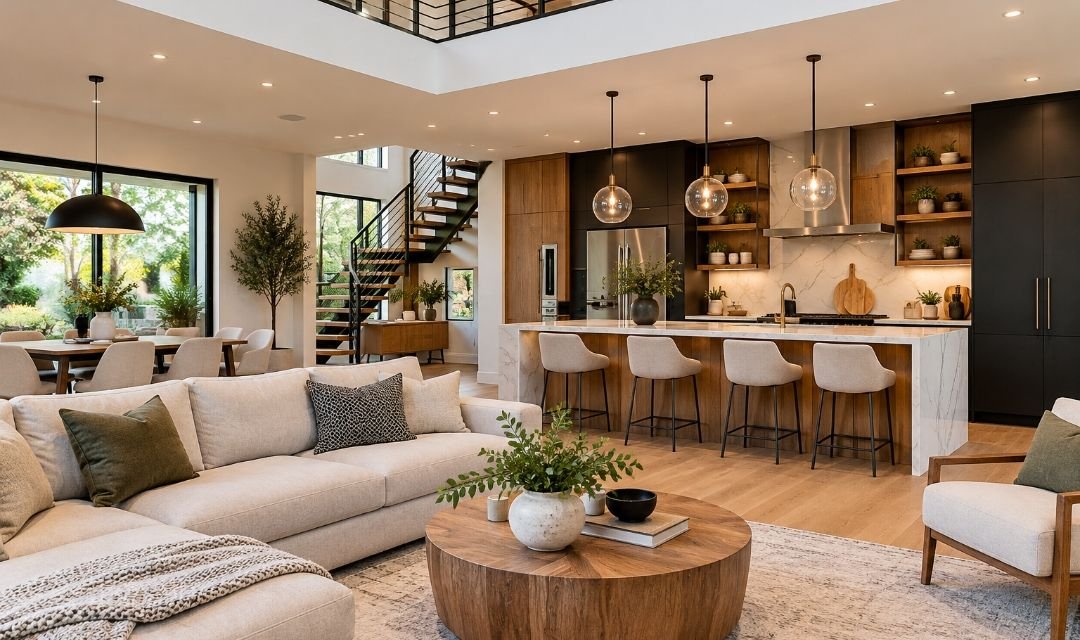
Modern home renovation trends in 2026 focus on creating comfortable, practical, and beautiful living spaces. Homeowners are increasingly interested in warm colors, natural materials, energy-efficient improvements, smart technology, and designs that make everyday life easier. These ideas are part of the broader world of home improvement, which includes updating, repairing, and improving residential properties.
Modern renovation is no longer just about making a home look expensive. Many homeowners want spaces that feel welcoming, support their daily routines, and remain attractive for years.
For example, a modern kitchen may combine natural wood cabinets with energy-efficient appliances. A bathroom might feature a walk-in shower, warm lighting, and simple storage solutions.
The best renovation trends balance style with function. Whether you own a large house, a small apartment, or an older property, you can use these ideas to create a more comfortable home.
This guide explores 25 modern home renovation trends, room-by-room design inspiration, affordable upgrades, and practical planning tips.
Quick Overview of Modern Home Renovation Trends
| Category | Popular ideas |
|---|---|
| Main topic | Modern Home Renovation Trends |
| Design focus | Comfort, functionality, and personal style |
| Popular colors | Warm white, beige, sage green, terracotta |
| Kitchen trends | Natural wood, smart storage, layered lighting |
| Bathroom trends | Walk-in showers, spa-inspired designs |
| Living room trends | Comfortable furniture, warm minimalism |
| Bedroom trends | Soft textures, natural materials |
| Flooring trends | Wood-look surfaces, large-format tiles |
| Technology trends | Smart lighting, connected controls |
| Energy improvements | Insulation, efficient appliances, LED lighting |
| Sustainable choices | Durable, repairable, and reclaimed materials |
| Small-home trends | Multifunctional furniture, built-in storage |
| Main priority | Long-lasting design and everyday comfort |
What Are Modern Home Renovation Trends?
Modern home renovation trends describe popular ways homeowners update their properties.
These trends can involve colors, materials, furniture, technology, room layouts, and energy performance.
Some focus on appearance.
Others improve comfort, safety, and functionality.
For example, a new wall color may refresh a room, while better insulation may help control indoor temperatures.
Modern renovation often combines both types of improvement.
A successful project should make a home attractive while also solving practical problems.
Why Are Modern Home Renovation Trends Changing?
Homeowners’ needs change over time.
More people use their homes for work, entertainment, relaxation, and family activities.
This creates demand for flexible spaces.
Technology also influences renovation choices.
Smart thermostats, lighting systems, and connected security devices have become familiar features in many homes.
Environmental concerns encourage interest in energy efficiency and durable materials.
At the same time, design preferences continue to evolve.
Many contemporary interiors favor warmer, more natural appearances instead of extremely cold or empty spaces.
1. Warm Minimalism
Warm minimalism is one of the defining directions in contemporary interior design.
Traditional minimalism often uses simple furniture, neutral colors, and very little decoration.
Warm minimalism keeps the clean appearance but introduces softer materials and inviting colors.
Think cream walls, natural wood furniture, comfortable sofas, and textured rugs.
The goal is to create a calm room without making it feel empty.
This approach works particularly well in living rooms and bedrooms.
How to Create a Warm Minimalist Home
Start with a neutral color palette.
Choose furniture with simple shapes.
Add natural textures through wood, cotton, linen, and wool.
Use soft lighting instead of relying entirely on bright ceiling fixtures.
Keep decorative items limited but meaningful.
A few carefully selected pieces can create a balanced appearance.
2. Natural Wood Kitchen Cabinets
Natural wood cabinets are a popular choice for modern kitchens.
They add warmth and texture.
Oak, walnut, and other wood finishes can create different looks.
Light wood often suits Scandinavian-inspired interiors.
Darker wood can create a richer appearance.
Wood cabinets also combine well with stone-look countertops and neutral wall colors.
If replacing cabinets is too expensive, refinishing existing wooden cabinets may provide a similar effect.
3. Earthy Interior Color Palettes
Earthy colors continue to influence modern home design.
Popular examples include terracotta, olive green, clay, warm beige, and muted brown.
These colors are inspired by natural materials and landscapes.
They can make rooms feel comfortable and grounded.
A terracotta accent wall may add warmth to a living room.
Sage green cabinets can soften the appearance of a kitchen.
Warm beige walls can provide a flexible background for different furniture styles.
Choose colors based on the room’s natural light and existing materials.
4. Spa-Inspired Bathrooms
Modern bathrooms increasingly emphasize relaxation and comfort.
Spa-inspired designs often use natural-looking materials, soft lighting, and uncluttered surfaces.
Walk-in showers are a common feature.
Large mirrors can make the room feel brighter.
Floating vanities may create a lighter visual appearance.
Built-in shower niches provide practical storage.
However, bathroom renovation requires proper waterproofing and ventilation.
These technical details are more important than decorative trends.
5. Walk-In Showers With Glass Panels
Walk-in showers are popular because they can create a clean, open appearance.
Clear glass panels allow light to move through the bathroom.
Large tiles can reduce the number of visible grout lines.
Simple fixtures complement contemporary designs.
Some homeowners choose curbless showers for improved accessibility.
However, curbless designs require careful floor slopes, drainage, and waterproofing.
Professional installation is particularly important when modifying shower floors.
6. Smart Home Technology
Smart technology is becoming a common consideration in home renovation.
Connected devices can help control lighting, temperature, and security.
Smart thermostats may support more efficient heating and cooling.
Smart lighting systems allow homeowners to adjust brightness and schedules.
Video doorbells and connected cameras may provide additional convenience.
However, smart devices should be selected carefully.
Check compatibility, security updates, and privacy settings before installation.
Technology should make daily life easier rather than add unnecessary complexity.
7. Energy-Efficient Home Improvements
Energy efficiency is an important part of modern renovation.
Homeowners may improve insulation, reduce air leaks, or install more efficient heating and cooling systems.
LED lighting is another common upgrade.
Efficient windows may help improve comfort in certain buildings.
However, not every energy improvement provides the same savings.
The results depend on climate, energy prices, building conditions, and usage.
A home energy assessment can help identify the most useful improvements before major spending.
8. Sustainable and Reclaimed Materials
Sustainable renovation encourages homeowners to think about the environmental impact of materials.
Reclaimed wood, reused furniture, and durable products can reduce unnecessary waste.
Some homeowners prefer materials that can be repaired rather than replaced.
Others choose products with recycled content.
However, environmental claims should be evaluated carefully.
A product described as natural is not automatically more sustainable.
Durability, manufacturing, transportation, maintenance, and disposal all affect environmental performance.
9. Multifunctional Living Spaces
Modern homes often serve several purposes.
A living room may also function as a workspace.
A guest bedroom might double as a study.
Multifunctional furniture can help make these arrangements practical.
Examples include sofa beds, folding desks, and storage benches.
Room dividers may also create separate activity areas.
The goal is to use available space efficiently without making the home feel crowded.
10. Built-In Storage Solutions
Built-in storage helps create organized interiors.
Modern designs often include floor-to-ceiling wardrobes, concealed cabinets, and custom shelving.
These features can make better use of awkward spaces.
Under-stair storage is particularly useful in some houses.
In bedrooms, fitted wardrobes may provide more storage than freestanding furniture.
However, custom storage can be expensive.
Homeowners should compare the cost with simpler modular alternatives.
11. Large-Format Tiles
Large-format tiles are popular in contemporary kitchens and bathrooms.
They create a cleaner appearance because fewer grout lines are visible.
Stone-look porcelain tiles are available in many colors and finishes.
Neutral shades can create a calm atmosphere.
However, large tiles require a suitable, properly prepared surface.
Installation may be more difficult than with smaller tiles.
Choose slip-resistant finishes for floors where moisture is common.
12. Statement Lighting Fixtures
Lighting is no longer treated only as a practical necessity.
Many homeowners use fixtures as decorative features.
Pendant lights can create a focal point above a kitchen island.
A modern chandelier may add character to a dining room.
Wall lights can create a softer atmosphere in bedrooms.
The most effective lighting plans combine general, task, and accent lighting.
A beautiful fixture should still provide appropriate illumination.
13. Modern Home Office Designs
Home offices remain an important renovation consideration.
A comfortable workspace needs good lighting, suitable furniture, and enough storage.
Natural light can make the space more pleasant.
However, screens should be positioned to reduce glare.
Built-in desks may work well in small rooms.
Some homeowners use sliding doors or partitions to create privacy.
A successful home office supports concentration without taking over the entire home.
14. Curved Furniture and Soft Architectural Shapes
Curved furniture is becoming a recognizable feature of modern interiors.
Rounded sofas, oval dining tables, and arched doorways create a softer appearance than sharp geometric designs.
These shapes can make rooms feel welcoming.
Curved kitchen islands and rounded countertops are also attracting attention.
Houzz’s 2026 research found growing interest in arched pantry doors, rounded islands, and curved architectural details.
The Houzz Blog
You do not need to change the structure of your home to try this trend.
A round coffee table or curved armchair can introduce the same style at a lower cost.
15. Textured Walls and Decorative Finishes
Smooth painted walls remain popular, but textured finishes are receiving more attention.
Limewash, Venetian plaster, textured wallpaper, and decorative wall panels can add depth.
These finishes create visual interest without requiring bright colors.
For example, a soft beige textured wall can make a bedroom feel warmer.
Decorative molding may also create a classic appearance.
However, some finishes require specialized application.
Homeowners should consider maintenance, durability, and installation costs before choosing a material.
16. Modern Kitchen Storage and Coffee Stations
Kitchen design increasingly focuses on organization.
Many homeowners want storage that keeps countertops clear.
Pull-out drawers, pantry cabinets, and appliance garages can help reduce clutter.
A dedicated coffee station is another popular idea.
It may include a small countertop, shelves, and storage for cups and supplies.
In its 2026 UK trends report, Houzz recorded increased searches for appliance garages, walk-in pantries, and kitchen coffee bars.
Houzz
These features can make everyday kitchen routines more convenient.
17. Statement Ceilings
Ceilings are becoming more important in interior design.
Instead of leaving every ceiling plain white, some homeowners use paint, wallpaper, wood panels, or decorative beams.
A dark ceiling can create a cozy atmosphere in a large room.
Wooden beams can add warmth to traditional or modern interiors.
Decorative ceiling details may also help define a dining area.
However, complicated ceiling designs can make small rooms feel crowded.
Choose a style that suits the room’s height and proportions.
18. Modern Outdoor Living Spaces
Outdoor areas are increasingly treated as extensions of the home.
Patios, balconies, and gardens can provide space for relaxing and entertaining.
Popular improvements include comfortable seating, outdoor lighting, and weather-resistant furniture.
Some homeowners add outdoor kitchens or covered dining areas.
Others focus on simple landscaping.
Native plants may reduce maintenance and support local wildlife when chosen appropriately.
The best outdoor design depends on climate, available space, and budget.
19. Home Wellness Spaces
Wellness-inspired design focuses on creating spaces that support relaxation and everyday comfort.
Some homeowners create meditation corners or reading areas.
Others develop exercise rooms or quiet spaces away from busy living areas.
Bathrooms may include comfortable lighting and improved ventilation.
A wellness space does not need to be expensive.
A quiet corner with a comfortable chair, suitable lighting, and limited distractions may be enough.
The purpose is to create an environment that supports the activities you enjoy.
20. Reading Nooks and Personal Retreats
Reading nooks are becoming a popular feature in modern homes.
They provide a dedicated place to relax without screens or distractions.
A reading nook can fit beside a window, under a staircase, or in a quiet bedroom corner.
Start with a comfortable chair.
Add a small table and a reading lamp.
Built-in bookshelves can provide additional storage.
The 2026 Houzz UK research also identified increased interest in reading nooks and small home libraries.
Houzz
21. Accessible and Age-Friendly Design
Modern renovation increasingly considers how homes can remain comfortable as people grow older.
Accessible design can also benefit families with children or people with temporary injuries.
Useful features include wider doorways, better lighting, and reduced tripping hazards.
Bathrooms may include walk-in showers, grab bars, or shower seats.
Kitchen storage can be designed to make everyday items easier to reach.
These improvements should be planned carefully.
Accessibility requirements vary, and professional advice may be necessary for major changes.
22. Mixing Vintage and Modern Furniture
Modern interiors do not need to contain only new furniture.
Mixing vintage pieces with contemporary designs can create a more personal appearance.
An antique wooden table may work well with modern dining chairs.
A vintage cabinet can add character to a minimalist living room.
Older furniture may also offer opportunities for repair and reuse.
However, inspect secondhand items for damage and safety concerns.
A balanced combination of old and new can create a home that feels unique rather than overly coordinated.
23. Natural Stone and Stone-Look Surfaces
Stone surfaces remain popular in kitchens and bathrooms.
Marble, granite, quartzite, and other natural materials can create distinctive appearances.
However, natural stone may require sealing and maintenance.
Engineered and porcelain alternatives can provide different performance characteristics.
Stone-look porcelain is commonly used for flooring and wall finishes.
When choosing materials, consider cost, durability, cleaning requirements, and installation.
The most expensive surface is not always the best choice for every household.
24. Personalized Interior Design
One important direction in modern renovation is creating spaces that reflect the people living in them.
Instead of copying a showroom exactly, homeowners may combine different furniture styles, colors, and meaningful objects.
Family photographs, artwork, books, and travel souvenirs can add personality.
Personalized design can also involve practical choices.
A family that enjoys cooking may prioritize a larger kitchen workspace.
Someone who works remotely may prefer a dedicated office.
A successful home should support real daily activities rather than simply follow fashionable designs.
25. Budget-Friendly Modern Renovation
Modern design does not always require expensive construction.
Many contemporary looks can be achieved through smaller improvements.
Painting walls in warm neutral colors is one option.
Replacing old light fixtures may create another noticeable change.
Updating cabinet handles, adding shelves, and rearranging furniture can also improve a room.
The key is choosing a consistent design direction.
A few coordinated changes often look better than purchasing many unrelated decorative items.
Most Popular Kitchen Renovation Trends in 2026
Kitchen renovations continue to focus on warmth, storage, and practical layouts.
According to the 2026 U.S. Houzz Kitchen Trends Study, wood became the most popular cabinet finish among surveyed renovating homeowners, selected by 29%, compared with 28% choosing white.
pro.houzz.com
Other notable kitchen ideas include:
-
Natural wood cabinetry and warm neutral colors
-
Large pantry cabinets and organized storage
-
Coffee stations and appliance garages
-
Stone or stone-look countertops
-
Layered lighting and practical workspaces
-
Durable materials that are easy to maintain
The best kitchen design should reflect how the household cooks, stores food, and uses the space.
Modern Bathroom Renovation Trends
Modern bathrooms combine attractive design with practical improvements.
Walk-in showers remain a popular choice.
Floating vanities can create a clean appearance.
Warm lighting and natural-looking materials may make bathrooms feel more relaxing.
Storage is also important.
Built-in niches and drawers can help keep surfaces organized.
Homeowners should prioritize waterproofing, drainage, and ventilation.
These technical features protect the property and help the renovation last longer.
Modern Living Room Renovation Trends
Living rooms are becoming warmer and more personal.
Comfortable seating is often more important than overly formal furniture.
Natural textures such as wood, linen, and wool can create a welcoming atmosphere.
Earthy colors are also popular.
A modern living room might combine cream walls, a brown sofa, a wooden coffee table, and soft lighting.
Decorative objects can add personality without overwhelming the space.
The goal is to create a room that feels comfortable for everyday living.
Modern Bedroom Renovation Trends
Bedroom design increasingly focuses on comfort and relaxation.
Soft colors, comfortable bedding, and simple furniture can create a peaceful atmosphere.
Natural materials add warmth.
Layered lighting allows homeowners to adjust brightness for different activities.
Built-in wardrobes may help reduce clutter.
Blackout curtains can improve light control.
A successful bedroom renovation should prioritize sleep comfort, organization, and personal preferences.
Modern Home Renovation Trends for Small Houses
Small homes benefit from efficient layouts and multifunctional furniture.
Built-in storage can reduce clutter.
Light-colored walls may help rooms feel brighter.
Mirrors can reflect available light.
Wall-mounted desks and folding tables may provide flexibility.
However, small spaces do not always need white walls or minimalist furniture.
Warm colors and carefully selected decorative pieces can also work well.
The most important factor is maintaining enough space for comfortable movement.
Modern Home Renovation Budget Guide
The cost of renovation depends on the size of the project, location, labor, and materials.
The following table compares typical project complexity rather than providing fixed prices.
| Renovation idea | Relative cost | Project complexity |
|---|---|---|
| Painting walls | Low | Easy |
| Updating cabinet handles | Low | Easy |
| Adding decorative lighting | Low–medium | Varies |
| Installing floating shelves | Low–medium | Easy–moderate |
| Refinishing cabinets | Medium | Moderate |
| Replacing flooring | Medium–high | Moderate |
| Installing countertops | Medium–high | Professional installation often needed |
| Remodeling a bathroom | High | Complex |
| Replacing kitchen cabinets | High | Complex |
| Removing structural walls | High | Professional engineering required |
Before beginning, request local quotations and allow money for unexpected repairs.
How to Choose the Right Renovation Trend
Not every trend will suit every home.
Start by considering your lifestyle.
If your family spends a lot of time in the kitchen, better storage and lighting may provide the greatest benefit.
If your bedroom feels crowded, organization may matter more than expensive furniture.
Next, consider your budget.
Choose materials that are durable and appropriate for the room.
Finally, think about long-term use.
A design that looks attractive today should still be comfortable and practical in the future.
Common Modern Renovation Mistakes
One common mistake is following trends without considering everyday needs.
Another is choosing materials based only on appearance.
For example, a beautiful floor may be unsuitable for a bathroom if it becomes slippery when wet.
Poor lighting planning can also create problems.
Some homeowners install decorative fixtures without providing enough light for daily tasks.
Another serious mistake is attempting structural, electrical, or plumbing changes without qualified help.
Professional guidance and local permits may be necessary.
Final Thoughts
Modern home renovation trends in 2026 show a growing preference for comfortable, practical, and personalized living spaces.
Warm colors, natural wood, textured surfaces, smart storage, and energy-efficient improvements are shaping contemporary interiors.
Kitchens are becoming more organized, bathrooms are emphasizing relaxation, and living rooms are adopting softer and more welcoming designs.
However, the best renovation is not necessarily the most fashionable or expensive.
A successful project should reflect your needs, support your daily routine, and remain useful for years.
Whether you are planning a complete remodel or a few affordable improvements, thoughtful choices can help create a home that feels modern, comfortable, and uniquely yours.
Frequently Asked Questions About Modern Home Renovation Trends
1. What are the biggest modern home renovation trends in 2026?
Warm minimalism, natural wood, earthy colors, smart storage, energy efficiency, and wellness-inspired spaces are important trends.
2. What colors are popular for modern homes?
Warm white, beige, sage green, terracotta, olive green, and soft brown are popular choices.
3. Are white kitchens still popular?
Yes. White kitchens remain common, although natural wood cabinetry has gained popularity.
4. What is warm minimalism?
Warm minimalism combines simple design with comfortable textures, natural materials, and inviting colors.
5. Are open-plan homes still fashionable?
Open-plan layouts remain useful for some households, but flexible spaces and separate quiet areas are also attracting interest.
6. What are the latest kitchen renovation ideas?
Natural wood cabinets, organized pantries, coffee stations, practical lighting, and durable countertops are popular.
7. What are modern bathroom trends?
Walk-in showers, floating vanities, natural-looking materials, and spa-inspired designs are common choices.
8. Is smart home technology worth installing?
It can improve convenience and efficiency, but value depends on compatibility, cost, privacy, and actual use.
9. What flooring is popular in modern homes?
Wood and wood-look flooring remain popular, while porcelain tile is widely used in suitable areas.
10. Are dark interior colors trending?
Yes. Deep green, brown, navy, and charcoal can create cozy and dramatic interiors.
11. What is sustainable home renovation?
It involves considering energy use, material durability, waste reduction, and environmental impact during renovation.
12. How can I modernize my home cheaply?
Try painting, updating lighting, replacing cabinet hardware, and improving storage.
13. What is the best design for a small living room?
Choose furniture that fits the space, maintain clear walking paths, and use practical storage.
14. Are curved sofas fashionable?
Curved furniture is one of the recognizable design directions highlighted in 2026 trend research.
15. What are the best modern bedroom colors?
Warm neutrals, muted greens, soft blues, and earthy shades can create relaxing spaces.
16. Are natural materials popular?
Yes. Wood, stone, linen, and other natural-looking materials feature prominently in contemporary interiors.
17. What is a spa-inspired bathroom?
It is a bathroom designed to feel calm and comfortable through lighting, materials, organization, and suitable fixtures.
18. Should I install a walk-in shower?
A walk-in shower may be useful, but the decision depends on space, accessibility, drainage, and waterproofing requirements.
19. How can I make my home more energy-efficient?
Consider insulation, air sealing, LED lighting, and appropriate heating or cooling improvements.
20. Are statement ceilings popular?
Yes. Painted ceilings, wood details, and decorative finishes are receiving greater attention.
21. What is a multifunctional room?
It is a room designed to support more than one activity, such as working, studying, relaxing, or hosting guests.
22. Is vintage furniture suitable for modern homes?
Yes. Vintage pieces can add character when combined thoughtfully with contemporary furniture.
23. How can I make a modern home feel cozy?
Use warm colors, comfortable seating, soft lighting, and natural textures.
24. Which renovations can improve property value?
Kitchen and bathroom improvements, necessary repairs, and energy upgrades may add value, depending on local market conditions.
25. What is the most important modern renovation trend?
Creating a home that balances comfort, function, durability, and personal style is more valuable than following any single trend.
For more home improvement guides, interior design inspiration, renovation tips, and lifestyle articles, visit Picanto Magazine