
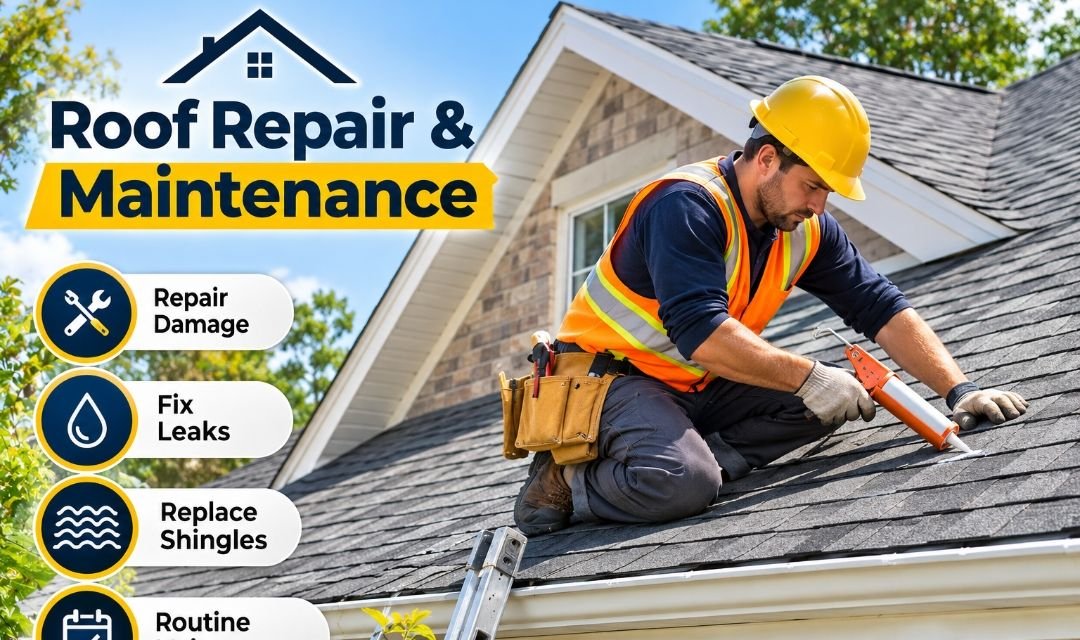
Roof repair and maintenance are essential for protecting your home from rain, moisture, extreme temperatures, and structural damage. A well-maintained roof helps keep your living spaces comfortable while reducing the risk of expensive repairs. Whether your home has asphalt shingles, metal roofing, clay tiles, or a flat roof, regular inspections and timely repairs can extend its useful life. Understanding the basic structure of a roof can also help homeowners recognize warning signs before small problems become serious.
Quick Overview of Roof Repair and Maintenance
| Category | Details |
|---|---|
| Main topic | Roof Repair and Maintenance |
| Main purpose | Protect the roof and prevent damage |
| Common problems | Leaks, cracked shingles, damaged flashing, blocked drains |
| Popular roof types | Asphalt shingles, metal, tile, flat roofs |
| Inspection frequency | At least annually and after significant storms |
| Important maintenance | Drainage cleaning, leak checks, professional inspections |
| Common warning signs | Water stains, missing materials, sagging, damp ceilings |
| Roof leak causes | Damaged flashing, failed seals, cracked roofing |
| Maintenance priority | Safety, waterproofing, drainage |
| Repair methods | Material replacement, flashing repair, waterproofing |
| Professional assistance | Recommended for roof access and repair work |
| Main goal | Improve roof durability and prevent costly damage |
Your roof is one of the most important parts of your house. It protects the building from rain, wind, sunlight, and other weather conditions.
However, roofs experience wear over time.
Strong winds can loosen roofing materials. Heavy rain can expose weak areas. Blocked gutters may cause water to collect where it should drain away.
Small problems can become expensive when ignored.
For example, a minor leak may eventually damage ceiling materials, insulation, electrical systems, or wooden structures.
The good news is that regular maintenance can help identify problems early.
This guide explains common roofing problems, repair methods, inspection tips, maintenance schedules, estimated costs, and warning signs that require professional attention.
What Is Roof Repair and Maintenance?
Roof repair involves fixing damaged areas of a roofing system.
This may include replacing broken tiles, repairing flashing, addressing leaks, or restoring damaged waterproofing.
Roof maintenance focuses on keeping the roofing system in suitable condition.
Maintenance activities may include inspections, drainage cleaning, checking visible damage, and arranging preventive repairs.
Although these activities are related, they serve different purposes.
Repairs address existing problems.
Maintenance helps reduce the chance of future problems.
Both are important for protecting a home.
Why Regular Roof Maintenance Is Important
Regular roof maintenance can help prevent unexpected damage.
A roof may look fine from the ground while hidden problems develop around joints, vents, and drainage areas.
Water can enter through small openings.
Over time, moisture may damage insulation, ceilings, and structural components.
Maintenance can also help homeowners plan expenses.
Identifying a damaged flashing detail early may prevent more extensive water damage.
However, maintenance cannot prevent every roofing problem.
Severe storms, aging materials, and unexpected failures may still require repairs.
The goal is to identify risks and address them promptly.
15 Common Roof Problems and How to Address Them
1. Roof Leaks
Roof leaks are among the most common roofing problems.
They may occur when roofing materials become damaged or waterproofing details fail.
Water can enter around flashing, vents, chimneys, and other roof penetrations.
However, the location of an indoor water stain may not be directly below the source of the leak.
Water can travel along roof components before becoming visible.
A roofing professional can investigate the cause and recommend suitable repairs.
Ignoring a leak can lead to further damage.
2. Missing or Damaged Shingles
Asphalt shingles can become damaged by wind, aging, and weather exposure.
Missing shingles may leave parts of the roofing system vulnerable.
Cracked or curled shingles can also indicate wear.
However, not every damaged shingle means the entire roof needs replacement.
A professional should assess the surrounding materials and roof condition.
Localized repairs may be possible when the roofing system remains in suitable condition.
3. Cracked Roof Tiles
Clay and concrete roof tiles can crack or break.
Damage may result from impact, weather, or improper loading.
Broken tiles can expose the underlying roofing system.
However, walking on tile roofs can cause additional damage and serious falls.
Do not climb onto the roof to inspect or replace tiles yourself.
Arrange professional inspection and replacement when needed.
4. Damaged Roof Flashing
Flashing is used around roof joints and penetrations to help direct water away from vulnerable areas.
It may be installed near chimneys, walls, vents, and roof valleys.
Damaged flashing can allow water to enter.
Common problems include corrosion, movement, and failed connections.
However, simply applying sealant may not provide a lasting solution.
A professional should determine whether flashing requires repair or replacement.
5. Blocked Gutters
Gutters help direct rainwater away from the roof and building.
Leaves, dirt, and debris can block drainage.
Water may overflow near walls or foundations.
In some roofing systems, poor drainage can also contribute to moisture problems.
Inspect gutters visually from a safe location.
Use qualified professionals for cleaning where ladder or roof access is required.
Keeping drainage systems functional is an important maintenance task.
6. Standing Water on Flat Roofs
Flat roofs are designed with drainage requirements, even though they appear nearly level.
Poor drainage may allow water to remain on the surface.
Standing water can increase stress on roofing materials.
It may also indicate blocked outlets or inadequate slopes.
However, some roofing systems tolerate limited temporary water accumulation according to their design.
Persistent ponding should be assessed by a roofing professional.
The solution depends on the roofing system and drainage conditions.
7. Damaged Roof Membranes
Many flat roofs use waterproof membranes.
These membranes can be damaged by aging, movement, punctures, or unsuitable installation.
Signs may include visible splits, lifting, or water entry.
However, different membrane materials require different repair methods.
A repair product suitable for one membrane may not work with another.
Professional identification of the roofing system is important before repairs begin.
8. Rust on Metal Roofing
Metal roofs can provide long service life when properly designed and maintained.
However, corrosion may develop where protective finishes are damaged.
Rust can also occur around fasteners or exposed edges.
The severity depends on the metal, coating, and environment.
Minor surface corrosion may be repairable.
More serious damage may require replacement of affected components.
A roofing professional should assess the condition before treatment.
9. Loose Roofing Fasteners
Some roofing systems use exposed fasteners.
Over time, fasteners or their sealing washers may deteriorate.
This can create potential water-entry points.
However, fastener problems should not be addressed by randomly tightening screws.
Incorrect tightening can damage roofing materials or seals.
A professional can identify suitable replacement components and installation methods.
10. Roof Ventilation Problems
Ventilation can influence moisture and temperature conditions in certain roof assemblies.
Poorly designed ventilation may contribute to condensation problems.
However, not every roof requires the same ventilation approach.
Some roofs use unvented assemblies designed for specific conditions.
Changes should be based on the actual roof construction.
A qualified professional can evaluate ventilation and insulation together.
11. Mold and Moisture Damage
Moisture can contribute to mold growth in roof cavities and ceilings.
Visible staining or musty odors may indicate a problem.
However, mold does not always mean the roof is leaking.
Plumbing problems, condensation, and indoor humidity can also cause moisture.
Identify and correct the moisture source.
Extensive mold or concealed damage may require professional assessment and remediation.
12. Damaged Roof Insulation
Roof insulation helps control heat transfer.
However, wet or damaged insulation may perform poorly.
Water entry can also affect surrounding building materials.
A professional may need to inspect concealed areas.
The appropriate repair depends on the insulation type and extent of moisture exposure.
Replacing visible roofing materials without addressing wet insulation may leave problems unresolved.
13. Sagging Roof Areas
A visibly sagging roof can indicate a serious structural concern.
Possible causes include damaged framing, excessive loading, or deterioration.
However, the exact cause cannot be determined from appearance alone.
Do not walk on or enter areas beneath a roof that appears structurally unsafe.
Keep people away from the affected area and arrange urgent professional evaluation.
Structural problems should not be treated as ordinary cosmetic repairs.
14. Storm Damage
Strong winds, hail, and heavy rain can damage roofing materials.
After a storm, inspect the property from a safe location.
Look for fallen materials, damaged gutters, and visible changes in the roof.
However, avoid climbing onto the roof.
Storm damage can create hidden hazards.
A professional inspection may be necessary, especially when leaks or visible damage are present.
15. Aging Roofing Materials
All roofing materials have limited service lives.
Aging can cause cracking, brittleness, corrosion, or surface deterioration.
However, roof lifespan varies widely.
Climate, installation quality, ventilation, maintenance, and material specifications all affect performance.
An older roof does not automatically require replacement.
A professional assessment can help determine whether repairs remain practical.
Roof Repair and Maintenance by Roof Type
Different roofing systems require different maintenance approaches.
| Roof type | Common concerns | Maintenance focus |
|---|---|---|
| Asphalt shingles | Cracking, missing shingles, aging | Visual inspection and damaged material replacement |
| Metal roofing | Corrosion, fastener deterioration | Coating condition and connection checks |
| Clay tiles | Cracked or displaced tiles | Tile condition and flashing |
| Concrete tiles | Cracking, movement, damaged underlayment | Tile condition and drainage |
| Flat membrane roof | Punctures, failed seams, ponding | Membrane condition and outlets |
| Concrete roof slab | Cracks, waterproofing failure | Drainage and waterproofing inspection |
| Wood roofing | Moisture damage, deterioration | Material condition and ventilation |
Always use maintenance methods suitable for the specific roofing system.
Roof Repair and Maintenance for Flat Roofs
Flat roofs are common in many residential buildings.
They often provide a simple architectural appearance.
Some are also used as terraces or service areas when designed for those purposes.
However, flat roofs require effective drainage and waterproofing.
Blocked outlets can allow water to collect.
Damaged membranes may allow leaks.
Cracks in exposed surfaces may require assessment.
Homeowners should monitor visible drainage problems and indoor moisture signs.
Professional inspection is important when waterproofing damage is suspected.
Do not apply random coatings or sealants without identifying the existing roofing system.
An incompatible product may fail or complicate future repairs.
Roof Repair and Maintenance for Sloped Roofs
Sloped roofs are designed to direct water downward.
They may use shingles, tiles, metal sheets, or other materials.
Maintenance often focuses on damaged coverings, flashing, gutters, and penetrations.
Wind can loosen roofing materials.
Debris may collect in valleys.
However, roof pitch and height create significant fall hazards.
Homeowners should not attempt roof access without appropriate professional training and safety equipment.
Visual checks from the ground can help identify obvious problems.
How to Identify a Roof Leak
A roof leak may produce several warning signs.
These include water stains on ceilings, damp walls, peeling paint, or dripping water during rain.
However, some leaks remain hidden for long periods.
Water may travel through roof cavities before becoming visible.
A ceiling stain can therefore appear far from the actual roof opening.
Do not assume that applying sealant directly above the stain will solve the problem.
A proper investigation may require inspection of roofing materials, flashing, drainage, and concealed building components.
If water is near electrical equipment or wiring, avoid the affected area and seek qualified assistance.
What to Do When Your Roof Starts Leaking
A leaking roof requires prompt attention.
Follow these general safety steps:
-
Keep people away from damaged ceilings or unsafe areas.
-
Avoid contact with wet electrical equipment.
-
Move valuable belongings away from dripping water when safe.
-
Place a container beneath minor drips if the area is safe.
-
Photograph visible damage for your records.
-
Contact a qualified roofing professional.
-
Arrange temporary weather protection when appropriate.
-
Have the source of the leak identified.
-
Repair damaged roofing and affected interior materials.
-
Monitor the area after repairs.
Do not climb onto a wet roof or attempt emergency roof repairs during storms.
If a ceiling is bulging, sagging, or at risk of collapse, keep clear and seek urgent professional help.
Roof Maintenance Checklist for Homeowners
Regular checks can help identify roofing problems before they become severe.
Homeowner’s Roof Inspection Checklist
0 of 9
Check ceilings for new water stains
Look for discoloration, damp patches, or peeling paint
Inspect visible roof areas from the ground
Watch for missing tiles, displaced materials, or obvious damage
Check gutters and downspouts
Look for overflowing water, blockage, or loose sections
Look for damaged flashing
Identify visible gaps or deterioration without climbing
Check attic or accessible roof spaces
Look for moisture, staining, or unusual odors when safe
Inspect after major storms
Check for fallen materials, leaks, and visible changes
Review flat-roof drainage
Watch for persistent standing water or blocked outlets
Check roof-mounted equipment
Look for visible damage around solar panels, vents, or other installations
Arrange professional assessment when needed
Have concerning signs investigated before damage spreads
These are visual checks from safe locations, not instructions to climb onto the roof.
Seasonal Roof Maintenance Schedule
Roof maintenance should account for local weather conditions.
| Time | Recommended maintenance |
|---|---|
| Before rainy season | Check drainage, visible roofing damage, and flashing |
| After major storms | Look for new leaks, displaced materials, and gutter damage |
| During dry weather | Arrange necessary professional repairs |
| Before winter in cold climates | Check drainage and potential ice-related concerns |
| Throughout the year | Monitor ceilings, walls, and accessible roof spaces |
| Annually | Consider a professional inspection based on roof age and condition |
The ideal schedule depends on local climate, roof design, and material condition.
Homes exposed to severe storms or frequent debris may need additional checks.
How Much Does Roof Repair Cost?
Roof repair costs vary widely.
The final price depends on the roofing material, damage severity, roof access, location, and labor requirements.
A small repair may cost much less than replacing an entire roofing section.
However, hidden moisture damage can increase expenses.
Illustrative Roof Repair Cost Ranges
| Repair type | Example cost range (USD) |
|---|---|
| Minor localized repair | $150–$500 |
| Flashing repair | $200–$800 |
| Gutter repair | $150–$600 |
| Limited shingle replacement | $200–$700 |
| Flat roof membrane repair | $300–$1,500 |
| More extensive leak repair | $500–$2,500+ |
| Major structural repair | Requires individual assessment |
These are broad illustrative planning ranges, not verified current quotations. Actual costs can fall outside them, and prices vary substantially by country, contractor, access conditions, and roofing system.
Request written estimates before approving major work.
Roof Repair vs. Roof Replacement
Homeowners sometimes struggle to decide whether to repair or replace a roof.
A repair may be suitable when damage is limited and the surrounding roofing system remains in good condition.
Replacement may be considered when damage is widespread, materials have deteriorated significantly, or repeated repairs are no longer economical.
| Factor | Roof repair | Roof replacement |
|---|---|---|
| Damage | Localized | Widespread |
| Initial cost | Usually lower | Usually higher |
| Project size | Smaller | Larger |
| Material condition | Surrounding roof remains serviceable | Significant deterioration |
| Long-term suitability | Depends on roof condition | Provides a new roofing system |
A qualified roofing professional should evaluate the roof before major decisions are made.
The lowest initial price is not always the best long-term option.
Preventive Roof Maintenance Tips
Preventive maintenance focuses on reducing avoidable damage.
Keep drainage systems functional.
Arrange removal of debris when necessary.
Monitor visible roofing materials.
Check for indoor moisture.
Maintain suitable clearance around roof-mounted equipment.
Address minor damage promptly.
Avoid unnecessary foot traffic on roofing surfaces.
Do not store heavy materials on roofs unless the structure is designed for the load.
Most importantly, arrange professional help for repairs that require roof access.
These habits can help protect roofing systems over time.
Roof Waterproofing and Leak Prevention
Waterproofing is an important part of many roofing systems.
Flat roofs often rely on membranes or other designed waterproofing layers.
Sloped roofs use a combination of roof coverings, underlayment, flashing, and drainage details.
However, waterproofing products are not interchangeable.
A coating suitable for one material may not bond correctly to another.
Surface preparation also affects performance.
Professional evaluation can help identify the appropriate repair system.
Avoid applying waterproofing products over active leaks without understanding the cause.
A successful repair should address the source of water entry.
Roof Maintenance for Homes in Hot Climates
Hot climates create different roofing challenges.
Strong sunlight and high temperatures can affect roofing materials.
Thermal expansion and contraction may contribute to movement.
Some coatings can deteriorate under ultraviolet exposure.
Roof design also influences indoor heat gain.
Reflective roofing products may help reduce solar heat absorption in suitable applications.
However, performance depends on climate, insulation, ventilation, and the complete roof assembly.
Choose products designed for local conditions.
Regular inspections can help identify heat-related deterioration.
Roof Maintenance During Heavy Rain
Heavy rainfall can expose weak areas of a roof.
Blocked drainage outlets may cause water accumulation.
Damaged flashing can allow water entry.
Flat roofs may experience persistent ponding when drainage is inadequate.
Before the rainy season, arrange inspection of vulnerable areas.
Ensure drainage systems are functional.
However, do not climb onto the roof during rain.
Wet roofing surfaces can be extremely slippery.
If a leak develops, focus on protecting people and belongings until professional assistance is available.
Roof Maintenance for Homes With Solar Panels
Solar panels add equipment and mounting points to a roof.
These installations may affect access and maintenance.
Roofing materials beneath panels still require appropriate inspection.
Mounting systems should be designed and installed correctly.
However, homeowners should not move solar panels or disturb electrical connections themselves.
Solar equipment can present electrical hazards even when household power is disconnected.
Use qualified roofing and solar professionals when inspections or repairs involve these systems.
Common Roof Repair Mistakes to Avoid
One common mistake is ignoring a small leak.
Water damage may spread before the problem becomes obvious.
Another mistake is using the wrong repair materials.
Different roofing systems require compatible products.
Poor surface preparation can also cause repairs to fail.
Some homeowners attempt roof repairs without suitable safety equipment.
Falls from roofs can cause serious injuries.
Another mistake is covering visible damage without identifying its source.
Finally, avoid choosing contractors based only on the lowest price.
Experience, qualifications, workmanship, and clear written estimates are important.
How to Choose a Reliable Roofing Contractor
Choosing the right contractor can influence the quality of repairs.
Look for professionals experienced with your roof type.
Check applicable licensing and insurance requirements.
Ask for a written inspection report when appropriate.
Request a detailed estimate.
Confirm which materials will be used.
Ask about workmanship warranties.
Review the proposed repair method.
However, avoid contractors who recommend major replacement without explaining the roof’s condition.
A clear assessment can help homeowners make informed decisions.
Frequently Asked Questions About Roof Repair and Maintenance
1. What is roof repair and maintenance?
Roof repair fixes damaged roofing components, while maintenance involves inspections and preventive care.
2. How often should a roof be inspected?
An annual inspection is a common starting point, with additional checks after significant storms or when damage is suspected.
3. What are the most common roof problems?
Leaks, damaged shingles, cracked tiles, failed flashing, blocked gutters, and drainage problems are common concerns.
4. How do I know if my roof is leaking?
Water stains, damp ceilings, peeling paint, and visible dripping may indicate a leak.
5. Can a small roof leak become serious?
Yes. Moisture can damage insulation, ceilings, and structural materials over time.
6. Is roof repair expensive?
Costs vary depending on damage severity, materials, access, and local labor prices.
7. Should I repair or replace my roof?
The decision depends on the roof’s age, condition, extent of damage, and repair costs.
8. Can I repair my roof myself?
Roof work involves serious fall and other safety hazards. Professional repair is generally the safer choice.
9. What causes roof leaks?
Damaged roofing materials, flashing failures, membrane problems, and drainage issues are possible causes.
10. Are flat roofs more difficult to maintain?
Flat roofs require particular attention to drainage and waterproofing, but maintenance needs depend on the system.
11. How can I prevent roof leaks?
Regular inspections, functioning drainage, and timely professional repairs can reduce the risk.
12. What is roof flashing?
Flashing is material used around roof joints and penetrations to help direct water away from vulnerable areas.
13. Can damaged shingles be replaced individually?
Sometimes, depending on the surrounding roof condition and material availability.
14. What causes standing water on flat roofs?
Blocked outlets, inadequate drainage slopes, or other design and maintenance issues may contribute.
15. How long does a roof last?
Lifespan varies widely by material, installation quality, climate, and maintenance.
16. Does roof waterproofing stop every leak?
No. Waterproofing must be compatible with the roofing system and correctly installed.
17. What should I do after storm damage?
Inspect from a safe location, document visible damage, and arrange professional assessment.
18. Can blocked gutters damage a roof?
Yes. Poor drainage can contribute to water-related problems in some roofing systems.
19. Is roof maintenance necessary for new homes?
Yes. New roofs also benefit from appropriate inspection and maintenance.
20. What are signs of serious roof damage?
Sagging, significant leaks, widespread material failure, and visible structural deterioration require prompt attention.
21. How can I reduce roof maintenance costs?
Address problems early, maintain drainage, and arrange appropriate inspections.
22. Are metal roofs maintenance-free?
No. Metal roofs also require checks for corrosion, damaged coatings, and connection problems.
23. Can roof leaks cause mold?
Yes. Persistent moisture can create conditions that support mold growth.
24. Should I inspect my roof during rain?
No. Avoid roof access during rain or other unsafe weather conditions.
25. What is the most important roof maintenance tip?
Identify damage early and arrange safe, appropriate repairs before problems spread.
Final Thoughts
Roof repair and maintenance are essential for keeping your home safe, dry, and comfortable.
A roofing system protects your house from rain, wind, sunlight, and other environmental conditions.
However, roofing materials can deteriorate over time.
Regular inspections and timely repairs can help reduce the risk of serious damage.
Pay attention to water stains, damaged roofing materials, blocked drainage, and unusual changes in the roof’s appearance.
Do not ignore small leaks.
Choose repair materials that are suitable for your roofing system.
Most importantly, prioritize safety and use qualified professionals for work that requires roof access.
Whether your home has asphalt shingles, metal roofing, tiles, or a flat concrete roof, a practical maintenance plan can help protect your investment and improve the roof’s long-term performance.
For more home improvement guides, renovation planning advice, practical maintenance tips, and affordable home repair ideas, visit Picanto Magazine