
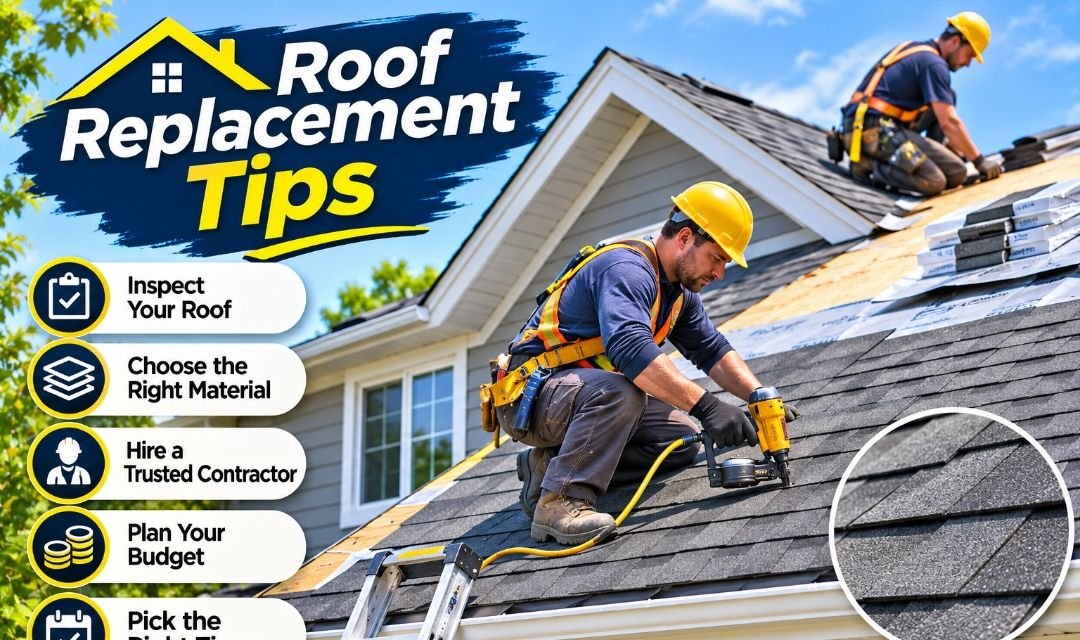
Roof replacement tips can help homeowners make smart decisions when an old, damaged, or leaking roof needs to be replaced. A new roof is one of the most important investments you can make in your home because it protects the building from rain, wind, sunlight, and moisture damage. Choosing the right roofing materials, hiring experienced contractors, and planning your budget carefully can help you avoid expensive mistakes. Understanding how a roof works is also useful when comparing replacement options and deciding which roofing system is best for your property.
Quick Overview of Roof Replacement Tips
| Category | Details |
|---|---|
| Main topic | Roof Replacement Tips |
| Main purpose | Help homeowners plan a successful roof replacement |
| Common replacement reasons | Aging, leaks, storm damage, structural problems |
| Popular roofing materials | Asphalt shingles, metal, clay tiles, concrete tiles |
| Flat roof options | Single-ply membranes, modified bitumen, built-up roofing |
| Important considerations | Durability, climate, budget, maintenance |
| Best time for replacement | Suitable dry and stable weather conditions |
| Main professionals | Roofing contractor, structural engineer when required |
| Typical project duration | Several days to multiple weeks, depending on complexity |
| Cost factors | Roof size, material, labor, access, structural condition |
| Safety priority | Professional installation and proper fall protection |
| Main goal | Install a durable, weather-resistant roofing system |
Replacing a roof can feel overwhelming, especially when you have never managed a roofing project before.
There are many decisions to make.
You must choose roofing materials, compare contractors, understand costs, and prepare your home for construction.
You also need to know whether your roof actually requires complete replacement.
Sometimes, a damaged roof can be repaired.
However, extensive deterioration, repeated leaks, or serious structural problems may make replacement a better long-term solution.
The good news is that proper planning can make the process easier.
In this guide, you will discover 25 practical roof replacement tips, common warning signs, roofing material comparisons, budget planning advice, installation considerations, and frequently asked questions.
What Is Roof Replacement?
Roof replacement is the process of removing or replacing an existing roofing system and installing new roofing materials.
The exact work depends on the roof type and condition.
For a sloped roof, replacement may involve removing shingles or tiles, inspecting the roof deck, replacing damaged components, installing underlayment, and fitting new roof coverings.
For a flat roof, replacement may involve removing damaged membranes, repairing insulation or substrate materials, and installing a new waterproofing system.
However, roof replacement does not always mean rebuilding the entire roof structure.
The scope depends on the condition of the existing components.
A qualified professional should inspect the roof before major work begins.
Why Roof Replacement Is Important
A roof protects the building from weather exposure.
When roofing materials deteriorate, water may enter the structure.
This can damage ceilings, insulation, walls, and wooden components.
Repeated moisture problems may also affect indoor comfort.
A properly designed replacement roof can improve weather protection.
Some roofing upgrades may also improve energy performance when combined with suitable insulation and ventilation.
However, a new roof does not automatically solve every building problem.
Drainage, flashing, structural conditions, and installation quality all matter.
The best replacement project addresses the complete roofing system rather than only its visible surface.
Signs That Your Roof May Need Replacement
Before planning a new roof, look for warning signs.
1. Frequent Roof Leaks
Occasional leaks may be repairable.
However, repeated leaks in different locations can indicate widespread roofing problems.
A professional should investigate the cause before recommending replacement.
2. Missing or Damaged Roofing Materials
Large areas of missing shingles, broken tiles, or deteriorated coverings may require extensive work.
However, localized damage does not always justify complete replacement.
3. Visible Roof Sagging
Sagging can indicate structural problems.
This requires urgent professional assessment.
Do not walk on the roof or enter areas that appear unsafe.
4. Widespread Material Deterioration
Cracking, brittleness, corrosion, or damaged membranes may indicate that roofing materials are approaching the end of their useful life.
5. Repeated Repair Expenses
If repairs are frequent and expensive, replacement may become more economical.
However, compare the condition of the roof and expected future costs before deciding.
6. Storm Damage
Strong winds, hail, and heavy rain can damage roofing systems.
A professional inspection can determine whether repair or replacement is appropriate.
7. Aging Roofing Materials
Roofing materials have different service lives.
Age alone does not prove replacement is necessary, but it can help guide inspection and planning.
25 Essential Roof Replacement Tips
1. Get a Professional Roof Inspection First
The first step is understanding the condition of your existing roof.
A qualified roofing professional can inspect visible roofing materials, flashing, drainage, and other important components.
They may also identify signs of moisture damage.
However, hidden problems may require additional investigation.
Ask for a clear explanation of the roof’s condition.
A professional assessment can help you avoid replacing a roof that only needs localized repairs.
2. Decide Between Roof Repair and Replacement
Not every roofing problem requires complete replacement.
Small areas of damage may be repairable.
However, widespread deterioration can make repeated repairs less practical.
Consider the roof’s age, condition, and repair history.
Compare estimated repair costs with replacement costs.
A reliable contractor should explain the available options.
The best decision depends on the condition of the complete roofing system.
3. Choose Roofing Materials Carefully
Different roofing materials offer different benefits.
Asphalt shingles are common in many residential markets.
Metal roofing can provide durability when properly installed.
Clay and concrete tiles create distinctive appearances.
Flat roofs often require specialized waterproofing membranes.
However, material suitability depends on climate, roof slope, structure, and local building requirements.
Choose a product designed for your specific roof.
4. Consider Your Local Climate
Climate should influence roofing material selection.
Hot climates may benefit from suitable reflective roofing systems.
Cold climates require attention to snow, ice, and moisture management.
Coastal locations may require materials and fasteners designed for corrosive environments.
Areas with strong winds may need specific fastening systems.
However, no single roofing material is best for every climate.
Review local building requirements and manufacturer specifications.
5. Set a Realistic Roof Replacement Budget
Roof replacement can involve significant expenses.
Start by estimating the roof area.
Consider roofing materials, labor, removal, disposal, and necessary repairs.
However, avoid setting a budget based only on material prices.
Hidden damage may increase costs.
Include a contingency amount.
A clear budget can help you compare contractor estimates and make informed decisions.
6. Compare Multiple Roofing Contractors
Hiring the right contractor is one of the most important roof replacement tips.
Request estimates from several qualified roofing companies.
Compare the proposed work.
Check experience with your roof type.
Review applicable licensing and insurance requirements.
Ask about warranties.
However, do not automatically choose the lowest estimate.
A detailed and properly planned installation may provide better long-term value.
7. Ask for a Written Roofing Estimate
A written estimate helps prevent misunderstandings.
It should describe the roofing materials and work included.
It may also identify removal costs, disposal, flashing, underlayment, and other components.
Ask how unexpected damage will be handled.
Confirm payment terms.
However, avoid relying on vague verbal promises.
Clear documentation helps both homeowners and contractors understand the project.
8. Check Contractor Experience
Roofing systems require specialized knowledge.
A contractor experienced with asphalt shingles may not have the same expertise with complex flat-roof membranes.
Ask about similar completed projects.
Review references when available.
Confirm that workers understand the selected roofing system.
Experience is particularly important for complicated roof shapes and waterproofing details.
9. Review Roofing Warranties
Roofing warranties vary.
A manufacturer may provide a product warranty.
A contractor may offer a separate workmanship warranty.
However, these warranties do not necessarily cover the same problems.
Read the terms carefully.
Check exclusions and maintenance requirements.
Understand whether registration is necessary.
A long warranty period does not automatically guarantee complete coverage.
10. Choose the Right Replacement Season
Weather conditions affect roofing work.
Heavy rain, strong winds, extreme temperatures, and storms can create installation difficulties.
Some roofing products have temperature or moisture requirements.
However, the ideal season varies by location.
Discuss the schedule with your contractor.
Choose a period that allows proper installation and weather protection.
11. Inspect the Roof Deck
The roof deck supports the roofing materials.
It may be made from wood panels, boards, concrete, or other suitable materials.
Damage can occur through moisture, deterioration, or structural movement.
During replacement, the contractor should assess exposed components.
Damaged materials may need repair or replacement.
However, structural changes require appropriate professional evaluation.
A new roof covering should not be installed over an unsuitable substrate.
12. Pay Attention to Underlayment
Underlayment is an important part of many sloped roofing systems.
It provides additional protection beneath the primary roof covering.
Different roofing materials require different underlayment products.
However, underlayment is not a substitute for proper roof installation.
Choose products compatible with the complete roofing system.
Follow manufacturer requirements and applicable building codes.
13. Replace Damaged Flashing
Flashing helps direct water away from vulnerable roof areas.
It is commonly used near chimneys, walls, vents, and roof intersections.
Old flashing may be damaged or unsuitable for the new roof.
However, flashing replacement requirements depend on the roof design and existing condition.
Ask the contractor to inspect these areas carefully.
Proper flashing installation is essential for preventing water entry.
14. Plan Roof Drainage
Good drainage is important for every roofing system.
Sloped roofs direct water toward gutters and drainage areas.
Flat roofs require suitable slopes and outlets.
Blocked or poorly designed drainage can contribute to water damage.
During replacement, review the drainage arrangement.
However, drainage modifications may require professional design.
A new roof should manage rainwater effectively.
15. Consider Roof Ventilation
Ventilation can influence moisture and temperature conditions in some roof assemblies.
However, not all roofs use the same ventilation approach.
Some designs rely on unvented assemblies.
The correct solution depends on insulation, climate, and construction.
Ask a qualified professional to assess ventilation requirements.
Avoid adding vents without understanding the roof system.
Incorrect changes can create moisture problems.
16. Review Roof Insulation
Roof replacement may provide an opportunity to improve insulation.
Suitable insulation can help reduce unwanted heat transfer.
However, insulation requirements depend on climate and building design.
Moisture control is also important.
Choose materials and installation methods appropriate for the roof assembly.
Professional advice can help prevent condensation problems.
17. Choose Suitable Roof Colors
Roof color affects appearance and solar heat absorption.
Light-colored roofing may reflect more sunlight than darker alternatives, depending on the product.
Dark roofing can create a traditional or dramatic appearance.
However, color alone does not determine energy performance.
Material reflectance, insulation, ventilation, and climate also matter.
Choose a color that complements your home while meeting practical requirements.
18. Understand Roof Weight Requirements
Roofing materials have different weights.
Some tile and stone roofing systems are considerably heavier than lightweight metal or asphalt products.
However, the existing structure may not support a heavier replacement material without modifications.
A structural professional should evaluate load requirements when necessary.
Never assume that a roof can support any roofing material.
Structural safety must come before appearance.
19. Prepare Your Home for Construction
Roof replacement can create noise, dust, and vibration.
Move fragile items away from vulnerable areas.
Protect belongings stored in accessible roof spaces when appropriate.
Keep children and pets away from construction zones.
Discuss access requirements with the contractor.
However, do not enter restricted work areas.
Good preparation can make the project safer and more organized.
20. Protect Landscaping and Outdoor Areas
Roof replacement may involve removing old materials.
Debris can fall around the building.
Discuss protection for plants, outdoor furniture, and pathways.
Move vehicles away from work areas.
However, do not attempt to collect roofing debris during active construction.
The contractor should establish suitable safety zones.
Protecting surrounding areas can reduce unnecessary damage.
21. Ask About Old Roofing Material Disposal
Removing an old roof creates waste.
Ask how materials will be collected and disposed of.
Some roofing products may be recyclable in certain locations.
However, recycling availability varies.
Older buildings may also contain hazardous materials, including asbestos-containing roofing products.
Suspected hazardous materials require appropriate professional assessment and handling.
Do not disturb unknown materials yourself.
22. Monitor Project Progress Safely
Homeowners should understand how the replacement project is progressing.
Ask for updates from the contractor.
Review agreed milestones.
Request photographs of important work stages when appropriate.
However, avoid entering active roofing work zones.
Do not climb onto the roof to inspect the work yourself.
Communication is safer and more effective than interfering with construction.
23. Check the Finished Installation
After installation, request a final walkthrough or review.
Ask about flashing, drainage, roof penetrations, and visible finishing details.
Confirm that debris has been removed.
Review any remaining work.
However, hidden defects may not be visible from the ground.
An independent professional inspection may be useful for complicated projects.
A proper final review helps identify issues before the project is closed.
24. Keep Roofing Documents
Save important project documents.
These may include contracts, invoices, warranties, material specifications, and inspection reports.
Keep photographs of the completed roof.
Record the installation date.
However, do not rely only on verbal information.
Good documentation can help with future maintenance, warranty claims, and property records.
25. Create a Roof Maintenance Plan
A new roof still requires maintenance.
Arrange inspections based on the roof type, local conditions, and manufacturer recommendations.
Monitor drainage systems.
Look for visible damage after significant storms.
Address leaks promptly.
However, avoid unnecessary roof access.
Professional maintenance can help preserve the roofing system’s condition.
Best Roofing Materials for Roof Replacement
Choosing the right material is one of the biggest decisions in a replacement project.
| Roofing material | Main advantages | Main considerations |
|---|---|---|
| Asphalt shingles | Widely available, varied designs | Aging, wind resistance, maintenance |
| Metal roofing | Durable options, lightweight systems | Noise, corrosion protection, installation |
| Clay tiles | Distinctive appearance, long service potential | Weight, breakage, installation |
| Concrete tiles | Durable, varied styles | Weight and structural requirements |
| Slate | Natural appearance, long service potential | High weight and cost |
| Single-ply membrane | Suitable for many low-slope roofs | Seam quality and installation |
| Modified bitumen | Common low-slope roofing option | System-specific installation and maintenance |
| Built-up roofing | Established low-slope system | Weight, installation complexity |
The best material depends on the roof’s structure, slope, climate, and budget.
Asphalt Shingle Roof Replacement
Asphalt shingles are common in many residential roofing markets.
They are available in different colors and styles.
Some products are designed for enhanced wind resistance.
However, installation quality is important.
Proper underlayment, flashing, ventilation where required, and fastening all affect performance.
Choose shingles suitable for the roof slope and local weather conditions.
Metal Roof Replacement
Metal roofing can provide an attractive and durable option.
Popular materials include steel and aluminum.
Some systems use standing seams.
Others use metal panels or shingles.
However, corrosion resistance, fastening, expansion, and drainage details matter.
Metal roofing should be installed according to the manufacturer’s requirements.
Choose products suitable for local weather exposure.
Tile Roof Replacement
Clay and concrete tiles can create a traditional or Mediterranean-inspired appearance.
They may provide long service life when properly installed.
However, tile roofs can be heavy.
The roof structure must support the selected system.
Tiles may also break under impact or improper foot traffic.
Professional installation and maintenance are important.
Flat Roof Replacement
Flat roofs require specialized waterproofing systems.
Common options include single-ply membranes, modified bitumen, and built-up roofing.
The appropriate choice depends on the roof’s use, slope, substrate, drainage, and climate.
However, flat roof replacement should not focus only on the membrane.
Insulation, drainage, flashing, and structural condition are also important.
A complete system assessment can help prevent recurring leaks.
How Much Does Roof Replacement Cost?
Roof replacement costs depend on several factors.
These include roof size, roofing material, labor, removal, access, and structural condition.
Complex roof shapes may require more labor.
Hidden damage can increase expenses.
Local building requirements may also affect the project.
Illustrative Roof Replacement Cost Comparison
| Roofing material | Example installed cost per square foot |
|---|---|
| Asphalt shingles | $4–$9 |
| Metal roofing | $7–$16 |
| Concrete tile | $9–$18 |
| Clay tile | $12–$25 |
| Natural slate | $15–$35 |
| Low-slope membrane roofing | $5–$14 |
These are broad illustrative planning ranges in US dollars, not verified current contractor quotations. Actual prices may fall outside these ranges and vary substantially by region, roof complexity, materials, and project scope.
For an accurate budget, obtain detailed local estimates.
Roof Replacement Cost Calculator
Use this simple planning calculator to explore hypothetical roof replacement costs.
Roof area (square feet)
Roofing material
Contingency allowance
15%
ILLUSTRATIVE ESTIMATED BUDGET
$6,900 – $15,525
Based on 1,500 sq ft at $4–$9/sq ft, plus 15% contingency.
This is not a contractor quote. Enter the actual roof surface area, not simply the home’s floor area. Structural repairs, permits, unusual access, and other costs may not be included.
Roof Repair vs. Roof Replacement
Sometimes repair is enough.
In other situations, replacement may provide better long-term value.
| Factor | Roof repair | Roof replacement |
|---|---|---|
| Damage | Usually localized | Often widespread |
| Initial expense | Generally lower | Generally higher |
| Project scope | Smaller | Larger |
| Material condition | Existing roof remains serviceable | Significant deterioration |
| Project duration | Often shorter | Often longer |
| Long-term suitability | Depends on roof condition | Provides a new roofing system |
A professional inspection should guide the decision.
How Long Does Roof Replacement Take?
Project duration varies.
A simple residential roof may be completed in several days.
Large or complicated roofs can take longer.
Weather delays may affect the schedule.
Structural repairs can also increase project time.
Material availability is another factor.
Ask your contractor for a realistic schedule.
However, remember that unexpected conditions may require adjustments.
A properly completed installation is more important than finishing quickly.
Roof Replacement Tips for Hot Climates
Hot climates can expose roofing materials to strong sunlight and high temperatures.
Choose products suitable for ultraviolet exposure.
Consider appropriate reflective roofing options.
Review insulation and ventilation requirements.
However, roof color alone does not determine energy performance.
The complete roofing assembly matters.
A qualified professional can help select materials appropriate for local conditions.
Roof Replacement Tips for Rainy Areas
Heavy rainfall makes waterproofing and drainage especially important.
Choose roofing materials suitable for the local climate.
Pay attention to flashing.
Review gutters and drainage outlets.
Flat roofs require suitable slopes and waterproofing details.
However, no roof should depend only on surface sealant for weather protection.
A complete roofing system must be designed to manage water effectively.
Roof Replacement Tips for Older Homes
Older homes may have hidden structural or material problems.
The roof deck may require repairs.
Framing may need assessment.
Existing roofing materials may contain hazardous substances.
However, these conditions cannot always be identified through a simple visual inspection.
Professional evaluation is important before demolition begins.
Older homes may also require upgrades to meet applicable building requirements.
Common Roof Replacement Mistakes to Avoid
One common mistake is replacing roofing materials without checking the underlying structure.
Another is choosing unsuitable materials for the roof slope.
Some homeowners also overlook drainage and flashing.
Poor installation can lead to leaks even when expensive materials are used.
Another mistake is ignoring written warranties.
Finally, avoid hiring contractors without checking qualifications and project details.
A successful replacement requires careful planning and professional workmanship.
Frequently Asked Questions About Roof Replacement Tips
1. What are the most important roof replacement tips?
Start with a professional inspection, choose suitable materials, compare contractors, review costs, and plan for maintenance.
2. How do I know if my roof needs replacement?
Widespread deterioration, repeated leaks, and serious damage may indicate replacement is necessary.
3. Can a damaged roof be repaired instead?
Yes. Localized damage may be repairable when the surrounding roof remains in suitable condition.
4. What is the best roofing material?
There is no single best material. The right choice depends on climate, structure, slope, and budget.
5. Is metal roofing better than asphalt shingles?
Each has advantages. Compare durability, installation requirements, cost, and local conditions.
6. How much does roof replacement cost?
Costs vary widely by roof size, material, labor, and project complexity.
7. How long does roof replacement take?
Simple projects may take several days, while complicated work can require longer.
8. What is the best season to replace a roof?
The best period generally offers suitable weather for the selected roofing system.
9. Should I replace flashing during roof replacement?
Existing flashing should be inspected and replaced when damaged, unsuitable, or required by the new system.
10. Is roof underlayment important?
Yes. Underlayment is an important component of many sloped roofing systems.
11. Can a new roof improve energy efficiency?
It may, especially when combined with suitable insulation and other appropriate roof upgrades.
12. Should I replace my roof before it leaks?
Replacement may be appropriate when inspections show significant deterioration, even before leaks appear.
13. How do I choose a roofing contractor?
Check experience, applicable licensing, insurance, references, written estimates, and warranties.
14. Do I need a permit for roof replacement?
Permit requirements depend on local regulations and project scope.
15. Can I stay home during roof replacement?
Often, but it depends on safety conditions and the extent of construction.
16. What happens to old roofing materials?
They are typically removed and disposed of or recycled where suitable facilities are available.
17. Can I install a heavier roof material?
Only when the structure is confirmed suitable for the additional load.
18. Are flat roofs difficult to replace?
Flat roofs require specialized waterproofing and drainage planning.
19. What is the purpose of roof flashing?
Flashing helps direct water away from vulnerable roof joints and penetrations.
20. Should I replace roof insulation?
Damaged insulation may require replacement. Upgrades may also be considered during roofing work.
21. What roof colors are popular?
Neutral gray, charcoal, brown, and other colors are common, depending on roofing material and home style.
22. Does a new roof need maintenance?
Yes. Regular inspections and appropriate maintenance remain important.
23. Can roof replacement increase property value?
A properly installed roof may improve property condition and buyer confidence, but financial returns vary.
24. What roof replacement mistakes should I avoid?
Avoid unsuitable materials, poor contractor selection, inadequate drainage, and ignoring structural conditions.
25. What is the most important roof replacement tip?
Have the complete roofing system professionally assessed before selecting materials or approving replacement work.
Final Thoughts
Roof replacement tips can help homeowners prepare for one of the most important home improvement projects.
A new roof can improve weather protection, appearance, and long-term building performance when properly designed and installed.
However, successful roof replacement requires more than selecting attractive materials.
You must consider roof condition, structural requirements, climate, drainage, insulation, and installation quality.
Start with a professional inspection.
Compare roofing materials carefully.
Request detailed contractor estimates.
Review warranties and maintenance requirements.
Prepare your property for construction.
Most importantly, prioritize safety and professional workmanship.
Whether you choose asphalt shingles, metal roofing, tiles, or a flat-roof waterproofing system, careful planning can help you create a durable roof that protects your home for years.
For more home improvement guides, renovation planning advice, roof maintenance tips, and practical home repair ideas, visit Picanto Magazine