
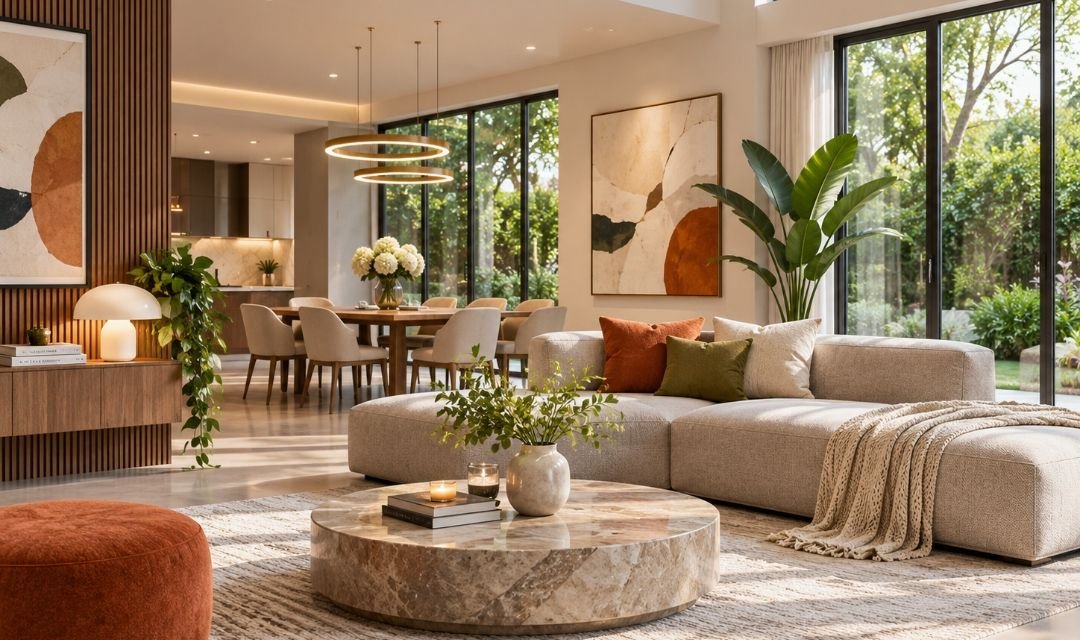
Modern interior design ideas can transform an ordinary house into a beautiful, comfortable, and functional living space. From minimalist furniture and neutral color palettes to smart lighting and natural materials, modern interiors focus on simplicity, elegance, and everyday comfort. The principles of interior design help homeowners create attractive spaces that balance appearance, functionality, and personal style.
| Category | Details |
|---|---|
| Main topic | Modern Interior Design Ideas |
| Popular styles | Modern, minimalist, Scandinavian, contemporary |
| Main focus | Comfort, simplicity, functionality |
| Popular colors | White, beige, gray, cream, earthy green |
| Common materials | Wood, glass, metal, stone |
| Furniture style | Clean lines, practical shapes |
| Lighting options | Pendant lights, LED strips, recessed lighting |
| Living room design | Neutral sofas, accent walls, modern furniture |
| Bedroom design | Soft colors, simple beds, layered lighting |
| Kitchen design | Sleek cabinets, islands, practical storage |
| Bathroom design | Walk-in showers, floating vanities |
| Budget options | Painting, rearranging, accessories, lighting |
| Design goal | Create a stylish and welcoming home |
Modern interior design has become popular because it combines attractive spaces with practical living.
Many homeowners want rooms that feel open, organized, and comfortable without excessive decoration.
However, creating a modern home does not mean removing every decorative item or using only white furniture.
Modern interiors can include warm colors, natural textures, comfortable seating, and personal accessories.
The key is to choose materials, furniture, and layouts that work together.
Whether you are decorating a small apartment, remodeling a family house, or refreshing one room, these 25 modern interior design ideas can help you create a beautiful home.
What Is Modern Interior Design?
Modern interior design is a style known for clean lines, simple shapes, functional furniture, and limited unnecessary decoration.
Historically, modern design developed through movements that emphasized practical spaces and straightforward materials.
Today, homeowners often use the term modern to describe interiors that look fresh, organized, and uncluttered.
Modern and contemporary design are related but not identical.
Modern design refers to an established design movement, while contemporary design describes styles popular in the present.
Many homes combine elements of both.
For example, a living room may include a simple modern sofa, natural wood furniture, and contemporary decorative lighting.
The result can feel stylish without becoming overly formal.
1. Choose a Neutral Color Palette
Neutral colors are a common foundation for modern interiors.
White, cream, beige, taupe, and gray can create a calm atmosphere.
These shades also work well with different furniture styles.
For example, warm beige walls can complement wooden flooring and a cream sofa.
Soft gray may look attractive with black metal accents.
However, modern homes do not need to use only neutral colors.
You can introduce stronger shades through artwork, cushions, and decorative accessories.
The goal is to create a balanced color scheme.
2. Add Natural Wood Elements
Natural wood can make modern interiors feel warmer.
Wooden furniture, flooring, shelves, and decorative panels introduce texture.
Oak, walnut, and ash are popular choices for different design styles.
Light wood can create a bright Scandinavian-inspired appearance.
Darker wood may add depth and contrast.
You do not need to use solid wood everywhere.
Quality wood veneers and suitable engineered materials can provide alternative options.
Choose finishes that complement the room’s overall color palette.
3. Use Minimalist Furniture
Minimalist furniture focuses on simple shapes and practical functions.
Modern sofas often feature clean lines and uncomplicated designs.
Dining tables may use slim legs and smooth surfaces.
Beds with simple headboards can create a peaceful bedroom atmosphere.
However, minimalist furniture should still be comfortable.
Avoid choosing a chair simply because it looks attractive.
Consider size, support, durability, and everyday use.
A few carefully selected furniture pieces often work better than many unnecessary items.
4. Create an Open-Plan Living Area
Open-plan layouts are popular in many modern homes.
They can connect the kitchen, dining room, and living room.
This arrangement may improve movement and allow natural light to reach more areas.
However, open-plan living is not suitable for every household.
Some families prefer separate spaces for privacy and noise control.
If you plan to remove walls, consult a qualified structural professional.
Never remove a potentially load-bearing wall without proper assessment and required approvals.
Sometimes rearranging furniture can create a more open appearance without construction.
5. Install Modern Pendant Lighting
Lighting is an important part of interior design.
Pendant lights can become attractive features above dining tables and kitchen islands.
Simple glass pendants suit many modern interiors.
Black metal fixtures can create contrast.
Warm-toned lighting may make living areas feel more comfortable.
However, decorative lighting should not replace practical task lighting.
Kitchens, bathrooms, and workspaces need appropriate brightness.
Choose fixtures that suit the room’s size and ceiling height.
6. Add a Statement Accent Wall
An accent wall can create visual interest without overwhelming a room.
You might choose a deep green, navy blue, or warm terracotta shade.
Textured wallpaper can also add character.
Wooden wall panels are another option.
However, avoid using too many strong patterns in one space.
Choose one main focal point.
An accent wall behind a sofa or bed can work particularly well.
Keep surrounding colors coordinated for a balanced appearance.
7. Use Large Windows and Natural Light
Natural light can make interiors feel brighter and more welcoming.
Large windows are common in many modern architectural designs.
However, replacing windows can be expensive.
You may be able to improve existing spaces by using lighter curtains and rearranging furniture.
Avoid blocking windows with large cabinets.
Mirrors can help reflect available daylight.
If you plan to enlarge window openings, structural and waterproofing requirements must be considered.
Professional assessment is important for major modifications.
8. Decorate With Indoor Plants
Indoor plants add natural color and texture.
They can soften the appearance of modern furniture and hard surfaces.
Popular choices include snake plants, pothos, and spider plants.
However, each plant has different care requirements.
Choose varieties suitable for the available light.
Check whether plants are safe for pets and children.
A few well-placed plants can create a welcoming atmosphere.
Avoid overcrowding shelves and windowsills.
9. Choose Modern Flooring
Flooring influences the appearance of an entire room.
Wood and wood-look finishes can create warmth.
Porcelain tiles may suit kitchens, bathrooms, and other suitable spaces.
Polished concrete can create an industrial-inspired appearance.
However, flooring should be chosen for practical performance.
Consider moisture exposure, durability, cleaning, and slip resistance.
Using consistent flooring across connected rooms may create visual continuity.
Choose materials that fit your budget and lifestyle.
10. Design a Modern Living Room
A modern living room should balance comfort and style.
Start with a sofa that fits the available space.
Add a practical coffee table.
Choose a rug that complements the furniture.
Use layered lighting for different activities.
A simple media unit can provide storage without dominating the room.
Avoid overcrowding the space with unnecessary furniture.
Modern living rooms should feel welcoming rather than empty.
Personal photographs, books, and artwork can add character.
11. Create a Comfortable Modern Bedroom
Modern bedrooms often use soft colors and simple furniture.
Neutral walls can create a relaxing atmosphere.
A comfortable bed should remain the main feature.
Choose practical bedside tables.
Wall-mounted lighting can save space.
Built-in wardrobes may improve storage.
Use curtains or blinds that provide suitable privacy and light control.
Layered bedding can introduce texture without excessive decoration.
The best modern bedroom design supports rest and everyday comfort.
12. Upgrade to a Modern Kitchen Design
Modern kitchens often feature streamlined cabinets and practical storage.
Flat-panel cabinet doors create a simple appearance.
Quartz, solid-surface, and other suitable countertop materials are common options.
Kitchen islands can provide additional preparation space when the layout allows them.
Under-cabinet lighting improves visibility.
Pull-out drawers can make storage more accessible.
However, the kitchen should remain practical.
Choose appliances and cabinet arrangements that support daily cooking routines.
13. Design a Modern Bathroom
Modern bathrooms often use clean lines and coordinated finishes.
Floating vanities can create a lighter appearance.
Large mirrors may help reflect light.
Walk-in showers are popular in many contemporary bathrooms.
Neutral tiles can provide a calm background.
However, waterproofing and ventilation are essential.
Choose flooring suitable for wet environments.
Use qualified professionals for major plumbing and shower installation work.
A modern bathroom should be safe, comfortable, and easy to maintain.
14. Add Smart Home Technology
Smart technology can improve convenience.
Popular devices include connected lighting, thermostats, and security systems.
Some products allow homeowners to control settings remotely.
However, not every smart device is necessary.
Choose technology that solves practical problems.
Check compatibility with existing systems.
Use strong passwords and keep devices updated.
Privacy and security should be considered before installing connected cameras or other monitoring equipment.
15. Use Glass and Metal Accents
Glass and metal can add a contemporary appearance.
Glass-top tables may create a lighter visual effect.
Metal furniture legs can provide clean lines.
Black metal frames are common in modern interiors.
Brushed brass can introduce warmth.
However, too many shiny surfaces may make a room feel cold.
Balance glass and metal with wood, fabric, and other softer textures.
Choose materials that are safe and easy to maintain.
16. Add Built-In Storage Solutions
Built-in storage can make a modern home feel organized.
Floor-to-ceiling cabinets provide substantial storage.
Wall-mounted shelves can hold books and decorative objects.
Under-stair cabinets may use otherwise wasted space.
Built-in wardrobes can reduce bedroom clutter.
However, storage should remain accessible.
Avoid creating cabinets that are difficult to clean or maintain.
Plan storage according to what your household actually owns.
17. Introduce Textured Fabrics
Modern interiors benefit from texture.
Without texture, neutral rooms may feel flat.
Consider linen curtains, woven rugs, cotton cushions, and upholstered furniture.
A soft throw can make a sofa feel more welcoming.
Textured bedding adds comfort to bedrooms.
Choose materials that suit your lifestyle.
For example, washable fabrics may be useful in busy family homes.
Combining different textures can create depth without relying on bold colors.
18. Create a Modern Dining Room
A modern dining room should support comfortable meals and gatherings.
Choose a table that fits the space.
Simple wooden or glass tables are popular options.
Dining chairs should provide suitable support.
A pendant light can create a focal point.
However, leave enough room for people to move around the table.
A sideboard may provide useful storage.
Keep decorations simple so the dining surface remains practical.
19. Use Mirrors for a Spacious Appearance
Mirrors can make rooms feel brighter.
They reflect light and create visual depth.
A large mirror may work well in a hallway.
A decorative mirror above a console table can become a focal point.
Mirrored wardrobe doors may be useful in small bedrooms.
However, placement matters.
Avoid reflections that create uncomfortable glare.
Secure mirrors properly, especially large or heavy designs.
20. Design a Modern Home Office
A home office should support productivity and comfort.
Choose a desk that fits the available space.
An ergonomic chair can improve comfort during long working periods.
Use shelves or cabinets for organization.
Good lighting is essential.
Keep computer cables tidy.
A neutral color palette may help create a calm atmosphere.
However, the space should reflect your personal preferences.
A modern home office does not need to look like a commercial workplace.
21. Add Modern Wall Art
Artwork can bring personality into a modern home.
Abstract paintings, photography, and simple prints are popular choices.
Large artwork can create a focal point above a sofa.
A gallery wall may work well in a hallway.
Choose pieces that complement the room’s colors.
However, artwork does not need to match every furniture item.
Personal meaning is also important.
Avoid filling every wall with decoration.
A balanced arrangement often creates a stronger visual effect.
22. Use Sustainable Design Materials
Sustainable interior design considers durability, resource use, and environmental impact.
Reclaimed wood can add character.
Secondhand furniture may reduce unnecessary waste.
Durable materials can reduce replacement frequency.
Energy-efficient lighting may lower electricity consumption.
However, sustainability depends on several factors.
Manufacturing, transportation, maintenance, and disposal all influence environmental impact.
Choose products based on verified information rather than marketing claims alone.
23. Create a Modern Entryway
An entryway creates the first impression of a home.
A narrow console table can provide a place for keys and small belongings.
A mirror may make the space feel brighter.
Wall hooks can organize coats and bags.
A simple rug can add warmth.
However, keep walkways clear.
Choose durable materials because entrances experience regular foot traffic.
A well-organized entryway can make the entire home feel more welcoming.
24. Add Warm and Cozy Lighting
Modern design does not need to feel cold.
Warm lighting can create a comfortable atmosphere.
Table lamps, floor lamps, and wall lights provide different lighting options.
Dimmable fixtures may offer flexibility when compatible with the electrical system.
Use brighter lighting for practical tasks.
Softer lighting may work well for relaxing in the evening.
The goal is to create a balanced lighting arrangement.
Choose fixtures and bulbs suitable for each space.
25. Personalize Your Modern Interior
The most successful modern homes reflect the people living in them.
A room should not feel like a furniture showroom.
Display meaningful photographs.
Include favorite books.
Choose artwork you enjoy.
Use colors that make you comfortable.
However, avoid filling every surface with decorative objects.
A balanced approach allows personal items to stand out.
Modern interior design should combine simplicity with individuality.
Modern Interior Design Color Combinations
Color combinations influence the mood of a room.
| Color combination | Best for | Overall appearance |
|---|---|---|
| White and beige | Living rooms | Bright and warm |
| Gray and black | Modern offices | Clean and sophisticated |
| Cream and natural wood | Bedrooms | Soft and relaxing |
| Sage green and white | Kitchens | Fresh and natural |
| Navy blue and brass | Dining rooms | Bold and elegant |
| Terracotta and beige | Living spaces | Warm and earthy |
| Charcoal and walnut | Home offices | Rich and modern |
| Soft blue and white | Bathrooms | Calm and refreshing |
Choose colors based on natural light, room size, and personal preferences.
Modern Interior Design Ideas for Small Homes
Small homes can benefit from modern design principles.
Use furniture that fits the available space.
Choose practical storage solutions.
Avoid blocking windows.
Light-colored walls may help rooms feel brighter.
Multifunctional furniture can reduce clutter.
For example, a sofa bed can provide seating and sleeping space.
A storage ottoman can hold blankets.
Wall-mounted shelves may replace bulky cabinets.
The most important goal is to improve functionality without overcrowding the room.
Modern Interior Design on a Budget
Modern interiors do not always require expensive renovations.
Small changes can create a noticeable difference.
Consider repainting walls.
Replace outdated cabinet handles.
Rearrange existing furniture.
Add affordable artwork.
Update curtains and lighting.
Refinish furniture that remains in good condition.
Choose a consistent color palette.
These improvements can refresh a home without major construction.
Example $1,000 Modern Interior Makeover Budget
| Improvement | Example budget |
|---|---|
| Painting and supplies | $200 |
| Lighting upgrades | $150 |
| Curtains and cushions | $150 |
| Wall art and mirrors | $120 |
| Shelves and storage | $130 |
| Small furniture updates | $150 |
| Contingency | $100 |
| Total | $1,000 |
These amounts are illustrative. Actual costs depend on local prices, room sizes, and materials.
Modern Interior Design Trends for 2026
Several design directions are relevant to modern interiors in 2026.
Warm minimalism continues to be a useful approach for homeowners who prefer simple but comfortable spaces.
Natural wood, earthy colors, and textured fabrics can soften modern interiors.
Multifunctional furniture remains practical for compact homes.
Integrated storage can help reduce clutter.
Energy-conscious lighting and durable materials are also important considerations.
However, trends should not replace personal preferences.
Choose designs that suit your home and remain practical over time.
Common Modern Interior Design Mistakes
One common mistake is using too many decorative items.
This can make rooms feel crowded.
Another mistake is choosing furniture that is too large.
Poor lighting can also reduce comfort.
Some homeowners use only hard materials, making rooms feel cold.
Adding fabrics and natural textures can create balance.
Another problem is following trends without considering daily needs.
A beautiful interior should also be practical.
Finally, avoid spending money on decorative improvements while ignoring necessary repairs.
How to Plan a Modern Interior Design Project
Start by identifying the rooms you want to improve.
Measure each space carefully.
Choose a general design direction.
Create a color palette.
Select the main furniture pieces.
Plan lighting and storage.
Set a realistic budget.
Research materials before purchasing.
If structural, electrical, or plumbing changes are required, consult qualified professionals.
Complete essential repairs before decorative work.
A clear plan helps create a consistent result.
Final Thoughts
Modern interior design ideas can help transform ordinary rooms into attractive, comfortable, and practical living spaces.
You do not need a large property or an unlimited budget to create a stylish home.
Simple changes such as choosing coordinated colors, improving lighting, adding natural materials, and organizing furniture can make a noticeable difference.
Modern design works best when every element has a purpose.
Comfortable seating, practical storage, durable finishes, and suitable lighting are just as important as appearance.
Whether you prefer minimalist interiors, warm natural materials, or bold contemporary accents, the best design should reflect your lifestyle.
With thoughtful planning and carefully selected details, you can create a modern home that remains welcoming, functional, and beautiful for years.
Frequently Asked Questions About Modern Interior Design Ideas
1. What is modern interior design?
Modern interior design emphasizes clean lines, functional furniture, simple forms, and coordinated materials.
2. What are the best modern interior design ideas?
Neutral colors, natural wood, practical storage, layered lighting, and comfortable furniture are popular choices.
3. What colors are best for modern homes?
White, beige, gray, cream, earthy green, and other coordinated shades can work well.
4. How can I make my home look modern?
Update lighting, simplify furniture arrangements, improve storage, and choose coordinated finishes.
5. Is modern interior design expensive?
Not necessarily. Painting, rearranging furniture, and updating accessories can provide affordable improvements.
6. What furniture is best for modern interiors?
Furniture with clean lines, suitable proportions, and practical functions often works well.
7. Can modern design work in small apartments?
Yes. Compact furniture, vertical storage, and efficient layouts can make small spaces comfortable.
8. What is the difference between modern and contemporary design?
Modern design refers to an established design movement, while contemporary design reflects current styles.
9. Are neutral colors necessary for modern interiors?
No. Modern homes can include bold colors when used thoughtfully.
10. How do I design a modern living room?
Choose comfortable furniture, coordinated colors, practical lighting, and organized storage.
11. What makes a bedroom look modern?
Simple furniture, soft colors, suitable lighting, and uncluttered storage can create a modern appearance.
12. What is a modern kitchen design?
It often includes streamlined cabinets, practical layouts, durable countertops, and efficient storage.
13. What is a modern bathroom design?
Modern bathrooms commonly use simple fixtures, coordinated finishes, good lighting, and practical storage.
14. Is wood suitable for modern interiors?
Yes. Natural wood can add warmth and texture.
15. Are indoor plants good for modern homes?
They can add natural color and soften the appearance of furniture and hard surfaces.
16. How can I improve modern interior lighting?
Combine general lighting, task lighting, and decorative fixtures.
17. What flooring works best in modern homes?
The best choice depends on moisture exposure, durability, maintenance, and design preferences.
18. Should modern homes have open layouts?
Open layouts can work well, but privacy, noise, and household needs should be considered.
19. How can I make modern interiors feel cozy?
Use warm lighting, comfortable furniture, natural materials, and textured fabrics.
20. Is minimalist design the same as modern design?
No. Minimalism focuses on reducing unnecessary elements, while modern design includes a broader set of principles.
21. Can I combine modern and traditional furniture?
Yes. A carefully coordinated mix can create a personal and attractive interior.
22. What are popular modern interior materials?
Wood, glass, metal, stone, and suitable engineered materials are commonly used.
23. How do I decorate modern walls?
Use artwork, mirrors, accent paint, or selected decorative panels.
24. What modern interior design mistakes should I avoid?
Avoid oversized furniture, poor lighting, excessive clutter, and impractical layouts.
25. What is the most important modern interior design tip?
Create a balance between appearance, comfort, and functionality.
For more home improvement guides, interior decorating inspiration, renovation tips, and affordable design ideas, visit Picanto Magazine