
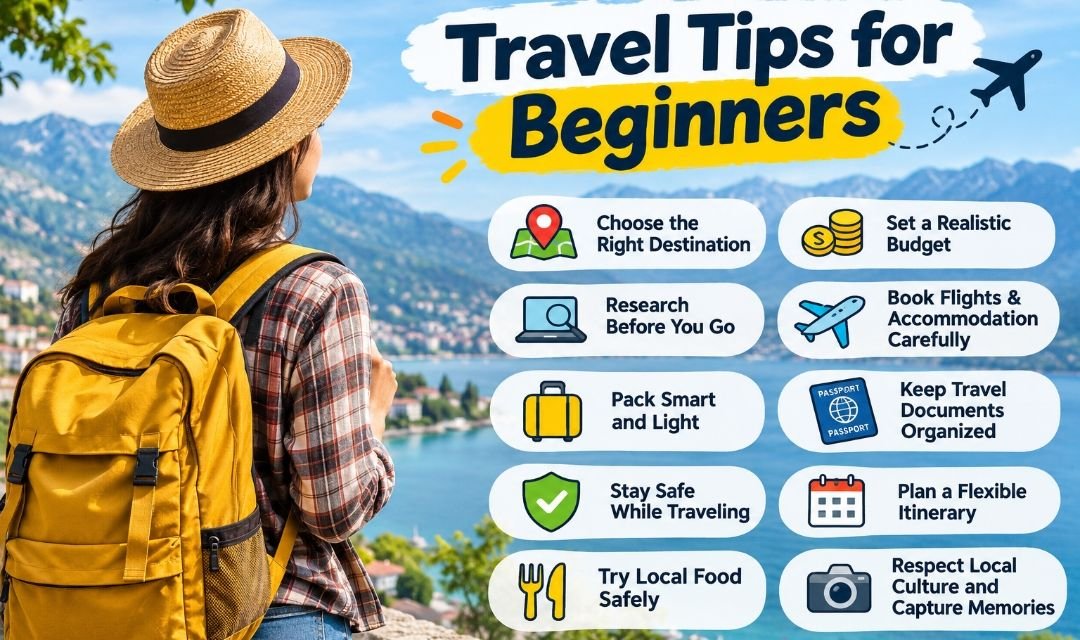
Travel tips for beginners can make your first journey easier, safer, and more enjoyable. Traveling to a new place is exciting, but it can also feel confusing when you do not know where to start. From choosing a destination to packing your luggage, there are many small things to consider before leaving home.
The good news is that traveling does not have to be complicated. With some preparation, a realistic budget, and a flexible attitude, almost anyone can enjoy a successful trip. Whether you want to explore another city, visit a beautiful beach, or experience a different culture, learning basic travel skills can help you feel more confident.
According to Wikipedia’s travel overview, people travel for different reasons, including recreation, exploration, business, and personal experiences. Whatever your reason for traveling, understanding the basics is a useful first step.
Quick Overview of Travel Tips for Beginners
| Travel topic | Beginner advice |
|---|---|
| Destination | Choose an easy and affordable place |
| Budget | Plan for transportation, food, and accommodation |
| Packing | Bring essential items and avoid overpacking |
| Accommodation | Check location, reviews, and facilities |
| Transportation | Research local travel options |
| Travel documents | Check passports, visas, and entry requirements |
| Safety | Protect important documents and belongings |
| Health | Prepare medications and check travel health advice |
| Planning | Make a flexible daily itinerary |
| Experience | Explore local culture and enjoy the journey |
1. Choose the Right Destination for Your First Trip
One of the most important travel tips for beginners is choosing a destination that matches your interests, budget, and comfort level.
Some places are easier for first-time travelers because they have reliable transportation, plenty of accommodation choices, and established tourist facilities.
Before selecting a destination, think about what you want from your journey.
Do you prefer relaxing near the ocean? Would you rather explore historical buildings or enjoy busy city streets?
Your personal interests should guide your decision.
Consider these factors before choosing
-
Travel distance and transportation costs.
-
Weather during your planned visit.
-
Accommodation availability.
-
Local transportation options.
-
Language and communication.
-
Safety conditions and entry requirements.
For your first adventure, choosing a destination with straightforward travel arrangements can reduce unnecessary stress.
Remember that your first trip does not need to be expensive or international. Exploring a nearby city can be just as exciting.
2. Set a Realistic Travel Budget
Traveling without a budget can quickly become stressful.
Many beginners focus only on flight tickets and hotel prices. However, small daily expenses can add up during a trip.
A good travel budget should cover your main expenses while leaving some extra money for unexpected situations.
Common travel expenses
| Expense | What to include |
|---|---|
| Transportation | Flights, trains, buses, taxis |
| Accommodation | Hotels, hostels, guesthouses |
| Food | Meals, snacks, and drinks |
| Activities | Attractions, tours, entrance fees |
| Shopping | Souvenirs and personal purchases |
| Emergency money | Unexpected transportation or medical expenses |
Try to estimate your total costs before making reservations.
You can also divide your available spending money by the number of travel days to create a daily budget.
For example, if you have $500 available for daily spending during a five-day trip, your average daily allowance would be $100. This example excludes any expenses you have already paid.
It is also helpful to keep an emergency fund separate from your regular spending money.
3. Research Your Destination Before Traveling
Research is one of the simplest ways to avoid common travel mistakes.
You do not need to learn everything about your destination. However, understanding basic information can make your arrival much smoother.
Start by checking the local weather, transportation options, popular attractions, and general travel conditions.
You should also learn about local customs and cultural expectations.
Something considered normal in your home country may be viewed differently somewhere else.
Important things to research
-
Local currency and common payment methods.
-
Public transportation routes.
-
Local customs and etiquette.
-
Weather and seasonal conditions.
-
Tourist scams and common safety concerns.
-
Emergency telephone numbers.
-
Internet access and mobile connectivity.
Reading recent traveler experiences can also provide useful information, but verify important details through official sources.
Good research helps you understand what to expect without removing the excitement of discovering somewhere new.
4. Book Flights and Accommodation Carefully
Flight and accommodation bookings are often the biggest early decisions when organizing a trip.
Beginners should compare prices, locations, and booking conditions before making payments.
A cheap flight may look attractive, but additional baggage fees or inconvenient departure times can increase its overall cost.
Similarly, an inexpensive hotel far from the main attractions may result in higher transportation expenses.
Tips for booking flights
Compare different travel dates when your schedule is flexible.
Check baggage allowances before purchasing tickets.
Review airport locations and transfer times.
Make sure your name matches your passport or identification document.
Read cancellation and change policies.
Tips for choosing accommodation
Look for hotels or guesthouses with recent, detailed reviews.
Check whether the property is close to public transportation.
Review the check-in and check-out times.
Confirm whether breakfast, Wi-Fi, and taxes are included.
Choose accommodations with clear contact details and secure booking arrangements.
For first-time travelers, convenience and safety can be more valuable than finding the absolute lowest price.
5. Pack Smart and Avoid Overpacking
Packing too many items is a common beginner mistake.
Heavy luggage makes transportation more difficult, especially when moving between airports, train stations, and hotels.
The easiest approach is to pack only what you realistically expect to use.
Choose clothing that matches the weather and can be combined into different outfits.
Comfortable shoes are especially important if you plan to walk long distances.
Essential travel packing checklist
Your packing checklist
0 of 12 packed
Keep valuable items and essential medication in your carry-on bag when permitted.
If you are flying, check the airline’s restrictions on liquids, batteries, luggage dimensions, and prohibited items.
Packing light allows you to move comfortably and makes your journey easier.
6. Keep Travel Documents Organized
Important documents should be checked well before departure.
International travelers may need a valid passport, visa, travel authorization, or other entry documents depending on their nationality and destination.
Some countries also require passports to remain valid for a specific period beyond the intended travel dates.
Because entry rules vary, always confirm the latest requirements with official immigration or embassy sources.
Store digital copies of essential documents on a secure device or account.
It can also be helpful to carry paper copies separately from the originals.
Keep booking confirmations, emergency contacts, and travel insurance information easily accessible.
Being organized saves time when checking into hotels or navigating airports.
7. Arrive Early at Airports and Stations
Transportation hubs can feel overwhelming during your first journey.
Airports are especially busy, and you may need to complete several steps before boarding.
These can include baggage drop-off, security screening, immigration checks, and finding the correct gate.
Check your airline’s recommended arrival time rather than assuming that every airport follows the same schedule.
You should also account for possible traffic delays on the way to the airport.
When traveling by train or bus, confirm the departure platform, station location, and ticket requirements.
Giving yourself enough time helps avoid unnecessary rushing.
8. Learn How Local Transportation Works
Understanding local transportation can save both time and money.
Depending on your destination, you may have access to buses, trains, metro systems, taxis, or ride-hailing services.
Research transportation options before arrival.
Some cities have affordable daily or weekly public transportation passes.
Others may have limited services in certain areas, making taxis or rental vehicles more practical.
Check the approximate cost of traveling from your airport or station to your accommodation.
Learning how tickets work can also prevent confusion.
For example, some public transportation systems require passengers to validate tickets before boarding.
Having a basic transportation plan makes exploring a new place much easier.
9. Stay Safe While Traveling
Safety should always be part of your travel planning.
Most trips can be enjoyable without serious problems, but taking simple precautions helps reduce risks.
Keep an eye on your belongings in crowded tourist areas.
Avoid leaving bags unattended, and do not display large amounts of cash unnecessarily.
Use reputable transportation providers and verify accommodation details before arriving.
Simple safety habits
-
Share your itinerary with someone you trust.
-
Keep emergency contact details accessible.
-
Avoid walking alone in unfamiliar isolated areas late at night.
-
Use secure payment methods.
-
Protect passwords and sensitive information on public Wi-Fi.
-
Follow local laws and official safety advice.
-
Trust your judgment if a situation feels unsafe.
Travel insurance may also be useful, particularly for international trips where medical treatment or unexpected cancellations could become expensive.
Review coverage limits and exclusions before purchasing a policy.
10. Plan Your Activities Without Overloading Your Schedule
Many beginners try to visit every popular attraction during their first trip.
Although this sounds exciting, an overloaded itinerary can make traveling exhausting.
You may spend more time rushing between locations than enjoying them.
Instead, choose a few important activities each day.
Leave time for meals, transportation, rest, and unexpected discoveries.
Example of a relaxed travel day
| Time | Activity |
|---|---|
| Morning | Breakfast and a major attraction |
| Late morning | Explore nearby streets or landmarks |
| Afternoon | Lunch and a museum or local market |
| Evening | Relax, enjoy dinner, or take a short walk |
| Night | Prepare for the next day |
This flexible approach helps you enjoy each location.
Remember that traveling is not a competition to see the most attractions.
Sometimes your favorite memories come from simple moments that were never part of your original itinerary.
11. Learn a Few Useful Local Phrases
Language differences can be challenging for first-time international travelers.
Fortunately, you do not need to speak another language fluently to enjoy a destination.
Learning a few simple phrases can make everyday communication easier.
Start with greetings, polite expressions, and questions related to transportation or shopping.
Useful phrases include “hello,” “thank you,” “please,” “how much does this cost?” and “where is the station?”
Translation apps can help when communication becomes difficult.
Downloading an offline language pack can be particularly useful when internet access is limited.
Making an effort to communicate respectfully can also create positive interactions with local residents.
12. Understand Local Food and Drinking Water Safety
Trying local food is one of the most enjoyable parts of traveling.
Different destinations offer unique dishes, ingredients, and cooking traditions.
However, beginners should consider food hygiene and personal dietary needs.
Choose food establishments that appear clean and handle ingredients properly.
If you have food allergies, learn how to explain them clearly in the local language.
Research whether tap water is safe to drink at your destination.
Where water quality is uncertain, use a reliable safe drinking-water source.
Trying new foods gradually may also help travelers with sensitive stomachs.
There is no need to avoid local cuisine completely. Being thoughtful about food safety allows you to explore new flavors with greater confidence.
13. Prepare Your Phone and Internet Access
A smartphone is one of the most useful travel tools.
It can help with navigation, communication, translations, booking confirmations, and emergency information.
Before departure, check whether your mobile plan includes roaming services.
International roaming can be expensive, so compare available options.
A local SIM card or travel eSIM may offer better value, depending on your phone and destination.
Download important information before leaving home.
This can include offline maps, hotel addresses, transportation details, and travel documents.
It is also helpful to carry a portable power bank that meets airline requirements.
Keeping your phone charged and connected makes many travel tasks easier.
14. Respect Local Culture and Traditions
Every destination has its own customs and social expectations.
Respecting these differences is an important part of responsible travel.
Before visiting another country or region, learn about basic cultural practices.
Some religious sites require visitors to wear modest clothing.
Other locations may have rules about photography, public behavior, or entering certain buildings.
Always request permission before taking close photographs of people, especially in private or sensitive settings.
Be polite when communicating with local residents and service workers.
Showing respect can make your experience more meaningful and help create positive relationships.
15. Avoid Common Beginner Travel Mistakes
Travel mistakes are part of learning, but many are easy to prevent.
Understanding common problems can save money and reduce stress.
One frequent mistake is booking transportation with connections that are too short.
Another is planning too many activities without accounting for traffic or travel delays.
Beginners may also forget to check cancellation policies or underestimate additional costs.
Mistakes to avoid
| Common mistake | Better approach |
|---|---|
| Overpacking | Bring versatile essentials |
| Ignoring hidden costs | Check complete booking prices |
| Forgetting travel documents | Prepare a document checklist |
| Planning too many activities | Keep a flexible schedule |
| Not researching transport | Check routes before arriving |
| Exchanging money without comparison | Review rates and fees |
| Ignoring local customs | Learn basic etiquette |
| Relying entirely on internet access | Save important information offline |
Making a few preparations before departure can prevent many unnecessary difficulties.
16. Keep Some Flexibility in Your Travel Plans
Even carefully organized trips can change unexpectedly.
Bad weather, delayed transportation, or attraction closures may affect your itinerary.
Instead of becoming frustrated, try to keep alternative options available.
For example, if rain prevents an outdoor activity, you might visit a museum, indoor market, or café.
Avoid making every hour dependent on a strict schedule.
A flexible attitude makes it easier to handle surprises.
Sometimes an unexpected change leads to a memorable experience that you would otherwise have missed.
17. Travel Responsibly and Protect the Environment
Travel creates opportunities to discover beautiful destinations, but it can also affect local communities and natural environments.
Beginners can develop responsible travel habits from their first journey.
Avoid littering and use reusable items when practical.
Respect wildlife by observing animals from a safe distance rather than feeding or disturbing them.
Follow marked walking paths in natural areas.
Support local businesses when possible, including restaurants, markets, and independent guides.
Be mindful of water and electricity use in hotels.
Small actions can help protect the places that make traveling special.
Responsible travel also means treating local residents with courtesy and recognizing that communities are more than tourist attractions.
18. Capture Memories Without Missing the Experience
Taking photographs is a wonderful way to remember your trip.
You may want to document beautiful views, interesting streets, food, and special moments.
However, constantly focusing on your phone can take attention away from the experience itself.
Try to balance photography with enjoying your surroundings.
Spend some time observing what is happening around you without looking through a camera.
You can also keep a small travel journal.
Writing down favorite experiences, interesting conversations, or surprising discoveries can preserve memories that photographs may not capture.
The best travel memories often involve feelings and experiences rather than perfect pictures.
19. Start With Short Trips to Build Confidence
You do not need to begin your travel journey with a long international vacation.
A weekend trip to another city can help you learn many important travel skills.
You can practice organizing transportation, booking accommodation, managing expenses, and navigating unfamiliar locations.
Short trips also provide opportunities to discover your travel preferences.
You may learn that you enjoy quiet destinations more than crowded cities.
Perhaps you prefer nature activities over shopping or historical sightseeing.
These discoveries can help you plan future adventures more confidently.
As your experience grows, planning more complicated trips may become easier.
20. Enjoy the Journey Instead of Seeking Perfection
Perhaps the most important advice for beginners is to enjoy the experience without expecting everything to be perfect.
Travel can involve unexpected delays, confusing directions, and occasional mistakes.
These situations do not necessarily mean that your trip has failed.
Often, they become valuable learning experiences.
Focus on the opportunities that traveling provides.
You may discover unfamiliar foods, meet interesting people, explore beautiful scenery, or learn something new about yourself.
Every trip can help you become more independent and adaptable.
The more experience you gain, the more comfortable you may feel exploring unfamiliar places.
Frequently Asked Questions About Travel Tips for Beginners
What are the best travel tips for beginners?
The best travel tips include choosing a suitable destination, setting a budget, researching transportation, packing essentials, checking documents, and keeping a flexible itinerary. Staying aware of your surroundings and preparing for unexpected expenses are also important.
How much money should a beginner save for traveling?
The amount depends on the destination, trip length, accommodation preferences, and planned activities. Calculate major costs first, estimate daily spending, and keep additional money available for emergencies.
What should I pack for my first trip?
Pack identification documents, comfortable clothing, suitable shoes, essential toiletries, medications, chargers, and payment methods. Check the weather and transportation baggage rules before finalizing your luggage.
Is traveling alone safe for beginners?
Solo travel can be enjoyable, but safety depends on the destination, preparation, and personal circumstances. Beginners should research local conditions, choose reputable accommodation, share travel details with someone they trust, and take sensible precautions.
How can beginners travel on a small budget?
Traveling during less popular periods, comparing accommodation choices, using public transportation, and choosing affordable activities can help reduce expenses. Planning spending limits and avoiding unnecessary purchases can also make a difference.
How many days should a first trip last?
A short trip of two to five days can be a manageable starting point for many beginners. However, the ideal length depends on travel distance, available money, and personal comfort.
What is the biggest mistake first-time travelers make?
A common mistake is failing to plan for practical details such as transportation, documentation, baggage restrictions, and daily expenses. A simple checklist and flexible schedule can help prevent these problems.
Final Thoughts
Travel tips for beginners are not about creating a perfect vacation. They are about developing simple habits that help you explore unfamiliar places safely, confidently, and comfortably.
Your first journey may feel challenging at the beginning, but preparation can make a meaningful difference. Choosing the right destination, organizing essential documents, setting a realistic budget, and keeping your plans flexible are valuable steps.
You do not need expensive equipment, luxury hotels, or a complicated itinerary to enjoy traveling. Curiosity, thoughtful planning, and a willingness to discover new experiences are often enough to make a journey memorable.
Start small, travel smart, and remember that every experienced traveler was once a beginner.