
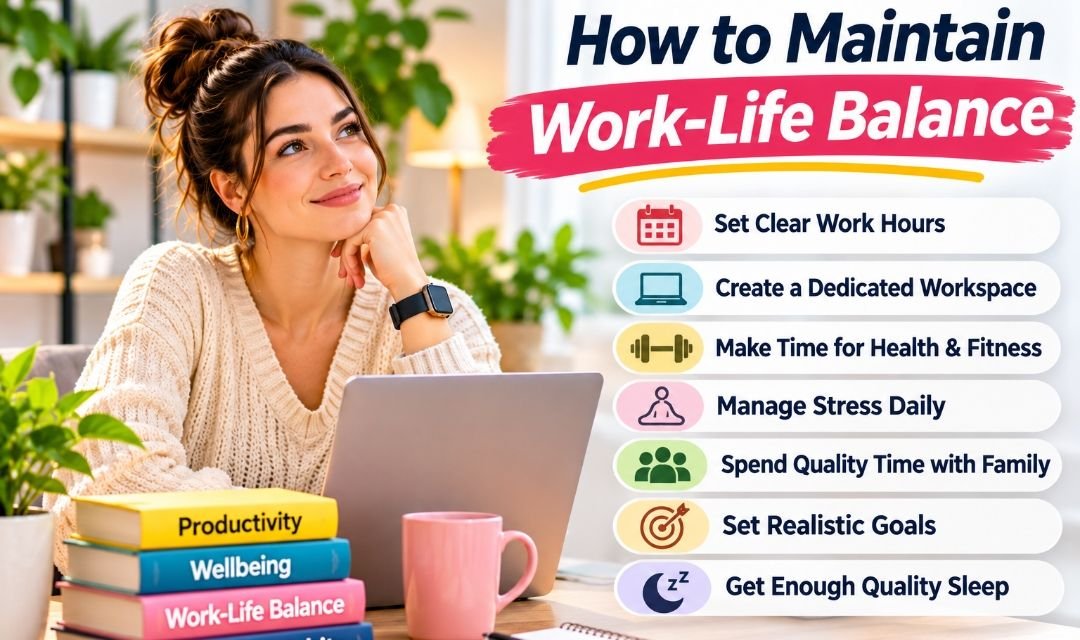
How to maintain work-life balance is an important question for anyone trying to manage professional responsibilities while enjoying a healthy personal life. In today’s busy world, people often spend long hours working, answering emails, attending meetings, and completing deadlines. As a result, personal interests, family time, exercise, and relaxation may receive less attention.
Finding the right balance between work and personal life does not mean dividing every day into equal hours. It means creating a routine that allows you to meet important responsibilities without constantly neglecting your wellbeing.
Whether you work in an office, manage a business, study, or work from home, developing healthier habits can help make everyday life more manageable.
This guide explores 20 practical ways to maintain work-life balance while protecting your time, health, relationships, and personal happiness.
What Is Work-Life Balance?
Work-life balance refers to the way people manage their professional responsibilities alongside personal needs and activities.
These activities may include spending time with family, maintaining relationships, exercising, enjoying hobbies, and getting sufficient rest.
A balanced lifestyle does not necessarily mean spending the same number of hours working and relaxing.
Different people have different responsibilities, schedules, and personal priorities.
For example, a business owner may occasionally need to work longer hours, while a parent may need greater flexibility during school holidays.
Work-life balance involves recognizing these changing demands and making adjustments where possible.
The goal is to create a lifestyle that supports both professional success and personal wellbeing.
Why Is Work-Life Balance Important?
Maintaining a healthy balance between work and personal life can support physical health, emotional wellbeing, and everyday satisfaction.
When professional responsibilities continuously occupy personal time, people may experience exhaustion, frustration, and difficulty relaxing.
Long working hours may also reduce opportunities for physical activity, healthy meals, and sufficient sleep.
A better balance can create space for important personal needs.
Better Physical Health
Making time for exercise, nutrition, and sleep supports long-term physical wellbeing.
Improved Emotional Wellbeing
Regular breaks and personal activities can provide opportunities to manage everyday stress.
Healthier Relationships
Spending meaningful time with family and friends helps maintain social connections.
Sustainable Productivity
A manageable work schedule can help people remain focused without relying on constant overtime.
Greater Personal Satisfaction
Having time for hobbies, rest, and meaningful experiences can make everyday life more enjoyable.
1. Set Clear Working Hours
One of the simplest ways to maintain work-life balance is to establish reasonable working hours.
Without clear boundaries, work can gradually occupy more of your personal time.
This can be especially challenging for freelancers, remote workers, and business owners.
Try creating a consistent schedule for beginning and finishing work.
For example, you might work from 9 AM to 5 PM and reserve evenings for personal activities.
Your exact schedule will depend on your responsibilities.
Once your working day ends, avoid unnecessary professional tasks when possible.
If your job requires flexible hours, try planning personal time around those commitments.
The important thing is to prevent work from automatically filling every available hour.
2. Create a Dedicated Workspace
A comfortable workspace can help you stay organized and separate professional tasks from personal activities.
This is particularly useful for people working from home.
If possible, choose a quiet area where you can concentrate.
You do not necessarily need a separate home office.
A small desk in a suitable corner may be enough.
Keep essential work materials nearby and reduce unnecessary distractions.
At the end of your working day, put away documents and close work-related applications.
This creates a clearer difference between professional and personal time.
A dedicated workspace can also help family members understand when you are working.
3. Learn to Prioritize Important Tasks
Trying to complete everything at once can create unnecessary pressure.
Instead, identify the responsibilities that require the most attention.
At the beginning of your working day, review your task list.
Choose two or three important priorities.
Complete urgent or high-value tasks before spending too much time on less important activities.
You can also divide large projects into smaller steps.
For example, rather than planning to finish an entire report immediately, begin with research, outlining, and drafting.
This approach makes demanding responsibilities easier to manage.
Prioritizing tasks helps you use working hours more effectively and may reduce the need for unnecessary overtime.
4. Take Regular Breaks During Work
Working continuously without breaks can become tiring.
Short breaks offer opportunities to move, rest your eyes, and temporarily step away from demanding tasks.
Consider standing or stretching after long periods of sitting.
You might also take a short walk, drink water, or enjoy a snack.
If your work involves computer screens, regularly looking away from the display can help reduce visual discomfort.
Breaks do not need to be lengthy.
Even a few minutes between demanding activities can be useful.
Try scheduling breaks rather than waiting until you feel completely exhausted.
Taking reasonable rest periods is part of maintaining a sustainable work routine.
5. Avoid Taking Unnecessary Work Home
Many employees and professionals continue checking emails after their official working hours.
Although occasional urgent responsibilities may be unavoidable, regularly working during personal time can make relaxation difficult.
Consider identifying which tasks genuinely require immediate attention.
Other responsibilities may be able to wait until the next working day.
If appropriate for your role, communicate your availability to coworkers and clients.
Turn off nonessential work notifications during personal time.
For people working remotely, closing the laptop and leaving the workspace can create a useful end-of-day routine.
Professional commitment is important, but constant availability is not always necessary or sustainable.
6. Make Time for Physical Activity
Exercise supports physical fitness and overall wellbeing.
However, busy working schedules can make regular physical activity difficult.
You do not need to spend several hours at the gym to become more active.
Walking, cycling, swimming, dancing, and home workouts are practical options.
Consider adding movement to your existing routine.
For example, you could take a short walk during lunch or exercise after finishing work.
Adults are generally encouraged to aim for at least 150 minutes of moderate-intensity physical activity each week, along with muscle-strengthening activities on two or more days.
If you are currently inactive, begin gradually.
Choose activities that match your abilities and interests.
7. Prioritize Quality Sleep
Sleep is an essential part of physical and emotional wellbeing.
Unfortunately, demanding workloads sometimes encourage people to reduce their sleeping hours.
Regularly getting insufficient sleep can affect concentration, mood, and everyday functioning.
Most adults need at least seven hours of sleep each night, although individual requirements vary.
Try maintaining consistent sleeping and waking times.
Keep your bedroom comfortable, quiet, and dark.
Avoid excessive caffeine late in the day if it affects your sleep.
A relaxing bedtime routine may also help.
Reading, gentle stretching, or taking a warm shower can provide a comfortable transition into rest.
Protecting sleep time is an important part of work-life balance.
8. Eat Balanced Meals During Busy Days
A demanding schedule can make healthy eating challenging.
Some people skip meals, eat while working, or regularly depend on convenience foods.
However, maintaining balanced nutrition supports normal body functions and everyday energy needs.
Try including vegetables, fruits, whole grains, protein-rich foods, and healthy fats in your meals.
Preparing food in advance may save time during particularly busy days.
For example, you could prepare lunch ingredients the previous evening.
Keeping nutritious snacks available may also help.
Take a proper meal break when your responsibilities allow.
Eating away from your workstation can provide an opportunity to relax.
Healthy meals do not need to be complicated or expensive.
9. Practice Simple Stress Management
Workplace pressure and personal responsibilities can sometimes create stress.
Although stress cannot always be avoided, developing healthy coping strategies can make difficult situations easier to manage.
Simple relaxation techniques include slow breathing, meditation, gentle stretching, and spending time outdoors.
Some people enjoy listening to music or writing in a journal.
Others prefer talking with trusted friends or family members.
Choose activities that help you feel comfortable.
Taking brief breaks during demanding tasks may also be useful.
If stress becomes persistent, overwhelming, or significantly affects daily functioning, consider seeking support from a qualified professional.
Managing stress is not about ignoring responsibilities.
It involves responding to challenges in a healthier and more sustainable way.
10. Spend Quality Time With Family
Family relationships are an important part of personal life.
However, long working hours can reduce opportunities for meaningful interaction.
Consider creating regular periods for family activities.
This might include sharing dinner, going for walks, playing games, or simply having conversations.
Try giving family members your full attention during these moments.
Avoid checking work messages unnecessarily when spending time together.
You do not need expensive outings to build meaningful connections.
Ordinary activities can provide enjoyable experiences.
Maintaining family relationships may require flexibility, especially during busy working periods.
The important thing is making reasonable efforts to protect time for people who matter.
11. Maintain Friendships and Social Connections
A healthy personal life includes relationships beyond professional responsibilities.
Friends and supportive communities can provide companionship, encouragement, and opportunities for enjoyable activities.
However, busy schedules sometimes make social connections difficult to maintain.
Consider arranging occasional meetings, phone calls, or shared activities.
You might join a local sports group, book club, or community event.
Even short conversations can help maintain meaningful relationships.
Social activities should feel enjoyable rather than become another demanding obligation.
Choose opportunities that suit your interests and available time.
A few supportive relationships can be more meaningful than having a large social circle.
12. Learn to Say No Politely
Taking on too many responsibilities can make work-life balance difficult.
People sometimes accept extra tasks because they want to help others or avoid disappointment.
However, repeatedly agreeing to more work than you can reasonably manage may lead to exhaustion.
Before accepting a new commitment, review your existing responsibilities.
Consider how much time and attention the task requires.
If your schedule is already full, explain your limitations respectfully.
You might suggest an alternative deadline or discuss which responsibilities should receive priority.
Setting boundaries does not mean avoiding important work.
It means being realistic about your capacity.
Clear communication can help prevent misunderstandings and unnecessary pressure.
13. Reduce Digital Distractions
Technology supports modern working life, but constant notifications can interrupt concentration.
Emails, messaging applications, social media, and online meetings may compete for your attention.
Consider turning off unnecessary notifications during focused work.
You can also schedule specific periods for checking emails when appropriate.
This may help reduce frequent interruptions.
Outside working hours, try limiting unnecessary professional communication.
You might also introduce screen-free periods during meals or before bedtime.
Digital wellness is not about avoiding technology entirely.
Instead, it involves using devices intentionally so they support productivity and personal wellbeing.
14. Make Time for Personal Hobbies
Hobbies provide opportunities to relax and enjoy activities outside work.
They may also help you develop new skills and explore personal interests.
Reading, gardening, photography, cooking, painting, and playing music are examples.
Some people enjoy sports or outdoor adventures.
Others prefer creative activities at home.
Try setting aside a small amount of time each week for something you genuinely enjoy.
A hobby does not need to become another business or professional achievement.
Sometimes, enjoyment is enough.
Making room for personal interests can add variety to your routine and help separate your identity from your job.
15. Plan Your Week in Advance
Weekly planning can help you organize responsibilities more effectively.
Spend a few minutes reviewing upcoming meetings, deadlines, appointments, and family commitments.
Identify periods that may become particularly busy.
You can then plan personal activities around important responsibilities.
For example, consider scheduling grocery shopping, exercise, and family time in advance.
A notebook or digital calendar may be useful.
However, avoid filling every available hour.
Unexpected situations are a normal part of life.
Leaving some flexibility can help you respond without unnecessary frustration.
A good weekly plan should make life easier rather than create a restrictive schedule.
16. Share Responsibilities When Possible
Maintaining work-life balance does not mean completing every responsibility alone.
At work, consider whether suitable tasks can be delegated or shared.
Managers may distribute responsibilities according to team members’ skills and availability.
At home, household tasks can also be shared when appropriate.
Cooking, cleaning, shopping, and organizing family activities do not always need to fall on one person.
Discuss expectations openly with the people involved.
Sharing responsibilities can create more time for rest and personal activities.
However, delegation should be reasonable and respectful.
The goal is to develop a fairer and more manageable distribution of responsibilities.
17. Use Your Time Off Meaningfully
Rest days, weekends, and holidays are important opportunities to recover from regular working demands.
However, some people continue thinking about unfinished tasks throughout their personal time.
When possible, plan activities that help you unwind.
You might enjoy a family outing, spend time outdoors, read, or relax at home.
Not every day off needs to include a busy schedule.
Sometimes, having unplanned time can be valuable.
If you take annual leave, consider setting appropriate expectations about your availability.
Use time away from work to attend to personal needs rather than treating it as another productivity challenge.
18. Avoid Comparing Your Routine With Others
Social media often presents idealized images of successful professionals.
You may see people describing extremely early mornings, lengthy workouts, demanding careers, and carefully organized personal lives.
However, these routines may not reflect ordinary circumstances.
Different individuals have different responsibilities, financial situations, health needs, and working arrangements.
A schedule that works for someone else may not suit your life.
Instead of copying every productivity trend, identify habits that genuinely help you.
Focus on personal progress rather than unrealistic comparisons.
Work-life balance should reflect your priorities and circumstances.
19. Recognize Signs of an Unhealthy Balance
Sometimes, people become accustomed to working long hours and overlook the effects on their personal lives.
Certain patterns may suggest that changes are needed.
These can include frequently missing meals, sleeping too little, feeling constantly exhausted, or having little time for important relationships.
Persistent irritability, difficulty switching off from work, or regularly canceling personal plans may also deserve attention.
These experiences do not automatically indicate a medical condition, but they can signal that your routine needs review.
Consider identifying the main sources of pressure.
Discuss manageable adjustments with relevant people.
If exhaustion or distress becomes persistent, professional advice may be appropriate.
Recognizing difficulties early can help you make more informed decisions.
20. Review Your Work-Life Balance Regularly
Your responsibilities and priorities will change over time.
A routine that works during a quiet month may become unsuitable during a major project or family event.
Review your schedule occasionally.
Ask yourself whether you have enough time for rest, relationships, exercise, and personal interests.
Consider which responsibilities are creating the most pressure.
If necessary, adjust working hours, simplify optional commitments, or seek support.
Remember that maintaining balance is an ongoing process.
There is no single perfect schedule.
Flexibility and realistic expectations can help make work-life balance more sustainable.
Example of a Healthy Work-Life Balance Schedule
The following example shows how work and personal activities might fit into an ordinary weekday.
| Time | Activity |
|---|---|
| 7:00 AM | Wake up and drink water |
| 7:30 AM | Stretch or take a short walk |
| 8:00 AM | Eat breakfast |
| 8:30 AM | Prepare for work |
| 9:00 AM | Begin important tasks |
| 11:00 AM | Take a short break |
| 1:00 PM | Eat lunch away from your desk |
| 2:00 PM | Continue professional responsibilities |
| 4:00 PM | Take a movement break |
| 5:30 PM | Finish work and disconnect |
| 6:00 PM | Exercise or enjoy a hobby |
| 7:30 PM | Eat dinner with family |
| 8:30 PM | Enjoy personal time |
| 9:30 PM | Prepare for the next day |
| 10:30 PM | Begin a relaxing bedtime routine |
| 11:00 PM | Go to sleep |
This schedule is only an example.
People working shifts, managing businesses, or caring for family members may need different arrangements.
The important thing is creating realistic opportunities for both responsibilities and personal wellbeing.
Work-Life Balance Tips for Remote Workers
Remote working can provide flexibility, but it may also blur the boundaries between professional and personal life.
Without a daily commute, some people find it difficult to recognize when their working day has ended.
Creating a consistent schedule can help.
Begin work at a planned time and take suitable breaks throughout the day.
Use a dedicated workspace whenever possible.
At the end of the day, close work applications and put away professional materials.
Avoid working from your bed if another suitable location is available.
Make time for outdoor activity and social interaction.
These habits can help remote workers maintain a clearer separation between work and relaxation.
Work-Life Balance Tips for Business Owners
Business owners often manage several responsibilities simultaneously.
Customer communication, financial planning, marketing, and daily operations can extend beyond regular working hours.
However, running a business does not mean personal wellbeing should be ignored.
Consider establishing reasonable working periods and identifying tasks that can be delegated.
Use scheduling tools to organize appointments and deadlines.
Create realistic expectations around client communication.
Whenever possible, plan time for rest, exercise, and relationships.
Business demands may occasionally require longer hours, but constant overwork can be difficult to maintain.
Developing efficient systems and appropriate support can help create a more manageable routine.
Common Work-Life Balance Mistakes to Avoid
One common mistake is believing that working longer hours always produces better results.
Although some projects require additional effort, unnecessary overtime can reduce opportunities for rest and recovery.
Another mistake is failing to communicate personal boundaries.
Some people also overload their schedules with too many responsibilities.
Others spend their free time worrying about unfinished work.
Avoid copying complicated productivity routines without considering your own circumstances.
Work-life balance is not about completing every task perfectly.
It involves making thoughtful decisions about how to use your limited time and energy.
Frequently Asked Questions
What is the best way to maintain work-life balance?
Set realistic working hours, prioritize important tasks, take regular breaks, protect personal time, and maintain healthy routines for sleep, exercise, and relationships.
Why is work-life balance important?
Work-life balance creates opportunities to manage professional responsibilities while supporting physical health, emotional wellbeing, relationships, and personal interests.
How can I maintain work-life balance while working from home?
Create a dedicated workspace, follow consistent working hours, take scheduled breaks, and disconnect from unnecessary professional communication after work.
Can work-life balance improve productivity?
A manageable schedule may support concentration and sustainable productivity by allowing appropriate time for rest and recovery.
How can business owners improve work-life balance?
Business owners can establish clear priorities, delegate suitable tasks, organize schedules, and protect reasonable periods for personal activities.
What are signs of poor work-life balance?
Possible signs include persistent exhaustion, insufficient sleep, regularly missing personal commitments, difficulty disconnecting from work, and having little time for important relationships.
Is perfect work-life balance possible every day?
Not necessarily. Responsibilities change, and some days will be busier than others. The goal is to maintain a healthy overall pattern rather than achieve perfect balance every day.
Final Thoughts
Learning how to maintain work-life balance involves making thoughtful decisions about your working hours, personal responsibilities, health, and relationships.
You do not need a perfect schedule to build a more balanced lifestyle.
Simple changes such as setting clear boundaries, taking breaks, staying physically active, protecting sleep, and spending meaningful time with loved ones can make everyday life more manageable.
The best work-life balance is one that reflects your circumstances and allows room for changing responsibilities.
Focus on realistic improvements rather than strict expectations.
With consistent habits, effective communication, and a flexible approach, you can create a healthier relationship between professional success and personal wellbeing.