
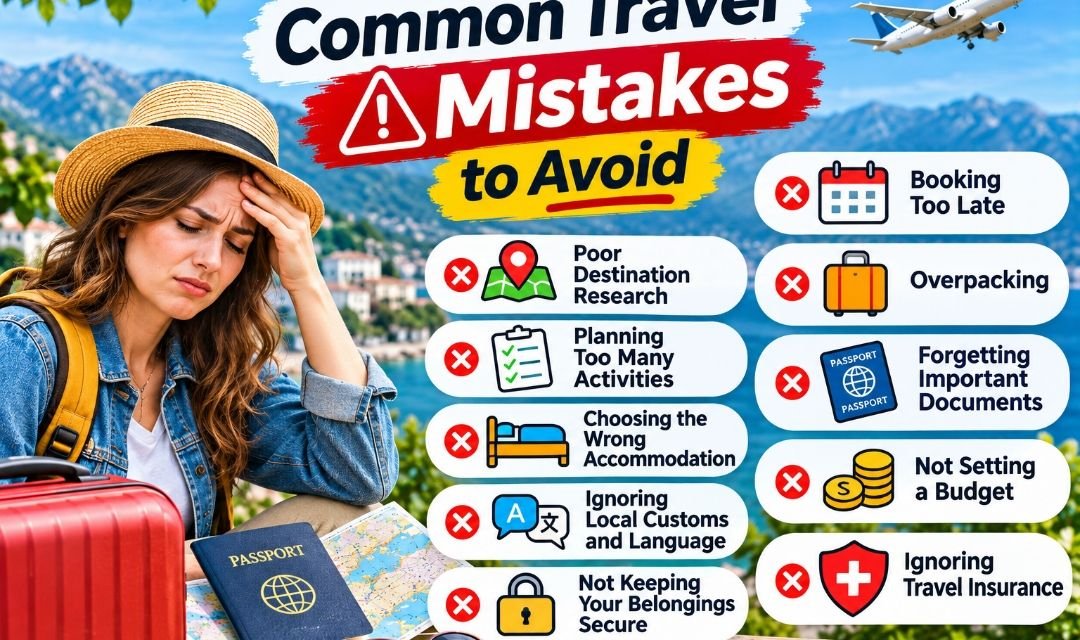
Common travel mistakes to avoid are important to understand before planning your next adventure. Traveling can be one of the most exciting experiences in life, but small mistakes can quickly turn a relaxing vacation into a stressful situation. From forgetting important documents to spending too much money, many travelers face problems that could have been prevented with proper preparation.
The good news is that most travel mistakes are easy to avoid. You do not need years of experience or a large budget to become a smarter traveler. A little research, careful planning, and a flexible attitude can make your journey easier, safer, and more enjoyable.
Whether you are planning your first international vacation, a family holiday, or a weekend getaway, this guide explains the most common mistakes travelers make and how to prevent them.
Quick Overview of Common Travel Mistakes to Avoid
| Common travel mistake | Smart solution |
|---|---|
| Booking too late | Compare prices and reserve in advance |
| Overpacking luggage | Pack practical essentials only |
| Forgetting documents | Check passports, visas, and tickets |
| Ignoring travel insurance | Review suitable coverage before traveling |
| Not setting a budget | Calculate expenses and emergency funds |
| Poor destination research | Learn about weather, culture, and transportation |
| Planning too many activities | Create a flexible itinerary |
| Choosing the wrong hotel | Review location, facilities, and guest feedback |
| Ignoring local customs | Learn basic cultural expectations |
| Unsafe money handling | Keep payment methods and valuables secure |
| Forgetting mobile connectivity | Arrange roaming, SIM, or eSIM options |
| Missing transportation details | Confirm routes and departure times |
1. Booking Flights and Hotels Too Late
One of the most common travel mistakes to avoid is waiting until the last moment to make important reservations.
Flights and hotels can become more expensive when demand increases, especially during holidays and popular travel seasons.
Last-minute booking may also leave you with fewer choices.
You might have to accept inconvenient flight times or accommodation far from your preferred attractions.
How to avoid this mistake
Start researching transportation and accommodation once you know your destination and approximate travel dates.
Compare prices across several suitable options.
Check the total booking cost, including taxes, baggage charges, and other fees.
Remember that booking earlier does not always guarantee the lowest price. Prices change according to demand, availability, and other factors.
The best approach is to compare options carefully and book when you find a suitable arrangement within your budget.
2. Packing Too Many Unnecessary Items
Overpacking is a frequent problem, particularly among first-time travelers.
Many people pack extra clothes, multiple pairs of shoes, and items they never actually use.
Heavy luggage makes moving between airports, train stations, and hotels more difficult.
It can also lead to extra baggage charges.
Smart packing tips
Choose clothing that can be mixed and matched.
Bring comfortable shoes suitable for planned activities.
Check the destination’s weather before packing.
Use a packing checklist to avoid bringing unnecessary items.
Keep essential documents, regular medication, and valuable items in your carry-on bag where permitted.
Packing light makes traveling more convenient and allows you to move around comfortably.
3. Forgetting Important Travel Documents
Forgetting essential documents can cause serious problems before departure.
International travelers may need a passport, visa, or electronic travel authorization.
Some destinations also have specific passport validity requirements.
Arriving at an airport without the correct documents could prevent you from boarding your flight.
Documents to check before traveling
- Valid passport or accepted identification.
- Required visa or travel authorization.
- Transportation tickets.
- Hotel booking confirmations.
- Travel insurance documents.
- Required health documentation.
- Emergency contact information.
Always verify entry requirements through official government or embassy sources.
Keep secure digital copies of important documents and consider carrying paper copies separately from the originals.
4. Traveling Without a Realistic Budget
Traveling without financial planning can create unnecessary stress.
Many people focus on major expenses such as flights and hotels but forget smaller daily costs.
Meals, transportation, entrance tickets, tips, and shopping can quickly increase your total spending.
A clear travel budget helps you make better financial decisions.
Example of a five-day travel budget
| Expense | Example amount |
|---|---|
| Transportation | $250 |
| Accommodation | $300 |
| Food and drinks | $150 |
| Local transportation | $75 |
| Activities | $100 |
| Shopping | $50 |
| Emergency reserve | $125 |
| Total | $1,050 |
These figures are illustrative and will vary depending on your destination and travel preferences.
Set a daily spending target and keep emergency money separate.
This helps you enjoy your trip without constantly worrying about expenses.
5. Ignoring Travel Insurance
Another important travel mistake is assuming that nothing unexpected will happen.
Medical emergencies, trip cancellations, delayed baggage, and transportation disruptions can create financial difficulties.
Travel insurance may provide protection for certain situations, depending on your policy.
However, not every insurance plan covers every problem.
Some policies exclude particular activities, pre-existing medical conditions, or certain destinations.
How to choose suitable travel insurance
Check medical coverage limits.
Review cancellation and interruption benefits.
Understand baggage protection.
Read exclusions and deductibles.
Confirm whether your destination requires specific insurance coverage.
Travel insurance is not always mandatory, but understanding your potential risks before departure is a smart decision.
6. Not Researching Your Destination
A lack of destination research can lead to confusion and unexpected expenses.
Travelers sometimes arrive without understanding the local transportation system, currency, weather, or cultural expectations.
This can make everyday activities more difficult.
Before departure, spend some time learning about your destination.
Research the most convenient transportation methods, popular attractions, and general safety conditions.
Check whether major attractions require advance reservations.
You should also learn about local payment methods and typical opening hours.
A little preparation helps you feel confident when exploring unfamiliar places.
7. Planning Too Many Activities
Trying to visit every famous attraction is one of the most common travel mistakes to avoid.
A busy schedule may look exciting on paper, but it can quickly become exhausting.
You may spend more time rushing between places than actually enjoying them.
Instead, focus on a few important experiences each day.
Example of a balanced daily itinerary
| Time | Suggested activity |
|---|---|
| Morning | Visit a major attraction |
| Late morning | Explore nearby landmarks |
| Afternoon | Enjoy lunch and rest |
| Late afternoon | Visit a market or museum |
| Evening | Have dinner and relax |
Leave enough time for transportation and unexpected delays.
A flexible schedule allows you to enjoy your vacation at a comfortable pace.
8. Choosing Accommodation Based Only on Price
Finding affordable accommodation is helpful, but choosing the cheapest option without checking other details can be a mistake.
A hotel may appear inexpensive while being far from tourist attractions or public transportation.
This could increase your daily transportation expenses.
Poor facilities or inconvenient check-in arrangements may also affect your comfort.
What to check before booking
Read recent guest reviews.
Check the location on a map.
Review transportation connections.
Confirm included facilities.
Understand cancellation and refund policies.
Look for clear pricing and contact information.
The best accommodation is not necessarily the cheapest. It should offer a suitable balance of comfort, convenience, safety, and value.
9. Ignoring Local Customs and Traditions
Traveling allows you to experience different cultures and ways of life.
However, behavior considered normal in one place may be inappropriate somewhere else.
Some destinations have specific expectations about clothing, greetings, photography, and public behavior.
Ignoring these customs may lead to uncomfortable situations.
Research local traditions before departure.
For example, certain religious sites require modest clothing.
Other locations may have restrictions on photographing people or buildings.
Learning a few polite phrases in the local language can also improve communication.
Respecting local customs helps create positive experiences for both travelers and residents.
10. Carrying Too Much Cash
Carrying large amounts of cash is another travel mistake worth avoiding.
Losing your wallet or experiencing theft could create serious problems if all your travel money is kept in one place.
Instead, consider using a combination of suitable payment methods.
Carry enough cash for immediate expenses, especially in places where electronic payments are uncommon.
Keep backup funds in a separate secure location.
Before departure, research international card fees and ATM withdrawal charges.
If necessary, inform your bank about your travel plans.
Smart money management can reduce financial risks during your journey.
11. Not Checking Transportation Details
Transportation mistakes can cause delays and unnecessary spending.
Travelers sometimes confuse airports, railway stations, or departure terminals.
Others underestimate the time required to reach their departure location.
Before traveling, confirm your departure and arrival details carefully.
Check the correct airport or station.
Review transportation schedules and allow extra time for traffic or security procedures.
If you have connecting flights, consider whether the connection provides enough time for baggage collection, immigration, or terminal transfers when applicable.
Proper transportation planning helps you avoid stressful last-minute situations.
12. Forgetting to Arrange Internet Access
Many travelers rely on their smartphones for navigation, communication, translations, and booking information.
However, mobile internet may not work automatically in another country.
International roaming can also be expensive.
Before departure, check your mobile provider’s roaming charges.
A local SIM card or travel eSIM may provide better value, depending on your destination and device.
Download offline maps and save important addresses.
Keep accommodation confirmations and emergency contacts accessible without an internet connection.
These simple preparations can make traveling much easier.
13. Not Considering the Local Weather
Weather can significantly affect your travel plans.
Some travelers book vacations without checking seasonal conditions.
They may arrive during heavy rainfall, extreme heat, or unusually cold weather.
This can limit outdoor activities and create packing difficulties.
Research typical weather conditions before choosing your travel dates.
Check forecasts again shortly before departure.
Pack suitable clothing and necessary equipment.
If your activities depend on good weather, consider having indoor alternatives available.
Being prepared for changing conditions makes your trip more comfortable.
14. Eating or Drinking Without Considering Safety
Trying local food is one of the most enjoyable parts of traveling.
However, travelers should remain aware of food and drinking water safety.
Food hygiene standards and water quality can vary between destinations.
Choose establishments that handle food properly.
If you have allergies, learn how to explain your dietary requirements clearly.
Research whether tap water is safe to drink.
In areas where drinking water quality is uncertain, use an appropriate safe water source.
Enjoying local cuisine is an important part of travel, but making informed choices can help protect your health.
15. Not Keeping Your Belongings Secure
Busy tourist locations, transportation hubs, and markets can create opportunities for theft.
Travelers who become distracted may accidentally leave their belongings unattended.
Keep valuable items secure and remain aware of your surroundings.
Avoid displaying large amounts of cash or expensive items unnecessarily.
Use suitable locks and secure storage when available.
Keep passports and important documents in a safe location.
It is also helpful to have backup copies of essential information.
A few basic security habits can reduce the risk of losing valuable belongings.
16. Skipping Important Health Preparation
Health preparation is often overlooked during travel planning.
Long journeys, unfamiliar food, changes in climate, and demanding activities may affect your well-being.
Before traveling, review destination-specific health advice.
Some countries require particular vaccinations or medical documentation.
If you take regular medication, make sure you have an adequate supply and check relevant import restrictions.
Carry essential medication in appropriate packaging.
Stay hydrated, get sufficient rest, and protect yourself from excessive sun exposure.
Preparing for your health needs allows you to travel more comfortably.
17. Ignoring Booking Terms and Cancellation Policies
Many travelers make reservations without reading the conditions.
This can create problems if plans change.
Some flight tickets and hotel reservations are nonrefundable.
Others may allow changes but charge additional fees.
Before confirming any booking, review cancellation rules, payment deadlines, and refund conditions.
Check whether luggage, meals, or other services are included in the price.
If flexibility is important, consider booking options that permit changes.
Understanding the conditions before payment can prevent unexpected financial losses.
18. Relying Completely on Technology
Smartphones and digital applications make modern travel easier.
However, batteries can run out, devices can malfunction, and internet connections can fail.
Relying entirely on one device may leave you without access to important information.
Save essential documents for offline use.
Consider carrying written emergency contacts and accommodation details.
Keep your phone charged and bring a permitted portable charger when useful.
Avoid storing all essential information in a single place.
Having backup information can be extremely valuable when technology is unavailable.
19. Not Leaving Time for Rest
Many travelers focus so much on sightseeing that they forget to relax.
Long days of walking, early departures, and crowded schedules can cause exhaustion.
A vacation should provide opportunities to enjoy new experiences without feeling constantly rushed.
Include breaks between major activities.
Stay hydrated and eat regular meals.
Try to maintain a reasonable sleeping schedule.
If you feel tired, consider replacing an activity with a relaxing afternoon.
Sometimes enjoying a peaceful café, beach, or park becomes one of the best memories of a trip.
20. Expecting Every Part of the Trip to Be Perfect
One of the biggest travel mistakes is expecting everything to happen exactly as planned.
Even carefully organized trips can involve unexpected delays, weather changes, or closed attractions.
These situations do not automatically mean your vacation is ruined.
Traveling requires patience and flexibility.
If one activity becomes unavailable, explore another option.
If transportation is delayed, use the opportunity to adjust your schedule.
Try not to focus too heavily on small inconveniences.
The most memorable travel experiences often include unexpected discoveries.
A positive attitude can make a major difference to how much you enjoy your journey.
How to Avoid Travel Mistakes Before Leaving Home
Preparation is one of the most effective ways to reduce travel problems.
Before departure, review your main arrangements and make sure you have everything necessary for a comfortable journey.
Final travel preparation checklist
- Confirm transportation schedules and tickets.
- Check passport, visa, and entry requirements.
- Verify accommodation reservations.
- Review luggage restrictions.
- Prepare appropriate payment methods.
- Pack essential medication and personal items.
- Download offline maps and booking information.
- Save emergency contact numbers.
- Check destination weather conditions.
- Review travel insurance details.
- Share your itinerary with someone you trust.
- Secure your home before leaving.
Completing these steps can help you start your vacation with greater confidence.
Frequently Asked Questions About Common Travel Mistakes to Avoid
What are the most common travel mistakes?
Some of the most common mistakes include overpacking, forgetting important documents, booking without comparing prices, failing to set a budget, and planning too many activities.
How can first-time travelers avoid mistakes?
First-time travelers should research their destination, prepare a packing checklist, organize travel documents, compare booking options, and create a flexible itinerary. Leaving enough time for transportation is also important.
What is the biggest mistake when planning a vacation?
One major mistake is failing to prepare for practical details such as entry requirements, transportation, accommodation, and expenses. Missing these details can affect the entire journey.
Why is overpacking a problem?
Overpacking creates heavier luggage, makes transportation more difficult, and may result in additional baggage charges. Packing practical essentials usually makes traveling more convenient.
Should I buy travel insurance?
Travel insurance can be useful for certain medical emergencies, cancellations, and travel disruptions. Whether it is required depends on your destination and circumstances. Always review policy terms and exclusions before purchasing coverage.
How can I avoid spending too much while traveling?
Create a realistic budget, estimate daily expenses, compare transportation prices, and keep emergency money separate. Tracking purchases can also help you stay within your planned spending limit.
How can I make my vacation less stressful?
Plan important arrangements early, pack light, organize essential documents, and leave flexibility in your itinerary. Avoid scheduling too many activities and allow time for rest.
Final Thoughts
Understanding common travel mistakes to avoid can make your next journey easier, safer, and more enjoyable. Many travel problems happen because of small planning errors, unrealistic expectations, or missing information.
Fortunately, most of these issues can be reduced through simple preparation.
Start by researching your destination, creating a realistic budget, and checking transportation and accommodation details. Organize your documents, pack practical items, and prepare for unexpected situations.
Remember that traveling is not about creating a perfect schedule. It is about discovering new places, enjoying different experiences, and making meaningful memories.
A few mistakes may still happen along the way, and that is part of gaining travel experience.
Plan carefully, stay flexible, avoid unnecessary risks, and enjoy every moment of your next adventure.