
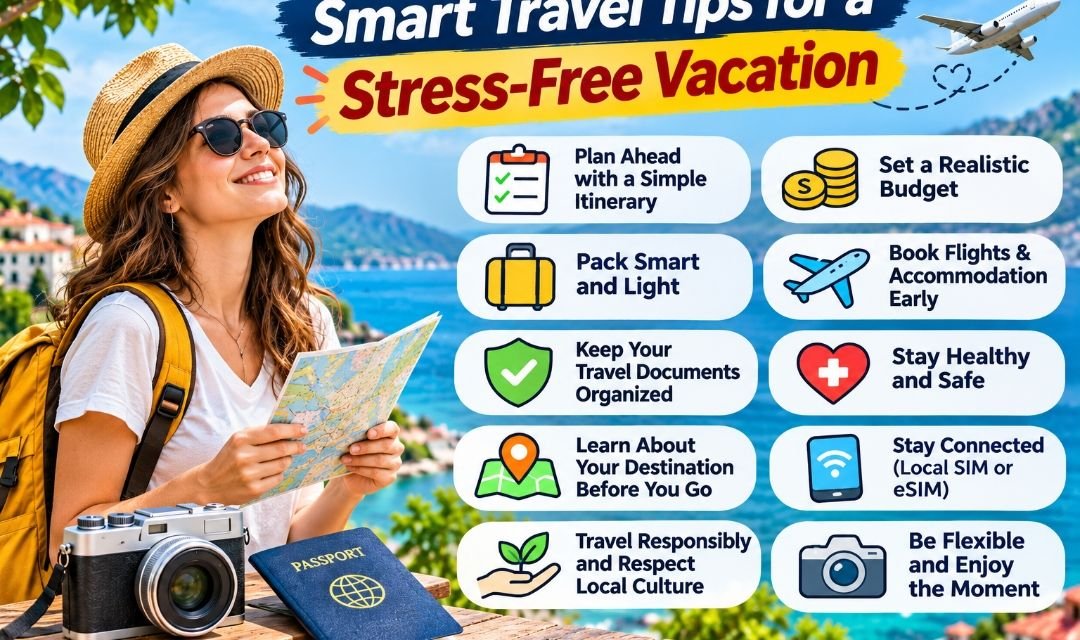
Smart travel tips for a stress-free vacation can help you enjoy your journey without worrying about unexpected problems. Traveling should be an exciting opportunity to relax, explore new places, and create wonderful memories. However, planning flights, choosing hotels, packing luggage, and managing expenses can sometimes make a vacation feel more stressful than enjoyable.
The good news is that a peaceful vacation does not require complicated planning or a large budget. With a few practical travel habits, you can avoid common mistakes and spend more time enjoying your destination. Whether you are planning a family holiday, a romantic getaway, or your first solo adventure, these simple tips can make traveling easier.
In this guide, you will discover how to organize your trip, save money, pack efficiently, stay safe, and enjoy your vacation with confidence.
Quick Overview of Smart Travel Tips for a Stress-Free Vacation
| Travel category | Smart travel advice |
|---|---|
| Planning | Create a simple and flexible itinerary |
| Budget | Calculate expenses and keep emergency money |
| Flights | Compare fares and review booking conditions |
| Accommodation | Choose convenient and reliable hotels |
| Packing | Pack light and bring essential items |
| Documents | Keep passports and reservations organized |
| Transportation | Research local travel options |
| Health | Prepare medications and stay hydrated |
| Safety | Protect belongings and save emergency contacts |
| Technology | Download maps and arrange mobile internet |
| Activities | Avoid overcrowding your schedule |
| Relaxation | Leave enough time to rest and enjoy |
1. Start Planning Your Vacation Early
One of the most useful smart travel tips for a stress-free vacation is to begin organizing your journey well before departure.
Last-minute planning can create unnecessary pressure, especially when transportation and accommodation options become limited.
Starting early gives you time to compare prices, research your destination, and prepare important documents.
You do not need to organize every minute of your vacation. Instead, focus on the essential arrangements first.
What should you plan in advance?
Start by choosing your destination and preferred travel dates.
Next, estimate your budget and research transportation options.
Once your dates are reasonably certain, compare flights, trains, or other transportation.
Research accommodation locations and check reviews before booking.
If you are traveling internationally, confirm passport and visa requirements before purchasing nonrefundable tickets.
Planning early can make the entire travel experience smoother and more comfortable.
2. Choose a Destination That Matches Your Travel Style
Not every destination is suitable for every traveler.
Some people enjoy busy cities filled with shopping centers, restaurants, and famous attractions.
Others prefer peaceful beaches, mountain villages, or quiet countryside locations.
Choosing a destination that matches your interests can reduce frustration during your vacation.
Before booking, think about what you actually want from the experience.
Would you prefer relaxing beside the ocean or exploring historical landmarks?
Do you enjoy outdoor adventures or comfortable sightseeing?
Your answers can help you select a destination that feels exciting rather than exhausting.
Consider these important factors
- Your available travel budget.
- Transportation time.
- Expected weather.
- Safety conditions.
- Accessibility and convenience.
- Local attractions and activities.
- Accommodation availability.
Remember that a good vacation is not always about visiting the most famous destination.
Sometimes a quieter and more affordable location provides a more relaxing experience.
3. Create a Realistic Travel Budget
Money worries can quickly affect the enjoyment of a vacation.
A realistic budget helps you understand what you can comfortably afford before leaving home.
Many travelers calculate flight and hotel expenses but forget daily costs such as meals, taxis, entrance fees, and shopping.
These smaller expenses can add up over several days.
Example of a five-day vacation budget
| Expense | Example budget |
|---|---|
| Transportation | $250 |
| Hotel accommodation | $300 |
| Food and drinks | $150 |
| Local transportation | $60 |
| Tourist attractions | $90 |
| Shopping | $50 |
| Emergency reserve | $100 |
| Total | $1,000 |
These are illustrative figures, not actual destination prices.
Simple ways to control spending
Set a daily spending target.
Compare prices before making reservations.
Choose accommodation with convenient transportation connections.
Research free attractions and outdoor activities.
Use public transportation when it is practical.
Keep emergency money separate from your regular travel budget.
A clear budget lets you focus on enjoying your trip rather than constantly calculating expenses.
4. Book Flights and Accommodation Carefully
Booking transportation and accommodation is an important part of preparing for a comfortable vacation.
However, rushing through reservations can lead to expensive mistakes.
When booking flights, compare the full ticket price, including baggage charges and any additional fees.
Check departure airports, arrival times, and connections.
A cheaper ticket is not always the most convenient option.
Long connections, difficult airport transfers, or inconvenient departure times may increase travel fatigue.
Choosing the right accommodation
Accommodation location can significantly affect your vacation.
A hotel near restaurants, public transportation, and major attractions may save both time and money.
Before booking, check recent guest reviews, facilities, and cancellation policies.
Also confirm whether the advertised rate includes taxes and additional fees.
A comfortable and convenient place to stay can make your vacation more relaxing.
5. Pack Smart and Travel Light
Overpacking is one of the most common travel mistakes.
Heavy luggage can make airport transfers, public transportation, and hotel check-ins more difficult.
Packing light allows you to move comfortably and spend less time managing your belongings.
Start by checking the weather at your destination.
Choose versatile clothing that can be worn in different combinations.
Bring comfortable shoes, especially if you plan to explore on foot.
Essential vacation packing checklist
Travel documents: Passport, identification, tickets, and booking confirmations.
Clothing: Comfortable outfits, footwear, underwear, and weather-appropriate outerwear.
Electronics: Phone, charger, suitable travel adapter, and permitted power bank.
Personal care: Toothbrush, toiletries, sunscreen, and hygiene products.
Health essentials: Personal medications and a basic first-aid kit.
Other items: Sunglasses, reusable water bottle, and small day bag.
Always check airline baggage restrictions before packing.
Keeping essential items in your carry-on luggage, where permitted, can also be helpful if checked baggage is delayed.
6. Organize Important Travel Documents
Missing documents can create serious problems before or during a journey.
Keeping everything organized is one of the simplest ways to reduce travel stress.
International travelers should check passport validity and any required visas or travel authorizations.
Entry requirements vary depending on nationality, destination, and travel purpose.
Always confirm the latest requirements through official government or embassy sources.
Documents to organize
- Passport or identification.
- Required visa or travel authorization.
- Flight and transportation tickets.
- Accommodation confirmations.
- Travel insurance information.
- Emergency contact details.
- Required health documentation.
- Copies of important documents.
Save secure digital copies of essential documents.
You can also carry paper copies separately from the originals.
This preparation makes it easier to access information when needed.
7. Create a Flexible Travel Itinerary
A detailed schedule may sound helpful, but planning too many activities can make a vacation exhausting.
Traveling should include time for exploration and relaxation.
Instead of filling every hour, choose a few important activities each day.
Group nearby attractions together to reduce unnecessary transportation.
Leave time for meals, rest, and unexpected discoveries.
Example of a relaxed vacation day
| Time | Activity |
|---|---|
| Morning | Enjoy breakfast and visit a major attraction |
| Late morning | Explore nearby landmarks |
| Afternoon | Have lunch and relax |
| Late afternoon | Visit a local market or museum |
| Evening | Enjoy dinner and a peaceful walk |
This flexible approach creates balance between sightseeing and relaxation.
If the weather changes or an attraction closes unexpectedly, you can adjust your plans without feeling overwhelmed.
8. Research Your Destination Before Traveling
Learning basic information about your destination can make your vacation much easier.
Research local customs, transportation, currency, weather, and popular attractions.
You should also understand how people commonly pay for goods and services.
Some destinations rely heavily on electronic payments, while others use cash more frequently.
Researching local transportation can prevent confusion after arrival.
You may discover that public buses or metro systems are more convenient than taxis.
Important information to research
Weather: Know what conditions to expect.
Currency: Understand local payment methods.
Transportation: Learn how to reach your accommodation.
Culture: Respect local customs and traditions.
Safety: Check official travel advisories and common tourist scams.
Attractions: Review opening hours and reservation requirements.
Good research helps you make informed decisions without removing the excitement of exploring somewhere new.
9. Prepare Your Phone and Internet Connection
A smartphone can make traveling much easier.
It provides access to navigation, communication, hotel information, translations, and transportation services.
However, relying completely on mobile internet can cause problems when coverage is poor.
Before departure, check whether your mobile provider offers affordable roaming.
A local SIM card or travel eSIM may be a better option, depending on your destination and device.
Download offline maps before leaving home.
Store important addresses, emergency telephone numbers, and reservation confirmations where they remain accessible without internet access.
Remember to charge your phone before sightseeing.
A portable power bank that meets airline restrictions can also be useful.
10. Arrive Early and Avoid Last-Minute Rushing
Rushing through airports or stations is an unnecessary source of travel stress.
Transportation hubs can be busy, especially during holidays and peak travel seasons.
Arriving early gives you enough time to complete check-in, security screening, and other required procedures.
Check your airline or transportation provider’s recommended arrival time.
You should also consider traffic conditions when traveling to the airport or station.
Avoid scheduling important activities immediately after arrival.
Flights and trains can occasionally experience delays.
Allowing extra time between arrangements makes your travel schedule more manageable.
11. Stay Healthy During Your Vacation
Your health and comfort are important parts of an enjoyable journey.
Long transportation journeys, unfamiliar food, and changes in routine can sometimes affect how you feel.
Drink enough safe water throughout the day.
Try to maintain a reasonable sleep schedule.
Take regular breaks during long sightseeing activities.
If you have dietary restrictions or food allergies, research suitable meal options before traveling.
Carry your regular medications in appropriate packaging and check destination-specific medicine rules.
Depending on your destination, you may also need vaccinations or other travel health precautions.
Check reliable official health guidance before departure.
12. Protect Yourself From Common Travel Problems
Simple safety habits can help prevent avoidable travel difficulties.
Keep valuable items secure in crowded areas.
Avoid leaving bags unattended.
Use reputable transportation providers and check payment arrangements before starting your journey.
Be cautious when strangers offer unusually cheap tours, accommodation, or transportation.
Safety habits for a peaceful vacation
Share your itinerary with someone you trust.
Save local emergency telephone numbers.
Avoid carrying large amounts of unnecessary cash.
Keep backup payment methods in a separate location.
Use secure connections for sensitive online activities.
Follow local laws and safety advice.
Review travel insurance coverage before departure.
Being prepared allows you to respond more calmly if an unexpected situation occurs.
13. Learn How Local Transportation Works
Getting around a new destination can feel confusing, especially when you do not understand the transportation system.
Before arrival, research available buses, trains, taxis, and other options.
Check how to travel from the airport or station to your accommodation.
Some cities offer affordable daily or weekly public transportation passes.
Others may require individual tickets or special travel cards.
Download transportation maps when available.
If you plan to rent a vehicle, check local driving rules, licensing requirements, insurance, and road conditions.
Understanding transportation in advance can save time and money.
14. Avoid Planning Too Many Activities
One of the best smart travel tips for a stress-free vacation is to avoid turning every day into a busy schedule.
Some travelers feel pressure to visit every popular attraction.
However, rushing between destinations may leave you tired and frustrated.
Choose a few experiences that genuinely interest you.
Allow time to enjoy each location.
Instead of visiting five attractions in one day, consider exploring two or three at a comfortable pace.
You may discover a beautiful café, peaceful park, or interesting neighborhood along the way.
These unexpected experiences can become some of your favorite vacation memories.
15. Keep Your Plans Flexible
Even carefully organized vacations can change unexpectedly.
Bad weather, delayed transportation, or attraction closures may affect your itinerary.
Rather than feeling disappointed, keep alternative activities available.
For example, if heavy rain prevents a beach visit, you might explore a museum, indoor market, or local restaurant.
Avoid making every reservation dependent on exact arrival times.
When possible, choose booking options that allow changes or cancellations.
Flexibility helps you manage surprises without allowing them to spoil your vacation.
16. Respect Local Culture and Traditions
Traveling offers opportunities to experience different ways of life.
Respecting local customs can make your journey more meaningful.
Before visiting another country or region, learn about basic cultural expectations.
Some locations have clothing requirements at religious sites.
Other destinations may have restrictions on photography or public behavior.
Be polite when interacting with residents, guides, and service workers.
Learning a few simple phrases in the local language can also improve communication.
Respectful travelers often enjoy more positive experiences with local communities.
17. Travel Responsibly
Responsible travel helps protect destinations for future visitors and local communities.
Small choices can make a difference.
Avoid littering and dispose of waste properly.
Use reusable items when practical.
Respect wildlife and follow rules in natural areas.
Support local restaurants, markets, and independent businesses when possible.
Be mindful of water and electricity use in accommodation.
Responsible tourism allows you to enjoy beautiful destinations while helping protect the places you visit.
18. Make Time for Rest and Relaxation
A vacation should give you an opportunity to recharge.
However, some travelers return home feeling more exhausted than before.
This often happens when they organize too many activities without enough rest.
Try to include relaxing moments in your itinerary.
Enjoy a slow breakfast, spend time in a peaceful park, or relax beside the beach.
You do not need to fill every free hour with sightseeing.
Listening to music, reading a book, or enjoying a quiet evening can be just as valuable.
Balance is the key to making your vacation refreshing.
19. Capture Memories Without Missing the Moment
Photographs are wonderful reminders of special travel experiences.
You may want to capture famous landmarks, beautiful landscapes, local food, and memorable activities.
However, constantly using your phone can distract you from enjoying the destination.
Take photographs when you want, but also spend time appreciating your surroundings.
Look around, notice small details, and enjoy conversations.
You could also keep a short travel journal.
Writing down favorite experiences helps preserve memories that pictures alone cannot capture.
A meaningful vacation is about the experiences you enjoy, not just the number of photographs you take.
20. Complete a Final Vacation Checklist
Before leaving home, review your main arrangements.
A simple final check can prevent many stressful situations.
Final travel checklist
| Task | What to confirm |
|---|---|
| Transportation | Departure time and booking details |
| Accommodation | Reservation and check-in instructions |
| Documents | Passport, identification, and required visas |
| Luggage | Essential items and baggage restrictions |
| Money | Payment methods and emergency funds |
| Electronics | Charged devices and travel adapters |
| Health | Medications and necessary supplies |
| Communication | Mobile data and saved contacts |
| Safety | Travel insurance and emergency information |
| Home | Secure doors, windows, and essential utilities |
Try to complete most of these checks before your departure day.
This reduces last-minute rushing and allows you to begin your journey feeling prepared.
Frequently Asked Questions About Stress-Free Travel
What are the best smart travel tips for a stress-free vacation?
The best tips include planning early, creating a realistic budget, packing light, organizing important documents, researching transportation, and maintaining a flexible itinerary. Allowing enough time for rest also makes traveling more enjoyable.
How can I avoid stress while traveling?
Avoid overscheduling your vacation, prepare essential documents, allow extra time for transportation, and keep emergency funds available. Staying flexible when plans change can also reduce travel stress.
How early should I plan my vacation?
The ideal planning period depends on your destination and travel requirements. A short domestic trip may require only a few weeks, while international vacations involving visas or complicated arrangements may require several months.
How can I make traveling easier with family?
Choose family-friendly accommodation, plan suitable activities, pack important supplies, and allow additional time between destinations. Keeping daily schedules flexible can make family trips more comfortable.
What should I do if my travel plans change unexpectedly?
Check your booking conditions, contact the relevant transportation or accommodation provider, and explore available alternatives. If you have travel insurance, review whether the situation is covered.
How can I enjoy a vacation on a limited budget?
Choose an affordable destination, compare transportation options, use public transportation, explore free attractions, and set daily spending limits. A small emergency reserve can help you manage unexpected costs.
Is it better to plan every day of a vacation?
A basic itinerary is helpful, but planning every minute can create unnecessary pressure. A combination of scheduled activities and flexible free time often provides a more relaxing experience.
Final Thoughts
Smart travel tips for a stress-free vacation can make a meaningful difference to your overall travel experience. A little preparation helps you avoid common mistakes, manage expenses, and feel more confident while exploring unfamiliar places.
Start by choosing a destination that matches your interests and budget. Book transportation and accommodation carefully, prepare important documents, and pack practical essentials.
Remember to keep your itinerary flexible and make time for relaxation. Unexpected changes are sometimes part of traveling, but they do not have to ruin your experience.
Most importantly, focus on enjoying your journey rather than trying to make everything perfect.
Travel smart, stay organized, enjoy the little moments, and create memories that last long after your vacation ends.