

Choosing prescription safety glasses should not seem hard. But many people end up with glasses that work on paper and feel uncomfortable at the end of the day.
The right pair does more than meet a requirement. It remains in place, provides good vision and deals with work hazards. Therefore, the decision should be made with greater care than simply selecting a frame from a list.
Prescription safety glasses are a must for anyone working around dust, small flying fragments, chemicals, machines or bright sunlight. They are a part of the job. Wiley X Safety Glasses are worth considering for those who prefer a brand that provides robust and dependable protection.
Why Do You Need Prescription Safety Glasses?
Prescription Glasses are made for everyday use. They are not designed to withstand workplace impacts, cuts, or chemicals.
Prescription safety glasses combine vision correction with protective eyewear in one pair. You don’t need to wear ordinary glasses underneath separate protective eyewear. This can make everyday use more comfortable and practical. That setup often feels heavy moves during movement. Creates blind spots.
OSHA says that employers must ensure that workers use eye or face protection when they are in danger from dangerous things. If your job has any of these dangers, prescription safety glasses help you meet that need without losing vision.
There is also a comfort issue. When people have to choose between seeing and being protected, many take one off. Prescription safety glasses take away that choice. You get both in one pair.
For companies, this is important too. Workers who can see clearly and feel comfortable are more likely to keep their glasses on. That improves following rules. Lowers the chance of avoidable eye injuries.
Five Important Things to Consider When Choosing Prescription Safety Glasses
Safety glasses are not suitable for all jobs. The optimal option depends on your hazards, your prescription, and the duration of time you wear them daily.
Here are 5 things to look for before ordering.
1. Check Safety Certifications and Standards
Start with the rating. You need a nice frame, but the frame is useless if it can’t withstand the hazards of your workplace.
Search for eyewear that complies with the ANSI Z87.1 standard.
Look for the mark on the lens or frame. If you work around high-impact hazards, ensure that the glasses are high-impact rated. Don’t assume that all safety glasses provide equal protection.

If you don’t know which rating fits you, consult your safety manager or your job hazard assessment. The right certification should align with the risk and not appear on a list.
2. Choose the Right Lens Material
Lens material influences weight, clarity and durability. Polycarbonate or Trivex lenses are the most common type of prescription safety glasses since they are tough and lighter than glass.
Polycarbonate and Trivex are popular lightweight options for prescription safety lenses. Both offer useful impact-resistant properties. Your optical professional can help compare their weight, optical clarity, and suitability for your prescription.
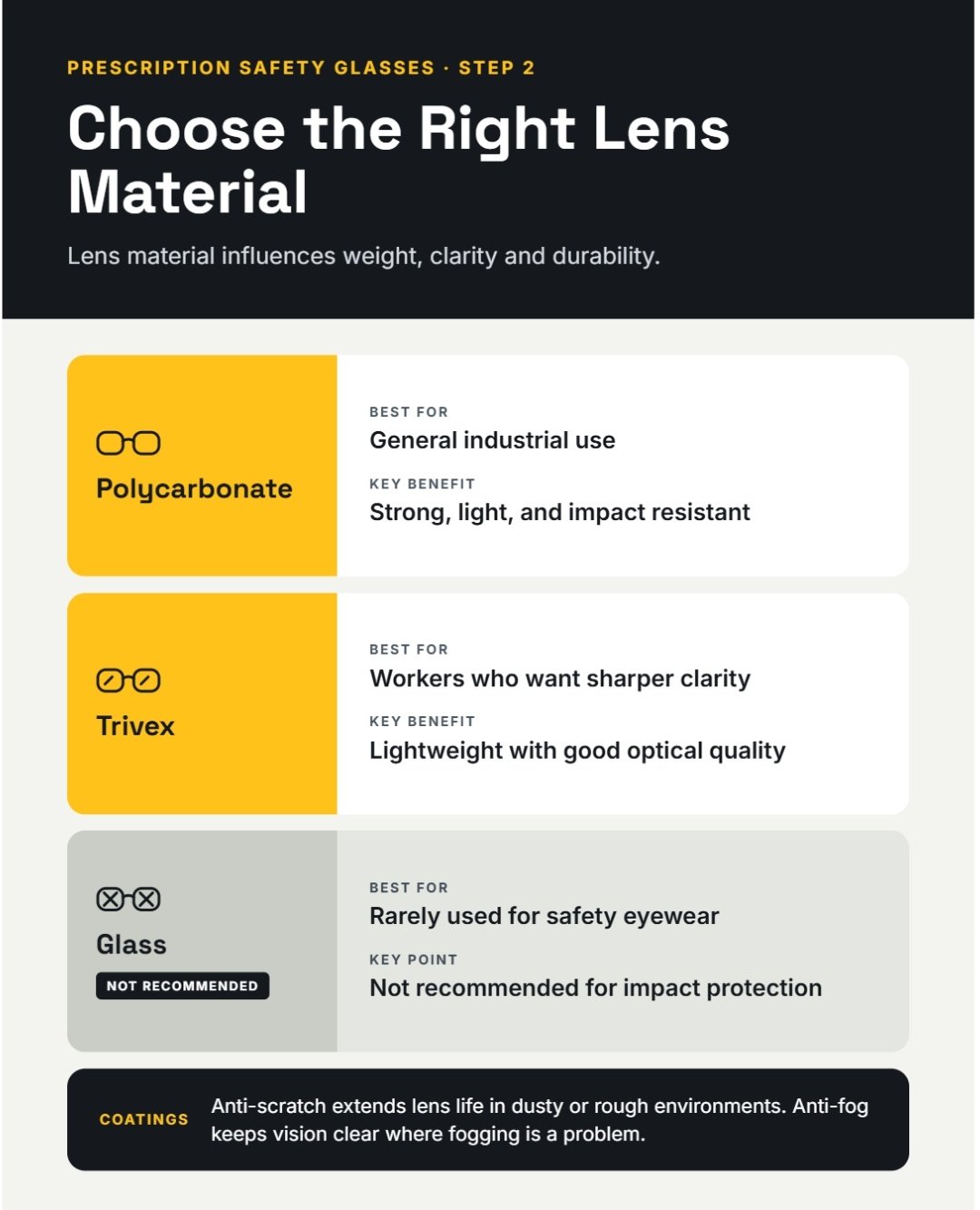
Consider coatings as well. Anti-scratch coating improves the longevity of lenses in dusty or rough environments. Anti-fog coatings are necessary in areas of fog or motion where visibility is obstructed.
3. Find a Comfortable Frame Fit
Fit is the difference between the glasses you wear and the glasses you leave in a box. A well-fitting frame should not pinch. It should not fall down your nose if you look down or move quickly.
The sides should rest snugly behind the ears, but not cause pressure points. If you have a small nose or want a better fit, check for nose pads. Spring hinges provide flexibility. Wraparound styles provide side coverage, useful in dusty or windy areas.
If possible, try the glasses on before purchasing. Rotate your head side to side. Check the frame by looking down to see if it remains stable. If you wear glasses, test them with the hat or other gear as well.
4. Consider Your Prescription Needs
Your prescription does more than improve your vision. It also influences what frames and lenses are suitable for you. If your prescription is strong, it may require certain lens materials or frame shapes to ensure the glasses are comfortable and balanced.
If the lens is bifocal or progressive, they should ensure that the safety frame is compatible with these lens types. Certain jobs also require special lens colors or coatings depending on the situation.
Make sure your prescription is up to date. If you have an old prescription, you may experience eye fatigue, headaches and poor focus, which negates the purpose of glasses.
5. Think About Your Workplace
Your lens and frame selection should be based on your workplace. Indoor workers with dust or dust fragments in the air might require side shield lenses. Sunglasses or colored lenses can help reduce glare for outdoor workers. For workers who need to switch between indoor and outdoor environments, changing light levels with the aid of changeable glasses is preferred.

Consider the entire day rather than a single activity. If you switch from areas of danger or light, get eyewear that adapts.
Why Wiley X Is a Popular Choice for Protective Glasses
Wiley X has made a name for glasses that handle various situations. The brand is known among people working in the military and outside jobs who need more than basic protection.
Designed with Protection in Mind
Wiley X Safety Glasses are made with impact resistance and strength in mind. Wraparound styles block debris, wind, and bright light from the side. This is necessary when threats are coming from more than one direction. A tight-fitting frame reduces the risk of dust or parts entering the eye.
Options for Different Workplaces
Wiley X has lens options for different conditions. Clear lenses are suitable for indoor or low-light environments. Colored and sunglasses lenses can help people working outside cope with glare.
Photochromic lenses adjust to light, making them ideal for those who work in both indoor and outdoor environments. This variety can help you pick out your glasses more easily based on your job rather than a generic one.
Comfort Meets Daily Use
Protection only works if you wear it. Wiley X frames are made to be comfortable for hours with features like adjustable nose pieces and a secure wraparound design.
The brand also offers regular glasses styles. This is significant for individuals who wish to be protected without feeling like they are wearing sporting gear. People are more likely to wear glasses if they feel comfortable and look comfortable.
Conclusion
Prescription safety glasses selection is all about matching protection, comfort, and clear vision to the job. Look at the certificate, select the appropriate lens material, ensure a proper fit, and consider your work environment.
Wiley X offers protective glasses options worth looking at. Make comparisons between each model and verify safety information. Most importantly, select glasses appropriate for the real work setting.