
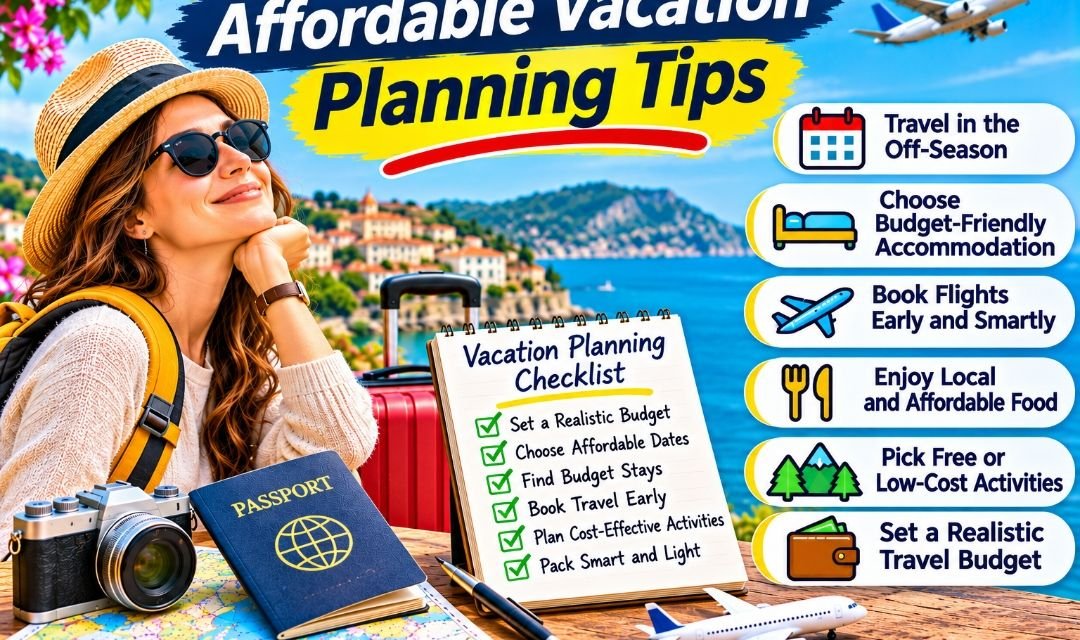
Affordable vacation planning tips can help you enjoy your dream holiday without spending more money than you can afford. Have you ever wanted to visit a beautiful beach, explore a new city, or take a relaxing family vacation but worried about the total cost? You are not alone. Many people postpone their travel plans because they believe a memorable vacation requires expensive flights, luxury hotels, and a large budget.
The good news is that you do not need to spend a fortune to enjoy an amazing holiday. With smart planning, flexible travel dates, and practical money-saving habits, you can explore wonderful destinations while keeping your expenses under control.
Imagine staying in comfortable accommodation, enjoying delicious local food, visiting exciting attractions, and returning home without financial stress. This is possible when you make thoughtful decisions before and during your vacation.
Whether you are planning a family getaway, a romantic holiday, or your first solo adventure, this guide shares 20 affordable vacation planning tips to help you save money, stay comfortable, and make the most of every travel experience.
Quick Overview of Affordable Vacation Planning Tips
| Vacation planning category | Money-saving strategy |
|---|---|
| Destination | Choose affordable locations |
| Travel dates | Consider off-season or shoulder-season travel |
| Flights | Compare total ticket prices |
| Accommodation | Choose budget hotels, guesthouses, or apartments |
| Food | Eat at local restaurants |
| Transportation | Use public transport when practical |
| Activities | Visit free or low-cost attractions |
| Packing | Avoid unnecessary baggage fees |
| Budget | Set daily spending limits |
| Shopping | Avoid unnecessary purchases |
| Technology | Compare mobile data options |
| Emergency planning | Keep backup funds available |
1. Start Planning Your Vacation Early
One of the most useful affordable vacation planning tips is beginning your preparations before your preferred travel dates.
Waiting until the last moment may limit your transportation and accommodation choices. In some cases, popular flights and hotels become more expensive as availability decreases.
Starting early gives you more time to compare prices, research destinations, and make informed decisions.
You can also spread certain travel expenses across several months instead of paying everything at once.
What should you organize first?
Start by choosing your destination.
Decide how many days you want to travel.
Estimate your available budget.
Research transportation options.
Compare accommodation prices.
Identify the attractions you want to visit.
Planning early does not always guarantee the cheapest price, but it can provide more choices and reduce last-minute pressure.
2. Choose a Destination That Fits Your Budget
Your destination can have a major impact on the cost of your vacation.
Some cities are known for expensive hotels, restaurants, and tourist activities.
Other destinations offer affordable accommodation, convenient transportation, and enjoyable attractions.
Before booking, compare the approximate daily expenses of different locations.
A cheap flight to an expensive city may result in a higher total vacation cost.
On the other hand, a destination with slightly higher transportation costs might offer affordable food and accommodation.
How to identify a budget-friendly destination
Research average accommodation costs.
Check public transportation availability.
Compare restaurant and grocery prices.
Look for free attractions.
Consider smaller cities and nearby towns.
Review seasonal weather conditions.
Choose a destination that offers the experiences you want without exceeding your budget.
3. Travel During Quieter Seasons
Travel dates can influence transportation and accommodation prices.
Popular destinations often experience high demand during school holidays, major festivals, and peak tourism periods.
Hotels may charge higher rates when rooms are limited.
Transportation prices can also increase.
Traveling during a quieter season may help reduce expenses.
Benefits of off-season travel
Accommodation may be more affordable.
Popular attractions may have fewer visitors.
You may find more available booking options.
Restaurants and sightseeing locations may feel less crowded.
However, off-season travel sometimes comes with unfavorable weather or reduced tourist services.
Research the destination’s climate before booking.
Shoulder-season travel can sometimes offer a useful balance of pleasant conditions and reasonable costs.
4. Set a Realistic Vacation Budget
A clear budget is one of the most important parts of affordable vacation planning.
Without a spending plan, small expenses can quickly add up.
Flights and accommodation are usually major costs, but you should also consider meals, transportation, attractions, and shopping.
Keep additional money available for unexpected situations.
Example of a five-day vacation budget
| Expense | Example amount |
|---|---|
| Transportation | $200 |
| Accommodation | $250 |
| Food and drinks | $125 |
| Local transportation | $50 |
| Tourist attractions | $75 |
| Personal shopping | $50 |
| Emergency reserve | $100 |
| Total | $850 |
These figures are illustrative rather than current prices for any specific destination.
Simple budgeting tips
Set a spending limit before departure.
Estimate daily expenses.
Compare major costs before booking.
Keep emergency money separate.
Record purchases during your trip.
Avoid using essential funds for unnecessary shopping.
A realistic budget allows you to enjoy your vacation without constant financial worry.
5. Compare Flights Before Making Reservations
Airfare can represent a large portion of your vacation budget.
Comparing flight options helps you understand the available choices.
Check several airlines and departure dates.
If your schedule allows flexibility, compare different days and nearby airports.
However, always consider the total cost rather than the advertised ticket price alone.
Some airlines charge separately for checked luggage, seat selection, meals, and ticket changes.
Smart flight booking checklist
Compare complete ticket prices.
Review baggage allowances.
Check connection times.
Research airport transportation costs.
Understand cancellation conditions.
Confirm passenger details.
Choose a flight that offers a suitable balance of price, convenience, and comfort.
6. Choose Affordable and Comfortable Accommodation
You do not need a luxury hotel to enjoy a relaxing vacation.
Many destinations offer comfortable budget hotels, guesthouses, hostels, and vacation rentals.
The best choice depends on your travel preferences and available budget.
A private guesthouse room may provide good value for couples.
An apartment with kitchen facilities may be useful for families.
Hostels may suit travelers comfortable with shared spaces.
What to check before booking accommodation
Location: Choose somewhere convenient for your planned activities.
Reviews: Read recent guest feedback about cleanliness and comfort.
Facilities: Check Wi-Fi, air conditioning, heating, and bathroom access.
Price: Review taxes and additional charges.
Transportation: Consider nearby public transport connections.
Cancellation: Understand booking conditions.
Accommodation should offer good value without sacrificing essential comfort or safety.
7. Use Public Transportation
Public transportation is often an affordable way to explore a destination.
Buses, metro systems, and trains may cost less than private taxis.
Many cities offer transportation passes for visitors.
These can sometimes provide better value when you expect to make several journeys.
Research the transportation system before arriving.
Download route maps and understand how tickets work.
However, consider accessibility, travel time, operating hours, and safety.
A slightly more expensive option may be worthwhile when traveling with heavy luggage or arriving late at night.
8. Enjoy Local and Affordable Food
Food is an important part of any vacation.
However, eating every meal at expensive tourist restaurants can increase your spending.
Explore suitable local restaurants, cafés, and markets.
These places may offer affordable meals and opportunities to experience regional cuisine.
Ways to reduce food expenses
Choose restaurants away from the busiest tourist areas.
Check menus and prices before ordering.
Look for affordable lunch options.
Purchase snacks at grocery stores.
Consider accommodation with breakfast included.
Prepare simple meals when kitchen facilities are available.
Always consider hygiene and safe drinking water.
Affordable food can be both enjoyable and an important part of discovering local culture.
9. Explore Free Tourist Attractions
An enjoyable vacation does not require expensive entertainment every day.
Many destinations offer beautiful public parks, beaches, historic streets, and scenic viewpoints.
Some museums provide free admission on selected days.
Others offer discounts for eligible visitors.
Free and low-cost vacation activities
Visit public parks.
Explore historical neighborhoods.
Relax at accessible beaches.
Discover local markets.
Enjoy scenic walking routes.
Visit museums during free-entry periods.
Attend suitable public cultural events.
Research opening hours and access conditions before visiting.
Mixing free activities with a few paid attractions can help you stay within your vacation budget.
10. Plan a Flexible Daily Itinerary
A simple itinerary can help you organize your activities and reduce unnecessary expenses.
Without planning, you may spend extra money traveling between distant attractions.
Group nearby places together.
This can reduce transportation costs and save time.
Avoid planning too many activities in one day.
Example of an affordable vacation day
| Time | Activity |
|---|---|
| Morning | Breakfast and local sightseeing |
| Late morning | Explore a public park or landmark |
| Afternoon | Enjoy an affordable lunch |
| Late afternoon | Visit a museum or local market |
| Evening | Relax and enjoy a simple dinner |
A flexible itinerary provides structure while leaving time for unexpected discoveries.
Remember that enjoying a destination is more important than visiting every attraction.
11. Pack Light to Avoid Baggage Fees
Overpacking can create unnecessary travel expenses.
Some airlines charge additional fees for checked or overweight luggage.
Heavy bags may also make transportation difficult.
Choose practical clothing that can be combined into different outfits.
Bring suitable footwear and weather-appropriate layers.
Avoid packing items you are unlikely to use.
Essential packing checklist
- Comfortable clothing.
- Suitable walking shoes.
- Passport or identification.
- Travel tickets.
- Phone and charger.
- Personal medications.
- Toiletries.
- Lightweight jacket.
- Small day bag.
- Reusable water bottle.
Check airline baggage restrictions before packing.
Traveling light can save money and make your journey more comfortable.
12. Consider Nearby Destinations
A memorable vacation does not always require international travel.
Exploring nearby cities, natural areas, or historical locations can be enjoyable and affordable.
Shorter distances may reduce transportation costs.
You may also spend less money on accommodation if your trip lasts only a few days.
Affordable nearby vacation ideas
Take a weekend city break.
Visit a public beach.
Explore nearby mountains or countryside.
Discover historical landmarks.
Enjoy a nature retreat.
Visit a national or public park.
Nearby vacations can provide opportunities to relax without the cost of long-distance travel.
13. Travel With Friends or Family
Traveling with others may help reduce certain expenses.
For example, sharing accommodation can make larger rooms or apartments more affordable.
Groups may also divide transportation costs.
However, successful group travel requires communication.
Discuss everyone’s budget before making reservations.
Agree on accommodation preferences and planned activities.
Group vacation budgeting tips
Set a shared spending plan.
Divide common expenses fairly.
Compare group accommodation options.
Research family or group attraction discounts.
Keep personal shopping budgets separate.
Communicate about unexpected expenses.
Clear planning helps reduce financial disagreements during the vacation.
14. Look for Useful Discounts
Discounts can make vacation planning more affordable.
Some accommodation providers, museums, transportation services, and attractions offer reduced prices.
Students, older adults, families, or larger groups may qualify for special rates.
You may also find attraction passes that combine several activities.
However, not every advertised discount offers real savings.
Compare the final cost before purchasing.
Discounts worth researching
Student transportation fares.
Museum admission offers.
Family attraction tickets.
Group accommodation rates.
Public transportation passes.
Off-season travel promotions.
Only purchase discounted services that match your travel plans.
A deal is not useful if it encourages unnecessary spending.
15. Save Money on Mobile Internet
International mobile roaming can create unexpected expenses.
Before departure, research your mobile provider’s roaming charges.
Compare local SIM cards and travel eSIM plans when available.
The best option depends on your destination, device, and data needs.
You can also reduce mobile data usage through offline preparation.
Download maps before traveling.
Save hotel addresses and important booking details.
Download entertainment before departure.
Keep emergency contact information accessible offline.
These simple habits can help control communication expenses.
16. Avoid Unnecessary Vacation Shopping
Shopping can be enjoyable, but souvenirs and personal purchases can quickly increase your expenses.
Set a shopping budget before leaving home.
Focus on items that are meaningful or genuinely useful.
Compare prices when appropriate.
Avoid purchasing products simply because they are displayed near major tourist attractions.
Consider your baggage limits before buying heavy items.
You do not need to return home with expensive souvenirs to remember a wonderful vacation.
Photographs and experiences can be equally meaningful.
17. Consider Vacation Rentals With Kitchen Facilities
For longer vacations, accommodation with a kitchen may help reduce food expenses.
Preparing breakfast or occasional meals can be more affordable than eating at restaurants every day.
This option can be particularly useful for families or groups.
However, compare the complete accommodation price.
Some vacation rentals include cleaning fees and other charges.
Also consider whether grocery stores are conveniently located.
A kitchen is only useful if you realistically plan to prepare meals.
Choose accommodation based on your actual needs rather than advertised facilities alone.
18. Keep an Emergency Fund
Unexpected expenses can happen during any vacation.
Transportation delays, medical needs, or sudden accommodation changes may increase costs.
Keeping emergency money separate from regular spending can help.
The amount should reflect your destination, travel duration, and personal circumstances.
You may also want to review suitable travel insurance.
Insurance can cover certain unexpected expenses, depending on the policy.
However, it does not replace the need for accessible emergency funds.
Avoid using emergency savings for unnecessary shopping or entertainment.
19. Track Your Expenses During the Vacation
A budget is most useful when you monitor spending.
Small purchases can add up over several days.
Record important expenses such as meals, local transportation, attractions, and shopping.
You can use a notebook, spreadsheet, or budgeting application.
Compare actual spending with your planned limits.
If one day becomes more expensive than expected, consider lower-cost activities the following day.
Tracking expenses helps you make informed decisions without constantly worrying about money.
20. Focus on Experiences Instead of Luxury
One of the best affordable vacation planning tips is remembering why you want to travel.
A wonderful holiday does not require luxury hotels, expensive restaurants, or costly entertainment.
Watching a sunset, exploring a historic neighborhood, visiting a peaceful park, or trying local food can create lasting memories.
Instead of comparing your vacation with expensive travel photographs online, choose experiences that genuinely interest you.
Enjoy the beauty of your destination.
Spend time with family or friends.
Learn about different cultures.
Take photographs and appreciate meaningful moments.
The value of a vacation comes from the experiences you enjoy, not simply the amount of money you spend.
Common Vacation Planning Mistakes to Avoid
Even careful travelers can make mistakes that increase expenses.
| Common mistake | Better approach |
|---|---|
| Booking without comparing prices | Review several suitable options |
| Choosing expensive travel dates | Consider flexible dates |
| Overpacking luggage | Pack practical essentials |
| Ignoring accommodation location | Compare transportation costs |
| Eating only in tourist areas | Explore suitable local restaurants |
| Planning too many paid activities | Include free attractions |
| Spending without limits | Track daily expenses |
| Forgetting emergency money | Keep a separate reserve |
| Ignoring hidden booking fees | Review final prices |
| Choosing price over safety | Prioritize reliable services |
Avoiding these mistakes can help you enjoy a more affordable and comfortable vacation.
Frequently Asked Questions About Affordable Vacation Planning Tips
What are the best affordable vacation planning tips?
The best tips include choosing a budget-friendly destination, comparing transportation prices, traveling during quieter seasons, finding affordable accommodation, using public transportation, and enjoying free attractions.
How can I plan a vacation with a small budget?
Start by calculating how much money you can comfortably spend. Choose an affordable destination, consider a short trip, compare accommodation prices, and create a daily spending plan.
Is it cheaper to book vacations in advance?
Booking in advance can provide more choices and sometimes better prices. However, the cheapest booking time varies by destination, season, and availability.
How can families save money on vacations?
Families can compare apartments with kitchens, prepare some meals, research family discounts, use suitable public transportation, and explore free attractions.
What is the cheapest type of vacation?
A short trip to a nearby destination can be affordable because transportation and accommodation costs may be lower. However, the cheapest option depends on your location, travel dates, and preferences.
How much money should I save for a vacation?
The amount depends on your destination, trip duration, accommodation, transportation, and planned activities. Estimate total costs and keep additional money for emergencies.
Can I enjoy a comfortable vacation on a budget?
Yes. Comfortable budget vacations are possible when you prioritize suitable accommodation, reliable transportation, practical packing, and a balanced itinerary.
How can I avoid overspending during a vacation?
Set daily spending limits, track purchases, avoid unnecessary shopping, and compare prices before booking activities. Keep emergency funds separate from regular vacation expenses.
Final Thoughts
Affordable vacation planning tips can help you enjoy memorable adventures without creating unnecessary financial pressure. A great vacation does not need to involve expensive flights, luxury accommodation, or costly attractions.
Start by choosing a destination that matches your budget. Research travel dates, compare transportation options, and find accommodation that offers comfort and convenience.
Explore affordable local food, use public transportation when practical, and include free activities in your itinerary.
Remember to keep an emergency fund and track spending during your journey.
Most importantly, focus on the experiences that make traveling special. Beautiful destinations, interesting cultures, and meaningful moments are often more valuable than expensive purchases.
Plan wisely, spend carefully, travel comfortably, and enjoy your dream vacation without breaking the bank.