
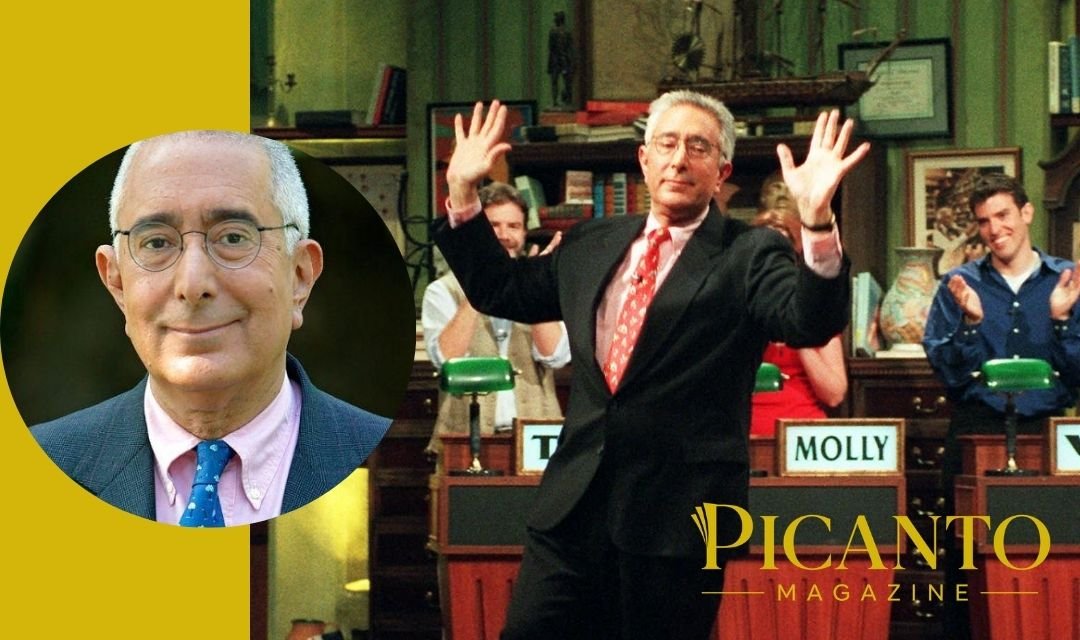
Ben Stein is an American actor, writer, lawyer, former presidential speechwriter, and television personality whose career connects Washington politics with Hollywood comedy. Some audiences recognize his classroom appearance in Ferris Bueller’s Day Off. Others remember his quiz show, financial writing, or advertising work. His quiet delivery helped create a memorable screen identity, while his public opinions made him a more controversial figure beyond entertainment. Understanding his story means looking at both sides of that long and unusual career.
| Detail | Information |
|---|---|
| Full name | Benjamin Jeremy Stein |
| Date of birth | November 25, 1944 |
| Birthplace | Washington, D.C., United States |
| Age | 81 as of September 2026 |
| Nationality | American |
| Education | Columbia University and Yale Law School |
| Main occupations | Writer, actor, lawyer, commentator, television host |
| Father | Economist Herbert Stein |
| Spouse | Alexandra Denman |
| Famous movie appearance | Ferris Bueller’s Day Off |
| Notable television show | Win Ben Stein’s Money |
Ben Stein’s Early Life and Family Background
Benjamin Jeremy Stein was born in Washington, D.C., and grew up in Silver Spring, Maryland. His parents were Herbert Stein, an economist and presidential adviser, and Mildred Fishman Stein. He came from a Jewish family with a strong connection to public affairs.
That background helps explain why economics and government remained recurring subjects throughout his working life. His later entertainment career can make his policy interests seem surprising, but those interests developed well before his first famous movie appearance.
His father’s profession provides useful context without explaining every choice his son eventually made. Ben Stein built a separate public identity through writing, legal work, acting, and television.
The distance between those professions is part of what makes his biography interesting. Few familiar comedy performers also have a professional history connected to presidential speechwriting and financial commentary.
Education at Columbia and Yale
Ben Stein graduated from Columbia University in 1966 with a degree in economics. He later attended Yale Law School and earned his law degree in 1970.
Biographical accounts describe him as his Yale class’s elected valedictorian. The word “elected” matters: it should not automatically be interpreted as a claim that he held the highest academic ranking.
His education gave him experience with subjects that later appeared throughout his career. Economics involves explaining incentives and decisions, while legal study places considerable weight on language, argument, and evidence.
These subjects also help explain an interesting feature of his entertainment persona. The knowledgeable, formal figure audiences saw on television had genuine academic training behind him. The comic exaggeration came through delivery and setting, especially when serious language appeared in an absurd situation.
Legal Work and Teaching Before Fame
Before becoming widely recognized on screen, Stein worked in law. His early experience included poverty law and service as a trial lawyer for the Federal Trade Commission.
He also taught at institutions including American University, the University of California, Santa Cruz, and Pepperdine. His teaching background covered legal and related academic subjects.
For viewers who know only his fictional classroom performances, this is a useful distinction. He did not simply build his career around imitating someone who sounded educated. Teaching and legal work were actual parts of his professional history.
Still, a screen character should not be treated as a documentary portrait of its performer. His famously dull teacher was a comic creation. The effectiveness of that role does not establish what his real classes were like or how former students experienced them.
Ben Stein’s White House Career
Stein worked as a speechwriter and lawyer for President Richard Nixon and later worked for President Gerald Ford. This placed him inside government before he became an entertainment personality.
Speechwriting requires a different kind of performance from acting. A writer must develop language that another person can deliver convincingly, often while explaining policy to several audiences at once.
That experience offers an interesting connection between his political and creative careers. Both involve choices about tone, timing, emphasis, and the audience’s attention.
However, working as a presidential speechwriter does not mean a person independently created an administration’s policies. The position belongs within a larger system of advisers, officials, editors, and decision makers.
His association with Nixon also became a lasting element of his public identity, extending beyond the years he spent working in government.
Moving From Washington to Hollywood
A professional biography published by the Land Investment Expo dates Stein’s move to Hollywood to June 1976. Writing was central to that transition.
This part of his story is easy to overlook because his most familiar screen appearance arrived a decade later. His entertainment career developed through work around the industry before a brief movie role made him recognizable.
The move also illustrates the difference between having transferable skills and finding a recognizable public role. A background in writing can support several careers, but audiences usually remember a specific performance, program, or character.
For Ben Stein, that defining moment involved an ordinary classroom, an unresponsive group of students, and a teacher whose voice seemed almost designed to drain the room of energy.
Ben Stein in Ferris Bueller’s Day Off
In the 1986 comedy Ferris Bueller’s Day Off, Stein played an economics teacher. His repeated call of “Bueller?” became the signature moment associated with his performance.
The scene works because it gives the audience something immediately understandable. Almost everyone recognizes the experience of waiting through a lesson that seems to move more slowly than the clock.
His restrained delivery also supports the film’s larger contrast. Ferris spends the day pursuing freedom and excitement, while the classroom represents the routine he has escaped.
Stein does not need an elaborate character history to establish that difference. His pauses, even tone, and unanswered questions do the work.
The result shows how a small supporting role can become culturally durable. Screen time alone does not determine whether a performance stays in the audience’s memory.
Why His Deadpan Delivery Works
Ben Stein’s comic style depends heavily on deadpan delivery: speaking with little visible excitement while the situation supplies the humor.
This approach asks the audience to notice the gap between what is happening and how the speaker responds. Instead of announcing a joke with a large reaction, the performer leaves room for viewers to discover it.
In his classroom scene, the teacher’s seriousness becomes funnier as the students remain disengaged. The character appears unaware of the atmosphere that the audience understands perfectly.
There is also a practical strength in a recognizable voice. A performer who establishes a distinctive rhythm can communicate a character quickly, sometimes before the dialogue has revealed much information.
That immediate recognition became useful across Stein’s appearances in comedy, television, and advertising.
Other Film and Television Roles
His acting work extended beyond Ferris Bueller’s Day Off. He appeared as science teacher Mr. Cantwell in The Wonder Years and played Dr. Arthur Neuman in The Mask and Son of the Mask.
These parts often suited the composed, formal presence audiences already associated with him. In a heightened comic world, a serious character can make the surrounding behavior seem even stranger.
Supporting performances like these depend on contrast. A scene full of energetic characters may become more effective when one person remains calm, literal, or professionally detached.
For Ben Stein, that role created continuity across otherwise different projects. Viewers could recognize the style without needing every character to be identical.
His career therefore offers a useful example of how a distinctive screen presence can support repeated casting.
Win Ben Stein’s Money and Jimmy Kimmel
Win Ben Stein’s Money ran on Comedy Central from 1997 to 2003. Jimmy Kimmel was its original co-host, with Nancy Pimental and later Sal Iacono also serving in that role.
The program gave Stein a broader showcase than a short film appearance. Its central attraction was the opportunity for contestants to challenge him in a knowledge competition.
That format made his intelligence part of the entertainment itself. Viewers did not simply watch him portray a knowledgeable character; they watched him answer questions under competitive conditions.
Kimmel’s more playful style also created a useful contrast with Stein’s formal manner. The combination made the show accessible to audiences who wanted comedy alongside trivia.
The program earned Daytime Emmy recognition and became one of the defining projects of Stein’s television career.
Why the Quiz Show Was a Good Fit
The title Win Ben Stein’s Money immediately explained the attraction: an ordinary contestant could challenge the familiar expert and leave with a prize.
That personal framing gave the competition a clear identity. Knowledge became a contest between people, with humor emerging from the difference in their personalities.
The format also allowed Stein to appear more flexible than his best-known movie character. A continuing television program requires reactions, conversation, and the ability to respond when an exchange takes an unexpected turn.
For audiences, this expanded the meaning of his familiar voice. It could belong to a deliberately boring teacher, but it could also support a lively competition.
His success in the format demonstrates how the same public persona can work differently when the surrounding structure changes.
Advertising and Familiarity
Ben Stein also became associated with Clear Eyes advertisements. These appearances brought his voice to viewers who might never have watched his quiz show or read his writing.
Advertising benefits from quick recognition. A familiar performer gives a short commercial an established personality without requiring a lengthy introduction.
His delivery was particularly suited to that function. The calm tone, deliberate pace, and recognizable manner made the performance easy to identify.
This is another reason his career cannot be measured only through leading roles. Repeated brief appearances can build public familiarity across years.
For some viewers, an advertisement may be their first encounter with a performer. For others, it reconnects them with an earlier film or television memory.
Ben Stein’s Books and Writing Career
Writing remained a substantial part of Stein’s professional life. His bibliography includes books about money, personal behavior, public affairs, and American life.
Titles associated with him include How to Ruin Your Financial Life and collaborations with Phil DeMuth such as Yes, You Can Retire Comfortably.
The contrast between those titles suggests two approaches to reaching readers. One uses humor and reversal, while another states a practical concern directly.
For a general audience, presentation matters. A complicated subject becomes easier to approach when a writer gives it a clear question or a memorable organizing idea.
His writing also reminds readers that acting was one branch of a longer career. Public recognition may have expanded through entertainment, but written argument remained an important form of his work.
Political Commentary and Public Disagreement
Stein has long been identified with conservative politics and the Republican Party. His commentary has also included criticism of positions taken within conservative circles, particularly around economic issues.
Political writing differs from scripted comedy because audiences are being asked to evaluate an argument rather than simply enjoy a performance.
That distinction matters when considering Ben Stein. Familiarity with his screen persona may draw attention to his views, but those views still need to be judged on their evidence and reasoning.
A balanced biography can acknowledge his achievements without assuming that every public statement deserves agreement.
It can also recognize disagreement without reducing a varied career to a single controversial position. His record includes entertainment, professional writing, political advocacy, and public debate.
The Expelled Documentary Controversy
In 2008, Stein co-wrote and appeared in Expelled: No Intelligence Allowed, a documentary promoting arguments associated with intelligent design and alleged exclusion from academic institutions.
The film attracted substantial criticism. The National Center for Science Education challenged its claims and created a dedicated response called Expelled Exposed.
The controversy is important because it involved factual representations of science and academic events. It was more than a disagreement about whether viewers enjoyed the film.
For anyone exploring Stein’s career, this project belongs alongside his more successful entertainment work. A complete profile should acknowledge both public achievements and significant criticism.
The episode also illustrates a broader challenge for celebrity commentators: recognition can bring attention to an argument, but it cannot replace the evidence needed to support it.
Ben Stein’s Personal Life
Stein is married to Alexandra Denman, an entertainment lawyer. Their relationship has been part of public biographical accounts for many years.
His family background and marriage provide context, but they do not need to become a collection of speculative details. The strongest material in his biography concerns a substantial, documented professional record.
The same principle applies to celebrity wealth estimates. Public visibility, book publication, and television work do not establish an independently verified personal fortune.
For readers interested in Ben Stein, his career choices reveal more than an unsupported dollar figure would. They show how one person moved among professions that usually produce very different kinds of public recognition.
Frequently Asked Questions About Ben Stein
How old is Ben Stein?
He was born on November 25, 1944. He is 81 years old as of September 2026 and turns 82 in November 2026.
What is Ben Stein best known for?
His most recognizable work includes the economics teacher in Ferris Bueller’s Day Off, the television quiz show Win Ben Stein’s Money, and his distinctive advertising appearances.
Was Ben Stein actually a lawyer?
Yes. He graduated from Yale Law School in 1970 and worked in law before becoming widely known as an actor and television personality.
Did he work for a president?
Yes. His professional background includes speechwriting and legal work for Richard Nixon, followed by work for Gerald Ford.
Why does his voice sound so familiar?
His deliberate, relatively flat delivery appears across several kinds of media. Viewers may recognize it from a film, television appearance, commercial, or a combination of those sources.
Where can readers check his career details?
A useful starting point is this Ben Stein biographical overview, which brings together his education, professional history, screen credits, and references for further reading.
His enduring appeal as a biographical subject comes from that range. A familiar voice leads into a much larger story involving education, public service, comedy, writing, and disputed ideas.
For more info, visit Picanto Magazine