
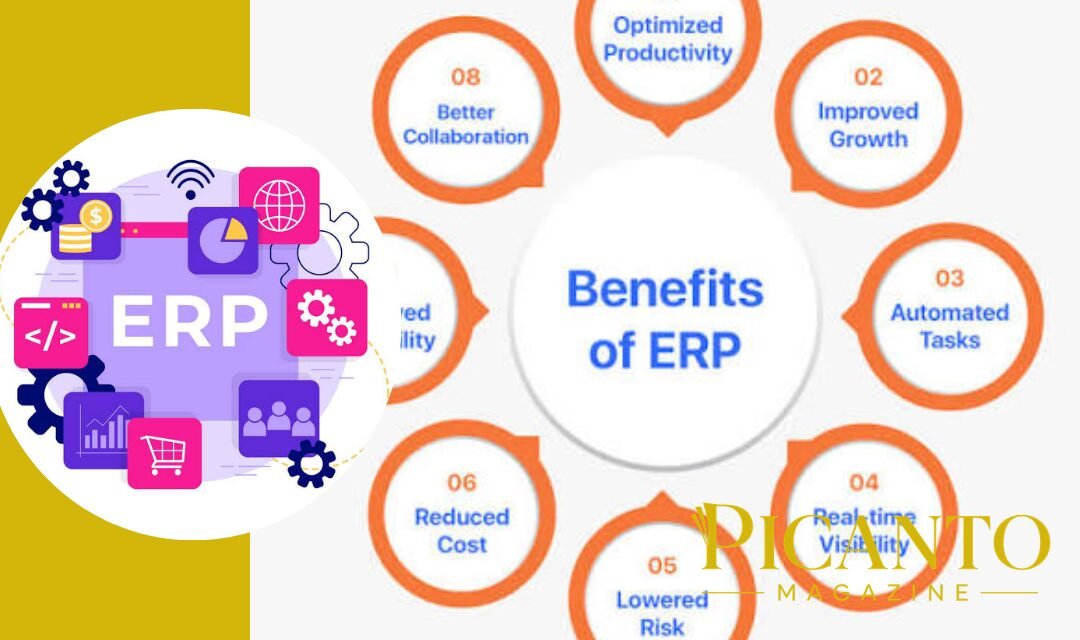
Benefits Of Using Enterprise Resource Planning Tools For Business Growth can be much bigger than many business owners first imagine. Running a business means dealing with sales, money, workers, stock, customers, suppliers, and many other things at the same time. When all this information is kept in different places, work can quickly become confusing. Enterprise Resource Planning tools, often called ERP tools, help bring everything together. They give businesses one central system where important information can be stored, checked, and managed more easily.
Think about a business like a school. A school has teachers, students, attendance records, fee records, exam results, and schedules. Imagine if every department kept its information in a completely different place and nobody could easily share it. Things would become messy very quickly. ERP software helps businesses avoid that kind of mess.
What Are Enterprise Resource Planning Tools?
Enterprise Resource Planning tools are software systems that help a company manage many parts of its business from one place.
An ERP system can help with things such as:
- Accounting and finance
- Sales
- Inventory
- Human resources
- Customer orders
- Purchasing
- Supply chains
- Manufacturing
- Reports
- Business planning
Instead of using one program for sales, another for stock, another for employees, and another for money, a company can connect these areas through one ERP system.
This does not mean every worker sees everything. Different employees can still have different access levels. The main benefit is that important business information can work together.
Why Businesses Use ERP Tools
As a small company grows, managing daily work usually becomes harder.
Imagine a shop that only receives ten orders each day. The owner might easily keep track of those orders using a spreadsheet.
Now imagine the same company grows and receives 5,000 orders every day.
Suddenly, spreadsheets may not be enough.
The company may need to know:
Which products are selling?
How much stock is left?
Which customers have paid?
Which orders have been shipped?
How much money has the company earned?
Which suppliers need to be paid?
This is where an ERP system can become very useful.
It collects business information and helps people understand what is happening without checking many different systems.
1. ERP Tools Keep Business Information In One Place
One of the biggest benefits of ERP software is having important information stored in one connected system.
Without ERP software, a business might have customer details in one program, sales figures in another, employee records somewhere else, and inventory information in spreadsheets.
Finding information can then become difficult.
Employees may spend a lot of time searching through emails, files, spreadsheets, and software.
ERP tools reduce this problem.
For example, when a customer places an order, the ERP system may automatically update the sales record, inventory level, invoice information, and shipping details.
Everyone who needs that information can work from the same updated data.
This can make everyday work much easier.
2. ERP Software Can Save Employees Time
Businesses often repeat the same small tasks every day.
Someone may have to copy numbers from one spreadsheet into another.
Another worker may have to enter the same customer information several times.
Another employee may spend hours creating reports manually.
ERP systems can automate many of these jobs.
Automation simply means letting software complete certain tasks automatically.
For example, an ERP system might automatically create an invoice when an order is confirmed.
That means an employee does not have to type the invoice manually every time.
Saving a few minutes may not sound important.
But imagine saving ten minutes on a task that happens 500 times every week.
That can add up to many hours.
Employees can then spend more time helping customers, developing products, improving marketing, or solving bigger business problems.
3. ERP Tools Help Reduce Human Errors
People make mistakes.
It happens in every business.
Someone may accidentally type 500 instead of 50.
Another person might forget to update an inventory spreadsheet.
Two workers may even create different versions of the same report.
These small mistakes can create bigger problems later.
ERP systems can reduce many manual tasks, which means there are fewer chances for typing errors or duplicate information.
For example, if one product is sold, the inventory level can update automatically.
Employees do not always need to remember to change the number themselves.
More accurate information helps business owners make better decisions.
4. Better Financial Management
Money is one of the most important parts of any business.
A company needs to understand how much money is coming in and how much is going out.
ERP systems can help businesses manage:
Revenue
Expenses
Invoices
Payments
Budgets
Taxes
Cash flow
Financial reports
When financial information is organized properly, business leaders get a clearer picture of the company’s health.
For example, they may quickly notice that expenses are rising faster than sales.
They can then investigate the problem before it becomes too serious.
Without clear financial information, businesses may discover problems much later.
5. ERP Systems Improve Inventory Management
Inventory means the products or materials a business has available.
For example, a clothing company may have thousands of shirts, jackets, jeans, and shoes in warehouses.
Keeping track of all these products manually can be difficult.
An ERP system can show how much stock is available.
It can also help businesses understand which products are selling quickly and which are sitting in storage.
This matters because having too much stock can waste money.
But having too little stock can also cause problems.
Imagine a popular product suddenly sells out.
Customers may buy from another company instead.
ERP software helps companies plan inventory more carefully.
6. Better Customer Service
ERP systems are mainly business tools, but they can also improve the customer experience.
How?
Because employees can access information more quickly.
Suppose a customer calls and asks:
“Where is my order?”
Without a connected system, an employee may have to contact several departments before answering.
With an ERP system, the worker may be able to see the order status immediately.
They may see when the order was received, whether payment was completed, whether the item has been packed, and whether it has been shipped.
Quick answers make customers happier.
Happy customers are also more likely to return.
7. ERP Tools Help Businesses Make Better Decisions
Business owners make decisions every day.
Should we hire more employees?
Should we order more stock?
Which product should we promote?
Which branch is performing best?
Should we reduce expenses?
Good decisions require good information.
ERP systems can turn business data into useful reports.
A manager may be able to see sales numbers, costs, inventory, employee performance, and other information through a dashboard.
A dashboard is simply a screen that shows important information in an easy-to-read way.
Instead of guessing, managers can use real business data.
That does not guarantee every decision will be perfect.
But it gives leaders better information to work with.
8. ERP Software Makes Business Growth Easier To Manage
Growth sounds exciting.
However, growth can also create problems.
A company with five employees is easier to manage than a company with 500 employees.
A business processing 20 orders a day is easier to manage than one processing 20,000.
As companies grow, they need better systems.
ERP software can provide the structure needed to handle larger amounts of information, customers, workers, products, and transactions.
This is sometimes called scalability.
Scalability simply means that a system can continue working as a business becomes bigger.
A suitable ERP solution can grow with the company instead of forcing the business to rebuild its systems every few years.
9. Departments Can Work Together More Easily
Businesses often have many departments.
These might include:
Sales
Marketing
Finance
Customer service
Human resources
Operations
Warehousing
Purchasing
One common business problem happens when these departments do not share information properly.
Sales may promise a customer something that the warehouse does not have.
Finance may not know that a customer order has changed.
Purchasing may order materials that are already available.
ERP software connects information between departments.
This can improve teamwork.
Employees spend less time asking other departments for information because much of it is already available inside the system.
10. ERP Tools Can Improve Business Reporting
Reports help businesses understand performance.
Managers may want to know:
Monthly sales
Yearly profit
Employee costs
Inventory levels
Customer orders
Product performance
Outstanding payments
Creating these reports manually can take hours or even days.
ERP software can often generate reports much faster.
Some systems also provide real-time reporting.
Real-time means the information updates as new activity happens.
For example, a manager may check today’s sales at 3:00 PM and see numbers that include orders placed only a few minutes earlier.
Faster reporting can help businesses respond to problems sooner.
11. Supply Chain Management Becomes Easier
A supply chain is the journey products and materials take before reaching the customer.
Imagine a furniture company.
It may buy wood from one supplier, fabric from another, and metal parts from another.
Those materials must arrive at the right time.
The company then makes the furniture, stores it, sells it, and delivers it.
There are many steps.
ERP systems can help track suppliers, purchases, production, inventory, and deliveries.
If one part of the supply chain has a problem, managers may notice it sooner.
This can reduce delays and improve planning.
12. Better Employee Management
Many ERP systems include human resources features.
These tools can help companies manage employee information such as:
Attendance
Working hours
Payroll
Leave requests
Job roles
Training
Performance information
Employee records
Managing this information becomes more important as a company grows.
For example, keeping track of ten employees may be simple.
Keeping track of 10,000 employees is very different.
ERP tools help companies organize this information more efficiently.
13. ERP Systems Can Support Business Planning
Every successful company needs to think about the future.
Business owners may need to predict future sales, costs, inventory needs, or hiring requirements.
ERP tools can provide historical data.
Historical data means information about what happened in the past.
For example, a company might notice that sales increase every December.
The business can then prepare earlier by ordering more stock and scheduling more workers.
Planning becomes easier when managers can study past patterns.
14. ERP Tools Can Help Control Costs
ERP software can also help companies understand where their money is being spent.
Managers may discover unnecessary expenses.
For example, a business may learn that it is paying several suppliers different prices for the same materials.
Or it may discover that too much money is being spent storing products that rarely sell.
When information is easier to see, waste is easier to find.
Reducing waste can improve profits.
15. Better Data Security And Access Control
Business information can be sensitive.
Companies may store employee salaries, customer details, financial records, supplier contracts, and other private information.
Many ERP systems provide security features that allow businesses to control who can access different information.
For example, a warehouse employee may need access to inventory records.
However, that employee may not need access to company payroll information.
ERP systems can give different users different permissions.
This helps businesses protect important data.
Companies still need good cybersecurity practices, strong passwords, backups, and proper employee training.
ERP software alone cannot protect a business from every security problem.
Cloud-Based ERP And Traditional ERP
Businesses usually have different ways to use ERP software.
One common option is cloud ERP.
Cloud ERP is hosted online.
Employees can often access the system through the internet.
This can be useful for companies with workers in different locations.
Another option is an on-premise ERP system.
This means the company runs the software using its own servers and technology systems.
Both options can work well.
The right choice depends on the company’s size, budget, security needs, technical team, and business goals.
Are ERP Tools Only For Large Companies?
No.
ERP software is often connected with large companies because major businesses have many departments and huge amounts of information.
However, smaller companies can also use ERP tools.
Many modern ERP providers offer systems designed for small and medium-sized businesses.
A small business may not need every feature.
It might only need accounting, inventory, sales, and customer management.
The important thing is choosing a system that matches the company’s actual needs.
Buying complicated software with hundreds of unnecessary features can create more problems instead of solving them.
Possible Challenges Of Using ERP Software
ERP tools offer many benefits, but businesses should also understand the challenges.
ERP Software Can Be Expensive
Some ERP systems require a large investment.
Costs can include software fees, implementation, employee training, customization, and technical support.
Companies should understand the full cost before choosing a system.
Employees Need Training
ERP software can be powerful, but employees need to know how to use it.
Without proper training, workers may become frustrated or make mistakes.
Businesses should give employees enough time to learn the new system.
Moving Data Can Be Difficult
A company may already have years of information stored in spreadsheets and older software.
Moving all that information into a new ERP system can take careful planning.
Incorrect or outdated information should ideally be cleaned before being moved.
Choosing The Wrong ERP Can Cause Problems
Not every ERP platform is right for every company.
A small retail company has different needs from a large manufacturing business.
Companies should carefully compare their needs before making a decision.
How To Choose The Right ERP Tool
Businesses should not simply choose the most expensive or most popular ERP platform.
They should ask practical questions.
What problems are we trying to solve?
How many employees will use the system?
Which departments need it?
What features are essential?
Can the system grow with us?
Is employee training available?
How much will the complete system cost?
Can it connect with software we already use?
What customer support is provided?
Companies should also involve employees in the decision.
The people who will use the system every day may notice important needs that senior managers overlook.
Why ERP Is Important For Long-Term Business Growth
Business growth is not only about getting more customers.
A company also needs systems that can handle that growth.
Imagine building a taller and taller building on a weak foundation.
Sooner or later, problems will appear.
Business systems work in a similar way.
A company may grow quickly, but if its information, finances, inventory, and operations are disorganized, that growth can become difficult to control.
ERP software can provide a stronger foundation.
It helps companies organize information, automate repeated work, understand performance, and connect departments.
That makes growth easier to manage.
Can ERP Software Guarantee Business Success?
No software can guarantee success.
A company still needs good products, strong leadership, hardworking employees, happy customers, smart marketing, and careful financial management.
ERP software is simply a tool.
Think of it like a map.
A map can show you where to go, but you still have to drive the car.
ERP systems give companies better information and better organization.
Business leaders must still use that information wisely.
Final Thoughts
The benefits of using Enterprise Resource Planning tools for business growth include better organization, faster work, fewer mistakes, improved financial control, stronger inventory management, better customer service, and easier business planning.
ERP systems bring different parts of a company together.
Instead of employees working with separate spreadsheets and disconnected software, important information can move through one connected system.
For growing businesses, this can make daily operations easier to understand and manage.
However, choosing the right ERP system is important. Businesses should think carefully about their size, budget, goals, employees, and future plans before selecting software.
The best ERP tool is not always the one with the most features.
It is the one that solves the company’s real problems and makes everyday work simpler.
Frequently Asked Questions
What does ERP mean?
ERP stands for Enterprise Resource Planning. It is software that helps businesses manage different areas such as finance, inventory, employees, sales, purchasing, and operations from a connected system.
How can ERP help a business grow?
ERP can help a growing business by organizing information, automating repeated tasks, improving reporting, reducing errors, and helping managers make better decisions.
Is ERP software only for big businesses?
No. Large companies commonly use ERP systems, but many ERP solutions are also designed for small and medium-sized businesses.
What departments can use ERP software?
ERP systems can be used by finance, sales, human resources, purchasing, inventory, manufacturing, customer service, and many other departments.
Does ERP reduce business costs?
ERP software can help reduce certain costs by improving efficiency, reducing repeated work, finding waste, and helping companies manage inventory and spending more carefully.
Is ERP difficult to use?
It depends on the system. Some ERP platforms are simple, while others are complex. Employee training is important when a business introduces a new ERP system.
What is cloud ERP?
Cloud ERP is an ERP system hosted online. Businesses normally access it through the internet instead of running everything on their own local servers.
What is the biggest benefit of ERP software?
One of the biggest benefits is having important business information connected in one place. This helps departments work together and gives managers a clearer view of the company.
Can ERP software replace employees?
ERP software can automate many repeated tasks, but businesses still need people to make decisions, communicate with customers, solve problems, manage teams, and perform work that requires human judgment.
How should a company choose an ERP system?
A company should first understand its problems and requirements. It should then compare features, cost, scalability, ease of use, integrations, training, security, and customer support before making a final choice.