
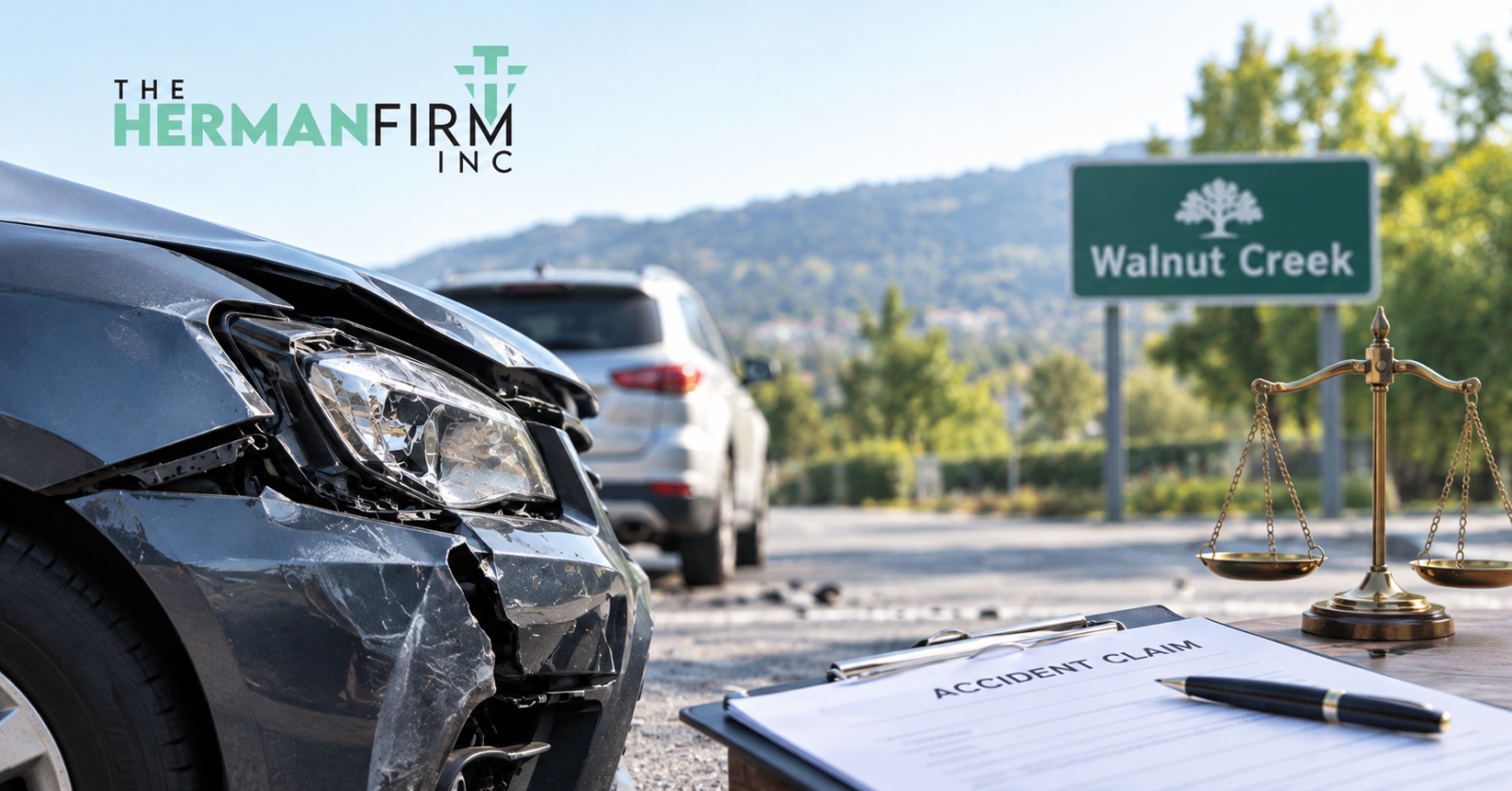
A car accident lawyer in Walnut Creek helps crash victims prove who caused the collision and recover compensation for medical bills, lost wages, vehicle damage, and pain and suffering. California is an at-fault state, so the driver who caused the crash, and their insurer, pays for the harm. You generally have two years to file an injury lawsuit.
Walnut Creek is one of the busiest traffic hubs in the East Bay. The I-680 and Highway 24 interchange carries heavy commuter traffic every day, while downtown streets mix drivers, shoppers, cyclists, and pedestrians heading to BART. With that much traffic, collisions happen often, from rear-end crashes on Ygnacio Valley Road to serious freeway wrecks.
If you were hurt in a car accident, this guide walks you through what to do at the scene, what California law says, what your claim may be worth, and when to call a car accident lawyer.
Key Takeaways
- Call 911 and get checked: see a doctor within 24 to 72 hours, even if you feel fine.
- Report to the DMV: file an SR-1 within 10 days if anyone was hurt or damage exceeds $1,000.
- Deadline: you have 2 years to file an injury lawsuit, 3 years for property damage, and only 6 months for claims against a government agency.
- Fault matters: California’s pure comparative negligence rule lets you recover even if you were partly at fault.
- Protect your claim: do not admit fault, give a recorded statement, or accept a quick settlement before talking to a lawyer.
What to Do After a Car Accident in Walnut Creek: 10 Steps
After a car accident, your priorities are safety, medical care, evidence, and protecting your claim from the insurance company. Follow these steps in order.
- Check for injuries and call 911. If anyone is hurt, call 911 immediately. Move to a safe spot if you can, and turn on your hazard lights.
- Call the police. Walnut Creek Police respond to crashes on city streets. The California Highway Patrol (CHP) handles collisions on I-680 and Highway 24. A police report is strong evidence of what happened.
- Exchange information. Get the other driver’s name, phone, address, license number, plate number, and insurance details. California Vehicle Code section 20001 requires drivers to stop and exchange information after an injury crash.
- Do not admit fault. Even a polite “I’m sorry” can be twisted into an admission. Stick to the facts.
- Document the scene. Take photos and video of all vehicles, plates, skid marks, traffic signals, road conditions, and your injuries. Note nearby businesses that may have security cameras.
- Talk to witnesses. Get names and phone numbers. Independent witnesses can make or break a disputed-fault case.
- See a doctor within 24 to 72 hours. Whiplash, concussions, and back injuries often appear later. Prompt treatment protects your health and creates a medical record that links your injuries to the crash.
- File an SR-1 with the DMV. California requires an SR-1 report within 10 days if anyone was injured or killed, or if property damage exceeds $1,000. This is separate from the police report.
- Notify your own insurer, but be careful with theirs. Tell your insurance company about the crash. Politely decline a recorded statement to the other driver’s insurer until you have legal advice.
- Call a car accident lawyer. A free consultation helps you understand your rights before you sign anything, and lets your lawyer preserve evidence such as video footage that may be erased within days.
What Not to Do
- Do not post about the accident or your recovery on social media.
- Do not sign medical authorizations or releases from the other driver’s insurer.
- Do not repair your car before it has been photographed and inspected.
- Do not skip doctor’s appointments or stop treatment early.
Common Causes of Car Accidents in Walnut Creek
Most car accidents in Walnut Creek are caused by driver error: distraction, speeding, impairment, and failing to yield. Common causes include:
- Distracted driving: texting, using a GPS, or eating behind the wheel
- Speeding and unsafe lane changes on I-680 and Highway 24
- Rear-end collisions in stop-and-go commuter traffic
- Failure to yield at busy intersections and when turning left
- Running red lights on major corridors downtown
- Drunk or drugged driving, especially at night and on weekends
- Drowsy driving during long commutes
- Unsafe road conditions such as potholes, missing signs, or poor lighting
High-Traffic Roads and Intersections
Some of the busiest and most crash-prone areas in and around Walnut Creek include:
- The I-680 / Highway 24 interchange, where merging traffic and sudden slowdowns are common
- Ygnacio Valley Road, a high-volume arterial with fast traffic and frequent turning movements
- Treat Boulevard near Bancroft Road and the I-680 ramps
- North Main Street and Mt. Diablo Boulevard downtown, near Broadway Plaza
- Streets around the Walnut Creek BART station, where cars, buses, cyclists, and pedestrians mix
Knowing the local roads matters. A lawyer familiar with these locations knows where to look for traffic cameras, how signal timing works, and which crash patterns repeat.
Who Can Be Held Liable for a Car Accident?
The at-fault driver is usually responsible, but they are not always the only one. Depending on the facts, liability may also fall on:
- An employer, if the driver was working at the time, such as a delivery or company vehicle
- A rideshare company’s insurer, if an Uber or Lyft driver was logged into the app
- A vehicle or parts manufacturer, if defective brakes, tires, or airbags caused or worsened the crash
- A government agency, if a dangerous road design or poor maintenance contributed
- A vehicle owner who knowingly lent the car to an unsafe driver
Identifying every responsible party matters because each may carry its own insurance. That can be the difference between a recovery capped by a small policy and one that fully covers serious injuries.
California Car Accident Laws You Should Know
California is an at-fault state with a 2-year deadline for injury lawsuits, minimum liability insurance of $30,000 per person, and a pure comparative negligence rule. Here is what each means for your claim.
Is California an At-Fault State?
Yes. California is an at-fault (tort) state, not a no-fault state. The driver who caused the crash is financially responsible, and you can file a claim against their insurance or sue them directly. You can also use your own coverage, such as medical payments or collision coverage, while the claim is pending.
California Minimum Car Insurance Requirements
Since January 1, 2025, California drivers must carry at least:
| Coverage | Minimum required |
| Bodily injury, per person | $30,000 |
| Bodily injury, per accident | $60,000 |
| Property damage | $15,000 |
Those limits are often far below the true cost of a serious injury. A single hospital stay or surgery can exceed $30,000. That is why your own uninsured/underinsured motorist (UM/UIM) coverage matters, and why a lawyer looks for every other source of recovery.
Filing Deadlines for Car Accident Claims
- Personal injury lawsuit: 2 years from the date of the accident
- Vehicle and property damage: 3 years
- Wrongful death: 2 years from the date of death
- Claims against a city, county, or state agency: written claim within 6 months
Insurance claims should be opened much sooner. Most policies require prompt notice, and evidence fades fast.
Comparative Fault in California Car Accidents
Under pure comparative negligence, your compensation is reduced by your percentage of fault, but never barred entirely. If a jury values your case at $200,000 and finds you 25% at fault for speeding, you would receive $150,000.
Uninsured Drivers and Proposition 213
If you were driving without insurance when someone else hit you, Proposition 213 generally limits you to economic damages, such as medical bills and lost wages. You cannot recover pain and suffering. There are exceptions, including when the at-fault driver was convicted of DUI.
What Compensation Can You Get After a Car Accident?
Car accident victims in California can recover economic damages for measurable financial losses and non-economic damages for pain, suffering, and reduced quality of life. A full claim may include:
- Emergency care, hospital stays, surgery, and future medical treatment
- Physical therapy, chiropractic care, and rehabilitation
- Lost wages and lost future earning capacity
- Vehicle repair or replacement, rental car costs, and damaged personal items
- Pain and suffering, emotional distress, and anxiety about driving
- Scarring, disfigurement, and permanent disability
- Loss of enjoyment of life
- Punitive damages in rare cases, such as crashes caused by a drunk driver
Common car accident injuries include whiplash and neck strain, herniated discs, concussions and traumatic brain injuries, broken bones, spinal cord injuries, and PTSD. The more serious and lasting the injury, the higher the potential value of the claim.
Insurance Company Tactics to Watch For
Insurance adjusters are friendly, but their job is to pay as little as possible. Watch for these tactics:
- Quick lowball offers made before you know the full extent of your injuries
- Recorded statements designed to get you to downplay your pain or accept some blame
- Broad medical authorizations that let them dig through unrelated health history
- Blaming gaps in treatment to argue you were not really hurt
- Disputing fault to shift a percentage of blame onto you
- Delays meant to pressure you into accepting less
How a Car Accident Lawyer Helps Your Case
A car accident lawyer handles the legal and insurance work so you can focus on recovery. That includes:
- Preserving evidence such as dashcam footage, traffic camera video, and vehicle data
- Working with accident reconstruction experts when fault is disputed
- Documenting your injuries and future medical needs with your doctors
- Finding every available insurance policy, including UM/UIM and employer coverage
- Negotiating medical liens to increase the amount you take home
- Filing a lawsuit and going to trial if the insurer will not offer fair value
Most car accident lawyers, including The Herman Firm, work on a contingency fee. You pay nothing upfront, and the fee comes from the recovery only if the case is won.
Why Choose The Herman Firm
The Herman Firm helps car accident victims in Walnut Creek and across Contra Costa County. You get direct attention from an attorney who knows local roads, local courts, and how to push insurers toward a fair result.
Frequently Asked Questions
Do I need a car accident lawyer for a minor accident?
If no one was hurt and the only damage is a dented bumper, you can often handle the claim yourself. If you have injuries, missed work, or the other driver disputes fault, a car accident lawyer can protect your claim and usually increase the recovery.
How much does a car accident lawyer cost?
Most car accident lawyers work on contingency, meaning no upfront fees. The lawyer is paid a percentage of the settlement or verdict, and you owe no attorney’s fee if there is no recovery.
How long after a car accident can I file a claim in California?
You have 2 years from the accident to file an injury lawsuit and 3 years for property damage. Claims involving a government agency require a written claim within 6 months.
What is the average car accident settlement in California?
There is no reliable average, because settlements depend on injury severity, medical costs, lost income, fault, and insurance limits. Minor soft-tissue claims may settle for a few thousand dollars, while serious injury cases can reach six or seven figures.
What if the other driver was uninsured or fled the scene?
You may be able to recover through your own uninsured motorist coverage, which also typically applies to hit-and-run crashes. Report the crash to police promptly, as insurers usually require it.
Speak With a Walnut Creek Car Accident Lawyer
A car accident can leave you facing medical bills, missed paychecks, and an insurance company that is already building its case. Getting experienced help early protects the evidence and your right to fair compensation.
If you were injured in a car accident in Walnut Creek, Concord, Lafayette, Pleasant Hill, Danville, or elsewhere in Contra Costa County, contact The Herman Firm for a free consultation. Call 925-532-1977. There is no fee unless we win.