
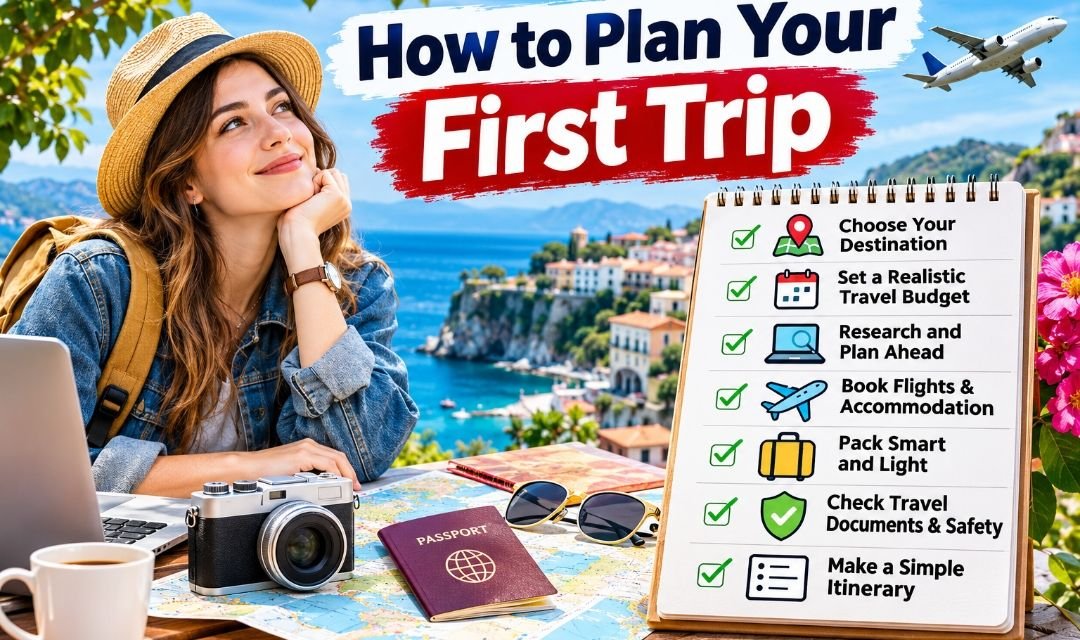
How to plan your first trip is one of the most exciting things to learn when you are ready to explore the world. Traveling somewhere new brings fresh experiences, beautiful places, and unforgettable memories. However, planning your first adventure can also feel confusing when you have never booked a hotel, organized transportation, or created a travel budget before.
The good news is that planning a trip does not have to be difficult. With a few simple steps, you can organize your journey, save money, and avoid common beginner mistakes. Whether you want to visit a nearby city or travel internationally, this guide will help you prepare for your first adventure with confidence.
Quick Overview: How to Plan Your First Trip
| Planning step | What to do |
|---|---|
| Choose a destination | Select a place that fits your interests |
| Decide travel dates | Consider weather, prices, and availability |
| Create a budget | Estimate transportation, food, and accommodation |
| Research your destination | Learn about attractions and local customs |
| Book transportation | Compare flights, trains, or buses |
| Find accommodation | Choose a comfortable and convenient location |
| Prepare documents | Check passport, visa, and identification requirements |
| Create an itinerary | Organize activities without rushing |
| Pack essentials | Bring useful items without overpacking |
| Prepare for safety | Arrange emergency contacts and necessary insurance |
1. Choose the Perfect Destination for Your First Trip
The first step in learning how to plan your first trip is deciding where you want to go.
With so many destinations available, choosing just one can feel overwhelming. Some travelers dream about sandy beaches, while others prefer mountains, historical cities, or peaceful countryside.
Start by thinking about the type of experience you want.
Would you enjoy relaxing in a quiet location? Do you want to explore famous landmarks? Are you interested in trying different foods and learning about new cultures?
Your answers will help you narrow down your options.
Things to consider when choosing a destination
- Budget: Choose a destination you can comfortably afford.
- Distance: Nearby places may be easier for your first journey.
- Weather: Research the expected weather during your travel dates.
- Safety: Review reliable destination-specific travel advice.
- Transportation: Look for places with convenient travel connections.
- Language: Consider how easily you can communicate with local people.
You do not need to visit an expensive international destination to enjoy your first trip. Sometimes a nearby city or beautiful natural area provides the perfect introduction to traveling.
2. Decide When You Want to Travel
Choosing the right travel dates is an important part of organizing your journey.
Different destinations have different travel seasons. Some places attract large crowds during summer, while others become popular during winter.
Traveling during a busy season may mean higher hotel prices, crowded attractions, and limited accommodation choices.
If your schedule is flexible, consider visiting during a quieter period.
Why travel timing matters
Weather can affect outdoor activities, sightseeing, and transportation.
For example, a beach destination may be more enjoyable during warm, pleasant weather. Mountain destinations may require additional preparation during snowy or rainy conditions.
School holidays, festivals, and public celebrations can also affect prices and availability.
Check the local weather patterns and major events before deciding your dates.
Choosing suitable travel dates can make your first trip more comfortable and affordable.
3. Set a Realistic Travel Budget
One of the biggest mistakes new travelers make is planning a vacation without calculating its total cost.
Travel expenses include much more than flight tickets and hotel rooms.
You may need money for meals, transportation, attractions, shopping, and unexpected situations.
A realistic budget helps you understand how much you can spend without creating financial pressure.
Example of a beginner travel budget
Here is an illustrative budget for a five-day trip.
| Expense | Estimated cost |
|---|---|
| Transportation | $200 |
| Accommodation | $250 |
| Food and drinks | $125 |
| Local transportation | $50 |
| Activities | $75 |
| Emergency fund | $100 |
| Total budget | $800 |
These numbers are examples, not current prices. Actual costs depend on your destination, travel dates, and personal preferences.
Simple ways to save money
Compare transportation prices before booking.
Choose affordable hotels or guesthouses with good reviews.
Use public transportation when it is practical and safe.
Look for free attractions, public parks, and walking routes.
Set a daily spending limit.
Avoid unnecessary shopping during your first few days.
Keeping an emergency fund separate from your regular spending money is also a smart idea.
4. Research Your Destination Before Leaving
Research can turn a confusing travel experience into an enjoyable adventure.
You do not need to know every detail about your destination. However, understanding basic information will make your arrival much easier.
Start by learning about the city’s main attractions, neighborhoods, transportation systems, and local customs.
You can also read recent reviews from other travelers to understand what to expect.
Important things to research
Local transportation: Find out whether buses, trains, or taxis are the easiest way to travel.
Currency: Understand which currency is used and how payments usually work.
Weather: Check what clothing and equipment you may need.
Food: Research popular dishes and suitable restaurants.
Safety: Learn about common tourist scams and areas that require caution.
Cultural customs: Understand appropriate behavior in public places and religious locations.
Research also helps you avoid spending too much time looking for information after arriving.
5. Book Your Transportation Early
Once you have chosen a destination and decided your travel dates, you can begin organizing transportation.
Depending on the distance, you might travel by airplane, train, bus, or car.
Each option offers different advantages.
Flying may be convenient for long journeys, while trains can provide comfortable transportation between nearby cities.
For shorter distances, buses may be an affordable option.
How to book your first flight
Start by comparing flight options from reputable airlines and booking platforms.
Check departure times, arrival airports, baggage allowances, and total ticket prices.
A cheaper ticket may include additional charges for checked luggage or seat selection.
Always read the booking conditions carefully.
Make sure your name and personal details are correct before making payment.
If you are flying internationally, confirm that your passport and entry documents meet the destination’s requirements.
Keep a copy of your flight confirmation in an easily accessible location.
6. Choose Comfortable and Convenient Accommodation
Finding a good place to stay is another important step when learning how to plan your first trip.
Your accommodation can influence your comfort, safety, and transportation expenses.
Many beginners focus only on finding the cheapest hotel. However, location and quality are equally important.
A hotel far from popular attractions may require extra spending on transportation.
Before making a reservation, review the property’s location, facilities, and recent customer feedback.
What beginners should look for in accommodation
- A convenient location near transportation.
- Positive and detailed guest reviews.
- Clear pricing without unexpected charges.
- Reliable Wi-Fi where needed.
- Comfortable sleeping arrangements.
- Secure entrances and luggage storage.
- Flexible cancellation policies when available.
Also check the property’s check-in and check-out times.
If you expect to arrive late at night, confirm whether late check-in is possible.
Choosing suitable accommodation allows you to rest comfortably after long days of exploring.
7. Prepare Your Travel Documents
Travel documents are among the most important things to organize before departure.
The requirements depend on your destination, nationality, and transportation method.
For domestic travel, an appropriate identification document may be sufficient.
International travel usually requires a valid passport and may also require a visa or electronic travel authorization.
Some destinations have specific passport validity rules.
Always verify entry requirements through official government, embassy, or immigration sources before booking nonrefundable travel arrangements.
Documents to check before traveling
- Passport or accepted identification.
- Required visa or travel authorization.
- Transportation tickets.
- Accommodation confirmations.
- Travel insurance documents, if applicable.
- Emergency contact information.
- Any required health or vaccination documentation.
Keep digital copies of important documents in a secure location.
Carrying a separate paper copy can also be helpful if your phone becomes unavailable.
8. Create a Simple Travel Itinerary
A travel itinerary is a basic schedule that explains what you plan to do during your trip.
For first-time travelers, a simple itinerary is usually better than a complicated one.
Trying to visit too many attractions in a short period can make your journey exhausting.
Instead, choose a few important places you really want to experience.
Group nearby attractions together to reduce unnecessary transportation.
Example of a three-day travel itinerary
| Day | Morning | Afternoon | Evening |
|---|---|---|---|
| Day 1 | Arrival and hotel check-in | Explore nearby attractions | Enjoy a local dinner |
| Day 2 | Visit a famous landmark | Explore a museum or market | Relax and enjoy the city |
| Day 3 | Visit a park or scenic area | Shopping and preparation | Departure |
This schedule provides enough structure without making every hour feel rushed.
Leave additional time for unexpected opportunities.
Sometimes the most memorable part of traveling is discovering something that was not included in your original plans.
9. Pack Smart for Your First Adventure
Packing is an exciting part of preparing for a trip, but beginners often bring more luggage than they actually need.
Overpacking can create problems when moving between transportation stations and accommodation.
It may also lead to extra airline baggage charges.
The best approach is to pack useful items that match your destination and planned activities.
Essential packing checklist
Clothing: Comfortable outfits, suitable footwear, sleepwear, and weather-appropriate outerwear.
Travel essentials: Identification, tickets, wallet, and booking confirmations.
Electronics: Phone, charger, suitable adapter, and permitted power bank.
Personal care: Toothbrush, toiletries, sunscreen, and hygiene products.
Health items: Personal medications and a basic first-aid kit.
Other useful items: Reusable water bottle, sunglasses, and a small day bag.
Before packing, check your transportation provider’s baggage restrictions.
Avoid bringing items that are prohibited or unnecessary.
Packing light makes your first journey easier and more enjoyable.
10. Plan How You Will Get Around
Understanding local transportation is important, especially when visiting an unfamiliar city.
Research how you will travel from the airport or station to your accommodation.
This can prevent confusion after a long journey.
Some destinations have convenient metro systems, buses, or trains.
Others rely more heavily on taxis and private transportation.
Check approximate travel costs before leaving home.
If public transportation is available, find out whether you need a special ticket, travel card, or mobile application.
Downloading offline maps can also help you navigate when internet access is unavailable.
Knowing your transportation options saves time and allows you to explore more confidently.
11. Prepare for Travel Safety
Safety should always be part of your travel planning.
Although many trips happen without serious problems, basic precautions can reduce unnecessary risks.
Begin by researching your destination’s current safety conditions.
Choose reputable accommodation and transportation providers.
Avoid carrying large amounts of cash in crowded areas.
Keep important belongings close to you, especially in busy markets, stations, and tourist attractions.
Safety tips for first-time travelers
Tell a trusted family member or friend about your travel plans.
Save important emergency telephone numbers.
Avoid sharing your hotel room number with strangers.
Protect your personal information when using public networks.
Be cautious when accepting unexpected offers from unknown people.
Keep emergency money available.
Review your travel insurance coverage and exclusions.
Planning for emergencies does not mean expecting problems. It simply helps you respond more effectively if something unexpected happens.
12. Prepare Your Phone and Internet Connection
Your smartphone can become one of your most useful travel tools.
You can use it to navigate unfamiliar streets, find restaurants, translate conversations, and access booking information.
Before departure, check your mobile network’s roaming charges.
International roaming may be expensive, depending on your provider.
A local SIM card or travel eSIM might be a better option.
Download maps of your destination for offline use.
Save your hotel’s address, transportation information, and important contact numbers.
Charge your phone before leaving for sightseeing activities.
You should also consider carrying a portable power bank if your airline permits it.
A reliable phone connection makes traveling more convenient, especially during your first adventure.
13. Learn Basic Local Customs and Phrases
Visiting a new destination often means experiencing a different culture.
Learning about local traditions can make your journey more interesting and respectful.
Some destinations have specific expectations about clothing, greetings, photography, and behavior in religious places.
Research these customs before your visit.
You can also learn a few useful expressions in the local language.
Simple phrases such as “hello,” “thank you,” “please,” and “how much does this cost?” can help with everyday interactions.
Translation applications are useful, but showing a genuine interest in local culture can make communication more enjoyable.
Respectful behavior helps travelers create positive experiences with local communities.
14. Keep Your Travel Plans Flexible
Even the best travel plans can change unexpectedly.
Transportation delays, bad weather, or attraction closures may affect your schedule.
Beginners sometimes become frustrated when everything does not go exactly as planned.
However, flexibility is an important travel skill.
If an outdoor activity becomes impossible because of rain, you might visit a museum or indoor market instead.
If transportation is delayed, having additional time between activities can reduce stress.
Avoid booking every activity so tightly that one delay affects the entire day.
Keeping alternative options available makes your journey easier to manage.
15. Avoid Common First-Time Travel Mistakes
Understanding common mistakes can help you plan a more successful journey.
Many beginners make similar errors because they lack travel experience.
Fortunately, most of these problems can be reduced through simple preparation.
Common mistakes and solutions
| Mistake | How to avoid it |
|---|---|
| Choosing an expensive destination | Compare total travel costs |
| Forgetting important documents | Create a document checklist |
| Booking accommodation without research | Read recent guest reviews |
| Packing too many belongings | Bring only practical essentials |
| Creating an overloaded itinerary | Leave time for rest |
| Ignoring local transportation | Research routes before arrival |
| Spending beyond the budget | Track daily expenses |
| Forgetting emergency preparation | Save contacts and emergency funds |
Do not expect yourself to know everything during your first journey.
Every travel experience can teach you useful lessons for future adventures.
16. Make Time to Enjoy Your Travel Experience
Learning how to plan your first trip is important, but enjoying the journey matters just as much.
Some travelers become so focused on their schedules that they forget to appreciate their surroundings.
Try to balance organized activities with free time.
Walk through interesting neighborhoods, enjoy local food, visit peaceful parks, and take photographs of special moments.
You might also keep a small travel journal.
Writing down favorite experiences can help preserve memories long after you return home.
Traveling gives you opportunities to discover new environments and learn more about different ways of life.
Your first trip does not need to be perfect to become unforgettable.
17. Review Everything Before Departure
A final review can help you feel more confident before leaving home.
Check your transportation schedule and confirm your accommodation reservation.
Make sure your documents are valid and accessible.
Review the weather forecast and adjust your packing if necessary.
Charge your electronic devices and download useful travel information.
Confirm your transportation arrangements to the airport or station.
You should also share your itinerary with someone you trust.
Completing these simple checks can help you begin your journey feeling organized and prepared.
Frequently Asked Questions About How to Plan Your First Trip
How do I start planning my first trip?
Start by choosing a destination and deciding how much money you can spend. Next, select your travel dates, research transportation and accommodation, prepare any required documents, and create a flexible itinerary.
How far in advance should I plan my first trip?
A short domestic trip may require only a few weeks of preparation, depending on availability. International trips can require several months, especially when passports, visas, or other entry requirements are involved.
How much money should I save for my first trip?
Your savings goal depends on the destination, length of stay, transportation, accommodation, and daily activities. Calculate expected expenses and keep additional money for emergencies.
What is the easiest type of trip for a beginner?
A short trip to a nearby destination with convenient transportation and reliable accommodation can be a good starting point. It allows you to practice essential travel skills without managing a complicated itinerary.
Should I book everything before traveling?
It is generally helpful to arrange essential transportation and accommodation in advance. You may also need to book popular attractions. However, leaving some activities flexible can make your trip more enjoyable.
What should I do if something goes wrong during my first trip?
Stay calm and focus on the immediate problem. Contact your transportation provider, accommodation, insurance company, or relevant local authorities when appropriate. Keeping emergency contacts and important documents accessible can make unexpected situations easier to handle.
Can I plan my first trip on a small budget?
Yes. You can reduce expenses by choosing an affordable destination, comparing transportation prices, staying in budget-friendly accommodation, using public transportation, and exploring free attractions.
Final Thoughts
Learning how to plan your first trip is the beginning of an exciting journey. Although travel planning may seem complicated at first, breaking everything into small steps makes the process much easier.
Start by choosing a destination that matches your interests and budget. Research your travel dates, book reliable transportation and accommodation, organize your documents, and create a simple itinerary.
Most importantly, remember that your first adventure does not need to be expensive or perfectly organized. Good preparation, curiosity, and a flexible attitude can help you create meaningful memories.
Every experienced traveler started somewhere. Your first trip is an opportunity to discover new places, learn practical skills, and build confidence for future adventures.
Plan carefully, pack smart, stay curious, and enjoy every moment of your first journey.