
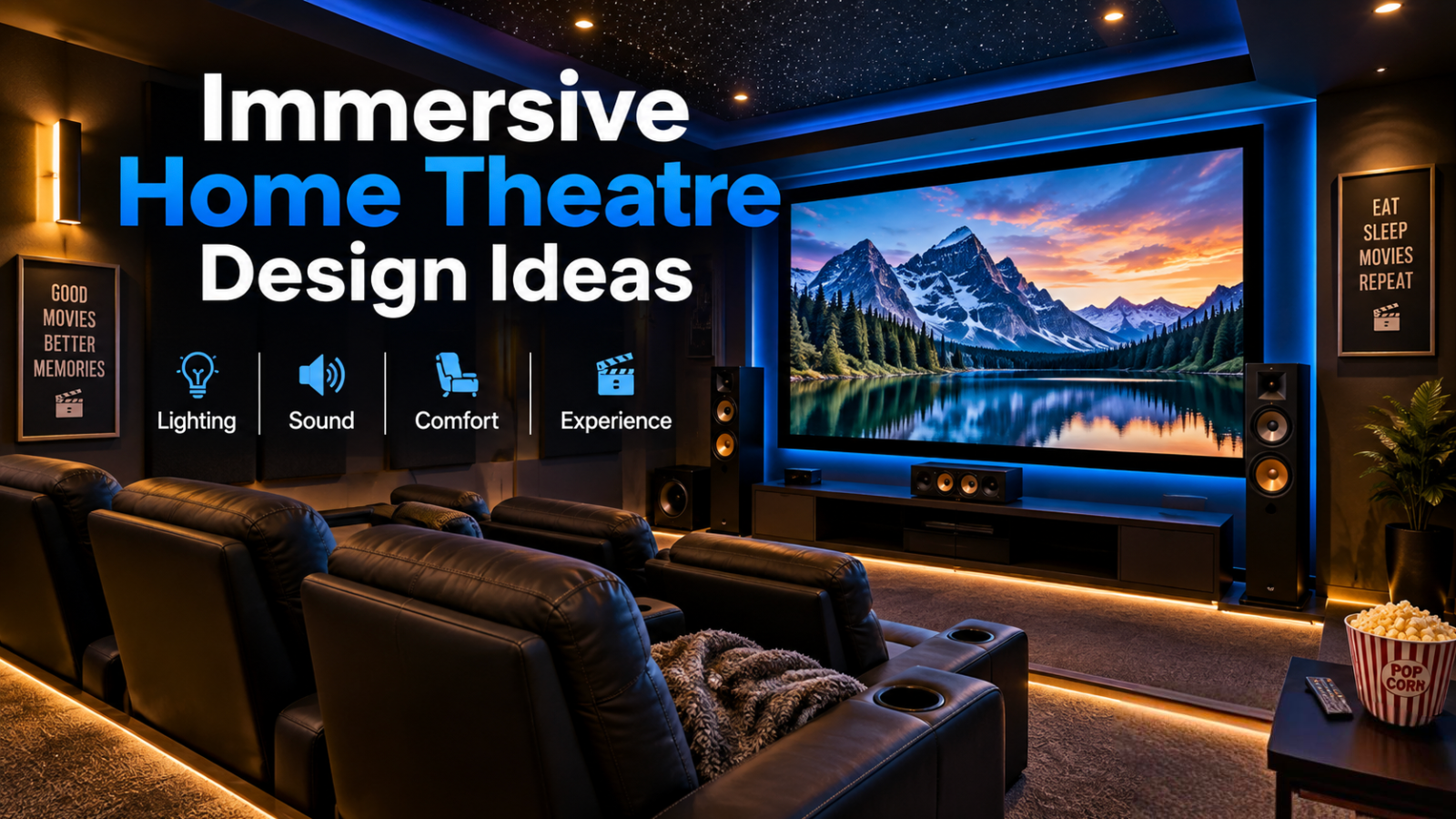
More homeowners are carving out dedicated spaces for entertainment, and the home theatre has become a top choice for those who want a true cinematic escape without leaving the house. But building a home theatre isn’t just about buying a big screen and a few speakers. The right design choices can transform an ordinary room into a professional-grade Audio Video experience that rivals your local cinema. From lighting to seating, every detail plays a role in how immersive your space feels.
Lighting Design for Home Theatre
Lighting sets the mood before a single movie even starts playing. Ambient and accent lighting work together to reduce glare on your screen while keeping the room from feeling like a dark cave. Harsh overhead lights are the enemy of a good Audio Video setup, so many homeowners opt for dimmable LED lights that can be adjusted based on what’s playing.
Blackout curtains are another must-have. They block out natural light that could wash out your picture quality, especially during daytime viewing. For an extra layer of atmosphere, consider placing accent lighting along the floor or behind the screen. This subtle glow adds depth to the room without competing with the on-screen action, creating a more cinematic feel from the moment you walk in.
Sound System Placement and Acoustics
Great visuals only tell half the story. Proper speaker positioning is essential for achieving true surround sound in your home theatre. Front speakers should flank your screen, while surround speakers are typically placed slightly behind and above seating height to wrap the room in sound.
Room acoustics also have a major impact on Audio Video quality. Hard surfaces like bare walls and floors can cause sound to bounce around, leading to echo and muddled dialogue. Adding rugs, upholstered furniture, or acoustic panels helps absorb excess sound reflection. If you’re serious about clarity, even small adjustments like moving speakers a few inches can make a noticeable difference in how balanced your audio sounds.
Display and Screen Selection
Choosing between a projector and a large display often comes down to room size and lighting control. Projectors tend to shine in fully darkened rooms and can deliver a larger-than-life picture, while high-quality displays offer excellent brightness and work well in rooms with some ambient light.
Screen size should be paired with proper viewing distance to avoid eye strain or missing detail. As a general rule, the farther your seating is from the screen, the larger your display should be to maintain that immersive feel. Once you’ve settled on your setup, don’t overlook wall mounting and cable management. Hidden wires and a flush-mounted screen keep the room looking clean and let your Audio Video equipment take center stage without visual clutter.
Seating and Layout
Comfort matters just as much as picture and sound quality. Theatre-style seating, often arranged in elevated rows, allows everyone a clear sight line to the screen. Reclining chairs with cup holders and armrests add a touch of luxury while keeping guests comfortable through longer films.
Row spacing should give enough legroom without pushing seats so far back that viewers lose detail. It’s also worth thinking about how furniture placement affects sound. Large couches and padded chairs can actually help absorb excess noise, contributing to better room acoustics rather than working against them.
Color Schemes and Decor
Dark, neutral colors like deep grays, blacks, and navy tones are popular choices for home theatres because they enhance contrast and minimize distractions on screen. Bright walls or reflective surfaces can create glare that interferes with picture quality, so muted tones tend to work best.
Wall treatments made from acoustic foam or fabric panels serve double duty. They improve soundproofing while adding texture and visual interest to the room. When choosing decor, aim for a cohesive look that complements your Audio Video equipment rather than competing with it. Simple, streamlined design elements keep the focus on the screen and speakers, where it belongs.
Bringing It All Together
Designing a home theatre is about more than assembling equipment. It’s about thoughtfully combining lighting, acoustics, seating, and decor to create a space that feels genuinely immersive. Small details, like the placement of a lamp or the fabric on your walls, can make the difference between a good setup and a great one. When every element works together, your home theatre becomes more than a room. It becomes an experience worth looking forward to every time the lights go down.