
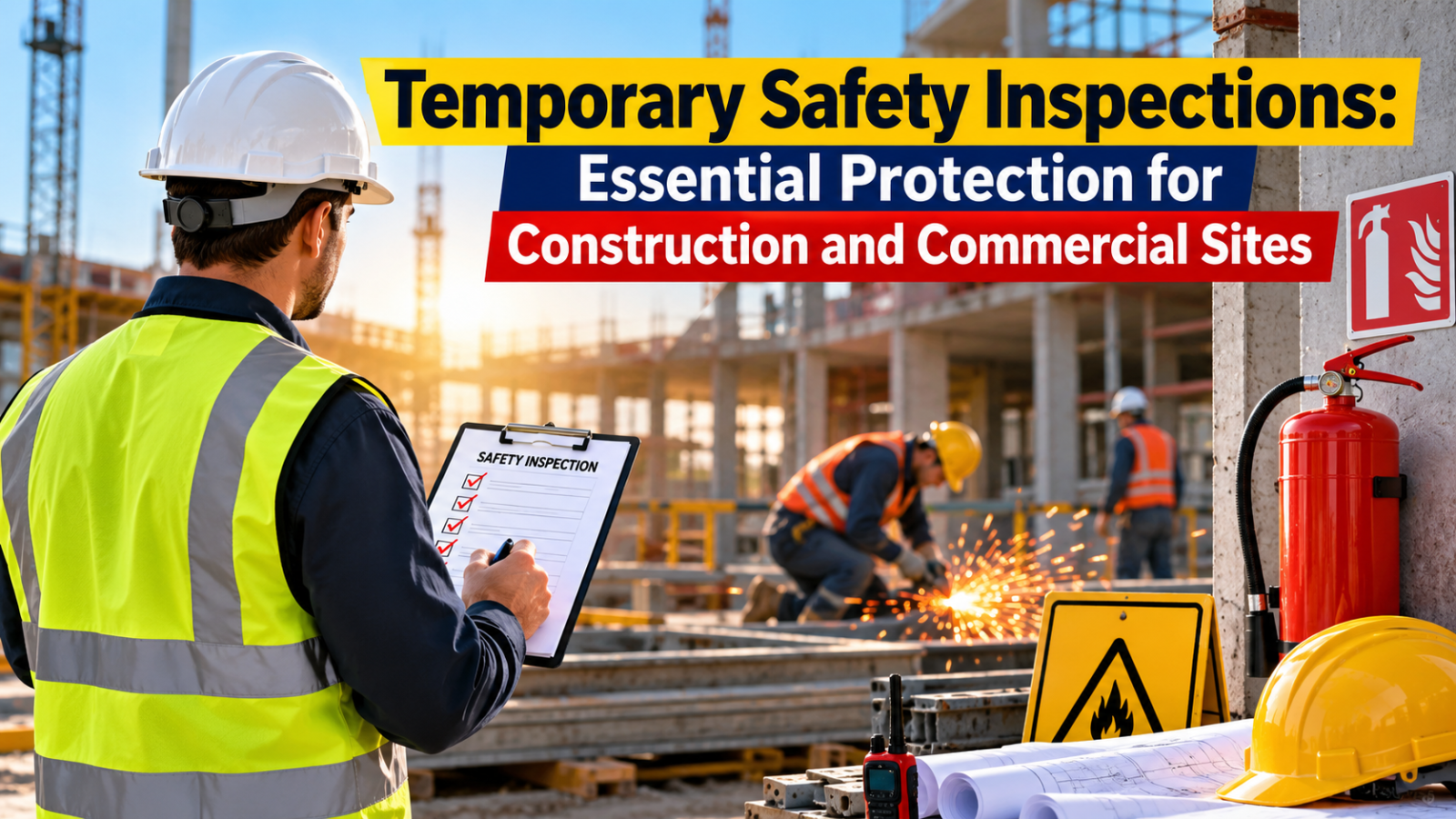
The vulnerability to fire hazards increases when fire protection systems are compromised, there is hot work taking place, or construction/renovation is in progress on an incomplete structure. Temporary safety inspections give another set of eyes to detect ignition sources, blocked access paths, improper storage of flammable material, and precursors to a fire before it occurs.
Effective coverage consists of a combination of hazard inspections on site, an established protocol for reporting, firefighting tools, patrol documentation, and communication with the site management or AHJ.
Identify Temporary Risks
Construction sites change rapidly. Combustible materials accumulate, temporary wiring moves, openings appear, and suppression systems may not yet cover every area. Deploying specialized fire watch services during these high-risk phases ensures constant hazard surveillance and rapid response capabilities.
OSHA requires a fire protection program throughout construction and demolition and says firefighting equipment must be available without delay.
Key checks include:
- Hot-work areas and nearby combustibles
- Temporary electrical equipment
- Extinguisher access and condition
- Egress routes and fire access
- Waste, packaging, and flammable-material storage
Inspect Around Hot Work
The process of welding, cutting, grinding, and heating may cause ignition sources beyond the work area. OSHA calls for an extra crew member when regular safety measures fail, and responsibilities continue past the process completion long enough to eliminate any fire danger.
The inspection area may include the opposite side of a wall, floor, or ceiling because heat and sparks can travel or transfer through assemblies.
Match Coverage To Risk
Not every temporary inspection requires identical coverage. The appropriate approach depends on the hazard, affected area, building configuration, occupancy, and instructions from the AHJ.
| Site condition | Inspection priority | Primary focus |
|---|---|---|
| Active hot work | High | Sparks, combustibles, adjacent areas |
| Partial construction | High | Temporary systems, access, storage |
| Alarm impairment | High | Affected zones, detection gaps |
| Routine low-risk work | Moderate | Housekeeping, ignition sources |
| Post-work period | High | Smoldering materials, hidden heat |
This risk-based approach addresses a recurring practitioner concern: someone can technically be assigned to “watch” a site while still missing areas where fire could develop. Recent safety discussions specifically question whether infrequent rounds provide meaningful protection when large areas are exposed.
Document Every Inspection
A useful inspection record should show what was checked, when it was checked, what was found, and who was notified. Documentation helps distinguish a structured monitoring program from an informal presence.
A practical log can include:
- Time and location
- Conditions observed
- Hazards corrected
- Alarm or suppression status
- Notifications and escalations
- End-of-watch condition
OSHA also requires suitable extinguishing equipment to be immediately available during qualifying construction hot work.
Coordinate The Response
Inspection only makes sense if observations result in action. The hierarchy of escalation must determine who has the ability to halt dangerous activities, dial the emergency services, alert management, and arrange restoration.
In case of business facilities, this hierarchy can also include the facility manager, contractors, alarm or sprinkler maintenance personnel, insurance companies, and the AHJ. Depending on jurisdictions and conditions, temporary surveillance must complement, not substitute, the fire safety system installed at the property.
This is when the right fire watch services become operationally effective: it delivers defined surveillance, notification, and escalation while fire protection is partial or additional fire risks are introduced.
Build A Handoff Process
Temporary protection should have a defined start and end. The new team requires the same maps, information about hazards, directions, and problems as the outgoing team does.
Before calling off the coverage, make sure that the condition that caused activation was indeed eliminated and that all necessary systems are restored. The purpose is not just to complete your shift but to fill in the protection gap safely.
Safer Transitions
Temporary protection becomes more effective if it is considered a control rather than just a person who is standing by. Construction stages, hot works, systems’ impairment, and partial occupancy may alter the risk picture in just hours.
An organized inspection procedure provides site staff with an opportunity to understand emerging risks and establish an accountable approach towards addressing them. As the usual protection systems come back into play, a similarly organized handover procedure will ensure that temporary protection is no longer needed and there won’t be any gaps left open.