
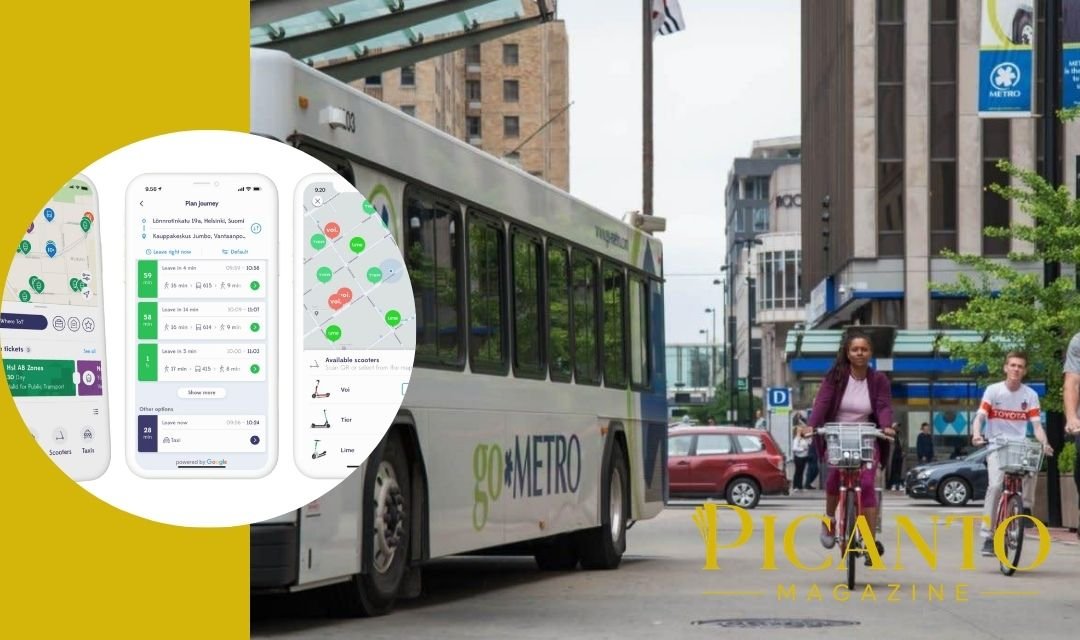
Bumetro is an emerging online term commonly described as a smart urban-mobility idea that brings buses, metro trains, bicycles, walking routes, and shared rides into one digital experience. The proposed concept is similar to Mobility as a Service, often shortened to MaaS, where travellers can plan different parts of a city journey through one connected system. However, a clearly verified official Bumetro application, operator, or supported-city network has not yet been established.
| Quick facts | Details |
|---|---|
| Term | Bumetro |
| Main online interpretation | Smart urban-mobility platform |
| Suggested purpose | Planning complete city journeys |
| Possible transport options | Bus, train, metro, bike, walking and rideshare |
| Related concept | Mobility as a Service |
| Potential users | Commuters, students and visitors |
| Official application | Not clearly verified |
| Confirmed operator | Not publicly established |
| Supported cities | No dependable official list found |
| Alternative meaning | Misspelling of VU meter in some languages |
| Best description | An emerging and currently unverified mobility concept |
What Is Bumetro?
Bumetro is usually presented online as a digital platform that could make city travel easier. Instead of checking one application for the bus, another for the metro, and a third for a shared bicycle, a traveller would see the complete journey in one place.
Imagine that you need to travel from your home to an office on the other side of the city.
The journey might begin with a five-minute walk to a bus stop. The bus takes you to a railway station. After travelling by train, you rent a shared bicycle for the final kilometre.
A Bumetro-style system would arrange all these steps in the correct order. It could compare possible routes and help you select the one that best matches your time, budget, and physical needs.
Several recent articles describe Bumetro in this way, but dependable primary documentation confirming it as an operating platform remains difficult to find.
Is Bumetro a Real Transport Application?
No widely established Bumetro application could be independently confirmed from current public information.
There is no easily identifiable official developer, app-store listing, launch announcement, pricing page, supported-city directory, or public-transport partnership under the exact name.
That does not prove that a small or developing service cannot exist. It means specific claims about the platform’s features should be treated carefully until an official source appears.
Some websites describe Bumetro as if people can already download and use it. Others present it more honestly as an emerging idea.
For now, it is safer to call Bumetro a proposed mobility concept rather than a fully verified transport application.
What Does the Name Bumetro Mean?
No official creator has clearly explained the name.
The “metro” section naturally suggests city transportation, underground trains, or metropolitan areas. The first two letters may represent bus and urban travel, but that explanation is only a reasonable guess.
The name could be interpreted as a combination of:
- Bus and metro
- Bike, bus, and metro
- Business and metropolitan transport
- A short urban-mobility brand name
- A spelling variation of another word
Bumetro also appears in Spanish-language electronics discussions as a mistaken or informal spelling of “vúmetro,” meaning a VU meter used to show audio-signal levels.
Context is therefore important. A Bumetro article about trains and buses has nothing to do with an electronics project displaying sound levels.
Why City Travel Needs a System Like Bumetro
Modern cities offer many ways to travel, but those choices do not always work together.
A bus company may have its own timetable. The railway uses a separate ticketing system. Shared bicycles require another account, while rideshare services operate through different applications.
Travellers must connect everything themselves.
This creates several problems:
- Confusing route changes
- Missed connections
- Unclear fares
- Different payment methods
- Outdated timetables
- Too many mobile applications
- Limited information about accessibility
- Uncertainty during service disruptions
A connected platform could reduce this confusion by treating the entire journey as one trip.
How a Bumetro-Style Journey Planner Would Work
The user would begin by entering a starting point and destination.
The system would then examine available transportation options. It might build several complete routes rather than displaying only the nearest bus or railway station.
For example:
| Route | Journey | Possible advantage |
|---|---|---|
| Option 1 | Walk, metro, walk | Fastest |
| Option 2 | Bus, train, walk | Lowest cost |
| Option 3 | Bike, metro, rideshare | Less walking |
| Option 4 | Bus only | Fewest changes |
| Option 5 | Walk and shared bike | Lower environmental impact |
The user could choose what matters most.
A young commuter may prefer the cheapest journey. A parent travelling with children might want fewer changes, while a wheelchair user needs step-free stations and suitable vehicles.
The best route is not always the fastest one.
Multi-Modal Route Planning
Multi-modal travel means using more than one type of transportation during a journey.
Many city trips are already multi-modal, even if travellers do not use that term. Walking to a bus stop and then taking a train involves three stages: walking, bus, and rail.
A Bumetro-style platform could connect:
- Walking
- City buses
- Metro or underground trains
- Trams
- Regional rail
- Shared bicycles
- Electric scooters
- Taxis
- Rideshare cars
- Car-sharing services
- Ferries
- Park-and-ride facilities
The difficult part is not simply displaying these options. The system must understand how their schedules and locations connect.
Real-Time Bus and Train Information
A useful mobility platform needs more than a printed timetable. It should show what is happening now.
A bus scheduled for 8:10 may actually arrive at 8:18 because of traffic. If the traveller has a train connection at 8:25, that delay matters.
Real-time information may include:
- Vehicle location
- Expected arrival
- Service delays
- Cancelled journeys
- Changed platforms
- Closed stations
- Traffic problems
- Lift or escalator failures
- Weather disruption
- Crowding information
Live information is never perfect. A vehicle may stop sending location data, or an unexpected event may occur after a route is calculated.
A responsible platform should clearly show when information was last updated.
Comparing Complete Journey Costs
Transport prices can be confusing, particularly when a journey uses several services.
A bus may charge one fare, the train another, and a shared bicycle a per-minute rate. There may also be booking fees or price increases during busy periods.
A Bumetro-style system could calculate the expected total before the traveller leaves.
It should clearly explain:
- Individual fares
- Transfer discounts
- Daily or weekly limits
- Subscription benefits
- Rideshare estimates
- Bike or scooter unlocking charges
- Parking costs
- Additional booking fees
- Possible price changes
An estimated price should always be labelled as an estimate when the final amount can change.
Tickets and Payments
The most advanced mobility platforms allow travellers to plan, book, and pay without leaving the application.
One digital ticket might cover several transport operators. Alternatively, the platform could store separate tickets in one wallet.
This sounds simple for users, but it requires complicated agreements between transportation companies, payment providers, and local authorities.
A genuine Bumetro payment system would need:
- Secure payment processing
- Clear refund rules
- Ticket inspection support
- Protection against duplicate charges
- Receipts
- Customer service
- Support for local fare rules
- Strong account security
Because an official Bumetro product is not clearly verified, users should not enter card details into a website or application simply using this name.
Environmental Benefits
City transportation creates noise, traffic, and air pollution. A well-designed journey planner could help people discover alternatives to driving alone.
The platform might compare the estimated environmental impact of several routes. A train-and-walking journey could produce fewer emissions than a private car trip.
It could also highlight:
- Cycling routes
- Walking connections
- Electric public transport
- Shared journeys
- Park-and-ride options
- Low-emission travel choices
Environmental estimates should explain how they are calculated. A bright green leaf icon is not enough to prove that one route is genuinely better.
Accessibility Features
Transportation technology should work for everyone.
A route that includes stairs may be impossible for a wheelchair user. A long walking connection may not suit an older passenger or someone with a health condition.
A useful Bumetro-style platform could allow travellers to select personal requirements.
Accessibility information may include:
- Step-free stations
- Working lifts
- Low-floor buses
- Wheelchair spaces
- Accessible toilets
- Audible announcements
- Visual information
- Maximum walking distance
- Safer crossing points
- Staff assistance
- Space for mobility equipment
This information must remain current. A route described as accessible can fail if a station lift is temporarily broken.
How Bumetro Could Help Daily Commuters
Regular commuters often know their route, but they still need information about delays and alternatives.
A mobility platform could remember a person’s normal trip and warn them before they leave home.
For example, it might say:
“Your usual metro line is delayed by 20 minutes. Take bus 18 to Central Station and transfer to the green line.”
This saves the traveller from discovering the problem after reaching the station.
Saved journeys could include home, work, school, and frequently visited places. Privacy controls would be essential because these locations reveal sensitive information about a person’s routine.
How Visitors Could Use Bumetro
Public transportation can feel confusing in an unfamiliar city.
Visitors may not understand local route numbers, station names, fare zones, or ticket rules. Language differences can make the experience even harder.
A Bumetro-style travel assistant could provide:
- Simple door-to-door directions
- Landmark-based instructions
- Fare explanations
- Local ticket advice
- Language options
- Offline journey details
- Airport connections
- Last-service warnings
- Walking directions between platforms
Tourists should still confirm important journeys—especially airport trips—through the official local transport operator.
Benefits for Students
Students often depend on affordable public transport. They may travel between home, school, college, libraries, workplaces, and social activities.
A connected planner could help students compare:
- Discounted fares
- Faster routes
- Safer evening options
- Fewer transfers
- Walking distance
- Last bus or train times
- Bicycle availability
The application could also warn when a student discount requires registration or identification.
It should never assume that the cheapest route is automatically the safest or most practical.
Could Bumetro Reduce Traffic?
A digital platform cannot remove traffic by itself.
However, it could help travellers discover that public transportation is faster or easier than they expected. If many people make that change, private-car use may decrease.
Cities could also study anonymous travel patterns to understand where services need improvement.
For example, data may reveal that thousands of people walk between two poorly connected stations each morning. Transport planners could consider a new bus route.
Data collection must be transparent. Travellers should know what is recorded, why it is needed, and how long it will be kept.
Privacy and Location Tracking
A journey-planning application may collect highly sensitive information.
It can know where users live, where they work, when they leave home, and which places they visit regularly.
Before using a mobility application, check:
- Whether an account is required
- Which location permissions it requests
- Whether tracking continues in the background
- How long journey history is stored
- Whether data is shared with advertisers
- How saved locations can be deleted
- Whether users can access the service without continuous tracking
- How the company protects payment information
A trustworthy app should request only the access needed for its actual features.
Is Bumetro Free?
No confirmed official pricing information is available.
Articles describing Bumetro may call it a free application, but without an official product page, this cannot be reliably established.
A mobility service could follow several possible models:
- Completely free access
- Free route planning with paid premium features
- Advertising-supported access
- Commission from ticket sales
- Subscription plans
- Licensing to cities or transport operators
Users should check the exact price before entering payment information. A free trial may turn into a subscription if it is not cancelled.
Which Cities Support Bumetro?
No dependable official list of supported cities could be confirmed.
Some online descriptions discuss Bumetro as if it works across many locations, but they do not identify transport partners or provide verifiable coverage maps.
A real mobility platform needs local data. Bus stops, train schedules, fares, and live vehicle information differ in every city.
Before depending on an application, compare one of its suggested routes with the official local transport authority. If important services are missing or timetables are outdated, use the official system instead.
Bumetro Compared With Established Journey Planners
The idea attributed to Bumetro is not unique. Established journey-planning services already combine several transport options.
A mature platform normally offers:
- Official or licensed transit data
- Supported-city information
- App-store listings
- Regular software updates
- Named developers
- Privacy documentation
- Customer support
- Independent reviews
- Download statistics
- Clear terms of service
Bumetro should not be described as better than established services without genuine testing.
A concept may sound impressive, but comparison requires a working product.
The Other Bumetro Meaning: A VU Meter
In some Spanish-language electronics discussions, “bumetro” is used as an incorrect spelling of vúmetro.
A VU meter is a display that shows the level of an audio signal. It may use a moving needle, coloured LED lights, or a digital bar.
VU stands for “Volume Unit.”
These meters can be found in:
- Audio mixers
- Recording equipment
- Amplifiers
- Music players
- Broadcast studios
- DIY electronics projects
- Vintage sound systems
An Arduino discussion from 2016 includes a user saying “bumetro,” followed by a correction explaining that the proper term is “vumetro.”
If a search result discusses LEDs, amplifiers, microphones, or sound levels, it probably refers to a VU meter rather than urban transportation.
How to Identify Which Meaning Is Intended
Look at the surrounding words.
| Nearby terms | Likely meaning |
|---|---|
| Bus, metro, bike, route | Urban mobility |
| Journey, fare, ticket, commuter | Transport platform |
| Amplifier, audio, LED, signal | VU meter |
| Chair, ergonomic, office | Buro Metro chair product |
| News, articles, lifestyle | A content website interpretation |
This simple context check prevents most confusion.
Is Bumetro Safe to Download?
No clearly verified official download could be confirmed. Therefore, avoid downloading files from random pages claiming to provide a Bumetro application.
Check whether the app appears in a trusted store and whether the named developer has an official website.
Review:
- Developer identity
- App permissions
- Update history
- Privacy information
- Genuine user feedback
- Number of downloads
- Customer-support contact
- Data-deletion options
A transport application does not normally need access to your photographs, microphone, contacts, or messages.
Final Thoughts
Bumetro is an interesting online term most commonly associated with a smart urban-mobility platform. The idea is to connect buses, trains, metro services, shared bikes, walking, and rideshare options inside one complete journey plan.
The problem it aims to solve is real. City transportation is often divided across too many systems, making ordinary trips more confusing than necessary.
However, Bumetro itself is not yet supported by strong public evidence of a widely operating application. Specific claims about live tracking, payments, fares, and city coverage should remain unconfirmed until an official operator provides documentation.
The word also has a separate electronics use as a common misspelling of VU meter.
For now, Bumetro is best treated as an emerging mobility idea rather than a proven worldwide transport service.
Frequently Asked Questions
What is Bumetro?
Bumetro is an emerging term commonly described as a platform for planning city journeys across buses, metro trains, bikes, walking, and shared rides.
Is Bumetro a real application?
No widely verified official application under the exact Bumetro name could be confidently identified.
How is Bumetro supposed to work?
A user would enter a starting point and destination. The platform would then compare several transportation options and arrange them into one journey.
Is Bumetro free?
No dependable official pricing information is currently available.
Which cities support Bumetro?
There is no verified public list of supported cities or transport partners.
Does Bumetro provide live bus information?
Recent articles describe real-time updates as a possible feature, but this has not been confirmed through an official platform.
Can I buy tickets through Bumetro?
Integrated ticketing is commonly associated with mobility platforms, but a working Bumetro payment service has not been verified.
Is Bumetro safe?
Safety cannot be judged without identifying the exact website or application. Users should verify the developer, permissions, privacy policy, and app-store listing.
What is a Bumetro in electronics?
In some online discussions, Bumetro is a misspelling of vúmetro or VU meter, a device that displays audio-signal levels.
Is Bumetro the future of urban transportation?
The connected travel model associated with Bumetro has strong potential, but the specific Bumetro service must be officially documented and tested before its performance can be evaluated.
For more technology explanations, transport guides, and digital trends, visit Picanto Magazine..