
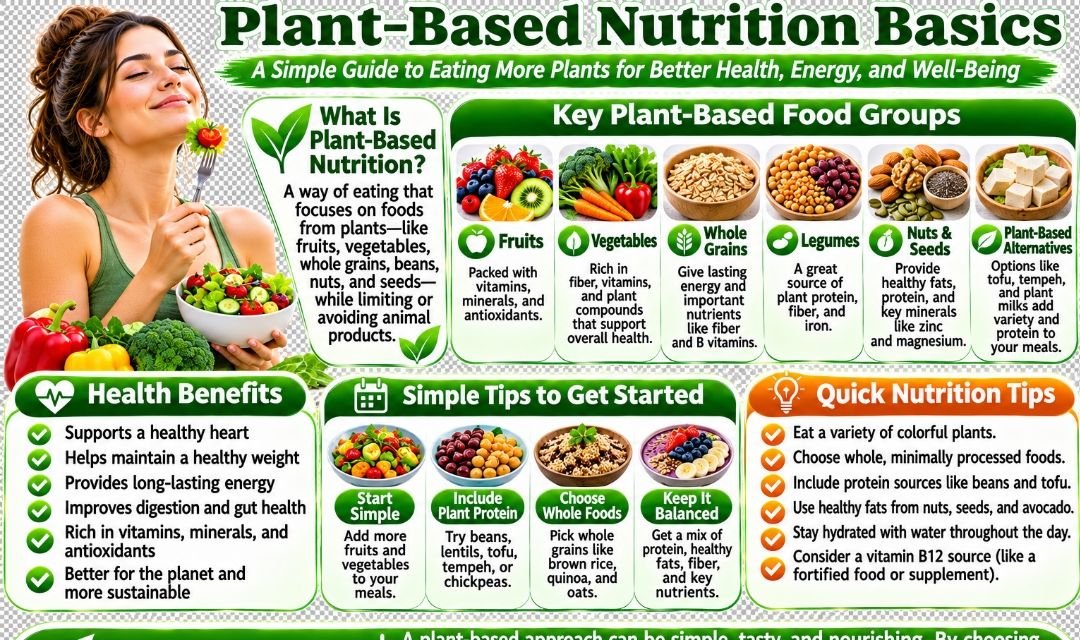
Plant-based nutrition basics focus on eating more foods that come from plants, including vegetables, fruits, whole grains, beans, lentils, nuts, and seeds. This approach encourages nutritious food choices while helping people understand how different plant foods provide energy, protein, fiber, vitamins, and minerals. A plant-based diet can take several forms, ranging from eating mostly plant foods to following a fully vegan diet. However, eating plant-based does not automatically guarantee good nutrition. A balanced approach requires dietary variety, appropriate nutrient intake, and attention to nutrients such as vitamin B12, iron, calcium, iodine, and omega-3 fatty acids.
Quick Overview of Plant-Based Nutrition Basics
| Category | Details |
|---|---|
| Main topic | Plant-Based Nutrition Basics |
| Primary goal | Meeting nutritional needs through plant-focused foods |
| Main foods | Vegetables, fruits, legumes, grains, nuts, seeds |
| Protein sources | Lentils, beans, tofu, tempeh, soy foods |
| Carbohydrate sources | Whole grains, potatoes, fruits |
| Healthy fats | Nuts, seeds, olive oil, avocado |
| Important vitamins | B12, D, folate, vitamin C |
| Important minerals | Iron, calcium, zinc, iodine |
| Omega-3 sources | Flaxseed, chia seeds, walnuts, algae oil |
| Fiber | Naturally present in many plant foods |
| Hydration | Water and other suitable fluids |
| Key consideration | Reliable vitamin B12 intake on vegan diets |
| Best approach | Variety, balance, and realistic meal planning |
Plant-based eating has become popular among people interested in nutrition, personal health, animal welfare, and environmental sustainability.
However, beginners sometimes feel confused about what they should eat.
Can plants provide enough protein?
Do people need supplements?
Is a vegan diet the same as a plant-based diet?
Can someone eat plant-based meals without giving up meat completely?
These are reasonable questions.
The good news is that plant-based nutrition can be simple when people understand the basic food groups and essential nutrients.
This guide explains how to build balanced plant-based meals, avoid common nutritional gaps, and develop sustainable eating habits.
What Is Plant-Based Nutrition?
Plant-based nutrition involves obtaining a substantial proportion of dietary nutrients from plant foods.
These foods include vegetables, fruits, grains, legumes, nuts, and seeds.
Some plant-based diets also include dairy, eggs, fish, or occasional meat.
Other dietary patterns exclude animal-derived foods entirely.
The nutritional quality of a plant-based diet depends on the foods selected.
For example, a diet rich in vegetables, legumes, and whole grains differs considerably from one consisting mainly of refined snacks and sugary drinks.
Therefore, plant-based nutrition should focus on food quality rather than simply avoiding animal products.
Different Types of Plant-Based Diets
Plant-based eating is not limited to one dietary pattern.
| Dietary pattern | Main characteristics |
|---|---|
| Flexitarian | Mostly plant foods with occasional animal products |
| Vegetarian | Excludes meat and fish; may include eggs and dairy |
| Lacto-vegetarian | Includes dairy but excludes meat, fish, and eggs |
| Ovo-vegetarian | Includes eggs but excludes meat, fish, and dairy |
| Vegan | Excludes animal-derived foods |
| Whole-food plant-based | Emphasizes minimally processed plant foods |
Each approach has different nutritional considerations.
Fully vegan diets require reliable sources of vitamin B12.
Other dietary patterns may obtain B12 from animal-derived foods, depending on intake.
1. Eat a Variety of Vegetables
Vegetables are an important foundation of plant-based nutrition.
They provide vitamins, minerals, fiber, and other naturally occurring compounds.
Different vegetables contain different nutrients.
Leafy greens may contribute folate and vitamin K.
Orange vegetables often provide carotenoids.
However, no single vegetable contains every essential nutrient.
Eating different types can help support nutritional adequacy.
Easy Vegetable Ideas
-
Add spinach to lentil dishes.
-
Include carrots and peppers in rice meals.
-
Prepare vegetable soups.
-
Add tomatoes and cucumbers to sandwiches.
-
Use frozen vegetables for convenient meals.
Vegetables can be enjoyed raw or cooked, depending on the type and food safety considerations.
2. Include Fruits Regularly
Fruits provide fiber, vitamins, minerals, and water.
Examples include apples, bananas, oranges, berries, mangoes, and seasonal fruits.
Whole fruits are generally preferable to regularly consuming large quantities of fruit juice.
This is partly because whole fruits provide fiber and may be more filling.
However, fruit needs vary according to individual circumstances.
3. Choose Whole Grains
Whole grains provide carbohydrates, fiber, and other nutrients.
Examples include oats, brown rice, whole wheat, barley, and quinoa.
Whole grains can contribute to a balanced plant-based diet.
However, refined grains do not need to be eliminated completely.
The overall dietary pattern matters more than any single food.
4. Eat Beans and Lentils
Beans and lentils are valuable sources of plant protein.
They also provide fiber, iron, and other nutrients.
Common examples include chickpeas, black beans, kidney beans, and red lentils.
These foods can be used in soups, curries, salads, and rice dishes.
However, some people experience bloating when increasing legume intake.
Gradual changes and appropriate preparation may help.
5. Include Soy Foods
Soy foods can provide high-quality plant protein.
Examples include tofu, tempeh, edamame, and soy milk.
Many soy foods contain all essential amino acids in useful proportions.
However, their nutrient content varies by product.
Fortified soy milk may provide calcium and vitamin B12.
Consumers should check labels rather than assuming all soy products contain the same nutrients.
6. Understand Plant-Based Protein
Protein is necessary for tissue maintenance, muscle function, and normal biological processes.
Plant foods can provide sufficient protein when the diet includes appropriate amounts and variety.
Common sources include legumes, soy foods, nuts, seeds, and grains.
However, protein needs vary according to age, body size, activity, and medical conditions.
People with higher protein requirements may benefit from individualized dietary planning.
Common Plant Protein Sources
| Food | Protein contribution |
|---|---|
| Lentils | Good source of plant protein |
| Chickpeas | Protein and fiber |
| Tofu | Concentrated soy protein |
| Tempeh | Fermented soy protein |
| Edamame | Protein and fiber |
| Peanuts | Protein and unsaturated fats |
| Pumpkin seeds | Protein, fats, and minerals |
| Oats | Moderate protein contribution |
| Quinoa | Protein and carbohydrates |
Eating a variety of protein-containing foods throughout the day can help meet amino acid requirements.
People generally do not need to combine specific plant proteins in every individual meal.
7. Choose Healthy Plant Fats
Dietary fats support cell function and help the body absorb certain vitamins.
Plant sources of unsaturated fats include nuts, seeds, olive oil, and avocado.
However, not every plant-derived fat has the same nutritional profile.
Coconut oil and palm oil contain relatively high amounts of saturated fat.
Replacing some saturated fat with unsaturated fat is generally beneficial for cardiovascular health.
8. Understand Vitamin B12
Vitamin B12 is one of the most important nutrients to consider on a vegan diet.
It supports normal nerve function and red blood cell formation.
Reliable unfortified plant foods generally do not provide adequate vitamin B12.
Therefore, people following vegan diets need dependable sources such as appropriately fortified foods or B12 supplements.
Vitamin B12 deficiency can cause serious health problems.
Anyone concerned about deficiency should seek appropriate medical advice.
9. Pay Attention to Iron
Iron supports oxygen transport in the blood.
Plant sources include lentils, beans, tofu, pumpkin seeds, and fortified cereals.
However, iron from plant foods is generally absorbed less efficiently than heme iron from animal foods.
Vitamin C can improve absorption of non-heme iron.
For example, eating lentils with tomatoes or citrus-containing foods may be helpful.
Iron supplements should not be taken unnecessarily because excessive iron can be harmful.
10. Include Calcium Sources
Calcium contributes to bone health and normal muscle function.
Plant-based calcium sources include fortified plant milks, calcium-set tofu, and certain leafy greens.
However, calcium content and absorption vary.
Some leafy vegetables contain compounds that reduce calcium absorption.
Consumers should check fortified product labels.
People with limited calcium intake may need individualized guidance.
11. Understand Vitamin D
Vitamin D supports calcium absorption and bone health.
It can be obtained through certain foods, supplements, and skin production following sunlight exposure.
However, sunlight exposure depends on several factors.
Some plant-based foods are fortified with vitamin D.
People at risk of deficiency may require medical evaluation or supplementation.
12. Include Omega-3 Fatty Acids
Omega-3 fatty acids are important components of a balanced diet.
Plant foods such as flaxseed, chia seeds, and walnuts provide alpha-linolenic acid, or ALA.
However, conversion of ALA into EPA and DHA is limited and variable.
Algae-derived supplements can provide EPA or DHA directly.
Some individuals may benefit from professional guidance about omega-3 intake.
13. Understand Zinc
Zinc supports normal immune function, growth, and other biological processes.
Plant sources include beans, nuts, seeds, and whole grains.
However, phytates in certain plant foods can reduce zinc absorption.
Food preparation methods such as soaking, sprouting, and fermentation may help improve mineral availability.
A varied diet can contribute to adequate zinc intake.
14. Remember Iodine
Iodine is necessary for normal thyroid hormone production.
Plant-based diets can sometimes provide insufficient iodine, depending on food choices and local food fortification.
Iodized salt is one potential source.
However, excessive iodine can also cause health problems.
Seaweed products may contain highly variable iodine amounts.
People should avoid assuming that more iodine is always better.
15. Eat Fiber-Rich Foods
Plant-based diets often contain substantial fiber.
Fiber supports digestive health and normal bowel function.
Certain types of fiber can also help manage cholesterol levels.
However, increasing fiber too quickly can cause bloating or discomfort.
Gradual increases and appropriate hydration may help.
16. Maintain Proper Hydration
Water is essential for normal body functions.
Hydration needs depend on activity, climate, diet, and medical conditions.
Plant-based diets often contain water-rich fruits and vegetables.
However, drinking appropriate fluids remains important.
There is no universal water intake target suitable for every person.
17. Learn to Read Food Labels
Food labels can help people identify ingredients and nutrients.
For plant-based products, important details may include protein, fiber, calcium, vitamin B12, sodium, and added sugar.
However, products labeled vegan are not automatically nutritious.
Some vegan snacks contain substantial added sugar or saturated fat.
The complete nutritional profile matters.
18. Plan Balanced Plant-Based Meals
Meal planning can help ensure nutritional variety.
A balanced plant-based meal may include vegetables, legumes or soy foods, whole grains, and healthy fats.
However, portion sizes should reflect individual nutritional needs.
Simple Plant-Based Plate
Include suitable healthy fats and appropriate fluids.
This is a general educational model rather than a personalized meal prescription.
19. Understand Plant-Based Milk Alternatives
Plant-based milk alternatives include soy, oat, almond, and other beverages.
However, their nutritional profiles differ.
Some provide relatively little protein.
Others are fortified with calcium and vitamin B12.
Unsweetened fortified options may be useful for certain individuals.
Consumers should compare labels according to their needs.
20. Choose Nutritious Plant-Based Snacks
Snacks can contribute useful nutrients.
Examples include fruit, nuts, hummus, roasted chickpeas, and whole-grain foods.
However, snacks are not necessary for everyone.
Some people prefer regular meals without additional snacks.
The best pattern depends on individual preferences and nutritional needs.
21. Understand Plant-Based Protein Powders
Protein powders may be useful for some individuals.
Common plant protein sources include pea, soy, rice, and hemp.
However, most people can obtain protein through food.
Protein supplements should not replace balanced meals.
Product quality, allergens, and appropriate intake should be considered.
22. Understand Hemp Seeds in Plant-Based Nutrition
Hemp seeds provide protein, fats, and minerals.
They can be included in oatmeal, smoothies, and other foods.
Hemp seed oil also provides dietary fats.
However, hemp seed products differ from CBD products.
Properly processed hemp seeds generally contain little to no CBD.
CBD is not an essential nutrient.
23. Avoid Common Nutritional Gaps
Plant-based diets can be nutritionally adequate when appropriately planned.
However, certain nutrients require particular attention.
For fully vegan diets, reliable vitamin B12 intake is essential.
Other nutrients to consider include iron, calcium, iodine, vitamin D, zinc, and omega-3 fatty acids.
Individual needs vary.
Professional dietary advice may help people with complex nutritional requirements.
24. Build Plant-Based Habits Gradually
Beginners do not need to change every meal immediately.
A gradual approach may be easier.
For example, start by replacing one meat-based meal with lentils or beans.
Try a tofu dish.
Include more vegetables in familiar meals.
Small changes can help people learn which foods they enjoy.
25. Focus on Long-Term Sustainability
Plant-based eating should be realistic and enjoyable.
Extreme restrictions can make adequate nutrition more difficult.
The goal is to build a dietary pattern that provides essential nutrients while fitting personal preferences and circumstances.
Consistency is generally more useful than perfection.
Essential Nutrients in Plant-Based Diets
| Nutrient | Plant-based sources | Important consideration |
|---|---|---|
| Protein | Beans, lentils, tofu, tempeh | Eat adequate amounts |
| Vitamin B12 | Fortified foods, supplements | Reliable source essential for vegans |
| Iron | Lentils, beans, tofu | Vitamin C supports absorption |
| Calcium | Fortified plant milk, calcium-set tofu | Check product labels |
| Vitamin D | Fortified foods, supplements | Needs vary |
| Omega-3 | Flaxseed, chia, walnuts, algae oil | ALA conversion to EPA/DHA is limited |
| Zinc | Nuts, seeds, legumes | Absorption varies |
| Iodine | Iodized salt, appropriate supplements | Avoid excessive intake |
| Fiber | Vegetables, fruits, grains, legumes | Increase gradually |
This table provides general guidance.
Individual requirements may differ.
Seven-Day Plant-Based Meal Plan for Beginners
| Day | Breakfast | Lunch | Dinner |
|---|---|---|---|
| Monday | Oatmeal with fruit and seeds | Lentil and rice bowl | Tofu with vegetables |
| Tuesday | Whole-grain toast with nut butter | Chickpea salad | Bean and vegetable soup |
| Wednesday | Fortified soy yogurt with oats | Hummus and vegetable wrap | Lentil curry with rice |
| Thursday | Oatmeal with chia seeds | Tofu and vegetable bowl | Chickpea pasta |
| Friday | Whole-grain cereal with fortified soy milk | Bean and rice bowl | Vegetable stir-fry with tempeh |
| Saturday | Fruit and nut oatmeal | Lentil soup | Tofu and vegetable noodles |
| Sunday | Whole-grain toast with avocado | Chickpea and quinoa salad | Bean chili with vegetables |
This plan is illustrative.
Portions and nutrient needs should be individualized.
People following fully vegan diets must ensure reliable vitamin B12 intake.
Plant-Based Nutrition on a Budget
Plant-based eating does not always require expensive specialty products.
Beans, lentils, rice, oats, seasonal vegetables, and other basic foods can provide important nutrients.
Frozen and canned produce can also be practical.
However, food prices vary by location.
Meal planning may help reduce waste and unnecessary spending.
Plant-Based Nutrition for Athletes
Athletes can meet nutritional needs through appropriately planned plant-based diets.
However, energy and protein requirements may be higher.
Iron, calcium, and other nutrients may also require attention.
Individual dietary planning can help support training and recovery.
Plant-Based Nutrition for Older Adults
Older adults may need particular attention to protein, calcium, vitamin D, and vitamin B12.
However, requirements vary according to health and activity.
Maintaining muscle strength through suitable physical activity is also important.
Professional guidance may help when appetite or nutrient intake is limited.
Plant-Based Nutrition and Digestive Health
Plant foods provide dietary fiber.
Fiber can support bowel regularity and certain aspects of digestive health.
However, sudden increases in legumes and whole grains may cause bloating.
Gradually increasing intake can help some people adjust.
Persistent digestive symptoms should be evaluated medically.
Plant-Based Nutrition and Heart Health
Plant-focused dietary patterns rich in vegetables, whole grains, legumes, nuts, and unsaturated fats are associated with cardiovascular benefits.
However, not every plant-based product is heart-healthy.
Some vegan processed foods contain substantial sodium, added sugar, or saturated fat.
Food quality remains important.
Plant-Based Nutrition and Environmental Sustainability
Plant-based dietary patterns can have lower environmental impacts than some animal-heavy diets.
However, sustainability depends on farming methods, processing, transportation, and other factors.
Not every plant-derived product has the same environmental footprint.
Balanced environmental claims should consider the full food production system.
Common Plant-Based Nutrition Mistakes
Beginners sometimes make avoidable mistakes.
Examples include:
-
Ignoring vitamin B12 requirements
-
Eating too little protein
-
Relying heavily on refined vegan snacks
-
Neglecting iron and calcium sources
-
Assuming all plant milks have similar nutrition
-
Increasing fiber too quickly
-
Relying on unnecessary supplements
-
Following overly restrictive meal plans
-
Believing that plant-based automatically means healthy
-
Ignoring individual medical needs
A well-planned diet can help reduce these risks.
Frequently Asked Questions About Plant-Based Nutrition Basics
1. What is plant-based nutrition?
It is an eating approach that emphasizes foods obtained from plants.
2. Is plant-based the same as vegan?
Not always. Some plant-based diets include animal-derived foods.
3. Can plant foods provide enough protein?
Yes. Appropriate amounts and variety can meet protein needs.
4. What are the best plant protein sources?
Beans, lentils, tofu, tempeh, and soy foods are useful options.
5. Do vegans need vitamin B12?
Yes. Vegans need reliable B12 from fortified foods or supplements.
6. Can plant-based diets provide iron?
Yes, but plant iron absorption differs from heme iron absorption.
7. What are plant-based calcium sources?
Fortified plant milks, calcium-set tofu, and certain leafy greens.
8. Are plant-based diets healthy?
They can be healthy when appropriately planned.
9. Is soy protein healthy?
Soy foods can provide valuable protein and other nutrients.
10. Are plant-based diets high in fiber?
They often contain substantial fiber, depending on food choices.
11. Can plant-based eating be affordable?
Yes. Beans, lentils, oats, and seasonal vegetables can be economical.
12. Are vegan processed foods healthy?
Not automatically. Nutritional quality varies.
13. Do plant-based eaters need protein powder?
Not necessarily. Many people can meet protein needs through food.
14. What are plant-based omega-3 sources?
Flaxseed, chia seeds, walnuts, and algae-derived products.
15. Can children follow vegan diets?
They require careful planning to meet growth and developmental needs, ideally with qualified professional guidance.
16. Is plant-based nutrition suitable during pregnancy?
It can be, but nutrient needs require careful attention and professional guidance.
17. Are plant-based milk alternatives nutritious?
Some are, particularly appropriately fortified products. Nutrient content varies.
18. Is hemp protein useful?
Hemp protein can contribute dietary protein.
19. Is CBD part of plant-based nutrition?
No. CBD is not an essential nutrient.
20. Can plant-based diets support heart health?
Well-planned plant-focused dietary patterns are associated with cardiovascular benefits.
21. Do I need to combine proteins in every meal?
Generally no. Variety across the day is usually sufficient.
22. Are nuts healthy?
Nuts provide fats, protein, and other nutrients.
23. Can plant-based eating improve digestion?
Fiber-rich plant foods can support digestive health.
24. How do I start a plant-based diet?
Begin by adding more vegetables, legumes, and whole grains to familiar meals.
25. What is the most important plant-based nutrition rule?
Eat a varied diet while ensuring adequate intake of essential nutrients, especially vitamin B12 on vegan diets.
Final Thoughts
Plant-based nutrition basics provide a practical foundation for people interested in eating more vegetables, fruits, legumes, whole grains, nuts, and seeds.
A balanced plant-focused diet can provide protein, carbohydrates, fats, fiber, vitamins, and minerals.
However, nutritional planning remains important.
People following fully vegan diets must obtain vitamin B12 from reliable fortified foods or supplements.
Iron, calcium, iodine, zinc, vitamin D, and omega-3 fatty acids may also require attention.
Plant-based eating does not need to be expensive or complicated.
Simple meals made with beans, lentils, rice, oats, vegetables, and other familiar foods can contribute to good nutrition.
The most sustainable approach is to make gradual changes, choose varied foods, and meet individual nutritional needs.
For more plant-based nutrition guides, healthy eating advice, natural wellness education, beginner-friendly food tips, and everyday lifestyle articles, visit Picanto Magazine.
Medical Disclaimer: This article is for general educational purposes only and does not replace professional medical or nutritional advice, diagnosis, or treatment. Consult a qualified healthcare professional or registered dietitian before making significant dietary changes, especially during pregnancy, childhood, older age, or when managing medical conditions.