
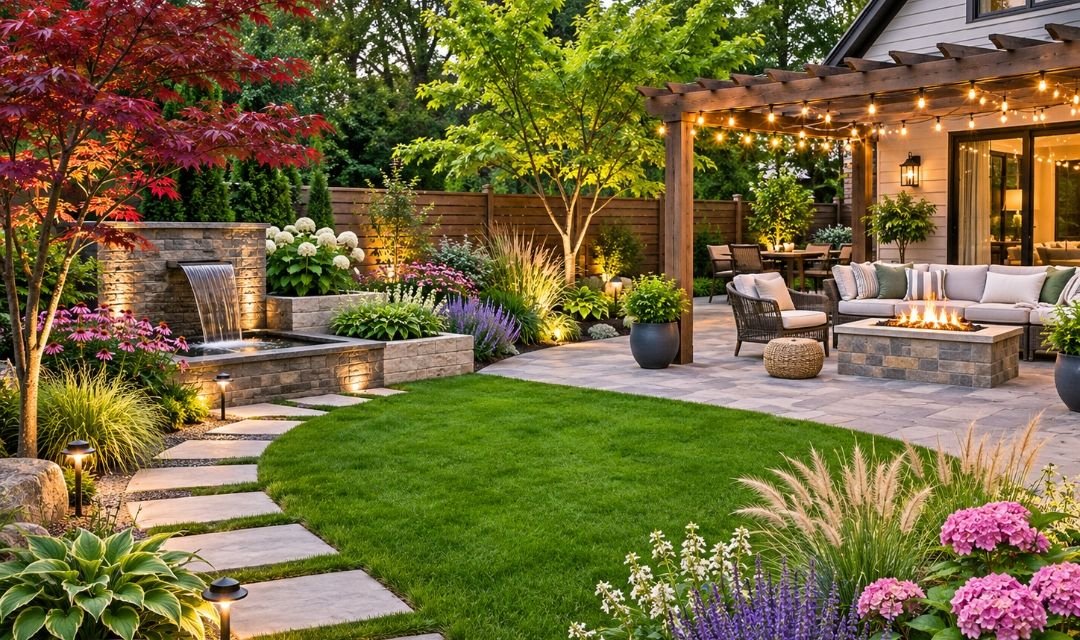
Backyard landscaping ideas can turn an ordinary outdoor area into a beautiful, comfortable, and relaxing space for your family. Whether you have a small backyard, a large garden, or a simple outdoor patio, thoughtful landscaping can improve the appearance and functionality of your property. From colorful flower beds and stone pathways to cozy seating areas and modern garden lighting, there are many creative ways to design your outdoor space. Understanding the basics of landscape design can help you combine plants, outdoor furniture, decorative features, and practical layouts to create a backyard that suits your lifestyle.
Quick Overview of Backyard Landscaping Ideas
| Category | Details |
|---|---|
| Main topic | Backyard Landscaping Ideas |
| Main purpose | Improve outdoor beauty, comfort, and functionality |
| Popular styles | Modern, minimalist, tropical, rustic, natural |
| Budget-friendly ideas | Mulch, gravel paths, container plants, DIY borders |
| Small backyard solutions | Vertical gardens, compact furniture, raised beds |
| Popular features | Patios, pathways, pergolas, flower beds |
| Common materials | Natural stone, gravel, wood, concrete, brick |
| Garden plants | Shrubs, ornamental grasses, flowers, small trees |
| Outdoor lighting | Solar lights, pathway lights, string lights |
| Low-maintenance options | Mulch beds, suitable native plants, efficient irrigation |
| Family-friendly features | Open lawn, shaded seating, play areas |
| Main goal | Create an attractive, practical, and enjoyable backyard |
A beautiful backyard can become one of the most enjoyable parts of your home.
It can provide a quiet place to relax after work, a comfortable area for family gatherings, or a safe outdoor space for children to play.
However, many homeowners struggle with backyard landscaping because they believe it requires expensive materials or professional garden designers.
The good news is that even simple improvements can make a noticeable difference.
Adding plants, creating a gravel pathway, improving outdoor lighting, or arranging comfortable furniture can completely refresh your backyard.
The most important step is planning your outdoor space according to its size, climate, sunlight, and daily use.
In this guide, you will discover 30 backyard landscaping ideas, modern outdoor design trends, affordable garden improvements, small backyard solutions, and practical tips for creating a beautiful outdoor area.
What Is Backyard Landscaping?
Backyard landscaping is the process of designing and improving the outdoor area behind a home.
It involves arranging plants, trees, pathways, seating areas, lawns, and decorative features.
Landscaping usually includes two main elements.
Softscaping refers to living features such as grass, flowers, shrubs, and trees.
Hardscaping includes nonliving features such as patios, walkways, retaining walls, fences, and decorative stones.
A successful backyard design combines both elements.
For example, a stone patio may provide a comfortable seating area, while surrounding plants create natural beauty.
The goal is to create an outdoor environment that looks attractive and works well for everyday activities.
Why Backyard Landscaping Is Important
Backyard landscaping offers more than visual improvement.
A well-planned outdoor space can provide areas for relaxation, gardening, dining, and family activities.
Trees and suitable shade structures may improve comfort during hot weather.
Plants can add color and texture.
Pathways can make movement easier.
Proper grading and drainage can also help manage rainwater.
However, landscaping should be planned carefully.
Poor drainage, unsuitable plants, and overcrowded layouts can create maintenance problems.
A beautiful backyard should be practical, comfortable, and suitable for local conditions.
30 Best Backyard Landscaping Ideas for 2026
1. Create a Modern Backyard Garden
Modern backyard gardens often use clean lines, simple materials, and organized layouts.
Choose a limited number of plant varieties.
Use rectangular garden beds.
Add natural stone or concrete pathways.
Keep furniture designs simple.
Neutral colors such as gray, beige, and charcoal can complement greenery.
However, modern landscaping does not mean removing every natural feature.
Plants and trees can soften hard surfaces.
A balanced modern garden feels organized without looking empty.
2. Add a Beautiful Stone Pathway
Stone pathways can improve both appearance and functionality.
They create clear walking routes through the backyard.
Natural stone, concrete pavers, and stepping stones are common choices.
A curved pathway can create a relaxed appearance.
Straight paths often suit modern gardens.
However, choose materials that provide suitable traction.
Proper ground preparation is important.
A well-designed pathway can connect patios, garden beds, and seating areas.
3. Design a Cozy Outdoor Seating Area
An outdoor seating area can make your backyard more enjoyable.
Choose weather-resistant furniture.
Arrange chairs around a small table.
Add suitable cushions for comfort.
Consider a shaded location.
However, furniture should not block important walking routes.
Leave enough room for people to move comfortably.
A simple seating area can become a favorite place for morning coffee or evening relaxation.
4. Install a Backyard Patio
A patio provides a practical outdoor surface for dining and relaxing.
Popular materials include concrete, brick, and natural stone.
A small patio may be suitable for compact backyards.
Larger patios can accommodate dining furniture.
However, proper drainage is essential.
The patio should direct water away from the house.
Choose materials suitable for local weather conditions.
A well-designed patio can make the backyard more functional throughout the year.
5. Add Colorful Flower Beds
Flower beds can introduce color and natural beauty.
Choose flowers suited to your climate.
Combine plants with different blooming periods where possible.
Use taller plants toward the back of borders.
Place shorter flowers near the front.
However, consider sunlight and watering requirements.
Avoid mixing plants that need very different growing conditions in the same bed.
A carefully planned flower garden can provide seasonal interest.
6. Create a Low-Maintenance Backyard
Low-maintenance landscaping is useful for busy homeowners.
Choose plants suited to local conditions.
Use mulch to help reduce moisture loss and suppress some weeds.
Consider efficient irrigation.
Limit areas that require frequent mowing.
However, no landscape is completely maintenance-free.
Plants still need care.
Pathways and drainage systems also require occasional inspection.
The goal is to reduce unnecessary work while keeping the backyard attractive.
7. Use Gravel for Affordable Landscaping
Gravel can be a practical landscaping material.
It may be used for pathways, decorative borders, and selected seating areas.
Gravel is available in different colors and sizes.
Light gravel can create a bright appearance.
Darker gravel may suit contemporary gardens.
However, proper edging and ground preparation are important.
Loose gravel may not be suitable for every walking surface or accessibility need.
Choose materials based on how the area will be used.
8. Add a Backyard Pergola
A pergola can create an attractive outdoor feature.
It may define a seating or dining area.
Wood and metal are common materials.
Some pergolas support climbing plants.
However, pergolas do not always provide complete protection from rain or strong sunlight.
Choose the design according to your needs.
Structural stability and secure installation are essential.
A pergola can add architectural interest to a backyard.
9. Create a Small Backyard Garden
Small backyards can still look beautiful.
Start by identifying the most important activities.
You may want a seating area, small garden, or play space.
Choose compact furniture.
Use vertical planting where suitable.
Avoid overcrowding the area with large decorative features.
A simple layout can make a small backyard feel comfortable and organized.
10. Install Raised Garden Beds
Raised garden beds can provide organized planting areas.
They are useful for growing flowers, herbs, and vegetables.
Wood, metal, and masonry are common construction materials.
However, material selection matters.
Choose products suitable for contact with garden soil.
Ensure proper drainage.
Place beds where plants receive appropriate sunlight.
Raised beds can make gardening easier to organize.
11. Add Outdoor String Lights
String lights can create a welcoming evening atmosphere.
They may be installed above patios or seating areas.
Warm-white lighting often creates a cozy appearance.
However, choose products rated for outdoor use.
Keep electrical connections protected according to product requirements.
Avoid attaching lights to unsuitable structures.
Outdoor lighting should be decorative while remaining safe.
12. Create a Backyard Fire Pit Area
A fire pit can provide a gathering place during cooler weather.
Some homeowners prefer permanent masonry fire pits.
Others use suitable portable units.
However, fire pits involve significant safety considerations.
Check local regulations and restrictions.
Maintain required clearances from buildings, vegetation, and combustible materials.
Never leave an active fire unattended.
A fire pit should only be installed and used where conditions allow safe operation.
13. Add a Decorative Water Feature
Water features can create an attractive focal point.
Small fountains are common in residential gardens.
Some designs include recirculating pumps.
However, water features require maintenance.
Standing water can attract insects.
Electrical equipment must be suitable for outdoor and wet locations.
Choose a design that can be cleaned easily.
A small fountain may provide decorative interest without requiring a large pond.
14. Plant Shade Trees
Trees can add beauty and provide shade.
Choose species suitable for your climate and soil.
Consider mature height and root spread.
Avoid planting large trees too close to buildings or underground services.
However, tree placement should be planned carefully.
Some species require significant space.
A suitable tree can become an important long-term feature of the backyard.
15. Create a Backyard Vegetable Garden
A vegetable garden can make outdoor space more productive.
Start with crops suited to your growing season.
Choose a sunny location where appropriate.
Prepare suitable soil.
Provide adequate watering.
However, vegetable gardens require regular attention.
Start with a manageable area.
You can expand later as your experience grows.
A small vegetable garden can be both practical and enjoyable.
16. Add a Vertical Garden
Vertical gardens are useful where ground space is limited.
Wall-mounted planters can hold suitable plants.
Trellises can support climbing varieties.
Freestanding plant stands offer another option.
However, vertical structures must be securely installed.
Consider watering and drainage.
Protect walls from moisture.
Vertical planting can add greenery without occupying much floor space.
17. Design a Family-Friendly Backyard
Family-friendly landscaping should support safe outdoor activities.
Create open areas for play.
Choose comfortable seating for adults.
Provide shade where possible.
Avoid sharp landscape edges in frequently used play areas.
However, every backyard has different needs.
Consider children’s ages and household activities.
A practical family garden should balance play space with relaxation areas.
18. Create a Backyard Dining Area
Outdoor dining can make family gatherings more enjoyable.
Choose a table that fits the available space.
Use weather-resistant chairs.
Consider shade during hot weather.
Add suitable lighting for evening meals.
However, keep the dining area accessible.
Choose surfaces that are easy to clean.
A simple outdoor dining space can improve how you use your backyard.
19. Add Decorative Garden Borders
Garden borders can separate planting areas from lawns and pathways.
Brick, stone, metal, and suitable plastic edging are common options.
Choose materials that complement the landscape.
However, edging should not create tripping hazards.
Install it securely.
A clean border can make garden beds look organized and well maintained.
20. Use Ornamental Grasses
Ornamental grasses can add movement and texture.
Different varieties offer different heights and colors.
Some work well in modern gardens.
Others complement naturalistic landscapes.
However, plant selection should consider local conditions.
Certain grasses may spread aggressively in some regions.
Choose appropriate species and maintain them as needed.
21. Create a Relaxing Hammock Corner
A hammock can create a peaceful place to relax.
Choose a suitable location.
Some hammocks use freestanding supports.
Others require appropriately rated mounting points.
However, never attach a hammock to weak structures.
Follow the manufacturer’s load and installation instructions.
A simple hammock area can make the backyard feel like a personal retreat.
22. Add Privacy Landscaping
Privacy is important in many backyards.
Shrubs and hedges can create natural screening.
Trellises with suitable climbing plants may also help.
However, plants require time to grow.
Consider mature size and maintenance needs.
Fences may provide another option where permitted.
Choose privacy solutions that complement the overall landscape.
23. Install a Garden Bench
A garden bench can provide a quiet seating area.
Place it near flower beds or beneath suitable shade.
Wooden benches create a natural appearance.
Metal benches may suit modern gardens.
However, choose materials designed for outdoor use.
Secure benches where required.
A simple bench can create an inviting place to enjoy the garden.
24. Create a Tropical Backyard Style
Tropical-inspired landscaping uses lush greenery and layered planting.
Large-leaf plants can create a dramatic appearance.
Natural stone and wooden furniture may complement the design.
However, tropical plants are not suitable for every climate.
Some require warm temperatures and regular watering.
Choose species that can thrive in your local conditions.
A climate-appropriate tropical-inspired garden can feel relaxing and vibrant.
25. Add a Rock Garden
Rock gardens combine stones with carefully selected plants.
They can work well in dry or sloped areas.
Choose rocks that complement the surroundings.
Use plants suited to the soil and climate.
However, heavy stones require careful placement.
Avoid unstable arrangements.
A rock garden can provide texture and reduce the amount of traditional lawn.
26. Design a Backyard With Artificial Grass
Artificial grass can provide a green appearance without mowing.
It may be useful in selected areas where natural grass struggles.
However, artificial turf has disadvantages.
It can become very hot in direct sunlight.
It also requires cleaning and may have environmental impacts.
Choose products carefully.
Consider natural alternatives before making a decision.
Artificial grass is not automatically the best low-maintenance solution.
27. Create a Mediterranean-Inspired Backyard
Mediterranean-inspired gardens often use warm colors and natural materials.
Terracotta pots can add character.
Gravel paths and stone patios create texture.
Suitable drought-tolerant plants may complement the design.
However, plant selection should match the local climate.
A Mediterranean-inspired backyard can feel welcoming and relaxed.
28. Add Solar Garden Lighting
Solar lights can provide decorative illumination without extensive wiring.
They are commonly used beside pathways and garden beds.
However, performance depends on sunlight, battery condition, and product quality.
Solar lights may not provide enough brightness for every safety-critical area.
Choose fixtures according to their purpose.
They can be a useful addition to a layered outdoor lighting plan.
29. Create a Multi-Level Backyard Design
A sloped backyard can offer opportunities for different outdoor zones.
One level may contain a patio.
Another may include planting beds.
Steps can connect different areas.
However, changing ground levels can affect drainage and structural stability.
Retaining walls may require engineering and permits.
Professional planning is important for significant grading work.
A carefully designed multi-level backyard can make sloped land more usable.
30. Personalize Your Backyard Landscaping
The best backyard reflects your lifestyle.
You may prefer a quiet garden with flowers.
Another homeowner may want a dining area and outdoor kitchen.
Families may prioritize open play space.
Garden enthusiasts may prefer raised beds and planting areas.
However, avoid adding features simply because they are fashionable.
Choose improvements that you will genuinely use.
A personalized backyard can become a comfortable extension of your home.
Backyard Landscaping Ideas for Small Spaces
Small backyards require thoughtful planning.
A compact outdoor area can still include greenery, seating, and decorative features.
The key is to avoid overcrowding.
Choose one main focal point.
Use vertical planting.
Select compact furniture.
Consider narrow pathways.
Keep storage organized.
Use similar materials throughout the space.
However, leave enough room for movement.
A small backyard with a clear layout can feel more comfortable than a larger area filled with unnecessary features.
Modern Backyard Landscaping Design Styles
Different landscaping styles create different appearances.
| Landscaping style | Main features | Overall appearance |
|---|---|---|
| Modern | Clean lines, simple furniture, organized beds | Contemporary and refined |
| Minimalist | Limited plants, open space, neutral materials | Calm and uncluttered |
| Rustic | Natural wood, stone, informal planting | Warm and traditional |
| Tropical | Lush foliage, layered greenery | Relaxing and vibrant |
| Mediterranean | Terracotta, gravel, warm colors | Welcoming and earthy |
| Naturalistic | Native plants, organic shapes | Relaxed and nature-inspired |
| Japanese-inspired | Carefully arranged stone, plants, and open space | Peaceful and balanced |
Choose a style that complements your house and suits your local climate.
Backyard Landscaping Ideas on a Budget
You do not need a large budget to improve your outdoor space.
Start with simple projects.
Remove unnecessary clutter.
Refresh existing garden beds.
Add mulch.
Use affordable container plants.
Create a gravel pathway where appropriate.
Refinish outdoor furniture.
Improve lighting.
However, avoid buying plants before checking their growing requirements.
A healthy, well-planned garden often looks better than an expensive landscape with unsuitable plants.
Example $500 Backyard Landscaping Budget
| Improvement | Illustrative cost |
|---|---|
| Plants and shrubs | $120 |
| Mulch and soil improvements | $80 |
| Gravel or pathway materials | $100 |
| Outdoor lighting | $60 |
| Garden edging | $50 |
| Decorative accessories | $40 |
| Contingency | $50 |
| Total | $500 |
These amounts are hypothetical planning figures in US dollars, not verified current retail prices. Actual costs depend on location, materials, labor, and backyard conditions.
Backyard Landscaping Budget Planner
Explore how you might divide a simple landscaping budget.
Your example landscaping budget
$1,000
Plants and soil (30%)
$300
Paths and edging (25%)
$250
Outdoor furniture (20%)
$200
Lighting (10%)
$100
Contingency (15%)
$150
This is a sample allocation, not a price estimate. Larger projects involving grading, retaining walls, drainage, or professional construction may require a substantially higher budget.
Low-Maintenance Backyard Landscaping Ideas
Low-maintenance landscaping can save time.
Choose plants suited to the local climate.
Use mulch where appropriate.
Group plants with similar watering requirements.
Consider efficient irrigation.
Limit unnecessary lawn areas.
Choose durable pathway materials.
However, regular inspection is still important.
Even low-maintenance gardens need occasional pruning, cleaning, and drainage checks.
A practical landscape should be easy to care for over time.
Backyard Landscaping Ideas for Hot Climates
Hot climates require careful plant selection.
Choose plants that tolerate local temperatures.
Consider shade trees where suitable.
Use mulch to reduce soil moisture loss.
Plan efficient watering.
Provide shaded seating.
However, not every drought-tolerant plant works in every soil.
Local growing conditions matter.
A climate-appropriate landscape can improve comfort while reducing unnecessary water use.
Backyard Landscaping Ideas for Rainy Climates
Rainy areas require effective drainage.
Choose plants suited to local rainfall.
Avoid placing patios where water collects.
Consider permeable surfaces when appropriate.
However, drainage improvements should not direct water toward neighboring properties or building foundations.
Major grading work may require professional advice.
A well-planned landscape should manage rainfall safely.
Backyard Landscaping Ideas for Families
Family backyards should balance play, comfort, and safety.
Provide open areas for activities.
Use suitable outdoor furniture.
Create shaded seating.
Choose plants carefully.
Avoid toxic plants where children or pets may access them.
Secure water features and other potential hazards.
However, every family has different needs.
Design the space around how it will be used.
Backyard Landscaping Ideas for Privacy
Privacy landscaping can make outdoor spaces more comfortable.
Suitable shrubs can create screening.
Climbing plants may work with trellises.
Fences can provide immediate privacy where allowed.
However, consider plant growth and property boundaries.
Avoid planting large trees too close to buildings.
Choose solutions that provide privacy without making the backyard feel overcrowded.
Backyard Landscaping Trends for 2026
Several outdoor design approaches are relevant in 2026.
Naturalistic planting can create relaxed garden environments.
Native and climate-adapted plants may support lower-maintenance landscapes.
Outdoor living areas continue to provide space for dining and relaxation.
Simple stone pathways complement modern homes.
Raised beds make gardening more organized.
Warm outdoor lighting can create welcoming evening spaces.
Multifunctional backyard layouts help make small spaces more useful.
However, landscaping trends change.
Choose features that suit your climate, budget, and lifestyle.
Common Backyard Landscaping Mistakes
One common mistake is planting trees too close to buildings.
Another is choosing plants without checking sunlight and soil requirements.
Poor drainage can create serious problems.
Some homeowners also overcrowd small backyards with furniture and decorations.
Another mistake is ignoring long-term maintenance.
A landscape that looks beautiful immediately after installation may require more work than expected.
Finally, avoid major grading or retaining wall projects without suitable professional advice.
The best landscaping plan balances beauty, safety, and practicality.
How to Plan Your Backyard Landscaping Step by Step
Follow these practical steps:
-
Measure your backyard.
-
Identify sunny and shaded areas.
-
Check drainage and soil conditions.
-
Decide how you want to use the space.
-
Choose a suitable landscaping style.
-
Set a realistic budget.
-
Plan pathways and seating areas.
-
Select climate-appropriate plants.
-
Consider irrigation and outdoor lighting.
-
Complete improvements in manageable stages.
A clear plan can help reduce unnecessary expenses and create a coordinated result.
Frequently Asked Questions About Backyard Landscaping Ideas
1. What are the best backyard landscaping ideas?
Patios, flower beds, stone pathways, outdoor seating, shade trees, and garden lighting are popular options.
2. How can I landscape my backyard cheaply?
Use mulch, affordable plants, simple pathways, existing furniture, and manageable DIY projects.
3. What is the easiest backyard landscaping design?
A simple layout with suitable plants, organized beds, and practical pathways can be easier to maintain.
4. How can I make my small backyard beautiful?
Use compact furniture, vertical gardens, mirrors where suitable, and carefully selected plants.
5. What plants are best for backyard landscaping?
The best plants depend on local climate, sunlight, soil, and maintenance preferences.
6. Are gravel pathways good for backyards?
Yes, when properly installed and suitable for the intended use.
7. What is low-maintenance landscaping?
It focuses on plants and materials that require less frequent care while remaining attractive.
8. How can I create privacy in my backyard?
Use suitable hedges, trellises, fences, or other screening features.
9. Is artificial grass good for backyards?
It may suit some spaces, but heat, cleaning, durability, and environmental impacts should be considered.
10. What is the best backyard lighting?
A combination of suitable pathway, seating, and decorative lighting often works well.
11. How can I make my backyard feel cozy?
Add comfortable seating, appropriate shade, plants, and warm outdoor lighting.
12. Are raised garden beds worth installing?
They can help organize planting and improve access, depending on the design.
13. What is modern backyard landscaping?
It often features clean lines, coordinated materials, simple furniture, and organized planting areas.
14. Can I landscape a backyard without grass?
Yes. Patios, gravel, planting beds, and suitable ground covers can replace traditional lawn areas.
15. What is the best backyard design for families?
A design with safe play areas, comfortable seating, shade, and practical pathways can work well.
16. How do I choose backyard furniture?
Consider available space, comfort, weather resistance, and maintenance.
17. Are pergolas useful in backyards?
Yes. They can define outdoor seating areas and provide partial shade, depending on the design.
18. Can landscaping improve drainage?
Yes, when grading, soil conditions, and drainage systems are properly planned.
19. What are good backyard landscaping colors?
Natural green, beige, gray, terracotta, and wood tones are common choices.
20. How can I make my backyard look modern?
Use simple layouts, clean borders, coordinated materials, and suitable lighting.
21. What backyard landscaping ideas are relevant in 2026?
Climate-adapted planting, naturalistic gardens, outdoor living areas, and low-maintenance designs are useful directions.
22. Can I landscape my backyard myself?
Many small projects are suitable for DIY work, but structural, electrical, and major drainage projects may require professionals.
23. How much does backyard landscaping cost?
Costs vary widely depending on yard size, materials, labor, plants, and project complexity.
24. What backyard landscaping mistakes should I avoid?
Avoid poor drainage, unsuitable plants, overcrowding, and ignoring long-term maintenance.
25. What is the most important backyard landscaping tip?
Design the backyard around your climate, available space, budget, and everyday activities.
Final Thoughts
Backyard landscaping ideas can transform an ordinary outdoor area into a beautiful, comfortable, and practical extension of your home.
You do not need an enormous garden or an unlimited budget to create an attractive backyard.
Simple improvements such as planting flowers, adding pathways, arranging comfortable seating, and installing suitable outdoor lighting can make a noticeable difference.
The most successful backyard designs combine natural beauty with everyday functionality.
Choose plants that suit your local climate.
Plan drainage carefully.
Use durable outdoor materials.
Create comfortable areas for relaxing and entertaining.
Avoid overcrowding small spaces.
Most importantly, design your backyard around the activities you enjoy.
Whether you prefer modern landscaping, a peaceful garden, a family-friendly outdoor area, or a low-maintenance backyard, thoughtful planning can help you create a space that remains enjoyable for years.
For more home improvement guides, outdoor design inspiration, affordable renovation ideas, and practical garden decorating tips, visit Picanto Magazine