
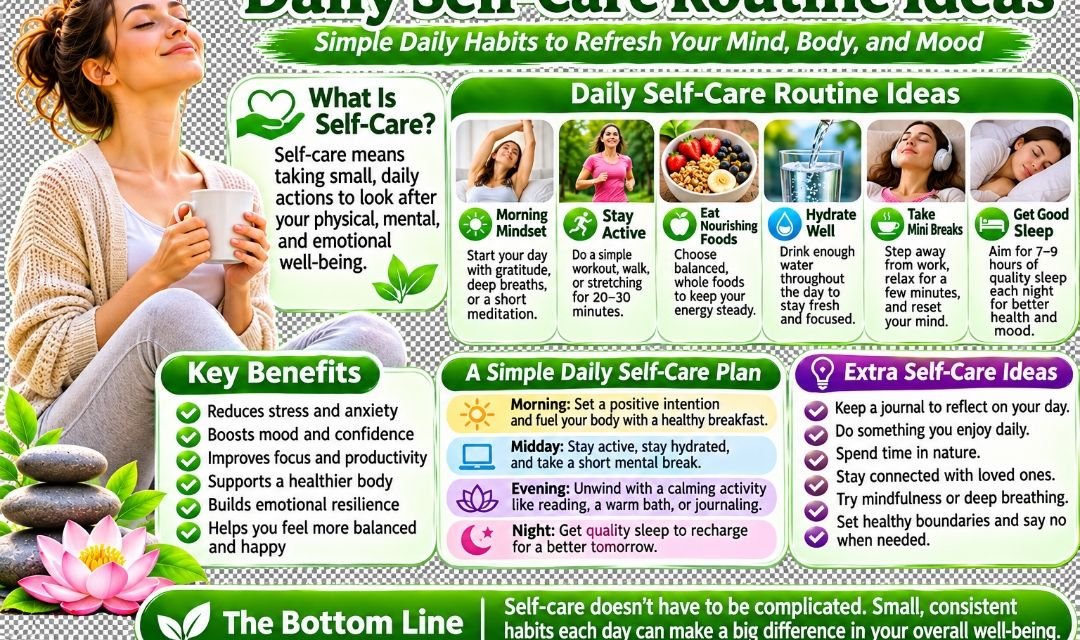
Quick Overview of Daily Self Care Routine Ideas
| Category | Details |
|---|---|
| Main topic | Daily Self Care Routine Ideas |
| Primary purpose | Supporting physical and mental well-being |
| Morning routine | Hydration, hygiene, breakfast, movement |
| Afternoon routine | Balanced meals, breaks, physical activity |
| Evening routine | Relaxation, personal care, sleep preparation |
| Mental wellness | Mindfulness, emotional awareness, social support |
| Physical wellness | Nutrition, exercise, adequate sleep |
| Skincare | Gentle cleansing, moisturizing, sun protection |
| Stress management | Breathing exercises, hobbies, realistic planning |
| Recommended approach | Simple, affordable, sustainable habits |
| Main limitation | Self-care cannot replace necessary medical treatment |
| Long-term goal | Building a balanced lifestyle |
Self-care does not need to take several hours every day.
Many useful habits require only a few minutes.
For example, taking a short walk can provide physical activity.
Preparing a balanced meal can support nutritional needs.
Maintaining a consistent bedtime can improve sleep habits.
The most effective routine is one that fits individual circumstances rather than following every wellness trend.
This guide explores 25 practical self-care habits and explains how to organize them into a realistic daily schedule.
What Is a Daily Self-Care Routine?
A daily self-care routine is a collection of regular habits that support personal health and well-being.
These habits may involve nutrition, hygiene, movement, rest, emotional support, and preventive healthcare.
A routine can be simple or detailed.
Some people prefer structured schedules.
Others benefit from flexible habits that fit around work, family, or other responsibilities.
The goal is consistency rather than perfection.
Why Is Daily Self-Care Important?
Self-care helps people pay attention to their physical and emotional needs.
Healthy habits can support energy levels, sleep, mobility, and daily functioning.
They may also reduce certain long-term health risks.
However, self-care cannot prevent every illness.
Genetics, environmental conditions, access to healthcare, and social circumstances also affect health.
A balanced approach recognizes these factors while encouraging practical personal habits.
1. Wake Up at a Consistent Time
A regular wake-up schedule can support the body’s sleep-wake rhythm.
Consistency may help improve sleep habits.
However, the ideal schedule depends on work responsibilities and individual sleep needs.
Most adults generally need seven to nine hours of sleep.
Getting enough sleep is more important than waking up unusually early.
2. Start the Morning With Hydration
Drinking water after waking can be part of a healthy routine.
Water supports normal body functions.
However, there is no scientific requirement to drink a specific amount immediately after waking.
Hydration needs vary according to climate, activity, and medical conditions.
People should maintain appropriate fluid intake throughout the day.
3. Practice Morning Personal Hygiene
Personal hygiene is an important part of self-care.
Brushing teeth, washing hands, and maintaining clean skin can support health.
Dental hygiene helps reduce the risk of oral health problems.
Regular dental care is also important.
However, excessive washing or harsh products can irritate the skin.
Gentle hygiene practices are generally preferable.
4. Eat a Balanced Breakfast
Breakfast can provide energy and nutrients.
Examples include whole-grain foods, eggs, yogurt, fruit, and other nutritious options.
However, breakfast is not medically necessary at a specific time for every adult.
Meal timing can vary.
The overall quality and balance of daily nutrition are more important.
5. Spend a Few Minutes Stretching
Gentle stretching may help some people feel more comfortable after waking.
It can also provide an opportunity to notice physical tension.
However, stretching should remain within a comfortable range of motion.
Painful stretching is unnecessary.
People with injuries or mobility limitations may need modified exercises.
6. Take a Short Morning Walk
Walking is one of the simplest forms of physical activity.
It can support cardiovascular health and general fitness.
A short morning walk may also provide time outdoors.
However, walking does not have to happen in the morning.
The best time is one that fits the individual’s routine.
7. Practice Mindfulness
Mindfulness involves paying attention to present experiences.
Some people use breathing awareness, meditation, or quiet reflection.
These practices may help with stress management.
However, mindfulness is not a guaranteed treatment for anxiety or depression.
People should choose exercises that feel comfortable.
8. Plan Your Daily Priorities
Planning can help organize responsibilities.
A simple daily list may reduce confusion and improve time management.
However, unrealistic schedules can create additional pressure.
A useful approach is to identify a few important tasks rather than attempting to complete everything at once.
9. Maintain Healthy Screen Habits
Phones and computers are useful tools.
However, constant notifications can interrupt concentration.
Reducing unnecessary alerts may help some people focus.
Taking regular screen breaks can also support more balanced routines.
The goal is intentional technology use rather than complete avoidance.
10. Take Regular Movement Breaks
Many adults spend long periods sitting.
Short movement breaks can reduce uninterrupted sedentary time.
Examples include standing, walking, or gentle stretching.
However, these breaks should complement regular physical activity.
They do not replace the broader benefits of exercise.
11. Eat Nutritious Meals
Balanced meals provide essential nutrients.
A healthy eating pattern generally includes vegetables, fruits, whole grains, legumes, and appropriate protein sources.
However, dietary needs differ between individuals.
Medical conditions and food preferences may affect meal planning.
Extreme diets are not necessary for everyday self-care.
12. Spend Time Outdoors
Outdoor activities can provide opportunities for movement and relaxation.
Parks, gardens, and walking paths may offer a change from indoor environments.
However, weather conditions, air quality, and sun exposure should be considered.
Outdoor activities should be safe and appropriate.
13. Practice Deep Relaxation
Relaxation techniques may help some people manage everyday tension.
Examples include slow breathing, progressive muscle relaxation, and guided imagery.
However, breathing exercises should remain comfortable.
Forced breathing or prolonged breath-holding can cause dizziness.
People should stop any exercise that creates discomfort.
14. Maintain a Simple Skincare Routine
Skincare can be part of personal hygiene and comfort.
A basic routine may involve gentle cleansing, moisturizing, and sun protection.
However, skincare needs vary.
Some people have sensitive skin or medical skin conditions.
Natural ingredients are not automatically safer than synthetic products.
15. Make Time for Enjoyable Activities
Hobbies can provide opportunities for enjoyment and relaxation.
Examples include reading, drawing, gardening, cooking, and crafts.
These activities may help people take breaks from demanding responsibilities.
However, self-care should not become another stressful obligation.
Choose activities that feel personally meaningful.
16. Connect With Supportive People
Social relationships are an important part of well-being.
Talking with friends, family, or trusted community members may provide emotional support.
However, social needs vary.
Some people prefer smaller social circles.
The quality of relationships is often more important than the number of contacts.
17. Practice Emotional Awareness
Emotional awareness involves recognizing feelings and understanding possible triggers.
For example, someone may notice frustration after a demanding day.
They can then choose an appropriate response.
Journaling or reflection may help some people.
However, persistent emotional difficulties may require professional support.
18. Maintain a Comfortable Living Environment
A clean and safe environment can support everyday functioning.
Simple activities such as organizing frequently used items may reduce inconvenience.
However, maintaining a perfect home is not necessary for wellness.
Environmental health also involves factors such as ventilation, safe water, and appropriate housing conditions.
19. Set Healthy Boundaries
Healthy boundaries involve recognizing personal limits.
For example, someone may need to reduce unnecessary commitments.
Others may benefit from setting clearer work hours.
However, boundaries can be difficult in certain circumstances.
Practical support and communication may help.
20. Reduce Excessive Caffeine
Caffeine can improve alertness.
However, excessive intake may cause nervousness or sleep disruption in some people.
Sensitivity varies.
People who experience these effects may benefit from reducing caffeine consumption.
Gradual reduction can help avoid withdrawal symptoms.
21. Prepare for Better Sleep
Evening habits can influence sleep quality.
A consistent bedtime routine may help signal that it is time to rest.
Reducing stimulating activities late at night may be useful.
A comfortable sleep environment also matters.
Persistent insomnia may require medical evaluation.
22. Practice Gratitude or Reflection
Some people find it helpful to reflect on positive experiences.
This may involve writing down a few meaningful moments from the day.
However, gratitude does not eliminate difficult emotions.
It should not be used to dismiss serious problems.
A balanced approach allows both positive and negative feelings.
23. Avoid Unhealthy Coping Habits
Stress can sometimes lead to unhealthy coping behaviors.
Examples include smoking, excessive alcohol consumption, or repeatedly sacrificing sleep.
These behaviors may increase health risks.
Healthier coping strategies include physical activity, supportive conversations, and professional help when needed.
24. Include Preventive Healthcare
Self-care includes appropriate medical care.
Vaccinations, recommended screenings, dental care, and management of medical conditions are important.
Healthy lifestyle habits cannot replace necessary diagnosis or treatment.
People should follow individualized medical recommendations.
25. Review Your Routine Regularly
A self-care routine should change when personal circumstances change.
For example, work schedules, health conditions, or family responsibilities may affect available time.
Reviewing habits can help identify what is realistic.
The goal is long-term consistency rather than following a rigid schedule.
Morning Self-Care Routine Ideas
A morning routine can help organize the beginning of the day.
| Activity | Suggested approach |
|---|---|
| Wake up | Maintain a consistent schedule |
| Hydration | Drink fluids according to needs |
| Hygiene | Brush teeth and wash appropriately |
| Breakfast | Choose a balanced meal if desired |
| Movement | Walk or stretch comfortably |
| Mindfulness | Practice brief present-moment awareness |
| Planning | Identify realistic daily priorities |
Not every activity is necessary for everyone.
A simple routine may be more sustainable than a complicated one.
Afternoon Self-Care Routine Ideas
Afternoon self-care can focus on maintaining energy and reducing unnecessary stress.
Useful habits may include eating a balanced meal, taking movement breaks, and staying appropriately hydrated.
People who work at desks may benefit from interrupting long periods of sitting.
Short breaks can also provide opportunities to rest attention.
However, the routine should fit individual responsibilities.
Evening Self-Care Routine Ideas
Evening self-care often focuses on relaxation and sleep preparation.
A simple routine may include a balanced dinner, personal hygiene, and a calming activity.
Some people enjoy reading or gentle stretching.
Others prefer quiet reflection.
However, sleep needs and schedules vary.
The most useful evening routine is one that supports adequate rest.
A Simple Daily Self-Care Schedule
| Time | Activity | Main benefit |
|---|---|---|
| Morning | Wake at a consistent time | Supports sleep rhythm |
| Morning | Hygiene and balanced breakfast | Supports daily health |
| Midmorning | Movement break | Reduces prolonged sitting |
| Afternoon | Nutritious meal | Provides nutrients |
| Afternoon | Walking or exercise | Supports physical fitness |
| Evening | Relaxation or hobbies | Encourages stress management |
| Evening | Social connection | Supports emotional well-being |
| Night | Consistent sleep routine | Supports rest and recovery |
This schedule is only an example.
Individual routines may look very different.
Seven-Day Self-Care Challenge
A short challenge can help beginners explore different habits.
Seven-day self-care tracker
0 of 7 completed
Monday: Hydration
Pay attention to thirst and maintain appropriate fluid intake.
Tuesday: Movement
Take a short walk or choose another comfortable activity.
Wednesday: Mindfulness
Spend five minutes noticing your surroundings or natural breathing.
Thursday: Nutrition
Include vegetables or fruit in a balanced meal.
Friday: Social connection
Connect with a supportive person.
Saturday: Relaxation
Make time for an enjoyable hobby or calming activity.
Sunday: Reflection
Review which habits felt useful and choose one to continue.
This challenge is designed for general wellness.
Activities can be adjusted according to individual needs.
Self-Care Routine Ideas for Busy Adults
Busy schedules can make self-care difficult.
However, healthy habits do not always require long periods of free time.
For example, a short walk during a break can provide movement.
Preparing simple meals may support nutrition.
Maintaining a consistent bedtime can support sleep.
The goal is to identify habits that fit existing responsibilities.
Self-Care Routine Ideas for Working From Home
Working from home can create challenges around movement and work-life boundaries.
A useful routine may include scheduled breaks and a dedicated workspace when possible.
Regular movement can help reduce prolonged sitting.
Clear work hours may also support personal time.
However, individual home environments and responsibilities vary.
Self-Care Routine Ideas for Mental Wellness
Mental self-care can involve stress management, emotional awareness, and supportive relationships.
Some people benefit from mindfulness or journaling.
Others prefer hobbies, physical activity, or social connection.
However, persistent anxiety, depression, or other mental health symptoms may require professional treatment.
Self-care should complement appropriate healthcare.
Self-Care Routine Ideas for Physical Wellness
Physical self-care focuses on supporting the body’s needs.
Important habits include balanced nutrition, regular activity, adequate sleep, and personal hygiene.
Preventive healthcare is also essential.
However, physical wellness is not determined solely by appearance or body weight.
Health involves multiple factors.
Self-Care Routine Ideas on a Budget
Self-care does not need to involve expensive products.
Many useful activities are free or low-cost.
Examples include walking, stretching, preparing simple meals, and maintaining healthy sleep habits.
Community resources may also provide opportunities for exercise or social connection.
Expensive wellness products are not necessary for most basic self-care routines.
Self-Care Products: Are They Necessary?
Self-care marketing often focuses on skincare, supplements, herbal products, and wellness accessories.
However, these products are optional.
A basic skincare routine may involve gentle cleansing, moisturizing, and sun protection.
Most people do not need numerous supplements without a specific nutritional or medical reason.
Natural products can also cause side effects or allergic reactions.
Consumers should evaluate claims carefully.
Hemp and CBD Products in Self-Care
Hemp-derived products are sometimes marketed as part of self-care routines.
Hemp seed oil may be used in cosmetics and food products.
CBD oil is different because it contains cannabidiol, a biologically active cannabinoid.
Some CBD products are promoted for relaxation or sleep.
However, evidence supporting many commercial CBD wellness claims remains limited.
CBD can cause side effects and interact with medications.
Some hemp-derived cannabinoid products may also contain THC.
These products are not essential for maintaining a healthy self-care routine.
Common Self-Care Mistakes to Avoid
Some approaches can make self-care unnecessarily difficult.
Common mistakes include:
-
Trying to follow a perfect routine
-
Spending excessively on wellness products
-
Ignoring sleep and nutrition
-
Following extreme diets
-
Comparing routines with social media influencers
-
Treating natural products as automatically safe
-
Avoiding necessary medical care
-
Expecting immediate results
The most useful routine is realistic and sustainable.
Benefits of a Consistent Self-Care Routine
A balanced self-care routine can support several aspects of well-being.
Regular physical activity benefits cardiovascular health and mobility.
Balanced nutrition provides essential nutrients.
Adequate sleep supports memory, recovery, and emotional regulation.
Stress-management practices may help some people cope with everyday challenges.
However, no routine guarantees perfect health.
Individual results vary.
How to Make Self-Care a Long-Term Habit
Long-term consistency often begins with manageable goals.
Instead of changing every part of daily life immediately, start with one or two habits.
For example, someone may begin with a regular bedtime.
Another person may focus on daily movement.
Once a habit becomes easier to maintain, additional changes can be introduced.
However, setbacks are normal.
A flexible routine is often more sustainable than a rigid one.
Frequently Asked Questions About Daily Self Care Routine Ideas
1. What is a daily self-care routine?
It is a collection of regular habits that support physical health, mental well-being, and personal needs.
2. Why is daily self-care important?
It encourages attention to health needs and can support long-term well-being.
3. What are simple self-care habits?
Examples include balanced meals, walking, adequate sleep, personal hygiene, and relaxation.
4. How much time should self-care take?
There is no fixed requirement. Even short, manageable activities can be useful.
5. What is the best morning self-care routine?
A routine may include hygiene, appropriate hydration, breakfast, and movement.
6. What is the best evening self-care routine?
A consistent sleep schedule and calming activities may support rest.
7. Can self-care reduce stress?
Some self-care habits can help people manage everyday stress.
8. Is mindfulness part of self-care?
Yes. Mindfulness can be included as an optional stress-management practice.
9. Is exercise necessary for self-care?
Regular physical activity is an important part of maintaining health.
10. How much sleep do adults need?
Most adults generally need around seven to nine hours each night.
11. Is skincare part of self-care?
Yes. Basic skincare can support hygiene and skin health.
12. Are expensive self-care products necessary?
No. Many useful habits require little or no special equipment.
13. Can walking count as self-care?
Yes. Walking supports physical activity and may provide opportunities for relaxation.
14. What is emotional self-care?
It involves recognizing emotional needs and developing healthy coping strategies.
15. What is mental self-care?
It includes habits that support psychological well-being and appropriate mental healthcare.
16. How can busy adults practice self-care?
They can begin with short, realistic habits that fit their schedules.
17. Is journaling useful for self-care?
Some people find journaling helpful for emotional reflection.
18. Can social relationships support self-care?
Yes. Supportive relationships can contribute to emotional well-being.
19. Are herbal supplements necessary?
No. Most basic self-care routines do not require herbal supplements.
20. Is CBD necessary for relaxation?
No. CBD is not an essential self-care product, and many wellness claims remain insufficiently supported.
21. Can self-care replace medical treatment?
No. Self-care should complement appropriate medical care.
22. How can I build a consistent routine?
Start with manageable habits and gradually develop consistency.
23. What if I miss a day?
Missing a day does not eliminate the value of healthy habits. Resume when practical.
24. What are budget-friendly self-care ideas?
Walking, stretching, healthy sleep habits, simple meals, and relaxation exercises are common examples.
25. What is the most important self-care habit?
There is no single habit for everyone, but adequate sleep, balanced nutrition, and regular physical activity are strong foundations.
Final Thoughts
Daily self care routine ideas can help adults develop practical habits that support physical and emotional well-being.
Healthy self-care includes balanced nutrition, regular movement, adequate sleep, personal hygiene, and stress management.
Social connection, enjoyable activities, and preventive healthcare also matter.
However, self-care does not require expensive skincare products, supplements, or complicated routines.
The most effective approach is realistic and flexible.
Small daily improvements can become sustainable habits over time.
Self-care should never be used as a replacement for necessary medical or mental health treatment.
A healthy routine is one that supports everyday functioning while respecting individual needs and circumstances.
For more self-care guides, natural wellness education, healthy lifestyle tips, skincare information, and beginner-friendly health articles, visit Picanto Magazine.
Medical Disclaimer: This article is for general educational purposes only and does not replace professional medical or mental health advice, diagnosis, or treatment. Consult a qualified healthcare professional before making significant health changes or using supplements and cannabinoid-containing products, especially if you have an existing medical condition.