
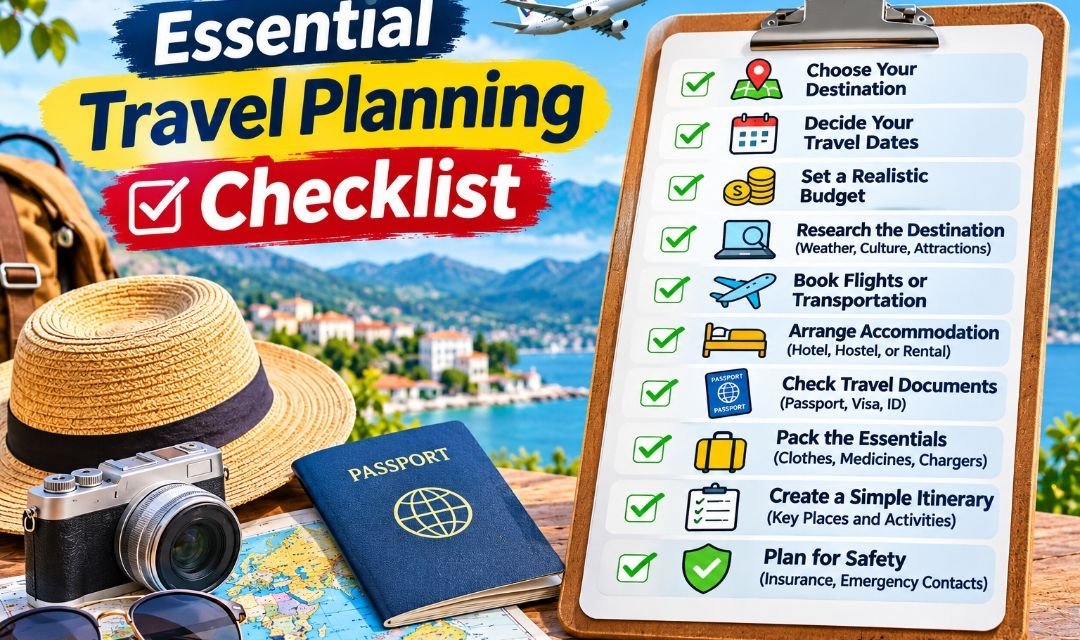
Essential travel planning checklist is something every traveler should prepare before leaving home. Whether you are planning your first vacation, a weekend getaway, or an international adventure, having a clear checklist can make your journey easier, safer, and more enjoyable.
Traveling brings exciting opportunities to explore new destinations, experience different cultures, and create wonderful memories. However, forgetting important documents, booking transportation too late, or packing unnecessary items can lead to unexpected problems.
The good news is that proper preparation can prevent many common travel mistakes. This guide covers everything you need to organize before departure, from choosing a destination and setting a budget to preparing travel documents and packing your luggage.
Quick Overview of the Essential Travel Planning Checklist
| Planning category | Important tasks |
|---|---|
| Destination | Choose where you want to travel |
| Travel dates | Select suitable departure and return dates |
| Budget | Calculate transportation, accommodation, and daily costs |
| Transportation | Book flights, trains, or buses |
| Accommodation | Reserve hotels, hostels, or vacation rentals |
| Documents | Check passports, visas, and identification |
| Activities | Research attractions and prepare an itinerary |
| Packing | Organize clothing, electronics, and toiletries |
| Health | Prepare medications and check health requirements |
| Safety | Save emergency contacts and review insurance |
| Communication | Arrange mobile data and offline maps |
| Final checks | Confirm reservations and departure details |
1. Choose Your Travel Destination
The first step in any essential travel planning checklist is deciding where you want to go.
Choosing a destination sounds simple, but many travelers struggle because there are so many beautiful places to explore.
Some people prefer relaxing beach vacations, while others enjoy mountains, historical cities, or nature adventures.
Start by thinking about your interests and expectations.
Ask yourself whether you want a peaceful vacation, an exciting outdoor experience, or an opportunity to explore a different culture.
Factors to consider when choosing a destination
Budget: Select a destination that fits your available money.
Travel distance: Consider how long it will take to reach your destination.
Weather: Research seasonal temperatures and rainfall.
Safety: Review current travel advisories and local conditions.
Activities: Check whether the destination offers experiences you enjoy.
Accessibility: Consider transportation, accommodation, and any personal mobility needs.
If you are traveling for the first time, choosing a destination with convenient transportation and reliable tourist facilities can make the experience easier.
2. Decide Your Travel Dates
Choosing suitable travel dates can influence the cost and comfort of your journey.
Some destinations become crowded during school holidays, festivals, and popular vacation seasons.
During these periods, accommodation and transportation prices may increase.
If your schedule is flexible, consider traveling during quieter months.
You may find more accommodation choices and fewer crowds at popular attractions.
However, cheaper travel periods sometimes come with less favorable weather.
Research the destination’s climate and local events before deciding when to visit.
Travel date checklist
- Check seasonal weather patterns.
- Review public holidays and festivals.
- Compare transportation prices across dates.
- Confirm your vacation or leave arrangements.
- Consider the opening schedules of major attractions.
Choosing the right dates helps you enjoy your destination while keeping expenses manageable.
3. Create a Realistic Travel Budget
A travel budget helps you understand how much money you need before departure.
Without financial planning, small expenses can quickly become difficult to manage.
Transportation and accommodation are usually major costs, but they are not the only expenses.
You should also consider meals, local transportation, attractions, shopping, and emergencies.
Example of a travel budget
| Expense | Example amount |
|---|---|
| Transportation | $250 |
| Accommodation | $300 |
| Food and drinks | $150 |
| Local transportation | $60 |
| Attractions | $90 |
| Shopping | $50 |
| Emergency reserve | $100 |
| Total | $1,000 |
This is an illustrative budget rather than a price estimate for a particular destination.
Simple ways to control travel expenses
Compare transportation options before booking.
Choose accommodation that balances affordability with a convenient location.
Research free attractions and outdoor activities.
Consider public transportation instead of expensive private transfers.
Set a daily spending target.
Keep emergency money separate from your regular budget.
A clear financial plan makes it easier to enjoy your vacation without constantly worrying about expenses.
4. Research Your Destination
Destination research is an important part of preparing for a successful journey.
Learning about local conditions before departure helps you avoid confusion.
Start by researching the most popular attractions, transportation methods, cultural practices, and general safety conditions.
You should also understand the local currency and common payment methods.
For international trips, checking entry rules is especially important.
Things to research before traveling
Local transportation: Learn how buses, trains, taxis, and ride-hailing services operate.
Currency: Check the currency used and available payment options.
Weather: Understand what clothing and equipment you may need.
Culture: Learn about customs, greetings, and appropriate behavior.
Food: Explore local dishes and identify options that suit your dietary needs.
Safety: Review official travel advice and common tourist scams.
A little research can help you feel more confident when arriving somewhere unfamiliar.
5. Book Flights or Other Transportation
Transportation arrangements should be one of your main priorities.
Depending on your destination, you may travel by airplane, train, bus, or personal vehicle.
Each option offers different advantages.
Flights are often practical for long-distance journeys, while trains and buses may be more affordable for shorter routes.
When booking flights, compare the total ticket price rather than focusing only on the advertised fare.
Additional charges may apply for checked luggage, seat selection, or changes to your reservation.
Transportation booking checklist
- Compare travel prices and schedules.
- Confirm departure and arrival locations.
- Review baggage allowances.
- Check cancellation and refund policies.
- Verify passenger names and personal details.
- Save booking confirmations.
- Arrange transportation to and from stations or airports.
Booking carefully can prevent expensive mistakes and unnecessary stress.
6. Reserve Suitable Accommodation
Choosing the right accommodation can make a major difference to your travel experience.
Hotels, guesthouses, hostels, and vacation rentals offer different levels of comfort and convenience.
For most travelers, location is an important consideration.
Accommodation near public transportation or major attractions may reduce daily travel expenses.
Before booking, read recent customer reviews and check the property’s facilities.
Accommodation checklist
- Convenient and reasonably safe location.
- Clear total price, including applicable taxes and fees.
- Positive recent guest reviews.
- Suitable room facilities.
- Reliable internet access if needed.
- Check-in and check-out information.
- Cancellation conditions.
- Property contact information.
If you expect to arrive late, confirm whether the accommodation allows late check-in.
Keeping your accommodation details easily accessible can also simplify your arrival.
7. Prepare Important Travel Documents
Travel documents are among the most essential items on your checklist.
Requirements depend on your nationality, destination, travel purpose, and transportation method.
Domestic travelers may need an appropriate identification document.
International travelers generally need a passport and may also need a visa or electronic travel authorization.
Some countries require passports to remain valid for several months beyond the travel dates.
Always confirm current rules through official government or embassy sources.
Essential document checklist
- Valid passport or identification.
- Visa or electronic travel authorization, where required.
- Flight or transportation tickets.
- Accommodation confirmations.
- Travel insurance information.
- Emergency contact details.
- Required medical or vaccination documents.
- Copies of important identification.
Store digital copies securely.
You may also want to carry paper copies separately from the original documents.
8. Create a Flexible Travel Itinerary
A travel itinerary helps organize activities and transportation during your trip.
However, it does not need to include every minute of your day.
Overplanning can make traveling exhausting, especially when visiting unfamiliar places.
A better approach is to choose a few important activities and leave room for rest.
Example three-day itinerary
| Day | Activities |
|---|---|
| Day 1 | Arrive, check into accommodation, explore nearby areas |
| Day 2 | Visit major attractions, explore local markets, enjoy regional food |
| Day 3 | Visit a park or museum, purchase souvenirs, prepare for departure |
Research attraction opening times before finalizing your schedule.
Try to group nearby attractions together to save transportation time.
Keep alternative activities available in case of unexpected weather or closures.
A flexible itinerary provides structure without removing the enjoyment of spontaneous discoveries.
9. Prepare Your Travel Packing Checklist
Packing is one of the most important steps before leaving home.
Many travelers make the mistake of bringing too many belongings.
Heavy luggage can make transportation uncomfortable and may result in additional baggage fees.
Choose practical items that match your destination, planned activities, and expected weather.
Clothing essentials
Pack comfortable outfits suitable for the climate.
Bring enough underwear and socks for your travel duration.
Include sleepwear and suitable footwear.
A lightweight jacket or raincoat may be useful depending on the weather.
Electronics essentials
Carry your mobile phone and charger.
Bring a travel adapter if your destination uses different electrical outlets.
A portable power bank can be useful, provided it complies with airline restrictions.
Consider carrying headphones and any other electronics you genuinely need.
Toiletries and personal items
Pack a toothbrush, toothpaste, personal hygiene products, and sunscreen.
Bring regular prescription medications in appropriate packaging.
Check airline restrictions before packing liquids in carry-on luggage.
Keeping your luggage organized makes it easier to find important items during the journey.
10. Prepare for Health and Safety
Travel health and safety should never be ignored.
Although many vacations happen without major problems, preparing for emergencies is a responsible decision.
Before traveling, check whether your destination has any recommended or required vaccinations or other health precautions.
Carry enough of your regular medication for the trip, subject to local import rules.
You should also research emergency services and nearby medical facilities.
Travel safety checklist
- Review destination-specific travel advisories.
- Save local emergency telephone numbers.
- Share your itinerary with someone you trust.
- Keep valuable belongings secure.
- Review medical and travel insurance coverage.
- Avoid unsafe transportation providers.
- Follow local laws and regulations.
- Store emergency money separately.
Travel insurance may help cover certain medical emergencies, delays, or cancellations, depending on the policy.
Read coverage terms and exclusions carefully before purchasing.
11. Arrange Money and Payment Methods
Managing money is an important part of travel preparation.
Before departure, research the currency used at your destination.
Check whether cash, debit cards, or credit cards are commonly accepted.
Some locations rely heavily on electronic payments, while smaller businesses may prefer cash.
It can be useful to carry more than one payment method.
However, keep backup cards and emergency funds in a separate secure location.
Review international transaction charges and ATM withdrawal fees.
If needed, notify your bank about upcoming international travel.
Understanding local payment options can prevent problems when purchasing food, transportation, or other essentials.
12. Organize Your Phone and Internet Access
A reliable phone connection can make traveling easier.
Your smartphone can help with maps, translations, reservations, and communication.
However, international roaming charges may be expensive.
Check your mobile provider’s travel plans before departure.
A local SIM card or eSIM may be more affordable, depending on your destination.
Technology checklist
- Check roaming costs.
- Arrange suitable mobile data.
- Download offline maps.
- Save hotel and transportation addresses.
- Store emergency telephone numbers.
- Download important tickets and confirmations.
- Charge devices before departure.
Avoid relying entirely on internet access.
Keeping essential information available offline is useful when mobile coverage is weak.
13. Research Local Transportation
Getting around an unfamiliar destination can feel confusing.
Before arriving, understand how the local transportation system works.
Many cities have affordable buses, trains, or metro services.
Other destinations may require taxis, rental vehicles, or organized transfers.
Research how to travel from your arrival point to your accommodation.
Check approximate transportation costs and operating schedules.
If you plan to use taxis, choose reputable providers and understand the local payment system.
Knowing your transportation options saves time and reduces unnecessary stress.
14. Learn About Local Culture and Etiquette
Traveling provides an opportunity to experience different cultures.
Understanding local customs can help you interact respectfully with residents.
Some destinations have specific expectations about clothing, public behavior, greetings, and photography.
For example, certain religious sites require visitors to dress modestly.
Research these expectations before arrival.
Learning a few useful words in the local language can also make communication easier.
Simple expressions such as “hello,” “thank you,” and “please” can be helpful.
Respecting local culture improves your travel experience and helps create positive interactions.
15. Check Your Home Before Leaving
Travel planning should also include preparing your home.
Before departure, make sure your property is secure.
Check doors and windows.
Turn off unnecessary electrical appliances and follow appropriate safety guidance for your home.
Dispose of food that may spoil during your absence.
If you will be away for an extended period, consider asking someone you trust to check on your property.
You should also arrange care for pets or plants when necessary.
These simple steps can help you travel with greater peace of mind.
16. Complete Your Final Pre-Departure Checks
The final days before your trip are the best time to review your arrangements.
Confirm transportation schedules and accommodation reservations.
Check your destination’s weather forecast.
Make sure your identification documents and tickets are accessible.
Charge your devices and prepare your luggage.
It is also helpful to confirm how you will reach the airport, station, or departure point.
Final 24-hour travel checklist
- Confirm your transportation departure time.
- Check for schedule changes.
- Verify accommodation details.
- Review passport and identification requirements.
- Pack medication and essential personal items.
- Charge phones and electronics.
- Save offline maps and travel documents.
- Confirm your airport or station transfer.
- Secure your home.
- Allow enough time to reach your departure point.
Completing these checks helps reduce last-minute problems.
Common Travel Planning Mistakes to Avoid
Even experienced travelers occasionally make mistakes.
However, understanding common problems can make your preparations more effective.
| Common mistake | Better solution |
|---|---|
| Forgetting important documents | Check requirements well before departure |
| Booking without comparing prices | Review several suitable options |
| Overpacking | Choose practical, versatile items |
| Planning too many activities | Allow extra time between attractions |
| Ignoring hidden expenses | Calculate the full estimated trip cost |
| Forgetting local transportation | Research routes before arrival |
| Not preparing for emergencies | Save contacts and keep emergency funds |
| Ignoring booking conditions | Review cancellation and refund policies |
A little extra attention during planning can prevent many avoidable difficulties.
Frequently Asked Questions About Essential Travel Planning Checklist
What should be included in an essential travel planning checklist?
A complete checklist should include destination selection, travel dates, budgeting, transportation, accommodation, documents, packing, health preparation, safety, communication, and final departure checks.
How early should I start planning a trip?
Planning time depends on the destination and travel requirements. Short domestic trips may need only a few weeks, while international journeys involving visas or complex arrangements may require several months.
What are the most important items to pack?
Important items include travel documents, medication, suitable clothing, payment methods, a phone, a charger, and personal hygiene products. Your specific packing needs will depend on your destination and planned activities.
How can I organize a trip without spending too much?
Set a realistic budget, compare transportation prices, choose affordable accommodation, use public transportation when practical, and explore free attractions.
Is travel insurance necessary?
Travel insurance requirements vary by destination and traveler. Some countries require certain coverage, while other trips make insurance optional. Insurance can provide useful protection, but coverage and exclusions differ between policies.
How do I avoid forgetting things before traveling?
Use a written or digital checklist and review it several times before departure. Organize important documents early and complete a final check the day before traveling.
What should first-time travelers prioritize?
First-time travelers should prioritize valid documents, reliable transportation, suitable accommodation, realistic budgeting, and basic safety preparation. A flexible itinerary can also make the journey more comfortable.
Final Thoughts
An essential travel planning checklist helps turn a complicated journey into a manageable and enjoyable experience.
From selecting your destination and organizing transportation to packing luggage and preparing emergency contacts, every small step contributes to smoother travel.
You do not need to organize every moment of your vacation. Instead, focus on the important details and leave room for new experiences.
A successful trip begins with preparation, but the most memorable moments often happen when you explore beyond your everyday routine.
Plan smart, travel safely, and enjoy the adventure ahead.