
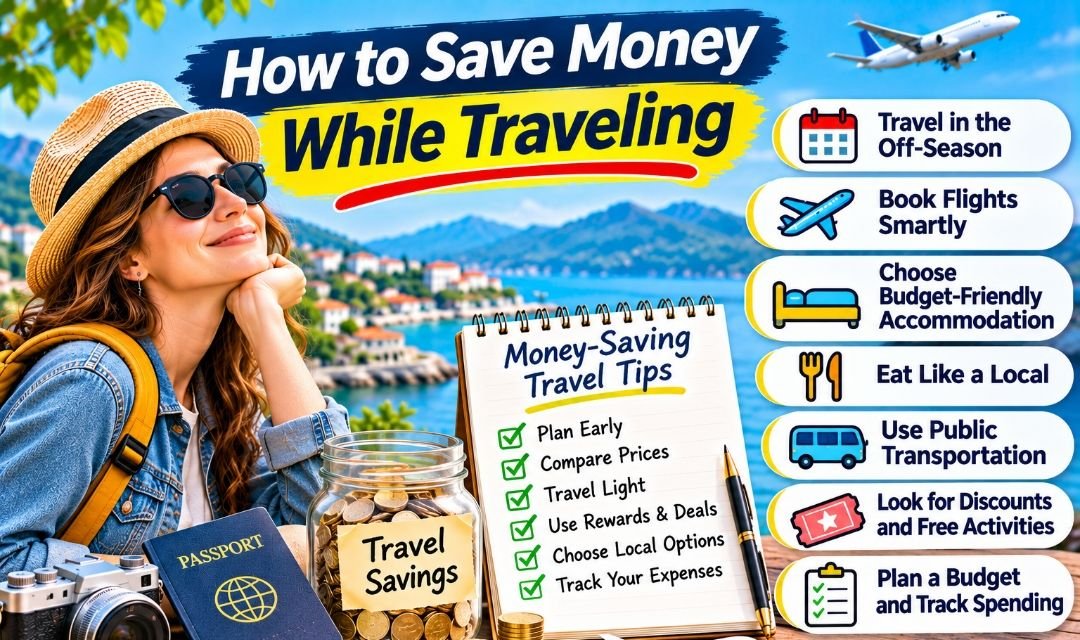
How to save money while traveling is something every traveler should understand before planning a vacation. Exploring new destinations, enjoying local food, and discovering different cultures can be exciting, but travel expenses can quickly become overwhelming without proper planning. From expensive flights to hotel bookings and daily transportation, small costs can add up faster than expected.
The good news is that traveling does not always require a large budget. With smart decisions, careful research, and a little flexibility, you can enjoy memorable experiences without spending unnecessarily. Saving money while traveling does not mean giving up comfort or missing exciting attractions. It simply means making better choices about where your money goes.
Whether you are planning a weekend getaway, a family holiday, or an international adventure, these practical travel tips will help you reduce expenses while enjoying your journey.
Quick Overview: How to Save Money While Traveling
| Travel expense | Money-saving strategy |
|---|---|
| Flights | Compare prices and travel dates |
| Accommodation | Choose affordable hotels or guesthouses |
| Transportation | Use public transportation |
| Food | Eat at local restaurants |
| Activities | Explore free or inexpensive attractions |
| Packing | Travel light to avoid baggage fees |
| Shopping | Set a souvenir budget |
| Travel dates | Consider off-season travel |
| Mobile internet | Compare local SIM and eSIM plans |
| Currency | Avoid unnecessary exchange fees |
| Budget | Track your daily spending |
| Emergency expenses | Keep backup money available |
1. Plan Your Trip Before Booking Anything
One of the easiest ways to save money while traveling is to plan your journey before making expensive reservations.
Many travelers book flights or hotels without comparing options. Later, they discover cheaper alternatives or realize that their accommodation is far from the attractions they want to visit.
Planning ahead gives you time to research costs and make informed decisions.
Start by choosing your destination and estimating your available budget.
Next, research transportation, accommodation, food, and sightseeing expenses.
What should you plan in advance?
- Destination and travel dates.
- Transportation options.
- Accommodation choices.
- Daily food expenses.
- Tourist attractions.
- Local transportation.
- Emergency funds.
You do not need to schedule every hour of your vacation.
A simple travel plan can help you avoid unnecessary expenses while keeping your journey flexible.
2. Choose Affordable Travel Destinations
Your destination has a major impact on your overall travel expenses.
Some cities have expensive hotels, restaurants, and transportation systems.
Other destinations offer comfortable accommodation and enjoyable experiences at more affordable prices.
Before selecting a destination, compare the total cost of visiting different places.
A cheap flight to an expensive city may not be the best option.
Similarly, a slightly more expensive flight to a destination with affordable accommodation and food could provide better overall value.
How to choose a budget-friendly destination
Research typical hotel prices.
Compare daily food costs.
Check public transportation expenses.
Look for free tourist attractions.
Consider nearby towns and smaller cities.
Research seasonal weather conditions.
The best destination is one that offers experiences you enjoy without placing unnecessary pressure on your finances.
3. Travel During the Off-Season
Travel timing can make a big difference to vacation costs.
Popular destinations often become more expensive during school holidays, festivals, and busy tourist seasons.
Hotels and transportation providers may charge higher prices when demand increases.
Traveling during quieter periods can sometimes reduce these expenses.
You may also enjoy fewer crowds and a more peaceful experience.
Benefits of off-season travel
Accommodation may be more affordable.
Popular attractions may be less crowded.
You may have more booking choices.
Some transportation options may offer better value.
However, off-season travel may involve unfavorable weather or reduced tourist services.
Research your destination before choosing dates.
Shoulder-season travel can sometimes provide a good balance between pleasant weather and reasonable prices.
4. Compare Flight Prices Carefully
Airfare is often one of the biggest expenses when traveling internationally.
Comparing different flight options can help you find better value.
Check several airlines and travel dates.
Look at nearby airports when practical.
Remember that the cheapest advertised ticket may not be the cheapest overall option.
Some airlines charge separately for checked luggage, seat selection, meals, or ticket changes.
Smart flight booking tips
Compare complete ticket prices.
Check baggage allowances.
Review connection times.
Consider airport transfer costs.
Read cancellation conditions.
Choose travel dates with reasonable flexibility.
Booking early can provide more options, but it does not guarantee the lowest fare.
Focus on finding a suitable flight at a price that fits your budget.
5. Choose Budget-Friendly Accommodation
You do not need to stay in a luxury hotel to enjoy a comfortable vacation.
Many destinations offer affordable hotels, hostels, guesthouses, and vacation rentals.
The key is to compare overall value.
A hotel with a lower nightly rate may be located far from the attractions you want to visit.
This could increase transportation expenses.
Accommodation near public transportation may provide better value, even if the room costs slightly more.
What to check before booking
Location: Choose an area convenient for your activities.
Reviews: Read recent guest feedback about cleanliness and comfort.
Facilities: Confirm whether Wi-Fi, breakfast, or kitchen access is included.
Total price: Check taxes and additional fees.
Cancellation: Understand the booking conditions.
Transportation: Consider daily travel costs from the property.
Choosing suitable accommodation can help you save money without sacrificing important comforts.
6. Use Public Transportation Instead of Taxis
Public transportation is often one of the easiest ways to reduce daily travel expenses.
Buses, trains, and metro systems can be more affordable than private transportation.
Many major cities have convenient public transportation networks connecting tourist attractions, shopping areas, and accommodation.
Before arriving, research the local transportation system.
Some destinations offer daily or weekly travel passes that can reduce costs.
Advantages of public transportation
Lower travel expenses in many cities.
Less need for expensive taxis.
Convenient connections between major areas.
Opportunities to experience everyday local life.
However, always consider safety, accessibility, operating hours, and convenience.
Sometimes paying slightly more for reliable transportation is the better choice.
7. Eat at Local Restaurants
Food can become a major vacation expense, especially when you eat every meal at expensive tourist restaurants.
Local restaurants, cafés, and markets may provide more affordable options.
They can also introduce you to regional dishes and traditional flavors.
Instead of automatically choosing restaurants near major attractions, explore suitable dining options in nearby neighborhoods.
Ways to save money on meals
Check menus before ordering.
Look for affordable lunch specials.
Explore local restaurants.
Purchase snacks from grocery stores.
Consider accommodation with breakfast included.
Prepare simple meals when kitchen facilities are available.
Always prioritize food hygiene and safe drinking water.
Saving money on food should not mean ignoring your health.
8. Explore Free Tourist Attractions
A memorable vacation does not require expensive attractions every day.
Many cities offer beautiful public parks, beaches, historic streets, and scenic walking routes.
Some museums provide free admission on selected days.
Others may offer discounted tickets for eligible visitors.
Research free activities before departure.
Free or inexpensive travel experiences
Visit public parks.
Explore historical neighborhoods.
Enjoy accessible beaches.
Walk through local markets.
Discover public art and architecture.
Visit free museum exhibitions.
Watch sunsets from public viewpoints.
These activities can create lasting memories without increasing your travel budget.
9. Pack Light to Avoid Extra Fees
Overpacking can create additional travel expenses.
Some airlines charge fees for checked bags or overweight luggage.
Heavy luggage can also make transportation more difficult.
Choose clothing that can be combined into different outfits.
Bring comfortable footwear suitable for multiple activities.
Avoid packing unnecessary items.
Simple packing checklist
- Comfortable clothing.
- Suitable walking shoes.
- Personal medication.
- Travel documents.
- Phone and charger.
- Basic toiletries.
- Lightweight jacket.
- Reusable water bottle.
- Small day bag.
Check airline baggage rules before departure.
Packing light can save money and make your journey more comfortable.
10. Create a Daily Spending Budget
A daily spending plan is one of the most practical ways to manage travel expenses.
Start by calculating major costs such as flights and accommodation.
Then estimate how much money you need for meals, transportation, attractions, and shopping.
Divide your available daily spending money by the number of travel days.
Example of a five-day vacation budget
| Expense | Example amount |
|---|---|
| Transportation | $200 |
| Accommodation | $250 |
| Food and drinks | $125 |
| Local transportation | $50 |
| Activities | $75 |
| Shopping | $50 |
| Emergency reserve | $100 |
| Total | $850 |
These are example figures rather than current prices for a particular destination.
If you have $300 available for meals, local transportation, activities, and shopping during five days, your average daily spending target would be $60.
Keep emergency money separate from regular spending.
A clear budget allows you to enjoy your trip without constant financial worry.
11. Avoid Unnecessary Shopping
Shopping can be enjoyable, but buying too many souvenirs can increase vacation expenses.
Before traveling, decide how much money you want to spend on personal purchases.
Focus on items that are meaningful or genuinely useful.
Compare prices when appropriate.
Avoid buying products simply because they are displayed near popular attractions.
You should also consider baggage limits.
Extra purchases may increase luggage weight and create additional transportation fees.
Remember that photographs and experiences can be just as valuable as physical souvenirs.
12. Use Travel Discounts and Special Offers
Travel discounts can help reduce costs when used carefully.
Some attractions, transportation services, and accommodation providers offer discounted prices for eligible visitors.
Students, older adults, families, and groups may qualify for certain offers.
You may also find reduced admission prices during particular days or seasons.
Discounts worth researching
Student transportation fares.
Group travel rates.
Museum discount days.
Public transportation passes.
Accommodation promotions.
Combination attraction tickets.
Always compare the final price.
A discount is only useful if it saves money on something you actually need or want to experience.
13. Save Money on Currency Exchange
Currency exchange fees can affect international travel budgets.
Before departure, research the local currency and approximate exchange rate.
Check whether your payment cards charge foreign transaction fees.
Some ATMs may apply additional withdrawal charges.
Avoid exchanging large amounts of money without comparing available rates.
When paying by card abroad, you may be offered the choice of paying in your home currency or the local currency.
Paying in the local currency often avoids an unfavorable merchant conversion rate, although your card provider’s fees may still apply.
Understanding payment costs helps prevent unnecessary spending.
14. Compare Mobile Internet Options
International mobile roaming can become expensive.
Before traveling, check your mobile provider’s roaming packages.
Compare local SIM cards and travel eSIM options where available.
The most affordable choice depends on your destination, phone compatibility, and data needs.
You can also reduce mobile data usage by preparing offline information.
Mobile data saving tips
Download offline maps.
Save hotel addresses.
Store transportation tickets offline.
Download entertainment before departure.
Disable unnecessary background data.
Use trusted Wi-Fi networks appropriately.
Protect sensitive accounts when connecting to unfamiliar networks.
These small steps can help reduce communication expenses.
15. Consider Slow Travel
Slow travel means spending more time in fewer destinations.
Instead of visiting several cities in a short period, you focus on exploring one or two locations more deeply.
This approach can reduce transportation costs.
You may spend less money on repeated train tickets, flights, or transfers.
Longer accommodation stays sometimes qualify for discounted rates.
Slow travel also creates more opportunities to discover affordable local restaurants and attractions.
Benefits of slow travel
Fewer transportation expenses.
Less rushing between destinations.
More time to explore local culture.
Potential accommodation discounts.
A more relaxed daily schedule.
Slow travel can provide better value for travelers who prefer comfortable and meaningful experiences.
16. Travel With Friends When Practical
Group travel can sometimes reduce individual expenses.
Sharing accommodation costs may make larger rooms or apartments more affordable.
Travel companions can also divide certain transportation expenses.
However, group travel works best when everyone has similar expectations.
Discuss budgets before booking.
Agree on accommodation preferences.
Decide how shared expenses will be managed.
Group travel money-saving ideas
Share suitable accommodation.
Divide transportation costs fairly.
Prepare some meals together.
Research group attraction discounts.
Create a shared expense record.
Avoid unnecessary group purchases.
Clear communication can help make group travel affordable and enjoyable.
17. Avoid Expensive Tourist Traps
Popular tourist areas sometimes have higher prices for restaurants, transportation, and souvenirs.
This does not mean every business near a major attraction is overpriced.
However, comparing options can help you avoid unnecessary spending.
Check restaurant menus before ordering.
Research typical transportation costs.
Use reputable tour providers.
Be cautious about unexpected offers or unclear pricing.
Avoid making rushed purchases.
A little research can help you enjoy popular destinations without spending more than necessary.
18. Track Your Expenses During the Trip
A budget is only useful when you pay attention to your actual spending.
Small daily purchases can add up over several days.
Record major expenses such as food, transportation, attractions, and shopping.
You can use a notebook, spreadsheet, or budgeting application.
Compare your spending with your planned budget.
If one day becomes more expensive than expected, consider choosing lower-cost activities the next day.
Avoid using emergency funds for unnecessary purchases.
Tracking expenses helps you stay financially organized throughout your vacation.
19. Prioritize Value Instead of the Lowest Price
Saving money does not always mean choosing the cheapest option.
Sometimes paying slightly more can prevent additional expenses.
For example, a hotel near public transportation may be more convenient than a cheaper property in a remote location.
A direct flight may offer better value than an itinerary with complicated connections.
Comfortable footwear may also be worth prioritizing if you plan to walk long distances.
Consider the full cost of each decision.
Think about transportation, convenience, safety, and personal comfort.
The goal is to spend wisely rather than reduce every expense at any cost.
20. Build a Travel Savings Fund
One of the best ways to make future vacations more affordable is saving money before departure.
Instead of paying for everything at the last moment, create a dedicated travel fund.
Decide how much money you want to save.
Then divide that amount by the number of months before your planned trip.
Example of a travel savings plan
| Monthly savings | Savings after 6 months |
|---|---|
| $25 | $150 |
| $50 | $300 |
| $75 | $450 |
| $100 | $600 |
| $150 | $900 |
Even small regular contributions can help build a useful vacation budget.
Keep your travel savings separate from money needed for essential living expenses.
A dedicated savings plan can make future adventures easier to afford.
Common Mistakes That Increase Travel Expenses
Travelers sometimes spend more than necessary because of avoidable planning mistakes.
| Common mistake | Better approach |
|---|---|
| Booking without comparing options | Research complete prices |
| Choosing expensive travel dates | Consider flexible dates |
| Overpacking luggage | Pack practical essentials |
| Staying far from attractions | Compare total transportation costs |
| Eating only in tourist areas | Explore suitable local restaurants |
| Ignoring free attractions | Research low-cost activities |
| Spending without a budget | Track daily expenses |
| Carrying no emergency funds | Keep a separate reserve |
| Ignoring currency exchange fees | Compare payment and withdrawal costs |
| Buying unnecessary souvenirs | Set a shopping limit |
Avoiding these mistakes can make your travel budget last longer.
Frequently Asked Questions About How to Save Money While Traveling
What is the best way to save money while traveling?
The best approach is to create a realistic budget, compare transportation and accommodation prices, eat at affordable restaurants, use public transportation, and include free attractions in your itinerary.
How can I travel with a small budget?
Choose an affordable destination, consider a short vacation, use budget accommodation, and limit unnecessary spending. Keep enough money available for essential needs and emergencies.
Is it cheaper to travel during the off-season?
Off-season travel can be cheaper because demand may be lower. However, prices and weather conditions vary by destination, so compare options before booking.
How can I save money on hotels?
Compare guesthouses, budget hotels, hostels, and vacation rentals. Check the location, recent reviews, facilities, and total booking price before choosing accommodation.
How can I spend less money on food while traveling?
Eat at suitable local restaurants, explore grocery stores, look for affordable meal options, and consider preparing some meals when kitchen facilities are available.
Should I carry cash when traveling internationally?
Some cash can be useful, especially where electronic payments are limited. However, avoid carrying unnecessarily large amounts and keep backup payment methods secure.
How can I avoid overspending during vacation?
Set a daily spending limit, track expenses, plan major purchases, and avoid unnecessary shopping. Keeping emergency money separate can also help.
Is budget travel comfortable?
Yes. Budget travel can be comfortable when you prioritize suitable accommodation, reliable transportation, personal safety, and practical planning. The cheapest option is not always the best value.
Final Thoughts
Learning how to save money while traveling can help you explore more destinations without placing unnecessary pressure on your finances. A memorable vacation does not require luxury hotels, expensive restaurants, or costly activities.
Start by choosing a destination that matches your budget. Compare flight and accommodation prices, consider traveling during quieter seasons, and explore affordable local experiences.
Use public transportation when convenient, pack practical essentials, and track your daily spending.
Remember to keep emergency money available and prioritize safety and comfort.
Most importantly, focus on the experiences that make traveling special. Beautiful landscapes, interesting cultures, and meaningful memories are often more valuable than expensive purchases.
Travel smart, save money, explore new places, and enjoy every adventure without breaking your budget.