
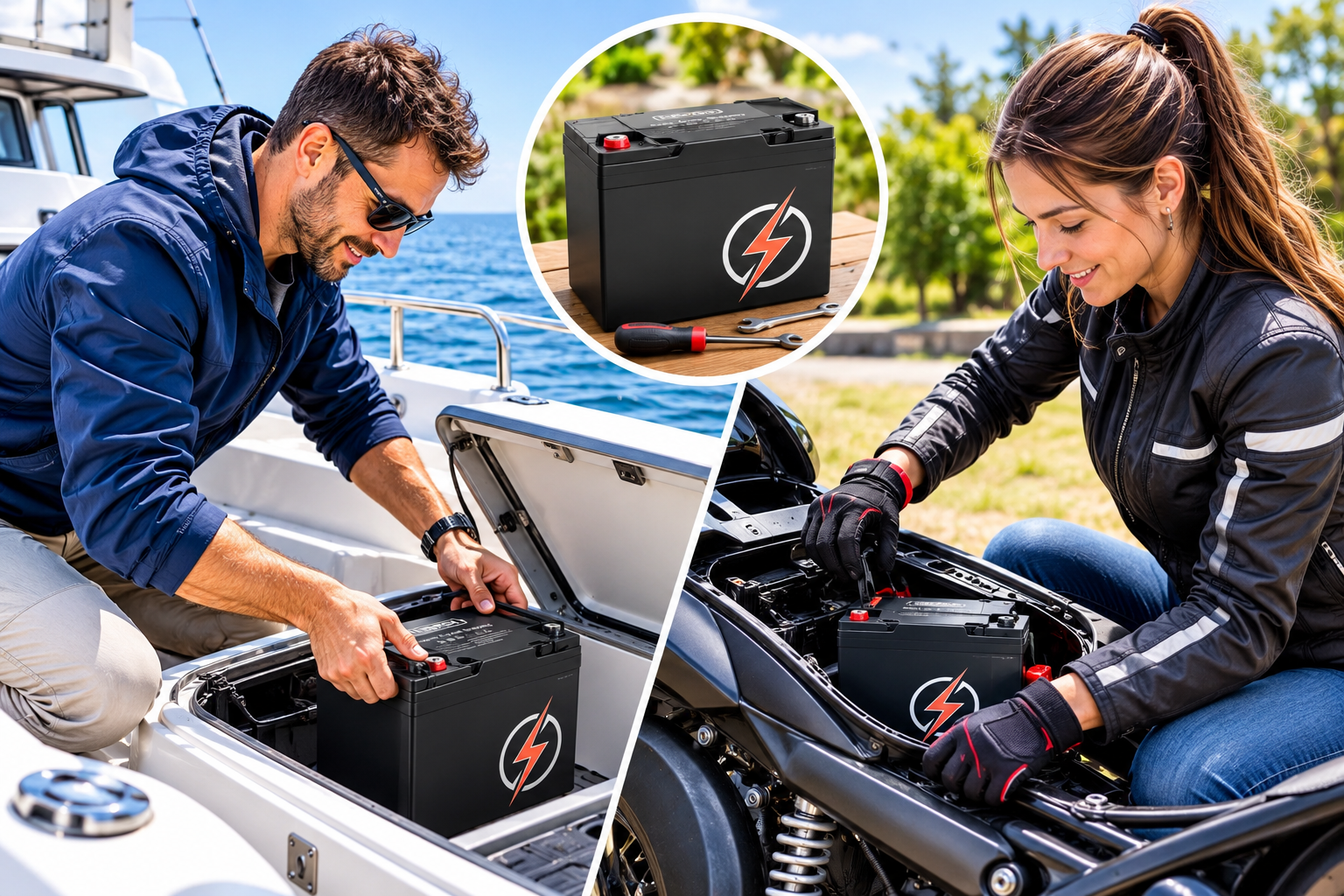
A reliable battery is essential for keeping electrical systems running smoothly, whether it is powering equipment on a boat or supporting the electrical needs of a motorcycle. Choosing the right battery involves understanding how much energy is required, how frequently it will be used, and the conditions in which it must operate. A deep cycle marine battery is designed to deliver consistent power over an extended period, making it particularly useful for marine equipment that needs electricity even when the engine is not running.
However, not every battery is suitable for every application. Boats and motorcycles have different electrical requirements, and selecting an unsuitable battery can lead to poor performance, charging problems, or premature replacement. Factors such as voltage, amp-hour capacity, battery chemistry, discharge limits, and durability should all be considered before making a decision. Understanding these specifications also makes regular maintenance easier and helps users get more value from their investment.
Understanding Deep Cycle Batteries
Deep cycle batteries are designed to provide a steady supply of electricity over longer periods rather than delivering only a short burst of power. This makes them different from conventional starting batteries, which are primarily designed to provide the high current needed to start an engine.
In marine applications, deep cycle batteries commonly power navigation equipment, fish finders, lighting, radios, water pumps, refrigerators, and trolling motors. These devices may continue operating for several hours while the boat’s engine is switched off.
Motorcycles have somewhat different requirements. Most standard motorcycles use starting batteries that provide sufficient current to turn over the engine. However, touring motorcycles, custom builds, and certain specialized applications may require additional electrical capacity for accessories such as GPS devices, auxiliary lighting, heated grips, and communication systems.
It is important to understand this distinction before choosing a battery. A conventional deep cycle battery is not automatically a suitable replacement for a motorcycle starting battery. Always check the motorcycle manufacturer’s voltage, starting-current, size, and battery-chemistry requirements.
Important Factors to Consider When Choosing a Battery
Selecting the right battery requires comparing several specifications rather than focusing only on price or physical appearance.
1. Check the Required Voltage
Voltage determines whether a battery is compatible with the electrical system it will power.
Most motorcycles use 12V electrical systems, while marine applications may use 12V, 24V, or 36V configurations depending on the vessel and its equipment.
Before selecting a replacement, check the manufacturer’s recommendations and the voltage requirements of connected devices.
For boats using multiple batteries, it is also important to understand battery connections:
- Series connection: Increases the overall voltage while maintaining the same amp-hour capacity.
- Parallel connection: Maintains the voltage while increasing the total amp-hour capacity.
For example, connecting two compatible 12V batteries in series produces a 24V system. Connecting them in parallel maintains 12V while increasing available capacity.
Correct connections are essential for reliable operation. Batteries should have compatible specifications, and the installation should follow the equipment manufacturer’s instructions.
2. Understand Amp-Hour Capacity
Battery capacity is generally measured in amp-hours (Ah). It indicates how much electrical current a battery can deliver over a specified period under particular testing conditions.
For example, a 100Ah battery can theoretically supply 5 amps for 20 hours under its rated testing conditions. Actual performance may differ depending on temperature, discharge rate, battery age, and chemistry.
Marine users should calculate the combined electricity requirements of their onboard equipment. Navigation systems, lighting, pumps, and other accessories can consume considerable energy during longer trips.
Motorcycle owners should consider the additional electrical load created by accessories while ensuring that the charging system can support them.
Choosing adequate capacity helps prevent excessive discharge and provides a useful reserve when electrical equipment needs to operate for extended periods.
3. Compare Different Battery Technologies
Battery chemistry has a significant influence on weight, maintenance requirements, charging efficiency, and overall performance.
Flooded lead-acid batteries
These batteries are widely used because of their relatively affordable cost and established technology. Some models require periodic electrolyte-level checks and distilled water top-ups. They also need suitable ventilation during charging.
AGM batteries
Absorbent Glass Mat batteries are sealed lead-acid batteries that use fiberglass separators to hold the electrolyte. They generally offer good vibration resistance and do not require routine electrolyte refilling.
Their construction makes them useful for applications where movement and limited maintenance access are concerns.
Gel batteries
Gel batteries contain an electrolyte in a gel-like form. They are sealed and can provide dependable performance when operated within their recommended charging limits.
However, they require compatible charging equipment because excessive charging voltage can damage their internal structure.
Lithium batteries
Lithium iron phosphate (LiFePO4) batteries are increasingly used in marine applications because of their relatively low weight, high usable capacity, and long cycle life.
Many models include a Battery Management System (BMS) to protect against overcharging, excessive discharge, and certain temperature-related conditions.
Before selecting a lithium battery, check its compatibility with the vessel’s charging system and the manufacturer’s recommended operating conditions.
Choosing the Right Battery for Marine Applications
Marine environments can be demanding because batteries are exposed to moisture, vibration, changing temperatures, and sometimes saltwater conditions. A suitable battery should provide dependable electricity while handling these environmental challenges.
Start by identifying which equipment needs battery power. A small recreational boat with basic lighting and navigation equipment may have very different requirements from a larger vessel operating refrigerators, pumps, fish finders, and trolling motors.
Consider these important factors:
- Power consumption: Calculate the combined electrical requirements of onboard equipment.
- Operating time: Estimate how many hours the equipment will operate between charging opportunities.
- Vibration resistance: Select a battery designed for the movement associated with marine use.
- Corrosion protection: Check the quality of terminals and external components.
- Physical dimensions: Ensure the battery fits securely inside the available compartment.
- Charging compatibility: Confirm that the alternator, shore charger, or solar charging system supports the selected battery.
A suitable marine deep cycle battery can provide consistent electricity for onboard accessories without relying entirely on the engine being switched on.
For boats with higher electrical demands, a dedicated house battery bank may be a practical solution. This separates the power used by onboard accessories from the battery reserved for engine starting.
It is also worth considering a dual-purpose battery when space is limited and both starting and accessory power are required. However, users should understand that dual-purpose batteries involve compromises and may not provide the same deep-cycle performance as a dedicated battery.
Selecting a Suitable Battery for Motorcycle Applications
Motorcycles have different electrical requirements from boats, so selecting a suitable battery requires paying attention to engine starting performance, physical dimensions, and compatibility with the charging system.
Most standard motorcycles use starting batteries rather than traditional deep-cycle batteries. However, certain touring motorcycles, custom builds, and specialized applications may benefit from additional battery capacity when supporting electrical accessories.
Consider the following factors before choosing a motorcycle battery.
Engine Starting Requirements
The battery must provide sufficient starting current to turn over the motorcycle’s engine. Cold Cranking Amps (CCA) indicate how effectively a battery can deliver current under cold-temperature conditions.
Motorcycles with larger engines or higher starting requirements may need a battery with a greater CCA rating. Always check the motorcycle manufacturer’s recommendations before selecting a replacement.
Physical Size and Terminal Position
Battery dimensions and terminal arrangements are important because motorcycles often have limited installation space.
Before purchasing, check:
- Battery length, width, and height.
- Positive and negative terminal positions.
- Mounting arrangements.
- Cable compatibility.
- Recommended battery specifications.
A battery with the correct voltage but unsuitable dimensions or terminal placement may not fit properly.
Additional Electrical Accessories
Modern motorcycles can operate several electrical accessories, including heated grips, auxiliary lights, GPS navigation, and communication devices.
These accessories increase electrical consumption, particularly during longer journeys. Calculate the additional power requirements and confirm that the motorcycle’s alternator can recharge the battery adequately.
Installing a larger-capacity battery alone will not solve an electrical system that cannot supply sufficient charging current.
Resistance to Vibration
Motorcycles experience continuous vibration, especially when traveling over uneven roads. A battery with suitable vibration resistance can help reduce the risk of internal damage and connection problems.
Sealed AGM batteries are often worth considering because of their construction and reduced maintenance requirements. Lithium alternatives may also be appropriate when the motorcycle’s charging system and manufacturer specifications support them.
How to Compare Battery Performance Before Making a Decision
Battery specifications can sometimes look similar even when actual performance differs considerably. Therefore, it is important to compare several characteristics rather than relying on a single advertised figure.
Here are some useful specifications to examine:
| Specification | Why it matters |
| Voltage | Determines compatibility with the electrical system |
| Amp-hour capacity | Indicates available energy storage |
| CCA | Helps evaluate engine-starting performance |
| Reserve capacity | Indicates how long a battery can supply a specified load |
| Cycle life | Provides an indication of repeated charging and discharging durability |
| Depth of discharge | Shows how much stored capacity can be used |
| Charging time | Helps estimate how quickly the battery can recover |
| Operating temperature | Indicates suitable environmental conditions |
For marine applications, amp-hour capacity and reserve capacity are particularly important when powering accessories for extended periods. For motorcycles, starting current, dimensions, and charging compatibility usually deserve greater attention.
Comparing these specifications helps identify a battery that meets actual requirements instead of paying for features that may never be needed.
Essential Maintenance Practices for Longer Battery Life
Even a well-designed battery needs proper care. Regular maintenance helps preserve its capacity, prevent unexpected failures, and reduce replacement expenses.
1. Inspect Battery Terminals Regularly
Loose connections and corrosion can interrupt electrical flow and reduce charging efficiency.
Check the positive and negative terminals for corrosion, dirt, and physical damage. Clean them using an appropriate battery-cleaning method and ensure that connections are properly secured.
Marine battery terminals deserve particular attention because moisture and salt exposure can accelerate corrosion.
2. Monitor Electrolyte Levels
Flooded lead-acid batteries require periodic electrolyte inspections. If the fluid level falls below the recommended mark, add distilled water according to the manufacturer’s instructions.
Never open sealed AGM, gel, or lithium batteries to inspect or refill their contents.
3. Avoid Excessive Discharging
Repeatedly allowing a battery to become completely discharged can shorten its service life.
Boat owners should monitor electricity consumption during longer trips, particularly when using navigation equipment, lighting, pumps, and other accessories.
Motorcycle owners should avoid leaving electrical accessories switched on while the engine is not running.
A battery monitor or voltage indicator can help identify low-charge conditions before they become serious problems.
4. Use a Compatible Battery Charger
Different battery technologies require different charging profiles. Using an unsuitable charger can cause overheating, overcharging, or reduced battery performance.
Smart chargers can be useful because they regulate charging stages and help prevent excessive charging. However, the charger must still support the specific battery chemistry.
For motorcycles, choose a charger with an appropriate output for the battery’s capacity. For boats, consider a charger designed to handle the complete battery bank.
5. Keep the Battery Clean and Dry
Dust, dirt, oil, and moisture can accumulate around battery terminals and surfaces.
Clean the battery exterior carefully and inspect its casing for cracks, swelling, leakage, or other visible damage.
Marine batteries should also be installed in suitable compartments that provide the required ventilation and protection against environmental exposure.
6. Prepare Batteries for Long-Term Storage
Motorcycles and boats are not always used throughout the year. Leaving a battery unused for several months without monitoring its charge can result in reduced capacity or permanent damage.
Before storing a battery:
- Charge it according to the manufacturer’s recommendations.
- Disconnect unnecessary electrical loads.
- Clean the battery and inspect its terminals.
- Keep it in a suitable, dry storage location.
- Use an appropriate maintenance charger when recommended.
- Check its charge periodically.
Lithium batteries may have different storage charge and temperature requirements, so always follow their specific instructions.
Common Signs That a Battery Needs Replacement
Recognizing early signs of battery deterioration can help prevent unexpected breakdowns.
Some common warning signs include:
Slow engine starting: The battery may no longer provide sufficient current to start the engine.
Reduced operating time: Marine equipment may stop working sooner than expected, even after a full charge.
Frequent charging: A battery that repeatedly loses its charge may have deteriorated cells or an underlying electrical problem.
Physical damage: Swelling, cracks, leakage, or excessive corrosion indicate that the battery needs attention.
Unstable voltage: Unusual voltage readings may indicate reduced capacity or problems with the charging system.
A professional battery load test can help determine whether the issue comes from the battery itself or another electrical component.
Safety Precautions When Handling Batteries
Battery maintenance should always be performed carefully because incorrect handling can cause electrical damage, chemical exposure, or fire hazards.
Switch off electrical equipment before disconnecting a battery. Wear appropriate gloves and eye protection when working with flooded lead-acid batteries, and avoid direct contact with battery acid.
Charging should take place in a suitably ventilated area, away from flames, sparks, and other ignition sources. Batteries must also be secured properly to prevent movement during transportation.
For lithium batteries, follow the manufacturer’s instructions regarding charging temperatures, physical damage, and battery management systems.
Never attempt to charge or continue using a visibly damaged, swollen, or leaking battery.
Exploring VEVOR Battery Solutions
Finding suitable battery options becomes easier when buyers understand their actual power requirements and compare available specifications.
VEVOR offers a range of equipment and battery-related solutions worth exploring for different power requirements. When evaluating its available options, consider the battery’s voltage, rated capacity, construction, charging compatibility, and intended application.
The most suitable option will depend on whether the primary requirement involves powering marine accessories, supporting an electrical system, or providing energy for other compatible equipment.
Before selecting a product, review its technical specifications and installation requirements. This helps ensure that the battery is appropriate for the intended application rather than relying solely on its advertised capacity.
Conclusion
Choosing and maintaining a suitable battery requires understanding the differences between marine and motorcycle electrical systems. While boats often need sustained energy delivery for onboard equipment, motorcycles generally prioritize reliable engine starting and compatibility with their charging systems.
Battery chemistry, voltage, amp-hour capacity, discharge limits, and physical durability all influence long-term performance. Regular inspections, suitable charging practices, clean terminals, and proper storage can also help prevent premature battery deterioration.
Whether powering onboard electronics or supporting compatible motorcycle accessories, selecting the right deep cycle marine batteries and maintaining them correctly can make a meaningful difference in reliability and operating life.
For additional options and product specifications, explore the VEVOR Deep Cycle Marine Battery collection to compare available solutions and identify products suited to different power requirements.