
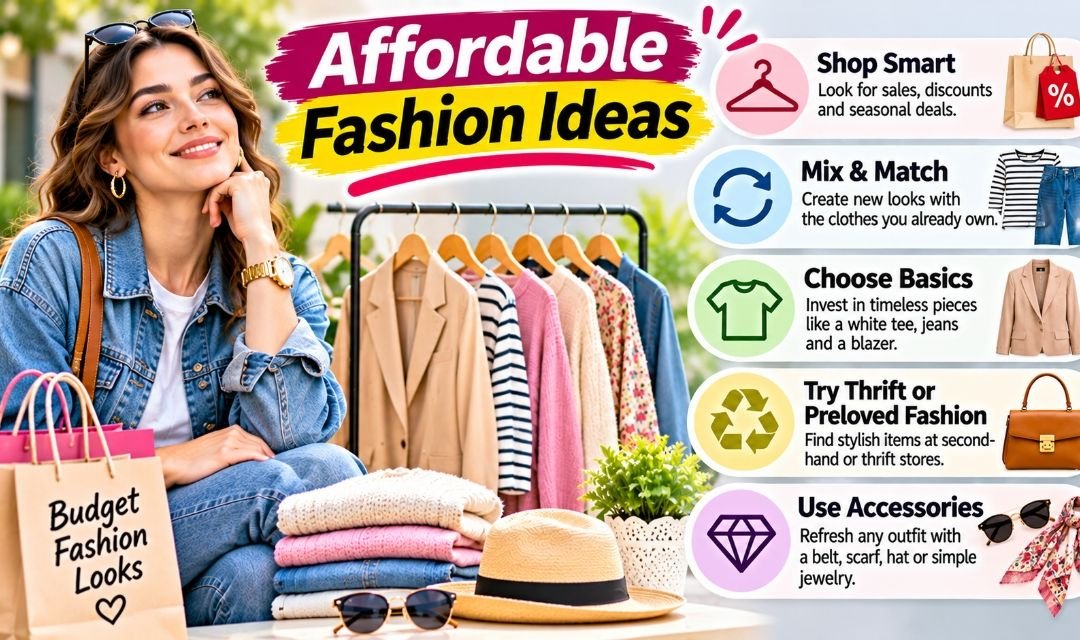
SEO Meta Title: Affordable Fashion Ideas: Look Stylish on a Budget
SEO Meta Description: Discover affordable fashion ideas for everyday outfits, budget-friendly wardrobe essentials, smart shopping, styling tips, and ways to look fashionable for less.
Affordable fashion ideas can help you create attractive, comfortable, and modern outfits without spending a large amount of money. Looking fashionable does not mean buying expensive designer clothes or replacing your wardrobe every season. With thoughtful shopping, creative outfit combinations, and a few useful wardrobe essentials, anyone can develop a stylish appearance on a reasonable budget. The world of fashion offers many ways to express personal style, and some of the most attractive outfits are built using simple clothing that people already own.
Have you ever looked at fashionable outfits online and wondered how people afford so many different clothes?
The good news is that you do not need to buy everything you see.
A plain shirt, comfortable jeans, a suitable jacket, and clean shoes can create a polished appearance.
The secret is learning how to combine clothing, choose versatile pieces, and avoid unnecessary purchases.
Affordable fashion is not about buying the cheapest item every time.
It is about finding clothing that offers good value, fits comfortably, and works with your lifestyle.
Quick Overview of Affordable Fashion
| Category | Details |
|---|---|
| Main topic | Affordable Fashion Ideas |
| Main goal | Look stylish while controlling clothing expenses |
| Suitable for | Men, women, students, and fashion beginners |
| Popular styles | Casual, minimalist, smart casual, streetwear |
| Essential clothing | T-shirts, jeans, trousers, shirts, jackets |
| Budget-friendly colors | Black, white, gray, beige, navy |
| Affordable accessories | Scarves, belts, watches, simple jewelry |
| Shopping options | Sales, thrift stores, secondhand platforms |
| Main styling technique | Mixing and matching existing clothes |
| Wardrobe strategy | Choose versatile pieces |
| Common mistake | Buying unnecessary items because of discounts |
| Best advice | Prioritize comfort, fit, quality, and usefulness |
Why Affordable Fashion Is Becoming More Important
Clothing is an everyday necessity, but fashion spending can increase quickly.
New trends appear regularly, encouraging people to purchase more clothes.
However, a stylish wardrobe does not need constant replacement.
Many outfits can be created by combining clothing in different ways.
For example, one pair of black trousers can work with a white shirt, casual T-shirt, sweater, or blazer.
This approach helps make better use of existing clothes.
It can also reduce unnecessary shopping.
1. Start With the Clothes You Already Own
The easiest way to save money on fashion is to review your existing wardrobe.
You may already own useful clothing that you have forgotten about.
Take out your shirts, jeans, trousers, jackets, and accessories.
Look for items that fit well and remain in good condition.
Then experiment with different combinations.
A shirt you normally wear with jeans might also work with tailored trousers.
You may discover several new outfits without purchasing anything.
2. Build a Budget-Friendly Capsule Wardrobe
A capsule wardrobe is a small collection of versatile clothing pieces.
The goal is to choose items that work together.
For example, three shirts, three trousers, and two jackets can create many different combinations.
You do not need to follow a strict number.
Choose clothing according to your lifestyle.
A capsule wardrobe can make getting dressed easier while reducing unnecessary purchases.
3. Invest in Basic T-Shirts
Plain T-shirts are useful for everyday fashion.
White, black, gray, and navy are easy to combine with other colors.
A plain T-shirt can be worn with jeans, trousers, shorts, or skirts.
Adding a jacket or blazer can change its appearance.
Look for comfortable fabrics and suitable stitching.
You do not need expensive branding for a simple T-shirt to look attractive.
4. Choose Versatile Jeans
Jeans are one of the most practical wardrobe pieces.
Dark-wash jeans can work for casual and smart-casual outfits.
Light denim creates a relaxed appearance.
Straight-leg and relaxed-fit styles are versatile options.
Choose a fit that feels comfortable and suits your preferences.
A reliable pair of jeans can be worn repeatedly with different tops.
5. Buy Neutral-Colored Clothing
Neutral colors make outfit coordination easier.
Black, white, beige, gray, brown, and navy can be combined in many ways.
For example, beige trousers can work with black, white, olive, or navy shirts.
This reduces the need to purchase separate clothing for every outfit.
However, neutral colors are not mandatory.
You can add brighter colors through accessories or selected clothing pieces.
6. Learn the Art of Mixing and Matching
Mixing and matching means creating different outfits using the same clothing.
For example, a white shirt can be worn with jeans for a casual look.
The same shirt can be paired with black trousers for a polished appearance.
Adding a cardigan creates another combination.
This simple technique helps increase the usefulness of your wardrobe.
7. Shop During Seasonal Sales
Seasonal sales can provide opportunities to purchase clothing at lower prices.
However, discounts should not encourage unnecessary spending.
Before shopping, create a list of items you need.
Compare prices and check return policies.
A discounted item is only a good purchase if you will actually use it.
8. Explore Thrift Stores
Thrift stores can offer affordable clothing.
You may find jackets, shirts, jeans, and accessories at lower prices than new retail items.
However, quality varies.
Inspect garments for stains, damaged seams, missing buttons, and broken zippers.
Choose pieces that fit comfortably.
Wash or clean secondhand clothing appropriately before wearing it.
9. Try Secondhand Online Shopping
Online resale platforms can provide access to used clothing.
Some sellers offer garments that have been worn only a few times.
Check photographs, measurements, descriptions, and seller policies.
Be cautious about counterfeit products and misleading listings.
Choose platforms with reasonable buyer protection when possible.
10. Restyle Old Clothing
Old clothing can sometimes be styled differently.
For example, a long shirt may work as a lightweight outer layer.
A sweater can be paired with different trousers.
A scarf can be used as a handbag accessory.
Before discarding clothing, consider whether it can be reused.
11. Learn Simple Clothing Alterations
Small alterations can improve the fit of inexpensive clothing.
For example, trousers may need hemming.
A shirt may require sleeve adjustments.
Loose buttons can often be repaired.
However, some alterations are expensive.
Compare the cost with the value of the garment.
12. Use Accessories to Refresh Outfits
Accessories can change an outfit without requiring new clothing.
A simple belt can make trousers look more polished.
A scarf can introduce color.
A watch or necklace can add personality.
You do not need many accessories.
Choose a few versatile pieces that suit your preferences.
13. Keep Shoes Clean and Well Maintained
Shoes influence the appearance of an outfit.
Clean sneakers can work with many casual combinations.
Loafers, flats, or boots may be suitable for other occasions.
Regular cleaning and proper storage can extend the useful life of footwear.
Choose shoes that provide comfort and support.
14. Create Monochrome Outfits
Monochrome outfits use one color or similar shades.
For example, black trousers with a black shirt create a simple coordinated look.
Cream and beige can also work well together.
You can use clothing you already own.
Different textures can make the outfit more interesting.
15. Try Minimalist Fashion
Minimalist fashion focuses on simple designs and versatile clothing.
It often includes neutral colors and clean silhouettes.
This approach can be budget-friendly because many pieces work together.
However, minimalist fashion is not the only affordable option.
Colorful and expressive wardrobes can also be built thoughtfully.
16. Choose Affordable Outerwear Carefully
Jackets and coats can be among the more expensive wardrobe items.
Choose outerwear according to your climate.
A lightweight jacket may be more useful than a heavy coat in warm regions.
Neutral colors can provide more outfit combinations.
Check fabric quality, zippers, and stitching before purchasing.
17. Create Smart-Casual Outfits With Basics
Smart-casual fashion combines relaxed and polished clothing.
For example, a plain shirt with tailored trousers can create a smart appearance.
A blazer with jeans is another option.
You may already own the necessary pieces.
This approach can be useful for dinners, meetings, and some workplaces.
18. Use Layering to Create New Looks
Layering involves wearing several garments together.
A T-shirt under an open shirt creates a relaxed outfit.
A sweater beneath a jacket works for cooler weather.
A cardigan can change the appearance of a simple dress.
Layering allows you to reuse clothing in different ways.
19. Avoid Buying Clothes Only Because They Are Trending
Fashion trends change frequently.
An item that is popular today may not suit your lifestyle.
Before buying, consider whether it matches your existing wardrobe.
Ask yourself how often you are likely to wear it.
If you cannot imagine several practical outfits, the purchase may not be worthwhile.
20. Compare Quality Instead of Brand Names
Expensive brands do not automatically guarantee better quality.
Look at fabric, stitching, seams, and garment construction.
Check washing instructions.
Consider whether the item feels comfortable.
A well-made affordable garment can provide good value.
21. Organize Your Wardrobe
An organized wardrobe helps you see what you own.
Arrange clothing by category, color, or season.
Keep frequently worn items accessible.
You may discover duplicate clothing or forgotten accessories.
This can help prevent unnecessary shopping.
22. Create a Clothing Shopping List
Before shopping, identify what your wardrobe actually needs.
For example, you may need comfortable shoes or a replacement pair of trousers.
Write these items down.
Set a spending limit.
Avoid adding unnecessary products simply because they look attractive.
23. Try Clothing Swaps
Clothing swaps allow people to exchange garments they no longer use.
Friends or family members may have clothing that fits your preferences.
However, make sure garments are clean and in good condition.
Clothing swaps can provide variety without requiring new purchases.
24. Repair Instead of Replace
Minor clothing damage does not always require replacement.
Loose buttons can be sewn back on.
Small tears may be repaired.
Some zippers can be replaced.
Repairing useful garments can help extend their life.
25. Choose Clothing for Multiple Occasions
Versatile clothing offers greater value.
For example, a neutral shirt can be worn casually or with tailored trousers.
A simple dress can be styled with different accessories.
A blazer can work for meetings and social gatherings.
Choose pieces that fit several parts of your lifestyle.
26. Build Outfits Around One Statement Piece
A statement piece is an item that attracts attention.
It might be a colorful jacket, patterned shirt, or interesting handbag.
You can combine it with simple clothing.
For example, a bright jacket can be worn with black trousers and a plain shirt.
This creates an expressive outfit without purchasing many new items.
27. Follow Fashion Inspiration Without Copying Everything
Fashion magazines and social media can provide outfit ideas.
However, you do not need to buy the exact clothing shown.
Instead, identify the colors, shapes, or combinations you like.
Then recreate the general idea using your existing wardrobe.
This makes fashion inspiration more affordable.
28. Learn Basic Clothing Care
Proper care can help clothing last longer.
Follow washing instructions.
Avoid unnecessary high heat.
Store delicate garments carefully.
Treat stains appropriately.
Different fabrics require different care methods.
Maintaining clothing can reduce replacement costs.
29. Set a Monthly Fashion Budget
A clothing budget helps you control spending.
The amount depends on your financial situation.
You may choose to save for a necessary item rather than shop every month.
Track purchases to understand where your money goes.
The goal is to make fashion spending intentional.
30. Develop Your Personal Style
Affordable fashion becomes easier when you understand your preferences.
You may enjoy minimalist clothing, colorful outfits, casual streetwear, or classic tailoring.
There is no single correct style.
Choose clothing that reflects your personality and supports your daily life.
Personal style matters more than owning the newest trends.
Affordable Wardrobe Essentials
| Clothing item | Why it is useful | Outfit combinations |
|---|---|---|
| White T-shirt | Versatile basic | Jeans, trousers, skirts |
| Black T-shirt | Easy coordination | Casual and layered outfits |
| Dark jeans | Practical | Shirts, sweaters, jackets |
| Neutral trousers | Suitable for several occasions | Casual and smart casual |
| White shirt | Classic piece | Jeans, tailored trousers |
| Lightweight jacket | Useful layering | Everyday outfits |
| Sweater | Comfortable in cooler weather | Jeans, trousers |
| Sneakers | Everyday footwear | Casual clothing |
| Smart-casual shoes | More polished appearance | Office and social events |
| Simple belt | Practical accessory | Jeans and trousers |
| Everyday bag | Carries essentials | Work, school, shopping |
Affordable Fashion Color Combinations
Black + Cream
Navy + Beige
Olive + White
Brown + Light Blue
Burgundy + Gray
Charcoal + Camel
These color combinations can help beginners create coordinated outfits using versatile clothing.
Affordable Outfit Ideas for Everyday Wear
| Occasion | Budget-friendly outfit |
|---|---|
| Casual outing | Plain T-shirt, jeans, sneakers |
| Office | Neutral shirt, tailored trousers, loafers |
| College | Relaxed jeans, casual shirt, comfortable shoes |
| Dinner | Dark trousers, simple top, smart shoes |
| Weekend | Oversized shirt, relaxed trousers, sneakers |
| Shopping | Comfortable jeans, T-shirt, practical bag |
| Family gathering | Coordinated shirt or dress with accessories |
| Cooler weather | Sweater, jeans, lightweight jacket |
How to Create More Outfits With Fewer Clothes
A small wardrobe can provide many combinations.
For example, consider these items:
-
Three shirts
-
Two T-shirts
-
Three pairs of trousers
-
One jacket
-
Two pairs of shoes
These pieces can create several different outfits.
A white shirt may work with black trousers, jeans, or beige chinos.
A jacket can be added to multiple combinations.
Different shoes can change the overall appearance.
The key is choosing items that work together.
Affordable Fashion Shopping Checklist
Before purchasing clothing, ask yourself:
Smart shopping checklist
0 of 7
Reset checklist
This checklist can help you make thoughtful shopping decisions.
Common Affordable Fashion Mistakes
Some shopping habits can make fashion more expensive than necessary.
Common mistakes include:
-
Buying clothing only because it is discounted
-
Choosing poor-quality items that wear out quickly
-
Ignoring clothing fit
-
Purchasing too many similar pieces
-
Following every fashion trend
-
Forgetting clothing care instructions
-
Buying uncomfortable shoes
-
Ignoring existing wardrobe items
-
Shopping without a spending limit
-
Assuming expensive brands always look better
Avoiding these habits can help you build a more practical wardrobe.
How to Make Cheap Clothes Look More Stylish
Affordable clothing can look polished with thoughtful styling.
Start with proper fit.
Choose clean, well-maintained garments.
Pay attention to color coordination.
Use simple accessories.
Consider minor alterations when practical.
For example, a plain white shirt with dark trousers and clean shoes can create an elegant appearance.
The goal is not to make clothing appear expensive.
It is to create outfits that feel comfortable, coordinated, and appropriate.
Affordable Fashion for Students
Students often need comfortable clothing suitable for long days.
Jeans, T-shirts, casual shirts, and sneakers are useful choices.
A small wardrobe of versatile pieces can reduce clothing expenses.
Secondhand shopping and clothing swaps may also help.
Choose items appropriate for school or college dress codes.
Affordable Fashion for Working Professionals
Professional clothing does not always require expensive suits.
Depending on workplace rules, tailored trousers, simple shirts, blazers, and suitable shoes may be enough.
Neutral colors can make outfit coordination easier.
Choose durable clothing that can be worn regularly.
Affordable Fashion for Special Occasions
Special events sometimes encourage expensive clothing purchases.
However, you may be able to restyle an existing outfit.
Different accessories, shoes, or outerwear can change its appearance.
Borrowing or renting formal clothing may also be practical for events that require something unusual.
Compare costs before deciding.
Frequently Asked Questions About Affordable Fashion
1. What are affordable fashion ideas?
Affordable fashion ideas are practical ways to create stylish outfits while controlling clothing expenses.
2. Can I look fashionable without expensive clothes?
Yes. Fit, comfort, coordination, and garment care are often more important than brand names.
3. What clothes should I buy on a budget?
Start with versatile basics such as plain shirts, jeans, trousers, and comfortable shoes.
4. Are thrift stores good for affordable fashion?
They can offer useful clothing at lower prices, although quality and availability vary.
5. How can I make simple outfits stylish?
Try coordinated colors, suitable shoes, and a few accessories.
6. What colors are easiest to combine?
Black, white, gray, beige, navy, and brown are versatile options.
7. What is a capsule wardrobe?
It is a small collection of clothing pieces designed to work together.
8. How can I save money on clothing?
Shop with a list, compare prices, repair garments, and avoid unnecessary purchases.
9. Should I buy clothes during sales?
Sales can be useful when the item is genuinely needed and offers good value.
10. Are expensive brands necessary for good fashion?
No. Affordable clothing can be stylish and practical.
11. How can I reuse old clothes?
Try new combinations, layering, alterations, or suitable repairs.
12. Are secondhand clothes fashionable?
Yes. Secondhand clothing can provide affordable and distinctive options.
13. What is minimalist fashion?
It focuses on simple designs and versatile wardrobe pieces.
14. How can students dress fashionably on a budget?
Choose comfortable basics, reuse clothing, and shop thoughtfully.
15. What shoes should I buy first?
Choose comfortable footwear suitable for your most common daily activities.
16. How can I make outfits look more polished?
Focus on fit, cleanliness, and coordinated clothing.
17. Should I follow fashion trends?
Only when they suit your preferences, lifestyle, and budget.
18. How can accessories improve outfits?
Accessories can introduce color, texture, and personality.
19. Is a small wardrobe enough?
Yes. Versatile pieces can create many different combinations.
20. How can I avoid unnecessary shopping?
Create a shopping list and consider how often you will wear each item.
21. What is cost per wear?
Cost per wear is the purchase price divided by the number of times an item is worn.
22. Can clothing alterations save money?
Sometimes. Minor alterations may improve useful garments, depending on their cost.
23. How can I create smart-casual outfits affordably?
Combine simple shirts, tailored trousers, jeans, and versatile jackets.
24. Is sustainable fashion always expensive?
No. Repairing, rewearing, and buying secondhand can be affordable approaches.
25. What is the best affordable fashion advice?
Buy thoughtfully, choose versatile clothing, and make the most of what you already own.
Final Thoughts
Affordable fashion ideas show that looking stylish does not require a large budget.
Simple clothing, thoughtful combinations, and practical shopping habits can create many attractive outfits.
Start by reviewing your existing wardrobe.
Choose versatile pieces that fit comfortably and suit your lifestyle.
Experiment with colors, accessories, and layering.
Consider secondhand shopping, clothing repairs, and seasonal discounts when appropriate.
Most importantly, avoid feeling pressured to purchase every new fashion trend.
A wardrobe should support your everyday life rather than create unnecessary financial stress.
Whether you prefer casual outfits, minimalist clothing, streetwear, or smart-casual fashion, affordable styling offers plenty of possibilities.
For more budget-friendly fashion ideas, outfit inspiration, personal style advice, and everyday lifestyle guides, visit Picanto Magazine.