
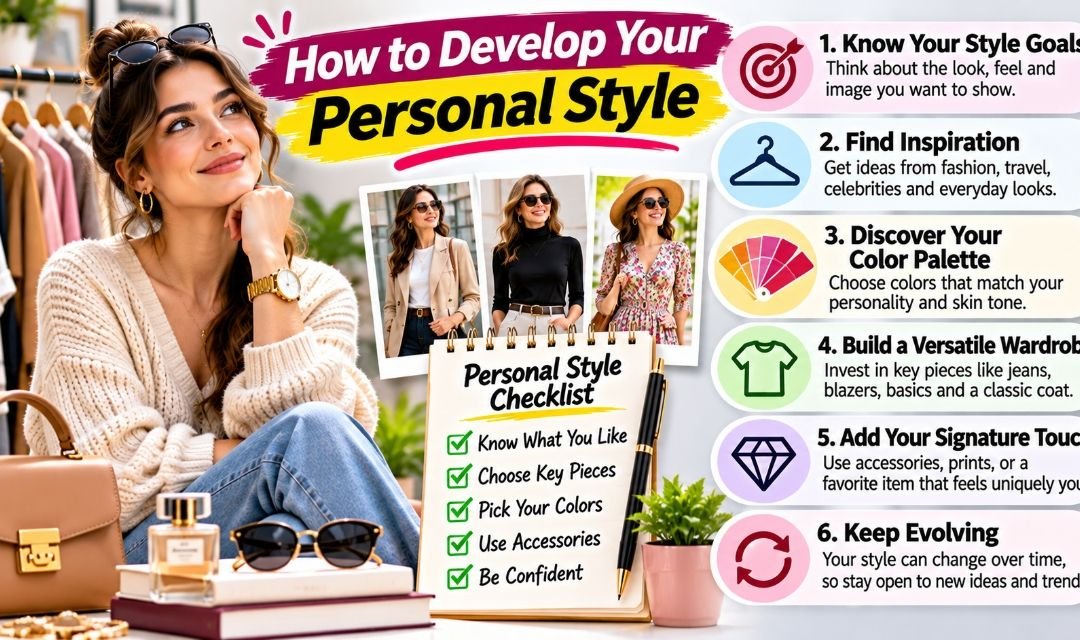
How to develop your personal style is one of the most useful things to learn when you want to feel comfortable, confident, and happy with your clothing choices. Personal style is not about wearing expensive brands, copying celebrities, or following every new trend. It is about discovering the colors, outfits, fabrics, and clothing combinations that reflect your personality and daily life. The world of fashion offers endless inspiration, but developing your own style means choosing what works best for you.
Have you ever opened your wardrobe and felt that you had nothing to wear?
You may own many shirts, jeans, dresses, or jackets but still struggle to create outfits you enjoy.
This usually happens when clothing is purchased without a clear idea of how the pieces work together.
Developing personal style can make everyday dressing easier.
It can also help you avoid unnecessary shopping and build a wardrobe that feels more organized.
The good news is that personal style does not develop overnight.
It grows gradually as you experiment with different outfits and discover what you genuinely enjoy wearing.
Quick Overview of Personal Style
| Category | Details |
|---|---|
| Main topic | How to Develop Your Personal Style |
| Main purpose | Discover clothing that reflects your personality |
| Suitable for | Men, women, and fashion beginners |
| Starting point | Understanding your lifestyle and preferences |
| Important elements | Fit, colors, fabrics, comfort, accessories |
| Popular style categories | Casual, minimalist, classic, streetwear, elegant |
| Wardrobe foundation | Versatile everyday clothing |
| Budget approach | Reuse existing clothes and shop thoughtfully |
| Color selection | Choose shades you enjoy wearing |
| Fashion inspiration | Magazines, street style, personal observations |
| Common mistake | Copying trends without considering personal needs |
| Best advice | Experiment, refine, and remain authentic |
What Is Personal Style?
Personal style is the way someone expresses their preferences through clothing and accessories.
It includes the colors, silhouettes, fabrics, and outfit combinations they choose.
For example, one person may enjoy simple black trousers and white shirts.
Another may prefer colorful dresses, patterned jackets, or relaxed streetwear.
Both approaches can reflect strong personal style.
There is no universal formula.
Your clothing choices should support your daily activities while allowing you to express yourself.
Why Is Developing Personal Style Important?
Developing personal style can make clothing decisions easier.
When you understand what you enjoy wearing, shopping becomes more focused.
You may also find it easier to combine items already in your wardrobe.
Personal style can help reduce unnecessary purchases.
However, its purpose is not to impress everyone.
It is to create clothing choices that feel comfortable and appropriate for your life.
1. Understand Your Lifestyle First
Your lifestyle should influence your wardrobe.
Someone who works in an office may need tailored trousers, shirts, and smart shoes.
A student may prefer jeans, sneakers, and comfortable casual clothing.
Someone who works outdoors may need durable fabrics and practical footwear.
Think about where you spend most of your time.
Your wardrobe should support those activities.
2. Identify the Clothes You Already Love
Start by examining your existing wardrobe.
Which clothes do you wear most often?
Which outfits make you feel comfortable?
Notice their colors, fabrics, and shapes.
You may discover that you naturally prefer relaxed shirts or neutral trousers.
These patterns can provide clues about your personal style.
3. Discover Your Favorite Fashion Styles
Fashion includes many different approaches.
Some common examples are:
-
Classic fashion
-
Minimalist fashion
-
Casual style
-
Smart-casual fashion
-
Streetwear
-
Sporty fashion
-
Vintage-inspired fashion
-
Elegant fashion
-
Bohemian style
-
Modest fashion
You do not need to choose only one.
Many people combine elements from several styles.
4. Create a Fashion Inspiration Collection
Collect outfit ideas that appeal to you.
You can use fashion magazines, photographs, or saved images.
Look for clothing combinations rather than expensive brand names.
For example, you might notice that you repeatedly like outfits featuring beige trousers and white shirts.
This suggests a preference for simple, neutral clothing.
Try to identify recurring patterns.
5. Understand Your Preferred Clothing Fit
Fit is an important part of personal style.
Some people prefer tailored clothing.
Others enjoy oversized shirts, loose trousers, or relaxed dresses.
Neither approach is automatically better.
Choose garments that allow comfortable movement.
Experiment with different cuts to discover what feels right.
6. Learn Which Colors You Enjoy Wearing
Color can influence the appearance of an outfit.
However, there are no strict rules about which colors someone must wear.
Begin with shades you already enjoy.
Neutral colors such as black, white, beige, gray, and navy are easy to combine.
You can then introduce brighter colors.
For example, burgundy, olive green, or blue may add personality to simple outfits.
7. Create Your Personal Color Palette
A personal color palette is a small group of colors that work well together.
For example, you might choose black, cream, olive, and brown.
These colors can appear throughout your wardrobe.
A consistent palette can make outfit coordination easier.
However, you should not feel restricted.
Your color preferences may change over time.
8. Understand Your Favorite Fabrics
Different fabrics create different experiences.
Cotton is commonly used for comfortable everyday clothing.
Linen can be useful in warm weather.
Wool and knit fabrics may provide warmth during cooler seasons.
Denim is popular for casual clothing.
Choose materials according to comfort, climate, and maintenance needs.
9. Build a Wardrobe Around Essentials
Wardrobe essentials are versatile pieces you can wear regularly.
They may include plain shirts, comfortable jeans, trousers, jackets, and suitable shoes.
However, essentials differ from person to person.
Someone who rarely attends formal events may not need several suits.
Someone living in a warm climate may not need heavy winter coats.
Choose essentials that match your real lifestyle.
10. Understand the Capsule Wardrobe Idea
A capsule wardrobe is a small collection of clothing designed to work together.
It usually focuses on versatile pieces.
For example, several shirts may coordinate with a few trousers and jackets.
This approach can reduce outfit planning time.
However, a capsule wardrobe is optional.
You can enjoy colorful or varied clothing while still developing a clear personal style.
11. Learn Basic Outfit Coordination
Outfit coordination means combining clothing pieces in a way you enjoy.
Beginners can start with simple combinations.
For example, a plain shirt with dark jeans creates a casual look.
A blazer with tailored trousers creates a more polished appearance.
A relaxed sweater with wide-leg trousers offers comfort.
Practice creating outfits with clothes you already own.
12. Balance Different Clothing Shapes
Clothing shapes can change the overall appearance of an outfit.
For example, wide-leg trousers can be paired with a fitted shirt.
An oversized jacket may work well with straight-leg jeans.
However, these are styling ideas rather than strict rules.
Loose clothing can also be combined with other relaxed pieces.
Experiment until you find proportions you like.
13. Choose Shoes That Match Your Lifestyle
Shoes are an important part of everyday style.
Sneakers are useful for casual outfits.
Loafers and flats can work for smart-casual clothing.
Boots may be practical in cooler weather.
Formal shoes are useful for certain events.
Choose footwear that provides comfort and suits your activities.
14. Use Accessories to Express Personality
Accessories can make simple outfits feel more personal.
Examples include watches, belts, scarves, handbags, sunglasses, and jewelry.
A plain outfit can look different with a colorful scarf or statement necklace.
However, you do not need many accessories.
Start with a few pieces you genuinely enjoy.
15. Experiment With Layering
Layering involves wearing clothing pieces together.
For example, a T-shirt can be worn under an open shirt.
A sweater can be layered beneath a jacket.
A dress may be paired with a cardigan.
Layering can create visual interest while helping you adjust to different temperatures.
16. Try Different Outfit Combinations
Before purchasing new clothing, experiment with what you already own.
You may discover combinations you have never tried.
For example, a formal shirt may look attractive with casual jeans.
A blazer may work with sneakers.
A simple dress may look different with a denim jacket.
Experimenting can help you develop creativity.
17. Understand the Difference Between Style and Trends
Fashion trends describe clothing ideas that become popular during particular periods.
Personal style is more individual.
You may enjoy some trends while ignoring others.
For example, oversized clothing may be popular, but you might prefer tailored outfits.
That is completely acceptable.
Trends should provide inspiration rather than pressure.
18. Avoid Copying Every Celebrity Outfit
Celebrities often wear clothing selected for special events, photographs, or performances.
These outfits may not be practical for everyday life.
Instead of copying an entire look, identify one element you enjoy.
It could be a color combination, jacket style, or accessory.
Adapt the idea using clothing that suits your needs.
19. Learn to Shop With a Purpose
Shopping becomes easier when you know what your wardrobe needs.
Before buying an item, ask yourself whether it matches clothing you already own.
Consider its comfort, quality, and likely frequency of use.
Avoid buying something simply because it is discounted.
A low price does not make an unnecessary purchase useful.
20. Focus on Clothing Quality
Quality does not always mean expensive designer clothing.
Look at stitching, fabric, buttons, and construction.
Check whether the garment feels comfortable.
Read care instructions.
A well-made item that you wear regularly may provide better value than several poorly constructed pieces.
21. Try Secondhand and Vintage Clothing
Secondhand shopping can help you discover unusual pieces.
Vintage clothing may provide interesting colors, patterns, and silhouettes.
It can also be more affordable than buying new clothing.
However, inspect garments carefully.
Check for damage, stains, missing buttons, and worn fabric.
22. Learn Basic Clothing Alterations
Small alterations can improve how clothing fits.
For example, trousers may need hemming.
A jacket may require sleeve adjustments.
A dress may need minor changes.
However, not every garment can be altered easily.
Consider the cost and practicality before purchasing something that requires extensive changes.
23. Organize Your Wardrobe
An organized wardrobe makes it easier to understand what you own.
Separate clothing by category or season.
Keep frequently worn items accessible.
You can also organize garments by color.
This may help you identify missing essentials and avoid buying duplicates.
24. Create Reliable Everyday Outfits
A reliable outfit is a combination you know works for you.
For example, you may enjoy wearing dark jeans, a plain shirt, and sneakers.
Another favorite might be tailored trousers with a knit top.
Keep several dependable combinations in mind.
This can save time on busy mornings.
25. Dress for Different Occasions
Personal style should be flexible.
You may need casual clothing for everyday activities.
Workplaces may require professional outfits.
Special occasions may involve formal clothing.
You can maintain your preferred colors and silhouettes while adapting to different dress codes.
26. Consider Your Local Climate
Weather affects clothing choices.
In warm climates, breathable fabrics and lightweight layers may be practical.
In colder areas, sweaters, coats, and boots become more important.
Rainy conditions may require water-resistant outerwear.
Your personal style should work with your environment.
27. Avoid Uncomfortable Fashion Choices
Clothing should support everyday movement.
An outfit that looks attractive but feels uncomfortable may not be practical.
Choose shoes that fit properly.
Avoid garments that restrict movement unnecessarily.
Comfort is an important part of sustainable personal style.
28. Take Outfit Photographs
Taking photographs of your outfits can help you notice patterns.
You may discover which combinations you enjoy most.
Photographs can also make it easier to remember successful outfits.
However, you do not need to share them online.
They can remain a private styling reference.
29. Allow Your Style to Change
Personal style is not permanent.
Preferences can change with age, work, lifestyle, and experience.
You may enjoy colorful streetwear one year and prefer minimalist clothing later.
This is normal.
Your wardrobe can evolve gradually without requiring a complete replacement.
30. Build Confidence Through Practice
Developing personal style takes time.
You may try outfits that do not feel right.
That is part of learning.
Focus on clothing that makes you comfortable.
You do not need approval from everyone.
Confidence often grows when your clothing choices feel natural and practical.
Popular Personal Style Categories
| Style | Main characteristics | Common clothing |
|---|---|---|
| Classic | Timeless, polished | Shirts, blazers, tailored trousers |
| Minimalist | Simple, clean | Neutral basics, plain clothing |
| Casual | Comfortable, relaxed | Jeans, T-shirts, sneakers |
| Smart casual | Polished but relaxed | Blazers, chinos, knitwear |
| Streetwear | Expressive, relaxed | Hoodies, loose trousers, sneakers |
| Sporty | Active, practical | Joggers, athletic tops |
| Vintage | Historical inspiration | Retro jackets, classic denim |
| Elegant | Refined, dressy | Dresses, tailored pieces |
| Bohemian | Relaxed, artistic | Flowing fabrics, patterns |
| Modest | Coverage-focused styling | Long dresses, loose layers |
These categories can overlap.
You can combine different elements to create a unique personal style.
How to Build a Personal Style Wardrobe on a Budget
Developing style does not require a large shopping budget.
Start by reviewing your existing clothing.
Identify pieces you already enjoy.
Then create a short list of items that would improve your outfit combinations.
For example, a neutral jacket may work with several shirts and trousers.
A versatile pair of shoes may also be useful.
Shopping secondhand, waiting for sales, and repairing existing clothing can help reduce costs.
The goal is to purchase intentionally rather than frequently.
A Seven-Day Personal Style Experiment
Try wearing different outfit combinations for one week.
| Day | Style experiment | What to notice |
|---|---|---|
| Monday | Simple neutral outfit | Comfort and color preference |
| Tuesday | Smart-casual combination | How polished clothing feels |
| Wednesday | Relaxed casual outfit | Preferred fit |
| Thursday | Monochrome outfit | Color coordination |
| Friday | Outfit with statement accessory | Accessory preferences |
| Saturday | Vintage-inspired combination | Interest in unusual pieces |
| Sunday | Favorite outfit of the week | What felt most natural |
At the end of the week, review which outfits you enjoyed.
This can help identify your strongest preferences.
Personal Style Self-Discovery Quiz
Discover your starting style direction
1. Which outfit feels most like you?
2. What matters most when shopping?
3. Which accessories do you prefer?
Common Mistakes When Developing Personal Style
Some habits can make finding your style more difficult.
Common examples include:
-
Buying clothing only because it is trending
-
Copying entire celebrity outfits
-
Ignoring comfort
-
Choosing the wrong size
-
Purchasing clothes that do not match existing items
-
Assuming expensive brands are necessary
-
Avoiding experimentation
-
Keeping clothing you never wear
-
Ignoring climate and lifestyle
-
Expecting personal style to develop immediately
Personal style becomes clearer through experience.
How to Know When You Have Found Your Style
You may notice several changes.
Getting dressed becomes easier.
You understand which clothing fits and colors you prefer.
Shopping decisions become more focused.
You also begin creating outfits without needing constant inspiration.
However, finding your style does not mean you must wear the same clothing forever.
Personal style can continue evolving.
Frequently Asked Questions About Personal Style
1. What is personal style?
Personal style is the way you express your preferences through clothing and accessories.
2. How can I develop my personal style?
Start by understanding your lifestyle, identifying favorite outfits, and experimenting with clothing combinations.
3. How long does it take to find personal style?
There is no fixed timeline. Style develops gradually through experience.
4. Do I need expensive clothing?
No. Affordable clothing can support a strong personal style.
5. What are the main fashion style categories?
Common categories include classic, casual, minimalist, streetwear, elegant, and vintage-inspired fashion.
6. Can I combine different fashion styles?
Yes. Mixing styles can help create a unique appearance.
7. How do I discover my favorite colors?
Try different shades and notice which ones you enjoy wearing.
8. What is a capsule wardrobe?
It is a small collection of versatile clothing designed to coordinate easily.
9. Should I follow fashion trends?
Only when they suit your preferences and lifestyle.
10. How important is clothing fit?
Fit affects comfort and appearance, making it an important consideration.
11. Can accessories improve personal style?
Yes. Accessories can add personality to simple outfits.
12. What should beginners buy first?
Versatile shirts, trousers, comfortable shoes, and suitable outerwear are useful starting points.
13. How can I develop style on a budget?
Reuse existing clothes, shop secondhand, and purchase intentionally.
14. What is minimalist personal style?
It emphasizes simple clothing, clean silhouettes, and versatile colors.
15. What is classic personal style?
It focuses on timeless clothing and polished combinations.
16. What is streetwear style?
It commonly includes relaxed clothing, sneakers, hoodies, and expressive casual outfits.
17. Can personal style change with age?
Yes. Preferences often change with lifestyle and experience.
18. How can I find outfit inspiration?
Look at fashion magazines, street style, and clothing combinations you admire.
19. Should I copy celebrity fashion?
You can borrow ideas, but adapt them to your own needs.
20. How can I organize my wardrobe?
Arrange clothes by category, season, or color.
21. Are neutral colors necessary?
No. They are useful for coordination, but colorful wardrobes can also work well.
22. How can I make simple outfits interesting?
Try layering, accessories, textures, or different color combinations.
23. What if I like several fashion styles?
You can combine them. Personal style does not need to fit one category.
24. How can I feel more confident in my clothing?
Wear comfortable outfits that reflect your preferences and suit your activities.
25. What is the most important rule of personal style?
Choose clothing that feels authentic, comfortable, and practical for your life.
Final Thoughts
Learning how to develop your personal style is a gradual and enjoyable process.
It begins with understanding your lifestyle, clothing preferences, favorite colors, and everyday needs.
You do not need expensive designer brands or a wardrobe filled with the latest trends.
Instead, focus on versatile clothing that fits comfortably and works with your existing pieces.
Experiment with different outfits, accessories, fabrics, and colors.
Over time, you may discover patterns that make your personal style easier to recognize.
Remember that fashion should support your life rather than create unnecessary pressure.
Your preferences can change, and your wardrobe can evolve with them.
The most successful personal style is one that feels natural to you and makes everyday dressing simpler.
For more personal style advice, modern fashion trends, outfit inspiration, and everyday lifestyle guides, visit Picanto Magazine.