
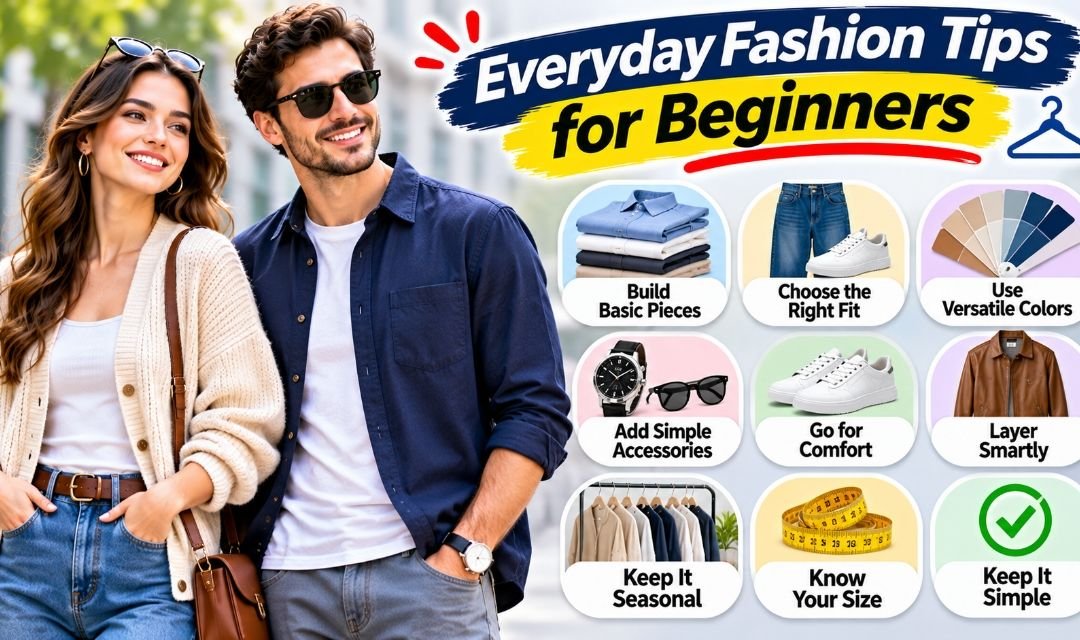
Everyday fashion tips for beginners can help anyone develop a personal style without spending too much money or following every new clothing trend. Learning how to choose comfortable outfits, combine colors, understand clothing sizes, and build a practical wardrobe makes getting dressed easier. The world of fashion may seem complicated at first, but good style often begins with simple choices. A clean shirt, comfortable trousers, suitable shoes, and a few thoughtful accessories can create an attractive everyday appearance.
Many people believe that looking fashionable requires expensive clothing.
However, this is not true.
Good fashion is often about wearing clothes that fit properly, feel comfortable, and work well together.
You do not need a wardrobe full of designer brands.
Instead, you can begin with a few basic clothing items and gradually discover what you enjoy wearing.
This guide explains practical fashion tips that beginners can use for work, school, shopping, family gatherings, and everyday activities.
Quick Overview of Everyday Fashion Tips
| Category | Details |
|---|---|
| Main topic | Everyday Fashion Tips for Beginners |
| Primary goal | Develop a simple and practical personal style |
| Suitable for | Men, women, and anyone learning fashion basics |
| Main focus | Comfort, fit, colors, and outfit coordination |
| Wardrobe essentials | T-shirts, shirts, jeans, trousers, jackets |
| Beginner-friendly colors | Black, white, gray, beige, navy |
| Popular everyday styles | Casual, smart casual, minimalist |
| Important accessories | Watches, belts, bags, simple jewelry |
| Footwear | Sneakers, loafers, flats, boots |
| Budget approach | Buy versatile clothing and reuse existing items |
| Common mistake | Following trends without considering personal needs |
| Best advice | Start simple and develop your own style |
Why Everyday Fashion Matters
Clothing is part of daily life.
People choose outfits for work, education, social events, and personal activities.
The right clothing can help someone feel comfortable and prepared for different situations.
However, fashion does not need to become stressful.
Learning a few basic styling principles can make everyday decisions easier.
Instead of wondering what to wear every morning, you can create several reliable outfit combinations.
1. Start With Simple Clothing
The easiest way to learn fashion is to begin with basic clothing.
Plain T-shirts, comfortable jeans, simple shirts, and neutral trousers are useful starting points.
These items can be combined in many ways.
For example, a white T-shirt with blue jeans creates a classic casual outfit.
Adding a jacket can make the same outfit suitable for cooler weather.
Simple clothing also makes color matching easier.
2. Understand Your Personal Style
Personal style is the way you choose clothing that reflects your preferences.
Some people enjoy relaxed outfits.
Others prefer elegant, sporty, minimalist, or formal clothing.
There is no single correct style.
Look at the clothes you already enjoy wearing.
Notice which colors, fabrics, and fits make you comfortable.
These preferences can help you develop your wardrobe.
3. Choose Clothes That Fit Properly
A comfortable fit is one of the most useful fashion principles.
Clothing does not need to be tight to look stylish.
Similarly, oversized clothing can look fashionable when it is intentionally styled.
The important thing is that the garment fits the way you want and allows comfortable movement.
Check the shoulders, waist, sleeves, and length when trying on clothes.
Different brands may use different sizing systems.
4. Learn Basic Color Matching
Color matching becomes easier with practice.
Beginners can start with neutral colors such as black, white, gray, beige, and navy.
These shades work well with many other colors.
For example, a navy shirt can be paired with beige trousers.
A white top can work with black jeans.
Once you feel comfortable with neutrals, introduce brighter colors.
5. Build a Small Wardrobe of Essentials
A practical wardrobe does not need hundreds of items.
Start with clothing that you can wear regularly.
Useful pieces may include plain shirts, jeans, trousers, a jacket, and comfortable shoes.
Choose items that match several other pieces.
This makes outfit planning easier and can reduce unnecessary purchases.
6. Understand Casual Fashion
Casual fashion focuses on comfort and everyday practicality.
Common examples include T-shirts, jeans, relaxed trousers, sneakers, and lightweight jackets.
Casual outfits are useful for shopping, meeting friends, or spending time outdoors.
However, casual does not mean careless.
Clean clothing and thoughtful combinations can create a polished appearance.
7. Learn Smart-Casual Dressing
Smart casual combines relaxed clothing with more polished pieces.
For example, jeans with a blazer can create a smart-casual outfit.
A simple blouse with tailored trousers is another option.
This style works for informal meetings, dinners, and some workplaces.
However, dress codes vary.
Choose clothing appropriate for the occasion.
8. Keep Your Shoes Clean
Shoes can affect the overall appearance of an outfit.
A simple pair of clean sneakers can make casual clothing look more coordinated.
For formal occasions, loafers, flats, or other suitable shoes may work better.
Comfort should remain important.
Avoid choosing footwear that causes pain simply because it is fashionable.
9. Use Accessories Carefully
Accessories can add personality to an outfit.
Examples include watches, belts, scarves, handbags, sunglasses, and jewelry.
However, beginners do not need many accessories.
Start with one or two pieces.
A simple watch or attractive belt may be enough to complete an outfit.
10. Understand Clothing Fabrics
Different fabrics have different characteristics.
Cotton is commonly used for everyday clothing.
Linen can be comfortable in warm weather.
Wool and certain knit fabrics are useful for cooler conditions.
Synthetic fabrics vary widely in texture, durability, and performance.
Read clothing care labels before purchasing.
Choose fabrics that suit your climate and daily activities.
11. Learn How to Layer Clothing
Layering involves wearing multiple garments together.
For example, a T-shirt can be worn under an open shirt or jacket.
A sweater can be layered under a coat.
Layering can add visual interest while helping you adjust to changing temperatures.
Start with lightweight pieces.
Avoid unnecessary layers in hot weather.
12. Try Monochrome Outfits
Monochrome styling uses one color or similar shades.
For example, black trousers with a black shirt create a simple monochrome look.
Cream and beige can also work well together.
Different textures can make the outfit more interesting.
Monochrome outfits are especially useful for beginners because they reduce complicated color decisions.
13. Balance Loose and Fitted Clothing
Outfit balance is a helpful styling idea.
For example, wide-leg trousers can be paired with a more fitted top.
An oversized shirt may work well with straight-leg jeans.
However, these are suggestions rather than strict rules.
Loose clothing can also be worn together.
Experiment with different proportions to find combinations you enjoy.
14. Choose Comfortable Everyday Jeans
Jeans are useful because they can be styled in many ways.
Straight-leg, relaxed, and fitted designs are common options.
Choose a style that feels comfortable.
Dark jeans can create a polished appearance.
Light denim often feels more casual.
The best pair is one that fits your preferences and daily needs.
15. Learn How to Style a White Shirt
A white shirt is a versatile wardrobe piece.
It can be worn with jeans, trousers, skirts, or shorts.
For a casual look, wear it open over a plain T-shirt.
For a smarter outfit, tuck it into tailored trousers.
The same shirt can create several different looks.
16. Understand the Importance of Outerwear
Jackets and coats can change an outfit.
A denim jacket creates a relaxed appearance.
A blazer adds structure.
A bomber jacket works well with casual clothing.
A long coat can provide warmth during colder weather.
Choose outerwear that suits your local climate.
17. Avoid Buying Every Fashion Trend
Fashion trends change frequently.
A popular clothing item may not suit your lifestyle or preferences.
Before purchasing something, consider whether you will wear it regularly.
Think about how it matches your existing wardrobe.
Buying fewer useful items may be better than collecting clothing you rarely use.
18. Learn to Dress for Different Occasions
Different situations may require different clothing.
For example, casual outfits are suitable for everyday errands.
Smart-casual clothing may work for dinners or informal meetings.
Formal events may require more polished outfits.
Understanding the occasion can make choosing clothes easier.
19. Choose Clothing for the Weather
Fashion should be practical.
In hot weather, lightweight and breathable fabrics may provide greater comfort.
In cold weather, layering and suitable outerwear become important.
Rainy conditions may require water-resistant shoes or jackets.
An attractive outfit should also work for the environment.
20. Keep Clothing Clean and Well Maintained
Clothing care is an important part of everyday style.
Follow washing instructions.
Remove stains when possible.
Store garments properly.
Iron or steam clothing when appropriate.
Well-maintained clothing can look polished even when it is inexpensive.
21. Experiment With Different Styles
Beginners should feel free to experiment.
Try combining clothing in new ways.
For example, wear a blazer with jeans instead of formal trousers.
Pair sneakers with a casual dress.
Experimenting can help you discover combinations that suit your personality.
22. Understand Minimalist Fashion
Minimalist fashion focuses on simple designs and versatile clothing.
It often uses neutral colors and clean silhouettes.
This approach can make outfit planning easier.
However, minimalism is not the only way to dress well.
Colorful and expressive styles are equally valid.
23. Create a Personal Color Palette
A personal color palette is a small collection of colors you enjoy wearing.
For example, you might choose navy, white, beige, and olive.
These colors can be combined in many ways.
Having a consistent palette may make shopping easier.
However, you can always introduce new colors.
24. Avoid Uncomfortable Clothing
Fashion should not require constant discomfort.
Clothes that restrict movement or shoes that cause pain may be impractical.
Choose garments that suit your daily activities.
Comfortable clothing can help you move naturally and enjoy your day.
25. Learn Basic Clothing Alterations
Sometimes a garment fits well in one area but not another.
Simple alterations can improve the fit.
For example, trousers may need hemming.
A shirt may need sleeve adjustments.
However, alteration costs vary.
Consider whether the improvement is worth the expense.
26. Shop With a Plan
Shopping without a plan can lead to unnecessary purchases.
Before buying new clothes, review your wardrobe.
Identify what you actually need.
Create a small shopping list.
Choose items that work with clothing you already own.
This approach can help control spending.
27. Try Secondhand Fashion
Secondhand shopping can provide affordable clothing.
It may also help extend the life of existing garments.
Look for items in good condition.
Check seams, zippers, buttons, and fabric quality.
Wash or clean purchased clothing appropriately before wearing.
28. Use Outfit Inspiration Wisely
Fashion magazines, social media, and street-style photographs can provide inspiration.
However, not every outfit needs to be copied exactly.
You can adapt ideas using clothing you already own.
For example, recreate a color combination without buying the same designer pieces.
29. Organize Your Wardrobe
An organized wardrobe makes outfit planning easier.
Keep frequently worn clothing accessible.
Separate seasonal items when practical.
You can also arrange clothes by category or color.
This helps you see what you own and avoid unnecessary duplicate purchases.
30. Develop Confidence in Your Personal Style
Confidence grows as you become more comfortable with your clothing choices.
You do not need to dress like everyone else.
Choose outfits that reflect your preferences.
Good style is not about meeting one universal standard.
It is about finding clothing that works for your life.
Everyday Fashion Essentials for Beginners
| Clothing item | Why it is useful | Styling idea |
|---|---|---|
| Plain T-shirt | Easy to combine | With jeans or trousers |
| White shirt | Versatile | Casual or smart casual |
| Dark jeans | Practical | With shirts or jackets |
| Neutral trousers | Easy coordination | With simple tops |
| Lightweight jacket | Useful for layering | Over T-shirts |
| Blazer | Adds structure | With jeans or trousers |
| Comfortable sneakers | Everyday footwear | With casual outfits |
| Smart-casual shoes | Suitable for polished outfits | With tailored clothing |
| Simple belt | Practical accessory | With jeans or trousers |
| Everyday bag | Carries essentials | Match to daily needs |
Beginner-Friendly Fashion Color Combinations
Cream + Navy
Black + Gray
Beige + Olive
White + Denim Blue
Brown + Cream
Burgundy + Charcoal
These combinations are useful starting points, but there are no strict rules about which colors you can wear together.
Seven-Day Everyday Outfit Plan
| Day | Outfit idea |
|---|---|
| Monday | Plain shirt, dark jeans, sneakers |
| Tuesday | White shirt, beige trousers, loafers |
| Wednesday | Casual T-shirt, relaxed trousers, jacket |
| Thursday | Monochrome outfit with simple accessories |
| Friday | Blazer, jeans, smart-casual shoes |
| Saturday | Comfortable casual clothing and sneakers |
| Sunday | Relaxed shirt, trousers, and practical footwear |
The outfits can be adjusted according to personal preferences, climate, and occasion.
How to Build a Wardrobe on a Small Budget
Building a wardrobe gradually is often more practical than buying many items at once.
Start by checking which clothes you already own.
Choose pieces that fit well and remain in good condition.
Then identify any gaps.
For example, you may need comfortable everyday shoes or a versatile jacket.
Prioritize items you will wear frequently.
Compare quality, fit, and care requirements before purchasing.
A small wardrobe with useful clothing can provide many outfit combinations.
Common Fashion Mistakes Beginners Should Avoid
Beginners sometimes make fashion decisions based only on trends.
However, personal comfort and practicality matter.
Common mistakes include:
-
Buying clothes without trying them on
-
Ignoring fabric quality and care instructions
-
Choosing uncomfortable shoes
-
Purchasing too many similar items
-
Following every trend
-
Ignoring the weather
-
Wearing clothing unsuitable for the occasion
-
Buying items that do not match existing clothes
-
Forgetting basic garment maintenance
-
Assuming expensive brands guarantee good style
Avoiding these habits can make everyday dressing easier.
How to Create More Outfits With Fewer Clothes
A useful wardrobe does not need to be large.
For example, three tops and three bottoms can create up to nine basic combinations before adding jackets or accessories.
However, not every combination will suit every occasion.
Choose pieces that coordinate well.
A white shirt, black T-shirt, and neutral sweater can work with jeans, chinos, and tailored trousers.
Adding different shoes or outerwear creates further possibilities.
Fashion Tips for School and College
Students often need clothing that is comfortable and practical.
Casual shirts, jeans, trousers, and sneakers are common choices where dress codes allow them.
Choose outfits suitable for walking and daily activities.
A backpack or practical bag may be more useful than a decorative accessory.
However, school and college clothing rules vary.
Fashion Tips for Office Beginners
Office clothing should reflect workplace expectations.
Some workplaces require formal clothing.
Others allow smart-casual outfits.
A simple shirt with tailored trousers is a useful starting point.
Adding a blazer can create a more professional appearance.
Choose comfortable footwear, especially if you spend long hours standing or walking.
Fashion Tips for Casual Outings
Casual outings allow more flexibility.
Jeans with a T-shirt and sneakers create a simple outfit.
A relaxed shirt with trousers is another option.
For cooler weather, add a jacket or cardigan.
Choose clothes that suit the activity.
Fashion Tips for Special Occasions
Special occasions may require more polished clothing.
However, expensive outfits are not always necessary.
A simple dress, well-fitting suit, or coordinated smart outfit can work beautifully.
Accessories can help create a more formal appearance.
Pay attention to the event’s dress code.
Everyday Fashion Checklist for Beginners
Before leaving home, consider these questions:
-
Are my clothes clean and comfortable?
-
Does the outfit suit the weather?
-
Is it appropriate for the occasion?
-
Do the colors work together in a way I like?
-
Are my shoes suitable for the activity?
-
Do I have everything I need?
-
Can I move comfortably?
-
Does the outfit reflect my personal style?
You do not need to answer every question perfectly.
The checklist is simply a way to make dressing easier.
Frequently Asked Questions About Everyday Fashion
1. What are the best everyday fashion tips for beginners?
Start with simple clothing, focus on comfortable fit, learn basic color matching, and develop your personal style.
2. How can beginners look stylish?
Choose coordinated clothing, suitable shoes, and a few thoughtful accessories.
3. Do I need expensive clothes to look fashionable?
No. Affordable clothing can look attractive when it fits well and is properly maintained.
4. What colors are easiest to match?
Black, white, gray, beige, and navy are useful starting points.
5. What clothes should beginners buy first?
Plain shirts, comfortable trousers, jeans, suitable shoes, and practical outerwear are good foundations.
6. What is casual fashion?
Casual fashion focuses on comfortable clothing for everyday activities.
7. What is smart-casual fashion?
It combines relaxed clothing with polished pieces.
8. Are oversized clothes fashionable?
Yes. Oversized clothing can be stylish when chosen intentionally.
9. How can I match colors easily?
Begin with neutral colors and gradually introduce brighter shades.
10. What is minimalist fashion?
It focuses on simple designs, versatile clothing, and clean silhouettes.
11. How many clothes do I need?
There is no fixed number. A small wardrobe of useful pieces can provide many combinations.
12. How can I dress well on a budget?
Reuse existing clothes, shop thoughtfully, and prioritize versatile items.
13. Are sneakers suitable for everyday fashion?
Yes. Comfortable sneakers work with many casual outfits.
14. How important are accessories?
Accessories can add personality, but they are not essential for every outfit.
15. Should I follow every fashion trend?
No. Choose trends that suit your lifestyle and preferences.
16. What is a capsule wardrobe?
It is a small collection of versatile clothing designed to work together.
17. How can I improve my clothing fit?
Try different sizes and cuts, or consider simple alterations.
18. How can I create a personal style?
Experiment with clothing, colors, and accessories you enjoy.
19. What should I wear for casual outings?
Comfortable jeans, shirts, trousers, and suitable shoes are common options.
20. How can I make simple outfits look better?
Pay attention to fit, garment care, and coordinated accessories.
21. Are secondhand clothes fashionable?
Yes. Secondhand clothing can provide affordable and unique style options.
22. How do I organize my wardrobe?
Arrange clothing by category, season, or color according to what works best for you.
23. Can I mix formal and casual clothing?
Yes. Combining pieces such as blazers and jeans is a common smart-casual approach.
24. What is the biggest fashion mistake for beginners?
Buying clothing without considering comfort, fit, and how it works with existing pieces.
25. What is the most important fashion rule?
Choose clothing that makes you feel comfortable and suits your personal needs.
Final Thoughts
Everyday fashion tips for beginners can make getting dressed simpler, more enjoyable, and more affordable.
Good style does not require expensive brands or a large wardrobe.
It begins with comfortable clothing, suitable fit, practical color combinations, and thoughtful outfit choices.
Beginners can start with basic wardrobe essentials and gradually experiment with different styles.
Learning how to combine shirts, trousers, jackets, shoes, and accessories can create many useful outfits.
However, fashion should never feel like a competition.
Personal preferences, lifestyle, climate, and comfort are more important than following every trend.
A simple outfit can look attractive when it is chosen with care.
The best approach is to build a wardrobe gradually and develop a style that feels natural to you.
For more everyday fashion advice, modern outfit ideas, beauty inspiration, and practical lifestyle guides, visit Picanto Magazine.