
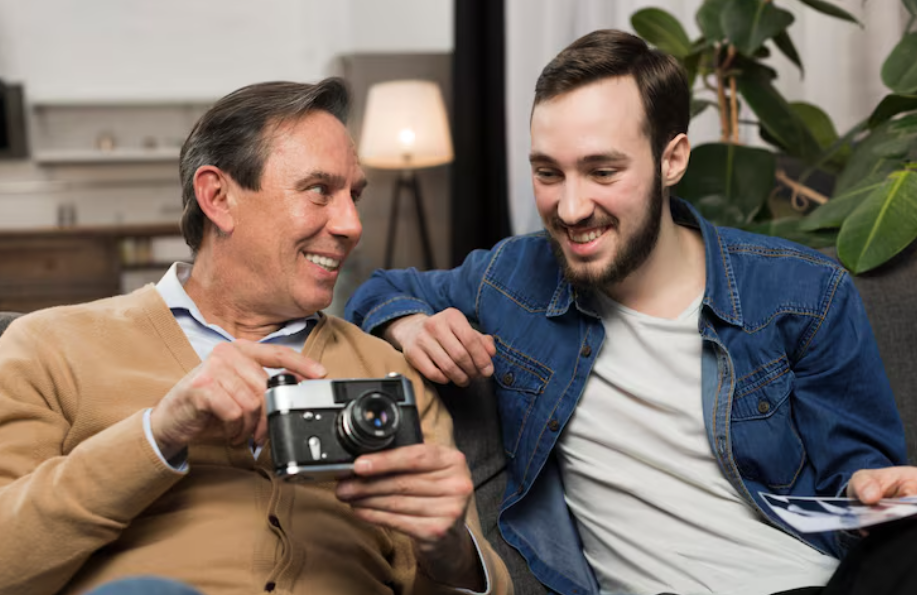
The best way to capture your grandparents’ stories is to sit down with old photos and let the pictures do the talking. Photos jog memories that a plain question like “tell me about your childhood” never will.
Handing someone a picture from 1962 does more than a hundred open-ended questions, because it gives their memory something to grab onto.
Before you dive in, it helps to have your photos in good shape. If your family’s pictures are faded, cracked, or stuck in old albums, consider professional photo scanning and restoration before your next visit.
Clear, restored images make it much easier for grandparents to recognize faces, places, and details, which means richer stories and fewer “I can’t quite tell what this is” moments.
Why Photos Work Better Than Questions
Straight-up questions often draw a blank. Ask “what was your wedding like?” and you might get a short answer.
But show a wedding photo, and suddenly your grandparent remembers the song playing, the neighbor who cried, the dress that didn’t fit right until the last minute, and the drive to the reception hall.
Photos work because they trigger specific, sensory memories instead of vague summaries. A picture pulls up details like:
- The smell of a specific meal being cooked in the background
- The name of a friend who’s been forgotten for years
- The weather on that exact day
- An inside joke tied to what someone is wearing
- A disagreement or funny mishap that happened just off camera
How to Set Up the Conversation
Getting good stories out of old photos takes a little planning. A rushed, distracted visit rarely gets you anything beyond surface-level answers.
- Pick the right place and time: Choose a quiet moment when your grandparent isn’t tired, rushed, or distracted by other family members. Afternoons often work better than evenings.
- Bring a small, curated stack: Don’t dump an entire album on the table at once. Select 10 to 15 photos that span different decades, events, and people. This keeps the conversation focused instead of overwhelming.
- Record the conversation: Use your phone to record audio or video, with permission. You’ll want to save the specific words and phrasing your grandparent uses, not just the general facts, since those details often get lost in retelling.
- Ask about the photo first, not the past in general: Instead of “tell me about your childhood,” ask “who is standing next to you here?” or “what were you doing right before this picture was taken?” Specific questions get specific answers.
- Let silence sit: When your grandparent pauses to think, resist the desire to fill the gap. Some of the best stories come after a long pause, once the memory finishes surfacing.
Questions That Actually Get Stories Flowing
Generic questions produce generic answers. Try these instead:
- “What happened right before or right after this photo was taken?”
- “Who took this picture, and what was the occasion?”
- “Is there anyone in this photo you haven’t spoken to in years? What happened?”
- “What were you thinking about in this moment?”
- “Does this place still exist? What was it like back then?”
These questions pull out context that a bare photo can’t show on its own, like emotions, relationships, and events that happened just outside the frame.
Turning the Stories Into Something Lasting
Once you’ve collected stories, don’t let them sit in a forgotten voice memo folder. Write down the key details right after the conversation while they’re fresh. Pair each story with its matching photo so future family members can connect the two.
A few simple ways to preserve what you’ve gathered:
- Create a labeled digital folder with the photo and its story saved together
- Type up a short paragraph under each picture with names, dates, and key details
- Share the stories with other family members who might add missing pieces
- Build a simple family timeline using the photos in chronological order
If the original photos are still scattered across shoeboxes, envelopes, and old albums, now’s a good time to get them organized and digitized. Once everything is in one place, sorting by decade or event becomes far easier, and you won’t risk losing the only copy of a photo to water damage, fading, or simple bad luck.
Start Before It’s Too Late
Every year that passes, details fade a little more, even from photos that are perfectly preserved.
Names slip, dates blur, and stories that once felt vivid start to lose their edges. The conversations you have today are the ones your grandchildren will thank you for decades from now.
You don’t need a big project or a special occasion to start. Grab a handful of old photos, sit down with your grandparent this weekend, and ask one specific question about one specific picture. That’s often all it takes to unlock a story that’s been waiting years to be told.