
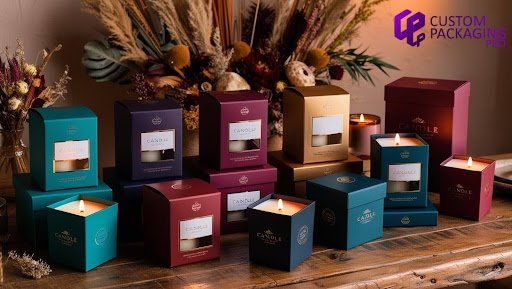
A candle can look perfect on a studio shelf and still create packaging problems before it reaches a customer. A heavy glass jar may shift inside an oversized carton, a lid can rub against the printed surface, or similar-looking boxes can make different fragrances difficult to identify.
Well-designed custom printed candle boxes bring product fit, presentation, and useful information together. They help businesses create a recognizable appearance while providing a structure suited to the candle’s dimensions, weight, and intended sales channel.
The strongest approach starts with the finished candle rather than the artwork alone. Its container, closure, protective requirements, and customer experience should guide the packaging before colors, graphics, and decorative finishes are finalized.
What Should Candle Packaging Accomplish?
Candle packaging needs to make the product understandable, support handling, and present the brand consistently. The balance changes depending on whether the candle is sold in a boutique, included in a gift set, or shipped directly to a customer.
A retail carton may prioritize clear fragrance identification and shelf presentation. A delivery package needs additional consideration of movement, impact, and compression.
Before choosing a structure, establish:
- What the candle weighs
- Whether its container is fragile
- How the product will be displayed
- Whether it will ship individually
- What information customers need before purchase
These answers create a practical brief for the design.
Custom Candle Boxes Should Fit the Finished Product
Measure the complete product, including the jar, lid, decorative attachments, and any individual wrapping. Container specifications alone may overlook a lid that extends beyond the vessel or a label that requires protection from rubbing.
Custom candle boxes should provide enough clearance for packing and removal without leaving unnecessary room for movement.
An excessively tight fit can make loading difficult. An oversized box may require extra protective material and create a less considered presentation.
Test the intended dimensions using actual finished candles. Small variations in containers or closures can affect how consistently the package fits across a production run.
Glass Candle Jars Need Controlled Movement
A glass vessel introduces protection requirements that appearance alone cannot address. The packaging should support its weight and help prevent contact with other hard components.
An insert can position the jar, but its effectiveness depends on the material, geometry, and complete packaging arrangement.
Check whether the candle can move sideways, lift out of position, or press against the lid when the box changes orientation.
Sturdy construction matters, but a strong outer box does not compensate for a loose jar inside. Evaluate the container, insert, and outer structure as one system, particularly when the product will enter a parcel network.
Match Materials to Retail and Shipping Needs
Different packaging materials serve different purposes. Folding paperboard cartons can provide printable surfaces and compact retail presentation. Corrugated structures can support shipping applications when appropriately specified and tested.
A rigid box can create a substantial presentation, although it may still need a separate protective shipping carton.
Material decisions should consider:
- Filled product weight
- Box dimensions
- Bottom closure design
- Insert requirements
- Storage conditions
- Handling and distribution
Avoid choosing board solely because it feels thick in a sample. The assembled package and its performance with the actual candle are more useful indicators of suitability.
Scented Candles Need Clear Fragrance Identification
Customers should be able to distinguish scents without searching every panel. For scented candles, establish a consistent position for the fragrance name and supporting description.
A simple information hierarchy might show the brand first, fragrance second, and a brief scent description beneath it.
Use color to support identification, but keep written names clear enough to work independently. Similar shades can be difficult to distinguish under different lighting conditions.
Describe fragrances accurately and specifically. A short explanation of the scent profile is more useful than repeating broad words such as “luxurious” or “refreshing” across every product.
Custom Printed Candle Boxes Need Consistent Artwork
A candle collection should feel connected even when scents, vessel sizes, or seasonal designs change. Consistency comes from repeatable decisions about typography, spacing, logo placement, and information order.
Create a core artwork system before developing individual variants.
For example, each box can retain the same brand panel and fragrance-name position while changing a supporting color or illustration.
Review the design on the assembled box. Artwork that looks balanced on a flat dieline may become awkward when folded, particularly near edges, closures, and narrow side panels.
Keep essential text clear of folds and areas likely to be covered by labels.
Luxury Candle Boxes Benefit From Restraint
Luxury candle boxes do not need every available decorative feature. A well-proportioned structure, precise printing, and one carefully selected finish can create a convincing premium presentation.
Consider what the customer will notice first: the surface texture, opening action, logo treatment, or interior arrangement.
Possible finishing choices include:
- Foil on a small brand mark
- Embossed lettering
- A textured paper wrap
- Selective gloss details
- Restrained interior printing
Each treatment should support readability and the brand’s character. A luxury candle with a minimal identity may suit a quieter package than one built around elaborate gifting.
Rigid Candle Boxes Need Practical Opening Features
Rigid candle boxes can work well when presentation is central to the purchase. Lift-off lids, hinged formats, and drawer structures each create a different opening experience.
However, the customer still needs to reach and remove the candle comfortably.
A deep insert with no finger clearance can make a premium package frustrating. A loose lid may also feel less considered than the exterior suggests.
For a luxury rigid box, review:
- Lid alignment and fit
- Product removal space
- Insert positioning
- Surface durability
- Storage volume
- Additional shipping protection
Approve the format based on how it functions as well as how it photographs.
Candle Gift Boxes Should Organize the Entire Set
Candle gift boxes may contain one large candle, several smaller fragrances, or a combination of candles and accessories.
Plan the interior around the full assortment. A lid, snuffer, or other accessory should not move freely against a glass vessel.
Separate compartments can make the contents easier to understand and remove. They can also help maintain a consistent arrangement during handling.
For seasonal collections, consider whether the core structure can remain useful after the occasion passes. A changeable sleeve or gift card may provide flexibility without requiring every box to carry permanent holiday artwork.
Cylindrical and Rectangular Boxes Offer Different Layouts
A cylindrical box can echo the shape of a round candle jar and create a distinctive presentation. A rectangular carton provides flat panels for graphics, information, and alignment with other boxed products.
Neither shape is automatically the better packaging solution.
Compare them using the actual product, available storage, packing process, and delivery arrangement. A cylindrical format may require a different insert or outer shipping configuration from a square carton.
Avoid selecting a box using a size label alone. Names such as “Size 3” have meaning only within the supplier’s own range; confirm the internal dimensions and usable space before ordering.
Window Designs Should Preserve Support
A window can reveal the jar color, label, or decorative candle surface. It can be useful when seeing the product helps customers understand the design.
However, removing part of a panel changes the structure. The window’s size and position should be assessed alongside board strength and product weight.
Check whether its edges catch during packing or whether the exposed area allows the product to rub against other surfaces.
If a transparent film is included, account for that additional material when developing disposal guidance. A window should provide a clear viewing benefit rather than simply adding another design feature.

Keep Product Information Easy to Find
Candle packaging boxes need enough space for the information customers use to identify and understand the product.
Plan the layout for applicable product details, care guidance, warnings, batch identification, and barcodes before filling every panel with decoration. Confirm the final content against the product’s requirements.
Small text should remain legible on the selected material and finish. Low contrast, busy backgrounds, or reflective treatments can make important wording difficult to read.
The packaging should also agree with the candle label. Conflicting fragrance names or product details can create confusion during both fulfillment and purchase.
Retail Candle Packaging Is Part of a Shipping System
A printed retail box should not automatically be treated as a complete shipping package. Direct-to-consumer orders may require a protective outer carton, cushioning, or a different arrangement for multiple units.
Evaluate the candle in the exact configuration customers will receive.
Check for:
- Movement inside the retail box
- Contact between separate candles
- Pressure on lids or decorative parts
- Damage to printed surfaces
- Empty space inside the shipping carton
- Closure performance during handling
Standard paper packaging should not be assumed to protect candles from temperature extremes. Consider the product’s sensitivity and anticipated delivery conditions when planning distribution.
Candle Boxes Wholesale Require Stable Specifications
Ordering candle boxes wholesale becomes easier when product dimensions and artwork are settled. Changes to jars, lids, or inserts after approval can make stored packaging unsuitable.
Before committing to volume, confirm which details will remain consistent and which may change between fragrances or collections.
Small businesses may benefit from using a shared structure across compatible products while varying printed details.
Compare the full cost of the package, including:
- The carton or rigid structure
- Inserts and protective materials
- Printing and finishing
- Assembly labor
- Storage space
- Shipping configuration
A lower box price does not always produce a lower overall packaging cost.
Eco-Friendly Packaging Needs Specific Evidence
An eco-friendly appearance is different from a supported environmental claim. Brown kraft material, minimal printing, or a reusable-looking structure does not establish recyclability or environmental superiority.
Start with practical improvements such as appropriate sizing, fewer unnecessary components, and protection that reduces avoidable product damage.
If recyclability is a priority, evaluate the complete package, including coatings, window films, inserts, magnets, and attachments.
Avoid describing candle packaging as “fully recyclable” without confirming the materials and relevant collection arrangements. Specific, accurate guidance is more useful than a broad claim customers cannot easily verify.
Test Samples Before Approving Production
A physical sample reveals details that a digital mockup cannot: product fit, lid resistance, surface texture, assembly difficulty, and the way the candle sits inside its insert.
Use finished products during evaluation and repeat the packing process with several units.
Common issues to catch include:
- Insufficient lid clearance
- Weak bottom support
- Inserts that grip too tightly
- Excessive internal movement
- Difficult product removal
- Scuffed dark surfaces
- Poorly positioned print
- Inconsistent closure alignment
Where shipping is involved, arrange testing appropriate to the product and distribution conditions. Record approved specifications so repeat orders have a clear reference.
Final Thoughts
Custom printed candle boxes work best when structural and visual decisions are made together. Product fit, readable information, reliable handling, and a comfortable opening experience all contribute to the finished package.
Folding cartons, rigid candle boxes, and candle gift boxes serve different needs. The appropriate choice depends on the vessel, sales channel, presentation goals, and protection required throughout delivery.
When working with a Custom Packaging Company, provide finished candle measurements, packed weight, artwork requirements, and details of the intended distribution process. This gives the project a stronger starting point than choosing a style from appearance alone.
Approve a sample that works with the actual candle. Packaging becomes easier to repeat consistently when its dimensions, materials, printing, and assembly have all been checked before production.
Frequently Asked Questions
- What are custom printed candle boxes?
Custom printed candle boxes are packages developed with selected dimensions, structures, and printed branding for candle products. They can identify fragrances, present the brand, and support handling. Their protective performance depends on the materials, inserts, construction, and intended distribution conditions.
- What material is best for candle packaging?
The appropriate material depends on candle weight, vessel fragility, presentation goals, and delivery requirements. Paperboard can suit retail cartons, while rigid structures can support premium presentation. Corrugated packaging may be appropriate for shipping, with the complete arrangement tested using the actual product.
- Do glass candles need packaging inserts?
Glass candles may benefit from inserts that limit movement and separate the vessel from other components. The insert must suit the jar’s dimensions and weight. Its effectiveness should be checked within the complete package rather than assumed from its appearance or thickness.
- How are luxury candle boxes different from standard cartons?
Luxury candle boxes often emphasize substantial construction, surface treatments, opening features, and interior presentation. They may use rigid structures or selected decorative finishes. These features do not automatically establish shipping protection, so additional outer packaging may still be necessary.
- Can candle packaging be fully recyclable?
Some candle packaging can be recyclable, but the claim depends on the complete material combination and available recycling systems. Coatings, films, inserts, magnets, and other attachments can affect disposal. Confirm those details before describing a package as fully recyclable.
- What should brands check before ordering candle boxes wholesale?
Confirm finished product dimensions, lid clearance, bottom support, inserts, artwork, assembly, and storage requirements. Test samples with actual candles and evaluate the shipping arrangement where applicable. Stable specifications help reduce the risk of ordering packaging that becomes unsuitable after a product change.