
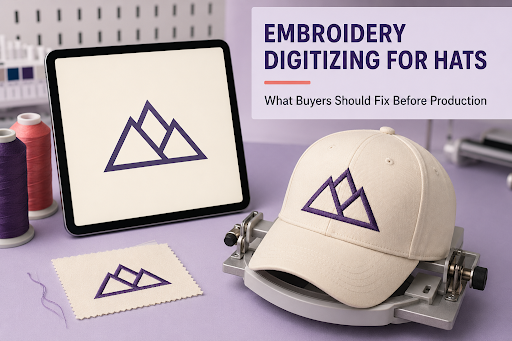
A logo file is not automatically ready for hat embroidery. A design that looks sharp on a website, business card, or PDF can still create problems when it is converted into stitches. Embroidery needs clean shapes, controlled spacing, and realistic detail.
This step is called digitizing, and it can strongly affect the final hat.
Thin Lines Often Need Adjustment
Thin lines may look elegant on screen, but they can disappear or become uneven in embroidery. Very small outlines, tiny icons, and fine decorative details often need to be thickened or removed.
A guide to custom hat embroidery vs printing can help buyers understand why some designs need adjustment before production.
The goal is not to damage the logo. The goal is to make it work in thread.
Small Text Is the Biggest Risk
Text under a logo is one of the first things to fail in embroidery. A slogan, location, date, or website may look readable in the original file but become unclear on a cap.
If the text is not essential, removing it can make the hat look more professional. If the text must stay, the size and stitch method should be checked carefully.
For many hats, a simplified logo version is better than the full brand mark.
Stitch Direction Changes the Look
Embroidery is not just filling a shape with thread. Stitch direction affects texture, light reflection, and edge clarity. A poorly digitized file may look uneven even if the original logo is clean.
This is why buyers should review an embroidery proof or sample, not only upload the logo and assume it will translate perfectly.
Match the Method to the Product
A structured cap, soft cap, trucker front, and beanie cuff all handle embroidery differently. A logo that stitches cleanly on one surface may need changes on another.
For teams planning several accessories at once, Fastsewing can help adjust logo execution across hats, socks, beanies, and scarves instead of forcing one method everywhere.
Closing Note
Good embroidery starts before production. Cleaning up small text, thin lines, spacing, and stitch direction can make the difference between a hat that looks branded and one that looks unfinished.