
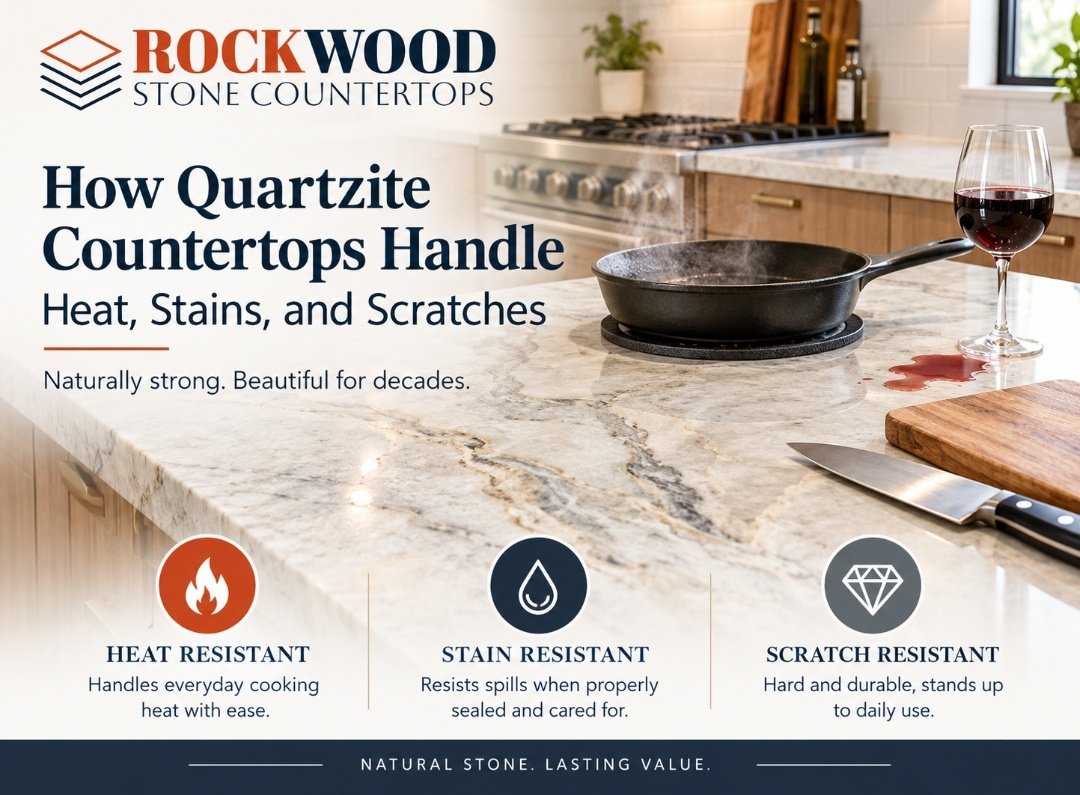
You set a hot pan on the counter, spill red wine during dinner, and drag a heavy pot across the surface, all in one evening. Will your countertop survive? If you are comparing quartzite stone countertops in Winnipeg that homeowners can buy locally, this guide shows how quartzite handles heat, stains, and scratches in real kitchens. It also explains what care it needs so it looks good for decades.
Quartzite is a natural stone that handles heat very well, resists scratches better than almost any other natural option, and stains only if you skip sealing. It is not maintenance-free, but the upkeep is simple. A good sealer, a cutting board, and a trivet for extreme heat will keep it in great shape for many years.
What Is Quartzite and Why Do Homeowners Choose It?
Quartzite is a natural stone that forms when sandstone is exposed to intense heat and pressure deep inside the earth. Over millions of years, the sand grains fuse into a dense, hard rock made mostly of quartz.
This origin explains its strength. Granite forms from cooled magma, marble forms from limestone, and quartzite forms from quartz-rich sandstone. Because quartz is one of the hardest common minerals, quartzite inherits that toughness.
People often confuse quartzite with quartz. They sound alike, but they are different products. Quartzite is a natural stone cut from a quarry. Quartz countertops, also called engineered stone, are man-made from ground quartz mixed with resin. Brands like Caesarstone and Silestone make quartz, while quartzite slabs come in natural varieties such as Taj Mahal, White Macaubas, and Sea Pearl.
Homeowners choose quartzite for its look and its strength. It often has the soft veining of marble with much better durability. If you want to see the range of options, take a look at these stunning quartzite countertop colors before you visit a showroom.
Can Quartzite Countertops Handle Heat?
Yes, quartzite handles heat better than most countertop materials, but you should still use a trivet under very hot cookware. The stone itself forms under extreme heat, so normal cooking temperatures do not hurt it.
A pot of boiling water or a warm baking sheet will not damage quartzite. The stone does not melt, scorch, or burn the way laminate and some solid surfaces can. Engineered quartz, by comparison, contains resin that can discolor or crack when a very hot pan sits on it, and many quartz makers specifically warn against placing pans straight from the stove on the surface.
Still, extreme and sudden temperature changes can create stress. This is called thermal shock. If you take a cast iron skillet straight off a 500-degree burner and set it on a cold slab, the quick change may crack the stone, especially near seams or thin areas around the sink and cooktop. It does not happen often, but it costs a lot to fix when it does.
The sealer is the weaker link. High heat can break down the sealer in one spot, leaving a patch that stains more easily. A trivet protects both the stone and the seal.
Winnipeg homes have another heat concern. Winters here are long and cold, and many kitchens have large windows. Direct sun through a window in summer, or a heating vent near the counter, can warm a slab unevenly. Quartzite handles normal swings like these without trouble, but a professional installer will leave the right expansion gaps and support the slab correctly.
Do Quartzite Countertops Stain Easily?
Quartzite resists stains well when it is sealed, but it can stain if the sealer wears off. Natural stone has tiny pores, and liquids can soak in if nothing blocks them.
How porous your quartzite is depends on the specific stone. Some varieties are very dense and barely absorb water. Others are more open and need more care. This is why a good fabricator tests each slab before installation.
Common stain culprits include red wine, coffee, tea, cooking oil, and fruit juice. Oil is the trickiest, because it soaks in slowly and leaves a dark spot. Water-based spills often leave a temporary dark patch that fades as the stone dries.
Here is an easy way to check your seal. Put a few drops of water on the counter and wait ten minutes. If the water beads up, the sealer is working. If the stone darkens, it is time to reseal. This takes about ten minutes of effort and saves you from permanent marks.
Most homeowners reseal once a year, and some dense stones can go two or three years between coats. Your installer should tell you what your specific slab needs. The Natural Stone Institute, a trade group that sets standards for stone care, recommends using a quality impregnating sealer and cleaning spills quickly. That advice matches what stone shops see every day.
Do Quartzite Countertops Scratch?
Quartzite resists scratches very well, and everyday kitchen use will rarely leave a mark. It ranks around 7 on the Mohs scale, which measures how hard a mineral is on a scale of 1 to 10.
For comparison, a typical steel knife blade ranks around 5 to 5.5 on the Mohs scale. That means your knife will usually dull before it scratches the quartzite. Marble ranks around 3 to 4, which is why marble scratches and etches so easily.
Even so, you should not cut directly on the counter. A knife will not scratch the stone, but the stone will dull your knife quickly. Use a cutting board to protect your blades.
A few things can still damage the surface. Heavy ceramic cookware with a rough base, diamond jewelry, and sharp, hard objects can leave marks. Dragging a rough pot across the counter can also leave light abrasions, though these are rare.
If you do notice a light scratch, a stone restoration professional can often polish it out. Deep chips near the edges may need a filler that matches the color of the slab.
Quartzite vs. Granite vs. Quartz vs. Marble: How Do They Compare?
Quartzite beats marble on durability and matches or exceeds granite on hardness, while engineered quartz offers lower upkeep but less heat resistance. The table below shows how they stack up.
| Feature | Quartzite | Granite | Engineered Quartz | Marble |
| Mohs hardness | About 7 | About 6 to 7 | About 7 (surface mineral) | About 3 to 4 |
| Heat resistance | Very good | Very good | Fair (resin can discolor) | Good, but can etch and mark |
| Stain resistance | Good when sealed | Good when sealed | Excellent, non-porous | Poor to fair |
| Scratch resistance | Excellent | Very good | Very good | Fair |
| Sealing needed | Yes, every 1 to 3 years | Yes, every 1 to 2 years | No | Yes, often |
| Look | Soft veining, natural variation | Speckled, bold patterns | Uniform, consistent | Classic veining |
Each material suits a different home. If you love natural variation and want strong performance, quartzite is a great fit. If you want zero maintenance and a perfectly even look, engineered quartz may suit you better.
How Do You Know If You Are Buying Real Quartzite?
Real quartzite passes a simple scratch test and does not etch from lemon juice. Some stones sold as quartzite are actually softer stones like dolomitic marble, and they behave very differently in a real kitchen.
This confusion is common in the stone industry. Taj Mahal, for instance, has been labelled as quartzite for years, and some slabs in the market under similar names are softer than they look. A trustworthy supplier tells you exactly what you are buying and lets you test a sample.
At the showroom, try two easy tests. First, scratch the stone with a steel knife or a glass piece. Real quartzite should not scratch. Second, put a few drops of lemon juice on a sample and wait 15 minutes. If the surface dulls, the stone contains calcium and acts more like marble.
Ask to see the slab in person, not just a photo. Every slab has its own pattern, and what you see is what goes in your kitchen. A local supplier lets you visit, touch the stone, and pick the exact slab.
If you are ready to talk to experts about your options, a showroom visit is the best next step, and you can ask for a sample to test at home.
How Do You Care for Quartzite Countertops Day to Day?
Wipe the counter with warm water and a pH-neutral stone cleaner, then dry it with a soft cloth. This simple routine keeps the stone clean without damaging the sealer.
Follow these steps for daily and weekly care:
- Wipe up spills right away, especially oil, wine, and citrus.
- Clean with warm water and a mild, pH-neutral cleaner made for natural stone.
- Dry the surface with a soft microfiber cloth to avoid water spots.
- Test the seal once or twice a year with the water drop test.
- Reseal when water no longer beads on the surface.
Avoid harsh products. Bleach, vinegar, ammonia, and abrasive scrubbers can wear down the sealer and dull the polish. Many popular all-purpose sprays contain acids or strong chemicals, so check the label before you spray.
One practical tip from real installs: place a small tray or cutting board near your stove for hot pots and a trivet next to the sink for pans. When the tool is within reach, you will actually use it, and your counters will last far longer.
How Much Do Quartzite Countertops Cost in Winnipeg?
Quartzite countertops in Winnipeg typically cost more than granite and similar to or slightly above engineered quartz, depending on the stone and the project. Prices vary a lot by slab type, edge style, and layout.
Several factors affect the final price. Exotic colors and rare patterns cost more. Complex layouts with many cutouts, waterfall edges, or large islands add fabrication time. Slab size also matters, because a large island may need extra material or careful seam planning.
The best way to get an accurate number is a written, itemized quote that lists the slab, fabrication, edge, installation, and sink cutouts. Compare quotes line by line, not just the bottom number. Ask what sealer the shop uses and whether the first seal is included.
Quartzite is an investment, but it often adds value to a home and can last for decades with basic care. That long lifespan spreads the cost over many years of use.
What Mistakes Should You Avoid With Quartzite?
The biggest mistakes are skipping the sealer, using harsh cleaners, and buying without testing the slab. Each one is easy to avoid.
Many homeowners assume natural stone needs no care once it is installed. That belief leads to stains and dull spots a few years later. A fresh seal costs little and takes minutes.
Others use vinegar-based cleaners because they work well on glass and laminate. On stone, they slowly wear away the sealer and can dull the finish. Stick with products made for natural stone.
Finally, some buyers choose a slab from a photo. Always see the real slab, check it for cracks or fissures, and confirm the stone type with your supplier.
Is Quartzite Right for Your Kitchen?
Quartzite handles heat, resists scratches, and stays beautiful with simple care. Seal it on schedule, wipe spills fast, use a trivet and a cutting board, and it will serve your kitchen for decades. The main thing to remember is to confirm that your slab is real quartzite before you buy.
Ready to see the stone in person? Visit a local showroom, test the samples yourself, and ask for a written quote. Pick the slab you love and get expert installation done right the first time. Call the team at Rockwood Stone Countertops.
People Also Ask
Is quartzite heat resistant?
Yes, quartzite handles normal cooking heat very well because the stone forms under intense heat and pressure. Still, use a trivet for pans straight from the stove or oven. Sudden temperature changes can stress the stone and break down the sealer, so a little protection goes a long way.
Does quartzite stain easily?
Quartzite stains rarely when sealed properly. Unsealed or poorly sealed stone can absorb wine, coffee, and oil. Wipe spills quickly and test the seal with a water drop once or twice a year. If the stone darkens, apply a fresh coat of sealer.
Is quartzite harder than granite?
Quartzite and granite are close, with quartzite usually around 7 on the Mohs scale and granite around 6 to 7. Both resist scratches very well. The exact result depends on the specific stone, so test a sample at the showroom before you decide.
Can you cut on quartzite countertops?
You can, but you should not. Quartzite is hard enough to resist scratches from a knife, but it will dull your blade fast. A cutting board protects both your knife and your counter, and it also prevents any acidic food from touching the stone.
How often should you seal quartzite?
Most quartzite needs sealing every one to three years, depending on how dense the stone is and how much you use the kitchen. Do the water drop test to check. If water soaks in or darkens the stone within ten minutes, it is time to reseal.
What is the difference between quartz and quartzite?
Quartzite is a natural stone cut from the earth, while quartz is an engineered product made from ground quartz and resin. Quartzite handles heat better and has natural variation. Quartz needs no sealing and has a more uniform look, but resin can discolor under high heat.