
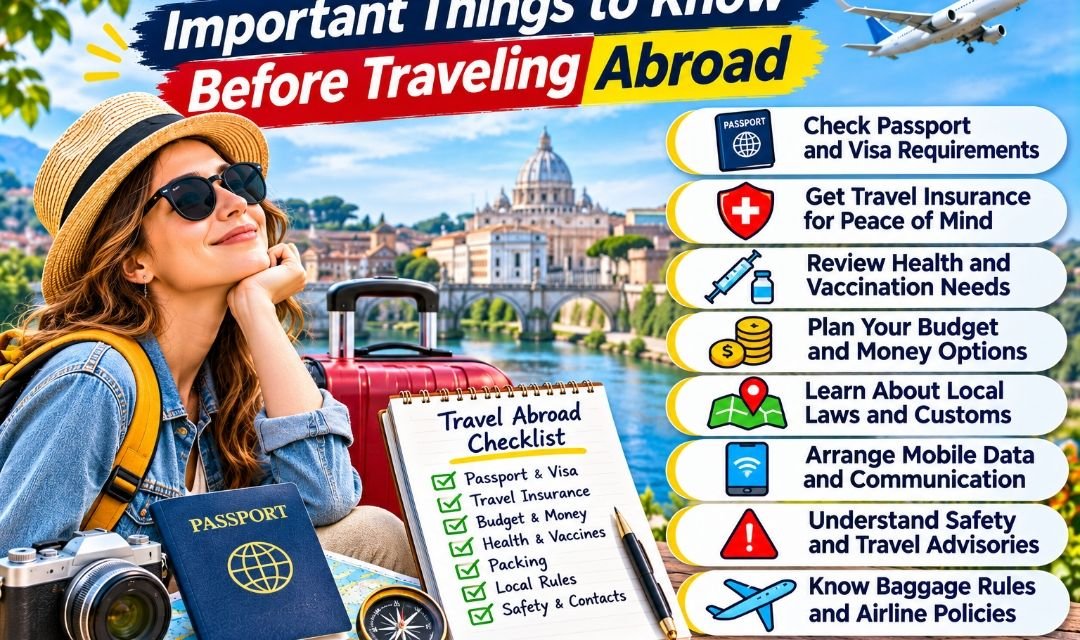
Important things to know before traveling abroad can make your international journey easier, safer, and more enjoyable. Visiting another country is an exciting experience because it gives you the opportunity to explore new destinations, experience different cultures, and create unforgettable memories. However, international travel also requires careful planning and preparation.
From checking passport requirements to understanding local laws, there are many details travelers should consider before leaving home. Forgetting an important document, misunderstanding currency exchange rates, or failing to research transportation can create unexpected difficulties.
The good news is that preparing for international travel does not have to be complicated. With a little research and a practical travel checklist, you can avoid many common mistakes and enjoy your adventure with greater confidence.
This guide covers 20 important things to understand before traveling internationally, including visas, accommodation, transportation, money, health, communication, and personal safety.
Quick Overview: Important Things to Know Before Traveling Abroad
| Travel category | Important preparation |
|---|---|
| Passport | Check validity and condition |
| Visa | Confirm entry and travel authorization rules |
| Travel insurance | Review suitable medical and emergency coverage |
| Budget | Plan transportation, accommodation, and daily expenses |
| Currency | Research exchange rates and payment methods |
| Accommodation | Choose reliable and convenient lodging |
| Transportation | Understand airport transfers and local travel |
| Health | Check vaccination and medication requirements |
| Local laws | Learn cultural expectations and regulations |
| Communication | Arrange mobile internet and translation tools |
| Safety | Review travel advisories and emergency services |
| Packing | Follow airline baggage and customs rules |
1. Check Your Passport Before Booking Your Trip
One of the most important things to know before traveling abroad is whether your passport meets your destination’s entry requirements.
A passport is your main international identification document. Without a valid passport, you may be unable to board your flight or enter another country.
Many travelers assume that a passport is acceptable as long as it has not expired. However, some destinations require passports to remain valid for several months beyond the planned travel dates.
Other countries may have additional requirements regarding blank passport pages or document condition.
What should you check?
- Passport expiration date.
- Destination-specific passport validity rules.
- Available blank pages.
- Passport condition.
- Correct personal information.
If your passport is close to expiration, research renewal requirements well before departure.
Always verify the rules through official government or immigration sources.
2. Understand Visa and Entry Requirements
A passport alone does not always guarantee permission to enter another country.
Depending on your nationality, destination, and reason for traveling, you may need a visa or electronic travel authorization.
Some countries offer visa-free entry for eligible travelers.
Others require visitors to apply for permission before departure.
Visa processing times and application requirements can vary.
Common travel authorization types
Tourist visa: Used for tourism and certain short visits.
Business visa: May be required for particular business activities.
Electronic travel authorization: An online authorization available to eligible travelers in certain countries.
Transit visa: May be required when passing through some countries.
Check whether your journey involves connections that require separate entry or transit permission.
Apply for necessary documents early and keep copies of approvals.
Do not assume that visa rules are the same for every nationality.
3. Research Your Destination Carefully
Destination research is one of the simplest ways to prevent travel problems.
Every country has different customs, transportation systems, weather conditions, and local laws.
Learning basic information before arrival can make your journey more comfortable.
Start by researching the areas you plan to visit.
Check popular attractions, local transportation options, and typical travel expenses.
You should also review official travel advisories for relevant safety updates.
Important information to research
- Local currency.
- Common payment methods.
- Weather and seasonal conditions.
- Public transportation.
- Local customs and etiquette.
- Emergency telephone numbers.
- Tourist attractions and opening hours.
- Destination-specific safety concerns.
Good research helps you understand what to expect without removing the excitement of exploring somewhere new.
4. Create a Realistic International Travel Budget
International travel often involves more expenses than travelers initially expect.
Flights and hotels are usually major costs, but smaller expenses can quickly add up.
You may need money for food, public transportation, attraction tickets, mobile internet, and shopping.
A clear budget allows you to understand your spending limits.
Example of an international travel budget
| Expense | Example amount |
|---|---|
| Round-trip transportation | $500 |
| Accommodation | $400 |
| Food and drinks | $200 |
| Local transportation | $80 |
| Attractions | $120 |
| Travel essentials | $50 |
| Emergency reserve | $150 |
| Total | $1,500 |
These are illustrative figures rather than actual prices for a particular destination.
Budgeting tips
Compare transportation and accommodation costs.
Check taxes and additional booking fees.
Estimate daily spending.
Research local transportation prices.
Keep emergency money separate.
Track spending throughout your journey.
A realistic budget can reduce financial pressure and make international travel more enjoyable.
5. Learn About Currency Exchange and Payment Methods
Different countries use different currencies and payment systems.
Before leaving home, understand the local currency and approximate exchange rate.
You should also research whether cash, debit cards, or credit cards are commonly accepted.
Some destinations rely heavily on electronic payments.
Others may require cash for smaller purchases.
Smart money preparation
Check international card transaction fees.
Research ATM withdrawal charges.
Compare currency exchange options.
Carry a suitable amount of local currency when needed.
Keep backup payment methods separately.
Avoid displaying large amounts of cash in public.
Knowing how payments work can prevent confusion when buying food, transportation tickets, or other essentials.
6. Choose Reliable Accommodation
Your accommodation can influence your comfort and safety during an international trip.
A hotel or guesthouse should offer a convenient location and suitable facilities.
Before booking, read recent guest reviews.
Check whether the property is located near public transportation or the attractions you want to visit.
An inexpensive hotel far from the city center may lead to higher transportation expenses.
Accommodation checklist
Location: Choose an area that matches your travel plans.
Reviews: Look for recent comments about cleanliness and reliability.
Facilities: Confirm Wi-Fi, heating, air conditioning, or other needs.
Total price: Check taxes and additional fees.
Cancellation: Understand booking conditions.
Check-in: Confirm arrival times and procedures.
Keeping your accommodation address accessible can make arrival much easier.
7. Understand Local Transportation
Transportation systems vary between countries.
Some cities have efficient metro networks and affordable buses.
Other locations may rely more heavily on taxis or private vehicles.
Research how you will travel from the airport to your accommodation.
Check approximate transportation costs and operating hours.
This is especially important if you arrive late at night.
Transportation tips
Use reputable taxi or ride-hailing services.
Learn how public transportation tickets work.
Download offline maps.
Research airport transfer options.
Understand local traffic conditions.
If renting a car, check licensing, insurance, and driving requirements.
Knowing your transportation options helps you move around confidently.
8. Buy Suitable Travel Insurance
Travel insurance is worth considering before visiting another country.
Medical emergencies, transportation disruptions, and lost baggage can create unexpected expenses.
A suitable policy may provide protection for certain situations.
However, insurance coverage differs between providers.
Some policies include emergency medical treatment, while others offer additional cancellation or baggage benefits.
What to check in a travel insurance policy
- Medical treatment coverage.
- Emergency evacuation benefits.
- Trip cancellation conditions.
- Lost or delayed baggage coverage.
- Deductibles and exclusions.
- Coverage for planned activities.
- Destination restrictions.
Some countries require visitors to have specific insurance coverage.
Check whether this applies to your destination.
Read policy terms carefully before purchasing.
9. Check Vaccination and Health Requirements
Health preparation is an important part of international travel.
Different destinations may have different disease risks and medical entry requirements.
Before departure, review official travel health guidance.
Certain vaccinations may be recommended or required depending on the country and travel circumstances.
Some preventive treatments also need to begin before departure.
If you take regular medication, research whether it is legal to carry into your destination.
Travel health preparation
Check required and recommended vaccinations.
Carry enough prescribed medication.
Keep relevant prescriptions or medical documentation.
Research destination-specific health risks.
Prepare basic first-aid supplies.
Review medical insurance coverage.
Starting health preparations early can make your journey safer and more comfortable.
10. Learn About Local Laws and Cultural Customs
Every country has its own laws, traditions, and social expectations.
Behavior that is acceptable in one destination may be restricted somewhere else.
Before traveling, research local rules involving identification, photography, clothing, medication, and public behavior.
Some religious locations require visitors to dress modestly.
Certain countries have restrictions on photographing sensitive buildings.
Respecting these rules can help you avoid misunderstandings.
Cultural awareness tips
Learn common greetings.
Understand appropriate clothing expectations.
Respect religious and historical sites.
Ask permission before photographing people.
Follow local regulations.
Be polite when communicating with residents.
Cultural awareness can make your international travel experience more meaningful.
11. Arrange Mobile Internet Before Departure
A smartphone can be extremely useful when traveling abroad.
It helps with navigation, translations, transportation, and communication.
However, international mobile roaming may be expensive.
Before departure, check available mobile data options.
A local SIM card or travel eSIM may offer better value.
The best option depends on your destination and device compatibility.
Mobile preparation checklist
- Check roaming fees.
- Compare SIM and eSIM plans.
- Download offline maps.
- Save important accommodation addresses.
- Store booking confirmations.
- Save emergency contact numbers.
- Charge your devices before departure.
Having important information available offline is useful if mobile coverage becomes unreliable.
12. Learn Basic Local Language Phrases
You do not need to speak another language fluently to enjoy international travel.
However, learning a few simple phrases can make everyday communication easier.
Start with greetings and polite expressions.
Useful phrases include:
- Hello.
- Thank you.
- Please.
- How much does this cost?
- Where is the station?
- I need help.
- Do you speak English?
Translation applications can also help.
Downloading an offline language pack may be useful when internet access is limited.
Making an effort to communicate respectfully often creates positive interactions with local residents.
13. Understand Airline Baggage Rules
Airline baggage requirements can differ depending on the airline, route, and ticket type.
Some tickets include checked luggage.
Others may only include a small personal item or carry-on bag.
Before departure, check baggage dimensions and weight limits.
Review restrictions involving liquids, batteries, and prohibited items.
Certain products may be permitted in checked luggage but not in carry-on bags, or the reverse.
Packing tips for international travel
Pack comfortable clothing.
Bring suitable footwear.
Carry necessary medication.
Keep important documents accessible.
Bring appropriate electrical adapters.
Avoid packing unnecessary valuables.
Research destination customs restrictions.
Understanding baggage rules can help prevent unexpected airport charges and delays.
14. Prepare for Different Weather Conditions
Weather can affect your comfort and activities during international travel.
Some countries experience significant seasonal changes.
Others may have rainy seasons, extreme heat, or cold winters.
Research typical weather conditions before choosing your travel dates.
Check the forecast again shortly before departure.
Pack clothing that matches your destination.
If you expect changing temperatures, consider bringing lightweight layers.
Keep alternative indoor activities available in case outdoor plans are affected by weather.
A little weather preparation can make your journey more comfortable.
15. Keep Your Travel Documents Organized
International travel often involves multiple documents.
You may need your passport, visa, transportation tickets, accommodation confirmations, and insurance information.
Keeping everything organized saves time.
Create a dedicated travel folder on your phone.
Store secure digital copies of essential documents.
Consider carrying paper copies as backups.
Avoid keeping every original document and backup in the same bag.
If your passport is lost or stolen, contact the relevant local authorities and your country’s embassy or consulate for guidance.
Good document organization can reduce unnecessary stress.
16. Know How to Handle Emergencies Abroad
Emergencies can occur unexpectedly, even during well-planned vacations.
Before departure, research the local emergency numbers.
These may be different from the numbers used in your home country.
Save contact information for police, ambulance services, your accommodation, and your insurance provider.
You should also know how to contact your country’s embassy or consulate.
Important emergency contacts
| Contact | Purpose |
|---|---|
| Police | Report crimes or urgent safety concerns |
| Ambulance | Request emergency medical assistance |
| Embassy or consulate | Seek certain types of assistance abroad |
| Travel insurance provider | Discuss covered emergencies |
| Accommodation | Request local assistance |
| Trusted family member | Share important updates |
Keep this information accessible without internet access.
Being prepared can help you respond more effectively to unexpected situations.
17. Protect Your Personal Belongings
Busy tourist locations can create opportunities for theft.
Travelers should remain reasonably aware of their surroundings, particularly in crowded markets, stations, and attractions.
Keep valuable belongings secure.
Avoid leaving your phone, wallet, or passport unattended.
Do not carry unnecessary amounts of cash.
Use reputable luggage storage services when needed.
Be cautious when strangers offer unexpected help or unusually cheap services.
You do not need to feel afraid while traveling.
Simple awareness and practical security habits can help reduce common risks.
18. Understand Time Zones and Jet Lag
Traveling across several time zones can affect your sleep schedule.
You may feel tired during the day or have difficulty sleeping at night.
This temporary adjustment is commonly called jet lag.
The effects vary depending on the number of time zones crossed, travel direction, and individual circumstances.
Ways to manage time zone changes
Get enough sleep before departure.
Adjust your sleeping schedule gradually when practical.
Spend time outdoors during suitable daylight hours.
Stay hydrated.
Avoid overscheduling activities immediately after arrival.
Allow your body time to adapt.
A flexible first day can help make long-distance international travel more comfortable.
19. Plan Your Activities Without Overloading Your Schedule
Visiting another country often creates excitement.
You may want to see famous landmarks, visit museums, explore local markets, and try different restaurants.
However, planning too many activities can become exhausting.
Choose a few important attractions each day.
Group nearby locations together to reduce transportation time.
Allow breaks for meals and rest.
Example of a relaxed travel day
| Time | Activity |
|---|---|
| Morning | Breakfast and a famous attraction |
| Late morning | Explore nearby landmarks |
| Afternoon | Enjoy lunch and rest |
| Late afternoon | Visit a museum or local market |
| Evening | Enjoy dinner and a peaceful walk |
Remember that traveling is not a competition.
Taking time to appreciate each experience can make your vacation more meaningful.
20. Complete a Final International Travel Checklist
Before leaving home, review your most important arrangements.
Confirm transportation schedules and accommodation bookings.
Make sure you have valid documents and appropriate payment methods.
Charge your electronic devices.
Review the weather and check your luggage.
Final checklist before traveling abroad
| Task | What to confirm |
|---|---|
| Passport | Valid and meets destination requirements |
| Visa | Required authorization obtained |
| Transportation | Flights and airport transfers confirmed |
| Accommodation | Hotel reservation verified |
| Insurance | Coverage reviewed |
| Money | Suitable payment methods available |
| Health | Vaccinations and medication prepared |
| Packing | Baggage rules followed |
| Internet | Mobile data and offline maps ready |
| Safety | Travel advisories checked |
| Emergency contacts | Important numbers saved |
| Home | Doors, windows, and responsibilities secured |
Try to complete most preparations before departure day.
This allows you to begin your trip feeling organized and confident.
Common Mistakes to Avoid When Traveling Abroad
International travelers sometimes make avoidable mistakes.
Understanding these problems can improve your planning.
| Common mistake | Better approach |
|---|---|
| Ignoring passport validity | Check requirements early |
| Forgetting visa rules | Verify official entry requirements |
| Carrying too much cash | Use suitable payment methods and backups |
| Not researching local customs | Learn relevant cultural expectations |
| Booking accommodation without checking location | Review maps and recent guest feedback |
| Ignoring mobile roaming charges | Compare international data plans |
| Overpacking luggage | Follow a practical packing checklist |
| Forgetting health preparation | Check destination-specific medical advice |
| Scheduling too many activities | Keep a flexible itinerary |
| Not preparing for emergencies | Save essential contacts and information |
These simple precautions can make international travel easier and more comfortable.
Frequently Asked Questions About Traveling Abroad
What are the most important things to know before traveling abroad?
The most important preparations include checking passport validity, understanding visa requirements, researching your destination, planning expenses, reviewing travel insurance, and organizing important documents.
How early should I prepare for international travel?
Preparation time depends on your destination and entry requirements. Trips involving visas, passport renewals, or health preparations may require several months of planning.
Should I carry cash when traveling internationally?
Carrying some local currency can be useful, especially where electronic payments are uncommon. However, avoid carrying unnecessary amounts and keep backup payment methods secure.
Is travel insurance necessary for international trips?
Some destinations require travel insurance, while others do not. Suitable coverage can provide financial protection for certain emergencies, but benefits and exclusions vary by policy.
How can I stay safe in another country?
Research current travel advisories, choose reliable accommodation, use reputable transportation, protect valuables, and keep emergency contacts accessible. Respect local laws and remain aware of your surroundings.
What should I pack for my first international trip?
Bring valid identification, travel documents, necessary medication, suitable clothing, comfortable shoes, electronic chargers, payment methods, and personal hygiene essentials. Check baggage and customs restrictions before packing.
What should I do if I lose my passport abroad?
Contact the appropriate local authorities when required and seek assistance from your country’s embassy or consulate. Secure copies of important documents can help with identification and replacement procedures.
Final Thoughts
Understanding the important things to know before traveling abroad can help turn an unfamiliar international journey into an enjoyable experience.
From checking passports and visas to preparing travel insurance, managing money, and researching local customs, every small step contributes to a smoother vacation.
Start your preparations early and keep essential information organized. Choose reliable transportation and accommodation, understand local laws, and prepare for unexpected situations.
Most importantly, remember that international travel is an opportunity to learn, explore, and experience different cultures.
You do not need to plan every moment perfectly. Good preparation and a flexible attitude can help you enjoy the journey with greater confidence.
Travel smart, stay safe, respect local cultures, and enjoy discovering the world.