
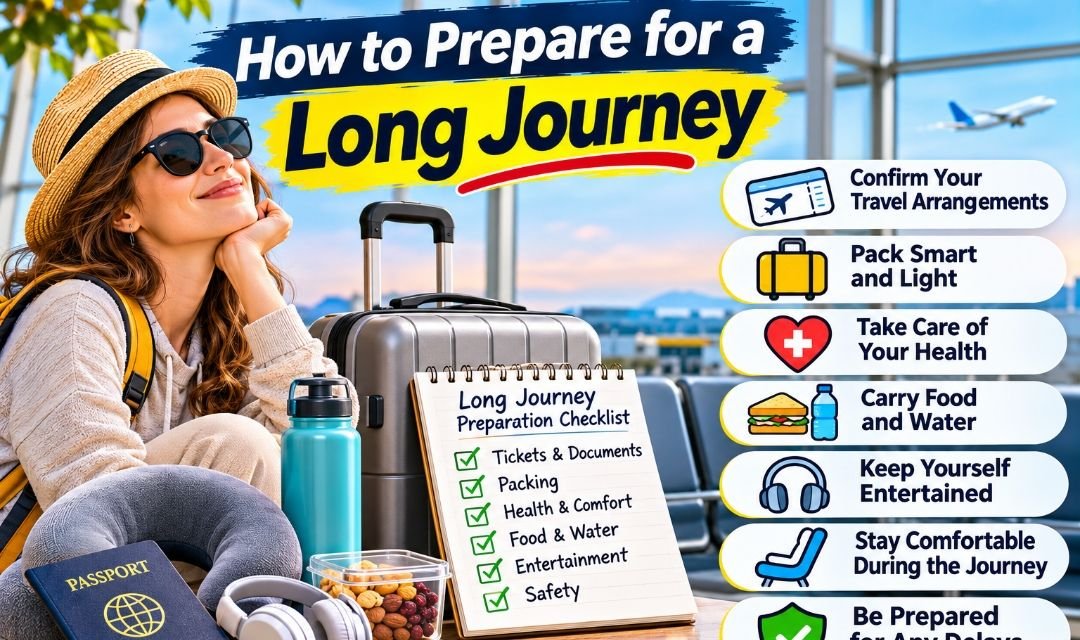
How to prepare for a long journey is something every traveler should understand before planning an extended trip. Whether you are traveling by airplane, train, bus, or car, spending several hours on the road can be exciting but also tiring. Long journeys often involve careful packing, transportation arrangements, and preparation for unexpected delays.
The good news is that a comfortable journey does not require complicated planning. With a little organization, you can reduce stress, protect your health, and enjoy the experience. Simple decisions, such as choosing comfortable clothing, preparing snacks, and keeping important documents accessible, can make a big difference.
In this guide, you will discover practical tips to prepare for a long journey, including essential packing advice, travel safety, budgeting, sleep, food, entertainment, and ways to stay comfortable throughout your trip.
Quick Overview: How to Prepare for a Long Journey
| Preparation category | What you should do |
|---|---|
| Travel arrangements | Confirm tickets, schedules, and reservations |
| Documents | Organize identification and travel papers |
| Packing | Bring essential items without overpacking |
| Clothing | Wear comfortable and practical outfits |
| Food and drinks | Prepare suitable snacks and safe drinking water |
| Health | Pack medication and necessary supplies |
| Sleep | Rest properly before departure |
| Entertainment | Download movies, books, or podcasts |
| Technology | Charge devices and prepare offline information |
| Transportation | Research stops, transfers, and arrival arrangements |
| Safety | Keep valuables and emergency contacts secure |
| Flexibility | Prepare for delays and unexpected changes |
1. Start Planning Your Journey Early
One of the most important steps when learning how to prepare for a long journey is starting your preparations in advance.
Long-distance travel often involves several arrangements, including transportation, accommodation, luggage, and travel documents.
Leaving everything until the last moment can create unnecessary pressure.
Start by confirming your destination and travel dates.
Research your transportation options and compare schedules before booking.
If your journey includes multiple connections, make sure there is enough time to move between transportation services.
Important things to organize early
- Departure and arrival times.
- Transportation tickets.
- Accommodation reservations.
- Passport or identification requirements.
- Baggage restrictions.
- Airport or station transfers.
- Emergency contact information.
Early preparation allows you to manage important details without rushing.
It also gives you time to solve problems before departure.
2. Confirm All Travel Arrangements
Before beginning a long journey, review your transportation reservations carefully.
Check the departure date, time, station, airport, or terminal.
Make sure your booking confirmation contains the correct passenger details.
For international flights, check whether your passport information matches your reservation.
If your journey involves connecting flights or trains, confirm the connection details.
Remember that transportation schedules can change.
Check for updates before leaving home.
Final booking checklist
Transportation: Confirm departure and arrival information.
Accommodation: Review reservation details and check-in instructions.
Connections: Check transfer locations and available connection time.
Baggage: Understand luggage allowances and restrictions.
Arrival: Know how you will reach your final destination.
Keeping these details organized reduces confusion during a long trip.
3. Prepare Important Travel Documents
Travel documents should always be checked before departure.
Domestic journeys may require accepted identification, while international travel usually requires a passport.
Depending on your destination and nationality, you may also need a visa or electronic travel authorization.
Some countries have specific passport validity requirements.
Always check official entry rules before making nonrefundable bookings.
Essential travel documents
- Passport or accepted identification.
- Required visa or travel authorization.
- Flight, train, or bus tickets.
- Accommodation confirmations.
- Travel insurance details.
- Required health documents.
- Emergency contact information.
Keep original documents secure and easily accessible when needed.
You can also save digital copies in a protected location.
Paper copies may provide a useful backup if your phone becomes unavailable.
4. Pack Smart and Avoid Heavy Luggage
Packing too many belongings can make a long journey uncomfortable.
Heavy bags are difficult to carry through airports, stations, and crowded transportation areas.
Overpacking may also result in additional baggage fees.
Instead, create a packing checklist based on your destination, travel duration, and planned activities.
Choose clothing that can be combined into different outfits.
Avoid bringing items you are unlikely to use.
Essential items for a long journey
Clothing: Comfortable outfits, suitable footwear, and weather-appropriate layers.
Personal care: Toothbrush, toiletries, tissues, and hygiene products.
Electronics: Phone, charger, headphones, and a permitted power bank.
Health: Necessary medication and basic first-aid supplies.
Documents: Tickets, identification, and booking confirmations.
Comfort: Travel pillow, light blanket, or eye mask when useful.
Always review transportation baggage restrictions before packing.
Traveling light makes it easier to move comfortably between locations.
5. Choose Comfortable Travel Clothing
Clothing can make a major difference during a long journey.
Tight or uncomfortable outfits may become irritating after several hours of sitting.
Choose breathable clothing that allows you to move easily.
Soft trousers, comfortable shirts, and practical footwear are often suitable choices.
Layering can also help you adjust to changing temperatures.
Airplanes, buses, and trains may feel cold because of air conditioning.
A lightweight jacket or sweater can help you stay comfortable.
Avoid wearing footwear that causes discomfort during long walks through airports or stations.
Comfort should be your priority when selecting travel clothes.
6. Get Enough Sleep Before Traveling
Starting a long journey while feeling exhausted can make the experience more difficult.
Sleep helps support attention, mood, and general well-being.
Try to maintain your usual sleeping routine before departure.
Avoid leaving packing and other preparations until late at night.
Complete important tasks in advance so you can rest properly.
If you are traveling across time zones, consider gradually adjusting your sleeping schedule when practical.
Simple ways to prepare for rest
Finish packing early.
Avoid unnecessary late-night activities.
Keep your sleeping environment comfortable.
Limit excessive caffeine close to bedtime.
Prepare alarms and departure arrangements in advance.
For road trips, never begin or continue driving when dangerously tired.
Adequate rest can make your journey safer and more enjoyable.
7. Carry Healthy Snacks and Drinking Water
Food and hydration are important during long-distance travel.
Depending on your transportation, meals may be limited, expensive, or unavailable at convenient times.
Carrying suitable snacks can help you stay comfortable between meals.
Choose foods that are easy to store and eat.
Useful travel snacks
- Nuts and dried fruit, where permitted.
- Whole-grain crackers.
- Suitable granola bars.
- Fresh fruit that complies with travel and entry rules.
- Simple sandwiches stored safely.
- Other lightweight packaged snacks.
Carry a reusable water bottle when practical.
For airport security, follow applicable liquid restrictions and refill your bottle after screening where safe drinking water is available.
Avoid relying entirely on sugary snacks or caffeinated drinks.
Balanced food choices and regular hydration can help you feel better during a long journey.
8. Prepare Entertainment for the Journey
Long journeys can become boring, especially when traveling for many hours.
Entertainment helps make the time more enjoyable.
Before departure, download content that you can access without an internet connection.
This is particularly useful on airplanes or in areas with limited mobile coverage.
Entertainment ideas
Movies: Download films you want to watch.
Music: Prepare your favorite playlists.
Podcasts: Save interesting discussions or educational episodes.
Books: Bring a paperback or download electronic books.
Games: Choose offline games suitable for your device.
Travel journal: Write about your plans and experiences.
Headphones can make entertainment more enjoyable without disturbing other passengers.
Remember to balance screen time with rest.
9. Keep Your Electronics Ready
Electronic devices are useful during long journeys.
Your phone may contain tickets, maps, accommodation information, and emergency contacts.
Before departure, charge all important devices.
Carry suitable charging cables and adapters.
If traveling internationally, check the electrical outlets and voltage used at your destination.
A portable power bank can be helpful, provided it meets airline and transportation safety rules.
Electronics checklist
- Fully charged phone.
- Phone charging cable.
- Appropriate travel adapter.
- Headphones.
- Permitted power bank.
- Offline maps.
- Downloaded booking confirmations.
Do not rely entirely on mobile internet.
Saving essential information offline can help when connectivity becomes unreliable.
10. Plan Your Transportation Connections
Long journeys sometimes involve several transportation services.
You may need to transfer between airplanes, trains, buses, or taxis.
Understanding these connections before departure can save time and reduce stress.
Research terminal locations, transportation schedules, and transfer procedures.
For flights, check whether you need to collect and recheck luggage.
International connections may also involve immigration or security screening.
Allow enough time between transfers.
If you are traveling with children, older adults, or people with mobility needs, additional preparation may be helpful.
A clear connection plan makes complicated journeys easier to manage.
11. Take Care of Your Health During Travel
Spending long periods sitting can cause stiffness and discomfort.
Move and stretch when it is safe to do so.
During flights or long train journeys, walking occasionally when permitted may help reduce discomfort.
You can also move your ankles and feet while seated.
For some travelers, especially those with blood-clot risk factors, prolonged immobility during travel may increase the risk of deep vein thrombosis.
Ask a healthcare professional about individual preventive measures if you have relevant risk factors.
General health tips for long journeys
Drink enough safe water.
Take movement breaks when practical.
Follow prescribed medication schedules.
Maintain good hand hygiene.
Avoid excessive alcohol consumption.
Seek medical advice if you experience concerning symptoms.
Health preparation allows you to travel more comfortably and responsibly.
12. Organize Your Carry-On Bag
Your carry-on bag should contain items you may need during the journey.
Keeping essentials organized saves time when traveling.
Place frequently used items in easy-to-reach compartments.
Avoid packing your passport or tickets underneath heavy clothing.
Recommended carry-on essentials
| Item | Why it is useful |
|---|---|
| Travel documents | Identification and transportation access |
| Phone and charger | Communication and navigation |
| Medication | Personal health needs |
| Headphones | Entertainment and relaxation |
| Snacks | Convenient food between meals |
| Empty water bottle | Hydration after permitted refilling |
| Light jacket | Comfort in cool environments |
| Tissues and sanitizer | Personal hygiene |
| Travel pillow | Additional neck support |
| Pen and small notebook | Notes and useful information |
Follow airline restrictions when packing liquids, batteries, and other items.
A well-organized carry-on bag can make your journey much easier.
13. Prepare for Travel Delays
Transportation delays are sometimes unavoidable.
Weather, technical issues, traffic, and operational changes may affect schedules.
Instead of expecting every part of your journey to happen perfectly, prepare for possible changes.
Keep essential items accessible.
Charge your devices before departure.
Save important contact numbers.
Review cancellation and rebooking policies.
If you experience a delay, check official updates from your transportation provider.
Useful delay preparations
Keep important medication in your accessible luggage.
Carry suitable snacks.
Have entertainment available offline.
Know your booking reference numbers.
Maintain some emergency funds.
Avoid making tightly scheduled arrangements immediately after arrival.
Flexibility can make unexpected delays easier to handle.
14. Plan Your Arrival Before Departure
Reaching your destination is not always the final part of your journey.
You may still need transportation from the airport or station to your accommodation.
Research these arrangements before leaving home.
Check whether public transportation operates at your expected arrival time.
If arriving late at night, consider arranging a reputable transfer in advance.
Save your accommodation address and contact information.
Understand the local currency and approximate transportation costs.
Planning your arrival helps prevent confusion when you are tired after traveling.
15. Protect Your Money and Valuable Belongings
Long journeys often involve busy transportation hubs.
Airports, stations, and crowded public areas require reasonable awareness.
Keep valuable belongings secure and avoid leaving bags unattended.
Do not carry all your cash in one place.
Use suitable payment methods and keep backup funds separately.
Protect your wallet, phone, passport, and other essential items.
If you are using luggage storage facilities, choose reputable providers.
A few basic security habits can reduce the risk of losing important belongings.
16. Prepare for Different Weather Conditions
Long journeys may involve changing temperatures and weather conditions.
You could leave a warm city and arrive somewhere much colder.
Research the forecast for both your departure and arrival locations.
Choose suitable clothing and pack necessary layers.
For road journeys, weather can affect travel conditions and driving safety.
Check official road and weather information before departure.
If severe weather is expected, consider adjusting your plans.
Preparing for different conditions can make your journey safer and more comfortable.
17. Make Long Road Trips More Comfortable
Traveling by car offers flexibility, but long road trips require careful preparation.
Before departure, check your vehicle’s condition.
Make sure tires, brakes, lights, and essential fluids are in suitable condition.
Plan your route and identify fuel stations and rest areas.
Avoid driving for long periods without breaks.
Fatigue can reduce attention and reaction time.
If you feel sleepy, stop in a safe location and rest.
Road trip essentials
Carry suitable drinking water and snacks.
Keep a charged phone available.
Bring necessary vehicle documents.
Plan rest stops.
Check weather and road conditions.
Prepare emergency supplies appropriate to your route.
Safe driving should always take priority over arriving quickly.
18. Prepare Children and Family Members for Long Travel
Traveling with family may require additional planning.
Children can become restless during long journeys.
Prepare suitable snacks, entertainment, and comfort items.
Explain the travel schedule in simple terms when appropriate.
For young children, bring necessary supplies such as spare clothing, hygiene products, and age-appropriate food.
If traveling with older family members, consider accessibility and rest needs.
Choose transportation connections that allow enough time.
Try to keep important medications and personal essentials accessible.
Family travel becomes easier when everyone has what they need.
19. Manage Your Travel Budget
Long-distance journeys can involve unexpected expenses.
Food, airport transportation, baggage fees, and accommodation changes may increase costs.
Create a realistic budget before departure.
Include transportation, meals, local travel, and necessary supplies.
Keep additional money available for emergencies.
Example long-journey budget
| Expense | Example amount |
|---|---|
| Main transportation | $300 |
| Food and drinks | $50 |
| Local transfers | $40 |
| Travel essentials | $30 |
| Emergency reserve | $80 |
| Total | $500 |
These are illustrative figures rather than current prices.
Your actual expenses will depend on the route, destination, and type of transportation.
Good budgeting helps you handle your journey without unnecessary financial pressure.
20. Complete a Final Long-Journey Checklist
Before leaving home, review your travel arrangements one final time.
Confirm transportation details and make sure your documents are ready.
Check your luggage and electronic devices.
Prepare food, water, medication, and comfort items.
Final travel preparation checklist
- Confirm departure time and transportation details.
- Check passport or identification.
- Review baggage allowances.
- Pack necessary medication.
- Charge electronic devices.
- Save offline maps and booking information.
- Prepare suitable snacks and drinking water.
- Pack comfortable clothing.
- Check weather conditions.
- Arrange arrival transportation.
- Save emergency contact numbers.
- Keep payment methods and backup funds secure.
- Secure your home before departure.
Completing these simple steps can reduce last-minute stress.
Common Mistakes to Avoid Before a Long Journey
Long journeys become easier when you understand common preparation mistakes.
| Common mistake | Better solution |
|---|---|
| Packing too much luggage | Bring practical essentials |
| Forgetting important documents | Prepare a travel document checklist |
| Starting the journey without sleep | Rest properly before departure |
| Ignoring transportation connections | Research transfer details |
| Not carrying suitable snacks | Prepare convenient food |
| Forgetting medication | Keep personal medication accessible |
| Relying completely on internet access | Save information offline |
| Planning without emergency funds | Keep backup money available |
| Ignoring weather conditions | Check forecasts before traveling |
| Not allowing time for delays | Keep your schedule flexible |
Avoiding these mistakes can make extended travel more comfortable.
Frequently Asked Questions About How to Prepare for a Long Journey
What should I do before a long journey?
Confirm transportation arrangements, prepare necessary documents, pack practical essentials, and get enough sleep. You should also organize medication, food, entertainment, and emergency contacts.
What should I pack for a long journey?
Pack comfortable clothing, travel documents, medication, a phone charger, headphones, toiletries, and suitable snacks. Your exact packing list should match your destination and transportation method.
How can I stay comfortable during a long flight?
Wear comfortable clothing, stay hydrated, move your legs regularly, and rest when possible. A travel pillow, eye mask, and headphones may also improve comfort.
How can I avoid boredom during long travel?
Download movies, podcasts, music, books, or offline games before departure. You can also use travel time for reading, writing, or resting.
How much sleep should I get before traveling?
Most adults generally need seven to nine hours of sleep per night, although individual needs vary. Try to follow a regular sleep schedule before departure.
What food should I carry during a long journey?
Choose practical snacks that are easy to store and transport. Nuts, crackers, suitable packaged snacks, and properly stored sandwiches may be convenient options. Always follow transportation and destination food restrictions.
What should I do if my journey is delayed?
Check official updates, contact the transportation provider when necessary, and review available rebooking options. Keep essential medication, food, emergency funds, and important information accessible.
Final Thoughts
Learning how to prepare for a long journey can make traveling easier, safer, and more enjoyable. Whether you are flying internationally, taking a long train ride, or planning a road trip, preparation helps reduce unnecessary problems.
Start by confirming transportation details and organizing important documents. Pack comfortable clothing, carry necessary medication, prepare suitable snacks, and keep your electronic devices ready.
Remember to get enough rest before departure and allow time for unexpected delays.
A successful long journey is not only about reaching your destination. It is also about staying comfortable, healthy, organized, and relaxed along the way.
Prepare early, pack smart, travel safely, and enjoy every part of your journey.