
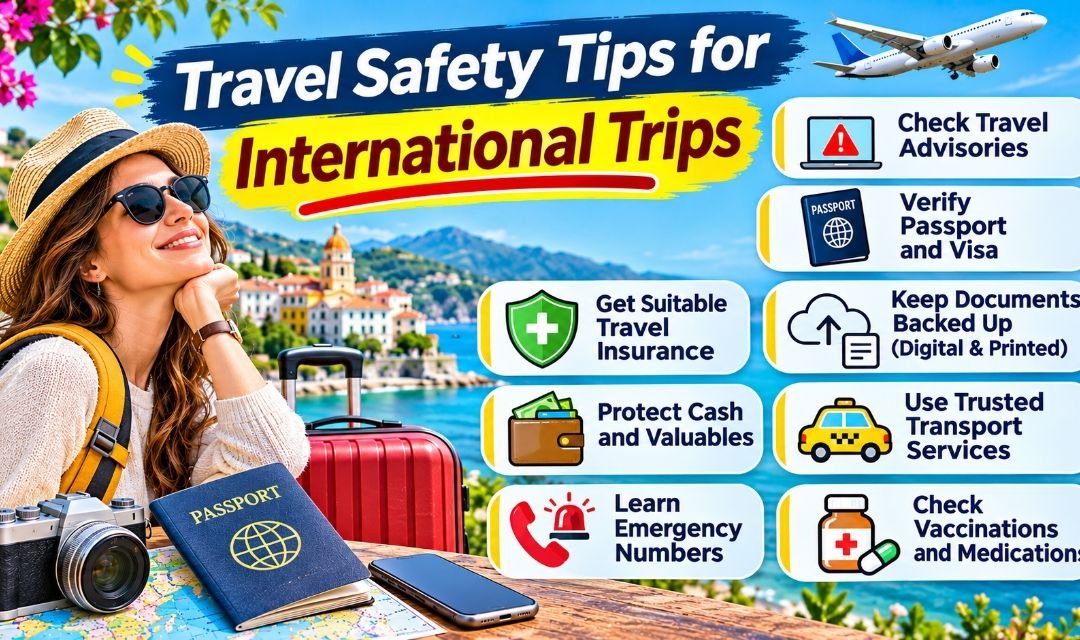
Travel safety tips for international trips are important for anyone planning to explore another country. Traveling abroad can be an exciting experience filled with beautiful destinations, different cultures, and unforgettable memories. However, visiting an unfamiliar country also brings challenges, from understanding local laws to protecting personal belongings and preparing for emergencies.
The good news is that most travelers can reduce many common risks through simple preparation. You do not need to become an experienced traveler before learning how to stay safe. Researching your destination, organizing important documents, choosing reliable transportation, and understanding local customs can make your journey much easier.
Whether you are planning your first international vacation, traveling alone, or visiting another country with family, these practical safety tips will help you prepare for a more comfortable and confident journey.
Quick Overview of Travel Safety Tips for International Trips
| Safety category | Important travel advice |
|---|---|
| Destination research | Check official travel advisories |
| Passport and visa | Verify validity and entry requirements |
| Travel insurance | Review medical and emergency coverage |
| Accommodation | Choose reliable and secure lodging |
| Transportation | Use reputable travel services |
| Money safety | Keep cash and payment cards secure |
| Personal belongings | Protect luggage and valuable items |
| Health | Check vaccinations and medication rules |
| Food and water | Follow destination-specific safety advice |
| Internet security | Protect personal information and accounts |
| Local laws | Understand customs and regulations |
| Emergency planning | Save important contacts and embassy details |
1. Research Your Destination Before Traveling
One of the most important travel safety tips for international trips is researching your destination before departure.
Every country has different laws, customs, safety conditions, and transportation systems.
Some destinations have excellent public transportation, while others require additional planning for safe movement between locations.
Before booking your trip, check official travel advisories issued by your government.
These advisories may provide information about crime, civil unrest, natural disasters, health concerns, and entry requirements.
Important information to research
- Current travel advisories and security conditions.
- Local laws and cultural expectations.
- Safe transportation options.
- Common tourist scams.
- Emergency telephone numbers.
- Weather conditions and natural hazards.
- Entry and visa requirements.
You should also research the neighborhoods where you plan to stay.
Understanding your destination helps you make informed decisions and reduces unnecessary risks.
2. Check Your Passport and Visa Requirements
Travel documents are essential when visiting another country.
Before making nonrefundable bookings, confirm that your passport meets the destination’s entry requirements.
Some countries require passports to remain valid for several months after your planned arrival or departure date.
Others may require visas or electronic travel authorizations.
These rules depend on your nationality, travel purpose, and destination.
International travel document checklist
Passport: Confirm its expiration date and condition.
Visa: Check whether an entry visa or travel authorization is necessary.
Travel tickets: Keep transportation reservations accessible.
Accommodation confirmation: Save your hotel or guesthouse information.
Health documents: Check whether vaccinations or medical certificates are required.
Emergency information: Carry important contacts and relevant insurance details.
Always verify current requirements with official immigration or embassy sources.
Taking care of these details early can prevent serious problems at airports and border crossings.
3. Purchase Suitable Travel Insurance
Travel insurance can be an important part of international travel preparation.
Medical treatment abroad may become expensive, especially if hospitalization or emergency transportation is required.
A suitable insurance policy may provide coverage for certain medical emergencies, trip cancellations, lost luggage, or travel interruptions.
However, coverage depends on the policy.
Some plans exclude specific activities, destinations, or medical conditions.
What to check before buying insurance
Review medical treatment limits.
Check whether emergency evacuation is covered.
Understand cancellation and interruption benefits.
Review baggage protection.
Check exclusions and deductibles.
Confirm whether your planned activities are included.
Do not assume that your regular health insurance automatically covers treatment in another country.
Review your existing coverage before purchasing additional protection.
4. Choose Safe and Reliable Accommodation
Your accommodation plays an important role in your travel experience.
A comfortable hotel or guesthouse provides more than a place to sleep. It should also offer an environment where you can feel reasonably secure.
Before booking, research the property’s location and recent guest reviews.
Look for comments about cleanliness, security, transportation access, and staff reliability.
Accommodation safety tips
Choose reputable booking platforms or verified accommodation providers.
Read recent guest reviews.
Check the surrounding neighborhood.
Confirm whether entrances and rooms have suitable locks.
Keep valuable belongings secure.
Avoid sharing your room number with strangers.
Understand emergency exits and evacuation procedures.
If you arrive late at night, confirm the check-in process before departure.
Selecting suitable accommodation can make your international trip more comfortable.
5. Keep Your Passport and Important Documents Secure
Losing your passport while abroad can create serious difficulties.
You may need to contact local authorities and your country’s embassy or consulate to arrange replacement documents.
Therefore, protecting important identification should be a priority.
Keep your passport in a secure location when it is not needed.
Some destinations require visitors to carry original identification, so check the local rules.
Smart document protection
Make secure digital copies of your passport and visa.
Carry paper copies separately from the originals when practical.
Do not leave travel documents unattended.
Avoid handing your passport to unauthorized individuals.
Keep relevant emergency contact information accessible.
If your passport is lost or stolen, contact the appropriate local authorities and your embassy or consulate for guidance.
6. Protect Your Money and Payment Cards
Managing money carefully can reduce problems during international travel.
Carrying large amounts of cash can increase your risk of financial loss.
Instead, consider using a combination of suitable payment methods.
Keep backup money or cards in a separate secure location.
Before departure, understand international transaction charges and available ATM services.
Money safety tips
Avoid displaying large amounts of cash in public.
Use reputable banks and ATMs.
Protect your PIN when making payments.
Monitor bank transactions for unusual activity.
Be cautious when exchanging money.
Keep emergency funds available.
Research whether cash or electronic payments are commonly accepted at your destination.
Good money management allows you to enjoy your journey with fewer financial worries.
7. Use Reliable Transportation Services
Transportation safety is especially important in unfamiliar cities.
Research how travelers commonly move between airports, hotels, and attractions.
Some destinations have reliable public transportation networks.
Others may require licensed taxis or trusted private transportation providers.
Avoid accepting rides from unknown individuals offering unofficial transportation services.
Transportation safety checklist
Confirm airport transfer arrangements before arrival.
Use reputable taxi or ride-hailing services.
Check vehicle and driver details when available.
Understand approximate travel costs.
Wear seat belts where provided.
Avoid unsafe driving practices.
If renting a vehicle, check local driving laws, licensing requirements, and insurance coverage.
Reliable transportation can reduce both safety concerns and unnecessary stress.
8. Stay Aware of Your Surroundings
Busy tourist destinations can be exciting, but crowded areas sometimes create opportunities for theft.
Markets, transportation stations, and popular attractions require reasonable awareness.
Keep valuable belongings close to you.
Avoid leaving your phone, wallet, or bag unattended.
Be cautious when strangers create distractions or offer unexpected assistance.
Simple personal safety habits
Keep your bag closed in crowded areas.
Avoid displaying expensive items unnecessarily.
Use secure storage for valuable belongings.
Stay aware when using your phone in public.
Choose well-lit, populated routes when practical.
Avoid unfamiliar isolated areas at night.
Being alert does not mean being afraid of every situation.
It simply means paying attention and making sensible decisions.
9. Learn About Common Tourist Scams
Tourist scams can happen in many destinations.
Some involve overpriced transportation, misleading services, fake tickets, or unexpected charges.
Others involve people pretending to offer official assistance.
Research common scams reported in your destination before departure.
Be cautious about offers that seem unusually cheap or urgent.
How to avoid tourist scams
Check prices before accepting services.
Use reputable booking providers.
Avoid handing money to unverified individuals.
Confirm attraction ticket sellers are legitimate.
Do not share sensitive information unnecessarily.
Take time to review unexpected payment requests.
If something feels suspicious, leave the situation when it is safe to do so.
10. Prepare for Health Risks Before Departure
Health preparation is an important part of international travel safety.
Different destinations may have different disease risks, healthcare systems, and vaccination requirements.
Before traveling, review official destination-specific travel health advice.
Some vaccinations or preventive medicines need to be arranged several weeks before departure.
If you take regular medication, check whether it is permitted in your destination country.
Travel health checklist
- Review recommended and required vaccinations.
- Carry necessary prescription medication.
- Check medication import restrictions.
- Keep prescriptions or relevant medical documentation.
- Identify emergency healthcare options.
- Review travel medical insurance.
- Pack basic first-aid supplies.
You should also consider any personal health needs when planning activities.
Preparing early can make your journey more comfortable and help reduce avoidable health problems.
11. Follow Food and Drinking Water Safety Advice
Trying local food is one of the most enjoyable parts of traveling abroad.
However, food and drinking water safety conditions vary between destinations.
Research whether tap water is considered safe to drink.
In areas where water safety is uncertain, use an appropriate safe drinking-water source.
Choose food establishments that follow good hygiene practices.
Be cautious with food that has been stored or handled improperly.
Food safety habits
Wash or sanitize your hands before eating.
Choose food that is properly cooked and served at safe temperatures.
Consider food storage and cleanliness.
Understand your allergies and dietary restrictions.
Use reliable drinking-water sources.
If you become seriously ill, seek appropriate medical advice rather than ignoring symptoms.
Enjoying local cuisine safely can make your international trip more memorable.
12. Protect Your Phone and Digital Information
Smartphones are useful travel companions.
They provide access to maps, booking confirmations, communication, and translation services.
However, losing your phone or exposing sensitive information can create difficulties.
Use a strong passcode or another secure authentication method.
Enable device tracking and remote-lock features when available.
Back up important information before departure.
Digital travel safety tips
Avoid accessing sensitive accounts through unsecured public networks.
Keep your phone’s operating system updated.
Use strong, unique passwords.
Enable multifactor authentication for important accounts.
Be cautious with unfamiliar charging equipment.
Save important information for offline access.
Consider installing a local SIM card or travel eSIM if appropriate for your destination.
Good digital habits help protect your personal information while abroad.
13. Respect Local Laws and Cultural Customs
Different countries have different laws and cultural expectations.
Activities considered acceptable in one country may be restricted somewhere else.
Before departure, research local rules about identification, photography, clothing, medication, and public behavior.
Some religious locations require visitors to follow specific dress codes.
Certain countries also restrict photography around government buildings or sensitive locations.
Follow local rules and treat residents respectfully.
Learning a few basic phrases in the local language can also make communication easier.
Cultural awareness helps you avoid misunderstandings and enjoy more positive interactions.
14. Share Your Travel Plans With Someone You Trust
Sharing basic travel information with a trusted person is a useful safety precaution.
Before leaving home, provide your destination, travel dates, and accommodation details.
You can also share important transportation information.
Agree on a reasonable way to stay in contact during your journey.
For longer trips, occasional check-ins may be helpful.
However, avoid publicly sharing detailed real-time travel information with strangers.
Keeping someone informed makes it easier for others to assist if an emergency occurs.
15. Save Important Emergency Contact Numbers
Emergency preparation should be included in every international travel checklist.
Before departure, find the local emergency numbers for police, ambulance, and fire services.
These numbers vary between countries.
Also save contact information for your accommodation, insurance provider, and nearest relevant embassy or consulate.
Keep emergency details available offline.
Important emergency contacts
| Contact | Why you may need it |
|---|---|
| Local police | Report crimes or urgent safety concerns |
| Emergency medical services | Request urgent medical help |
| Embassy or consulate | Seek assistance with certain overseas emergencies |
| Travel insurance provider | Ask about covered emergencies |
| Accommodation | Request local assistance |
| Trusted family contact | Share important updates |
Knowing where to seek help can make unexpected situations easier to manage.
16. Be Careful When Traveling Alone
Solo travel can be an enjoyable way to explore new places.
However, traveling alone requires additional planning because you may not have a companion available during difficult situations.
Research your accommodation and transportation carefully.
Share your itinerary with someone you trust.
Avoid isolated areas when conditions appear unsafe.
Choose well-reviewed tours and activities.
Be cautious when sharing personal information with strangers.
If you feel uncomfortable in a situation, move to a safer location when possible.
Solo travel can be rewarding when supported by thoughtful preparation and sensible precautions.
17. Avoid Unnecessary Risks During Adventure Activities
International travel often includes exciting outdoor experiences.
Hiking, swimming, diving, cycling, and other activities can make vacations memorable.
However, some activities involve additional safety risks.
Choose reputable operators and confirm that appropriate safety equipment is available.
Follow instructions from qualified guides.
Check weather conditions before outdoor activities.
Understand your physical limits and avoid activities beyond your preparation or experience.
Also confirm whether your travel insurance covers the activities you plan to attempt.
Good preparation allows you to enjoy adventures more responsibly.
18. Prepare for Weather and Natural Disasters
Weather conditions can change quickly in some destinations.
Heavy rainfall, extreme temperatures, storms, earthquakes, and other natural hazards may affect travel safety.
Before departure, research seasonal weather patterns and local risks.
Check weather forecasts during your trip.
Follow instructions from local emergency authorities.
Avoid outdoor activities during dangerous conditions.
Learn the basic evacuation procedures for your accommodation.
If serious weather warnings are issued, adjust your plans instead of taking unnecessary risks.
19. Keep Your Travel Plans Flexible
Unexpected events can happen during international travel.
Transportation delays, security concerns, illness, or weather changes may require adjustments.
A flexible itinerary makes it easier to respond.
Avoid scheduling every activity too closely.
Leave sufficient time between important transportation connections.
Keep alternative transportation and accommodation options in mind.
When possible, choose reservations with reasonable cancellation terms.
Check official travel updates during your journey.
Flexibility can help prevent small problems from becoming larger difficulties.
20. Complete a Final International Travel Safety Checklist
Before leaving home, review your most important safety preparations.
A final checklist helps ensure that essential arrangements are complete.
International travel safety checklist
| Safety task | What to confirm |
|---|---|
| Travel advisory | Current official destination guidance |
| Passport | Validity and condition |
| Visa | Required authorization obtained |
| Insurance | Suitable coverage and emergency contact details |
| Accommodation | Reservation and secure location |
| Transportation | Reliable airport transfer and local options |
| Medication | Sufficient supply and destination legality |
| Emergency contacts | Important numbers saved offline |
| Money | Secure payment methods and backup funds |
| Documents | Originals and secure copies |
| Phone | Charged device, connectivity, and offline maps |
| Family contact | Itinerary shared with someone trusted |
Completing these preparations can help you begin your journey with confidence.
Common International Travel Safety Mistakes to Avoid
Even experienced travelers sometimes overlook important safety details.
Understanding common mistakes can help you prepare more effectively.
| Common mistake | Better approach |
|---|---|
| Ignoring official travel advisories | Check updated destination guidance |
| Traveling with invalid documents | Verify entry requirements early |
| Carrying all money in one place | Separate payment methods and emergency funds |
| Using unverified transportation | Choose reputable services |
| Forgetting medication rules | Check destination restrictions |
| Depending completely on internet access | Save essential information offline |
| Ignoring local customs | Learn relevant cultural and legal expectations |
| Skipping emergency planning | Save contacts and insurance details |
| Leaving valuables unattended | Use appropriate secure storage |
| Overloading the itinerary | Allow time for unexpected changes |
Taking simple precautions can reduce avoidable problems and support a more enjoyable international vacation.
Frequently Asked Questions About Travel Safety Tips for International Trips
What are the most important travel safety tips for international trips?
The most important steps include checking official travel advisories, organizing valid documents, arranging suitable insurance, protecting valuables, researching transportation, and preparing emergency contacts.
How can I stay safe when traveling abroad for the first time?
Start by choosing a destination that matches your experience and comfort level. Research local conditions, book reputable accommodation, use reliable transportation, and share your itinerary with someone you trust.
Should I carry my passport everywhere?
Passport requirements vary by country. Some destinations require visitors to carry original identification, while others may allow secure storage of the passport and use of another accepted document. Check local laws before deciding.
Is travel insurance necessary for international trips?
Some destinations require insurance, while others do not. Even when optional, suitable coverage can help protect against certain medical emergencies, cancellations, and unexpected expenses. Review the policy carefully.
What should I do if my passport is lost abroad?
Report the loss to the appropriate local authorities when required and contact your country’s embassy or consulate for assistance. Keep copies of important documents available to help with identification and replacement procedures.
How can I protect my money while traveling?
Carry only necessary cash, use reputable payment services, keep backup funds separate, and monitor financial transactions. Avoid displaying large amounts of money in crowded areas.
What should I do during an emergency in another country?
Move to a safer location if possible, contact local emergency services when needed, and follow official instructions. Your embassy or consulate and travel insurance provider may also be able to provide relevant assistance.
Final Thoughts
Travel safety tips for international trips can help you explore the world with greater confidence and peace of mind. Visiting another country provides opportunities to discover beautiful destinations, experience different cultures, and create unforgettable memories.
However, enjoying these experiences becomes easier when you prepare for possible challenges.
Start by researching your destination and checking entry requirements. Organize important documents, choose reliable transportation, and review suitable insurance coverage.
Remember to protect your belongings, understand local laws, and keep emergency information accessible.
Most importantly, stay aware of your surroundings without allowing unnecessary fear to control your journey.
Travel smart, respect local cultures, prepare for emergencies, and enjoy the incredible experiences that international travel can offer.