
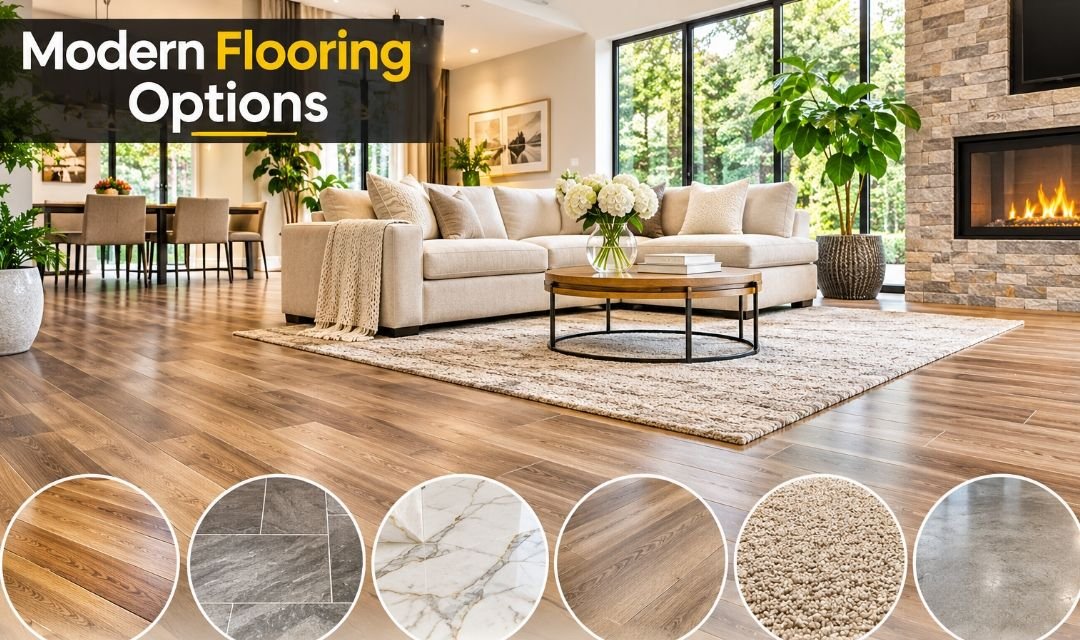
Modern flooring options can completely change the appearance, comfort, and functionality of your home. Whether you are renovating your living room, updating your kitchen, or choosing floors for a new house, the right flooring material can make your space feel modern, welcoming, and beautiful. From natural hardwood and luxury vinyl to porcelain tiles and polished concrete, today’s flooring choices offer many possibilities for different styles and budgets. Flooring is also an important part of interior design, helping connect furniture, wall colors, lighting, and other decorative features.
Quick Overview of Modern Flooring Options
| Category | Details |
|---|---|
| Main topic | Modern Flooring Options |
| Popular flooring types | Hardwood, vinyl, laminate, tile, concrete |
| Luxury flooring | Natural stone, engineered hardwood |
| Budget-friendly choices | Laminate, sheet vinyl, selected ceramic tiles |
| Water-resistant choices | Porcelain tile, suitable vinyl products |
| Eco-conscious choices | Cork, bamboo, responsibly sourced wood |
| Best living room flooring | Hardwood, engineered wood, luxury vinyl |
| Best kitchen flooring | Porcelain tile, suitable waterproof vinyl |
| Best bathroom flooring | Slip-resistant porcelain or ceramic tile |
| Best bedroom flooring | Hardwood, carpet, cork, laminate |
| Popular colors | Natural oak, beige, warm gray, walnut |
| Common finishes | Matte, satin, textured |
| Main goal | Balance appearance, durability, comfort, and cost |
Flooring is one of the largest visible surfaces in any house. Because of this, it has a major influence on the overall appearance of a room.
A beautiful floor can make simple furniture look more attractive. It can also help different rooms feel connected.
However, choosing flooring is not only about appearance.
You must also consider durability, cleaning, moisture, comfort, installation, and long-term maintenance.
A material that works well in a bedroom may not be suitable for a bathroom. Similarly, flooring that looks beautiful in a showroom may require more care than expected.
This guide explains 15 modern flooring options, their advantages, disadvantages, estimated costs, and the best places to use them.
You will also discover modern flooring trends for 2026, room-by-room recommendations, budget-friendly ideas, and common mistakes to avoid.
What Are Modern Flooring Options?
Modern flooring options are materials and finishes used to create practical, attractive floors in contemporary homes.
They include traditional materials such as wood and stone, along with manufactured products such as laminate, luxury vinyl, and engineered flooring.
Modern flooring often emphasizes clean appearances, natural textures, coordinated colors, and practical performance.
Some homeowners prefer light wooden floors that create a warm atmosphere.
Others choose large porcelain tiles for a smooth, contemporary appearance.
Industrial-inspired homes may feature polished concrete.
The best flooring depends on the room, household needs, and available budget.
Why Choosing the Right Flooring Matters
Flooring affects everyday comfort.
Hard surfaces may be easy to clean but can feel cold underfoot.
Carpet can provide softness but may require more frequent cleaning.
Natural wood can create warmth but may be sensitive to moisture.
Porcelain tile can handle wet conditions when properly installed, but its hard surface may not suit everyone.
Flooring also influences noise, maintenance, and long-term expenses.
For example, a household with pets may prioritize scratch resistance and easy cleaning.
A family with young children may prefer flooring that is comfortable and practical.
The best choice balances these factors rather than focusing only on appearance.
15 Best Modern Flooring Options for 2026
1. Hardwood Flooring
Hardwood flooring remains a popular choice for elegant homes.
It is made from natural wood species such as oak, maple, and walnut.
Hardwood floors can create a warm and timeless appearance.
They work particularly well in living rooms, dining rooms, and bedrooms.
Natural wood grain gives every floor a unique character.
Many solid hardwood floors can also be refinished, depending on their thickness and condition.
However, hardwood requires suitable care.
Excessive moisture can damage wood.
Scratches and dents may also occur.
Best for: Living rooms, bedrooms, dining rooms, and suitable hallways.
Main advantages: Natural beauty, long service potential, and refinishing possibilities.
Main disadvantages: Moisture sensitivity, maintenance needs, and potentially higher installation costs.
2. Engineered Hardwood Flooring
Engineered hardwood offers the appearance of natural wood with a layered construction.
It usually has a real wood surface attached to a stable core.
This construction can provide better dimensional stability than some solid wood products under changing indoor conditions.
Engineered hardwood is available in many colors and finishes.
Natural oak and walnut tones are common choices.
However, performance varies by product.
Not every engineered wood floor is suitable for wet rooms.
Refinishing possibilities also depend on the thickness of the wood surface.
Best for: Living rooms, bedrooms, dining areas, and suitable upper floors.
Main advantages: Natural wood appearance and a range of installation options.
Main disadvantages: Moisture limitations and variable refinishing potential.
3. Luxury Vinyl Plank Flooring
Luxury vinyl plank, often called LVP, is a manufactured flooring product designed to resemble wood.
It is available in many colors and patterns.
Some products include textured surfaces that imitate natural wood grain.
Luxury vinyl is popular because it can provide an attractive appearance with relatively simple maintenance.
Many products are designed to resist water exposure.
However, waterproof flooring does not automatically make the entire floor assembly waterproof.
Water can still reach the subfloor through edges, joints, or damaged areas.
Best for: Kitchens, living rooms, bedrooms, and other suitable indoor spaces.
Main advantages: Wide design selection, easy cleaning, and water-resistant product options.
Main disadvantages: Limited refinishing options and variable product quality.
4. Luxury Vinyl Tile Flooring
Luxury vinyl tile, or LVT, is designed to imitate materials such as stone and ceramic tile.
It can create a modern appearance without using natural stone.
Some products offer softer underfoot comfort than traditional tile.
LVT is available in different sizes, colors, and surface textures.
However, durability depends on construction, wear-layer quality, and installation.
Choose products suitable for the expected foot traffic.
Best for: Kitchens, hallways, laundry areas, and suitable bathrooms.
Main advantages: Decorative flexibility, practical cleaning, and water-resistant options.
Main disadvantages: Potential indentation, surface wear, and limited repair options.
5. Laminate Flooring
Laminate flooring is a popular budget-friendly alternative to natural wood.
It usually contains a photographic decorative layer protected by a durable surface.
Modern laminate can imitate oak, walnut, and other wood appearances.
Some products also resemble stone.
Laminate is often used in bedrooms and living rooms.
However, moisture resistance varies significantly.
Traditional laminate can swell when exposed to water.
Some newer products offer improved water resistance, but installation requirements remain important.
Best for: Bedrooms, living rooms, and dry interior spaces.
Main advantages: Affordable design options and relatively easy maintenance.
Main disadvantages: Moisture sensitivity in many products and limited refinishing options.
6. Porcelain Tile Flooring
Porcelain tile is one of the most practical modern flooring options.
It is made from dense ceramic material and is available in many colors, sizes, and textures.
Porcelain can imitate marble, concrete, wood, and natural stone.
Large-format porcelain tiles are common in contemporary interiors.
They can create a smooth and coordinated appearance.
Porcelain tile is suitable for many wet areas when properly selected and installed.
However, the surface can feel hard and cold.
Slip resistance is particularly important in bathrooms and other wet locations.
Best for: Kitchens, bathrooms, hallways, and high-traffic areas.
Main advantages: Durability, low water absorption, and design variety.
Main disadvantages: Hardness, installation complexity, and potentially slippery finishes.
7. Ceramic Tile Flooring
Ceramic tile is another practical flooring material.
It is available in many colors, shapes, and patterns.
Ceramic tiles can create modern, traditional, or decorative interiors.
They are commonly used in kitchens and bathrooms.
However, not every ceramic tile is suitable for floor installation.
Choose products specifically rated for flooring and the expected traffic.
Grout also requires maintenance.
Best for: Bathrooms, kitchens, and suitable interior floors.
Main advantages: Wide design selection and relatively simple cleaning.
Main disadvantages: Hard surfaces, grout maintenance, and possible cracking.
8. Polished Concrete Flooring
Polished concrete creates a clean and industrial-inspired appearance.
It is popular in modern and minimalist interiors.
The surface may have a matte, satin, or glossy finish.
Concrete can work well with wooden furniture, metal accents, and neutral walls.
However, not every existing concrete slab is suitable for polishing.
The condition of the surface affects the final result.
Concrete can also feel hard underfoot.
Cracks may remain visible.
Best for: Modern living areas, studios, and suitable ground-floor spaces.
Main advantages: Contemporary appearance and potential durability.
Main disadvantages: Hardness, cracking, and specialized installation requirements.
9. Natural Stone Flooring
Natural stone can create an elegant and luxurious appearance.
Popular options include marble, limestone, travertine, and slate.
Each stone has unique colors and patterns.
Marble can create a refined appearance in suitable interiors.
Slate offers natural texture.
However, natural stone requires careful selection.
Some materials are porous and may need sealing.
Certain stones can stain or react to acidic substances.
Best for: Entryways, living areas, and suitable bathrooms.
Main advantages: Natural beauty and distinctive appearance.
Main disadvantages: Maintenance requirements, weight, and installation costs.
10. Bamboo Flooring
Bamboo flooring is manufactured from processed bamboo material.
It can resemble hardwood flooring.
Bamboo products are available in different colors and construction types.
Some products offer good hardness and wear resistance.
However, quality varies significantly.
Moisture performance depends on the product and installation.
Environmental benefits also depend on manufacturing, adhesives, transport, and sourcing.
Best for: Bedrooms, living rooms, and suitable dry areas.
Main advantages: Attractive appearance and renewable raw material.
Main disadvantages: Variable product quality and moisture sensitivity.
11. Cork Flooring
Cork flooring offers a softer feel underfoot than many hard flooring materials.
It is made using cork material, commonly obtained from cork oak bark.
Cork can provide warmth and some sound absorption.
It may suit bedrooms and home offices.
However, cork can be damaged by sharp objects or heavy furniture.
Moisture protection is also important.
Some cork floors require periodic surface maintenance.
Best for: Bedrooms, home offices, and comfortable living areas.
Main advantages: Softer underfoot feel, warmth, and sound absorption.
Main disadvantages: Denting, moisture sensitivity, and maintenance needs.
12. Terrazzo Flooring
Terrazzo combines decorative chips, often made from stone or glass, within a binding material.
The finished surface can create a distinctive pattern.
Terrazzo works well in contemporary and artistic interiors.
It is available in different colors and styles.
However, installation can be specialized and expensive.
Maintenance depends on the materials and finish.
Some terrazzo-look porcelain tiles offer an alternative appearance.
Best for: Entryways, kitchens, bathrooms, and contemporary interiors.
Main advantages: Distinctive appearance and potentially long service life.
Main disadvantages: Installation complexity and potentially higher costs.
13. Carpet Flooring
Carpet remains a practical choice for rooms where softness and warmth are important.
Modern carpets are available in neutral colors, subtle patterns, and different textures.
Carpet can make bedrooms feel comfortable.
It can also help reduce some noise.
However, carpets require regular cleaning.
Spills may cause stains.
Moisture can create problems if the carpet or underlying materials remain damp.
Best for: Bedrooms, family rooms, and suitable upstairs spaces.
Main advantages: Comfort, warmth, and sound absorption.
Main disadvantages: Cleaning requirements and sensitivity to moisture.
14. Rubber Flooring
Rubber flooring is often associated with gyms, but it can also be useful in certain residential spaces.
It provides a resilient surface.
Some products offer good grip and impact resistance.
Rubber flooring may work well in home exercise rooms.
However, it is not suitable for every interior style.
Some products can have noticeable odors or specific installation requirements.
Choose materials designed for indoor residential use.
Best for: Home gyms, exercise areas, and selected utility rooms.
Main advantages: Resilience, grip, and impact absorption.
Main disadvantages: Limited decorative styles and possible odor concerns.
15. Wood-Look Porcelain Tile
Wood-look porcelain tile combines the appearance of wooden planks with the properties of porcelain.
It is available in many wood-inspired colors.
Light oak designs can create a Scandinavian appearance.
Darker patterns may suit traditional interiors.
This material can be useful in kitchens and bathrooms where natural wood may be less practical.
However, the surface remains hard like other tiles.
Choose a suitable slip-resistant finish for wet areas.
Best for: Kitchens, bathrooms, hallways, and modern family homes.
Main advantages: Wood-inspired appearance and low water absorption.
Main disadvantages: Hardness, grout maintenance, and installation requirements.
Modern Flooring Options Comparison Table
Choosing flooring becomes easier when you compare the main features.
| Flooring type | Water resistance | Comfort underfoot | Maintenance |
|---|---|---|---|
| Solid hardwood | Low | Moderate | Moderate |
| Engineered hardwood | Limited to moderate | Moderate | Moderate |
| Luxury vinyl plank | Often high at product level | Moderate | Usually easy |
| Luxury vinyl tile | Often high at product level | Moderate | Usually easy |
| Laminate | Varies by product | Moderate | Usually easy |
| Porcelain tile | High at tile level | Hard | Usually easy |
| Ceramic tile | Varies by tile | Hard | Moderate |
| Polished concrete | Depends on finish | Hard | Moderate |
| Natural stone | Varies by stone | Hard | Moderate to high |
| Bamboo | Varies by product | Moderate | Moderate |
| Cork | Limited | Soft | Moderate |
| Terrazzo | Depends on system | Hard | Moderate |
| Carpet | Low | Soft | Regular cleaning |
| Rubber | Varies by product | Resilient | Usually easy |
| Wood-look porcelain | High at tile level | Hard | Usually easy |
Water resistance ratings are general comparisons. Actual performance depends on the specific product, joints, subfloor, and installation system.
Best Modern Flooring Options for Living Rooms
Living rooms need flooring that balances appearance and comfort.
Hardwood is a popular choice for elegant interiors.
Engineered hardwood provides a similar appearance.
Luxury vinyl plank offers a practical alternative.
Porcelain tile can create a contemporary look, especially in warm climates.
Carpet may suit homeowners who prefer softness.
Choose flooring that complements your furniture and lighting.
Also consider household activity and cleaning needs.
A busy family living room may require a different surface from a formal sitting room.
Best Modern Flooring Options for Bedrooms
Bedrooms should feel comfortable and relaxing.
Carpet provides softness and warmth.
Hardwood creates a timeless appearance.
Engineered wood can offer a refined finish.
Laminate may be a budget-friendly choice.
Cork can provide a softer surface.
However, personal comfort matters.
Some homeowners prefer hard flooring with an area rug.
Others enjoy wall-to-wall carpet.
Choose materials that suit your climate, cleaning preferences, and lifestyle.
Best Modern Flooring Options for Kitchens
Kitchen floors should handle frequent cleaning and occasional spills.
Porcelain tile is a practical option.
Suitable luxury vinyl products may also work well.
Ceramic tile can provide attractive designs.
However, slip resistance and proper installation are important.
Avoid choosing flooring based only on appearance.
Consider dropped utensils, food spills, and regular foot traffic.
A practical kitchen floor should be durable and easy to maintain.
Best Modern Flooring Options for Bathrooms
Bathrooms require special attention because of moisture.
Slip-resistant porcelain tile is a common choice.
Suitable ceramic floor tiles may also work.
Some vinyl products are approved for bathroom installations.
However, the entire flooring system must be suitable for wet conditions.
Waterproofing, drainage, and sealing details are important.
A waterproof surface material alone does not guarantee protection against leaks.
Choose materials designed for bathroom use and follow installation requirements.
Best Modern Flooring Options for Small Homes
Small homes can benefit from coordinated flooring.
Using similar materials across connected rooms may create visual continuity.
Light wood tones can provide a bright appearance.
Neutral porcelain tiles can create a clean look.
Luxury vinyl planks may offer flexibility.
However, flooring color alone does not determine how spacious a room feels.
Lighting, furniture, and layout also matter.
Avoid unnecessary transitions between flooring materials when possible.
A consistent design can make a small home feel more connected.
Modern Flooring Colors for 2026
Color is an important part of flooring design.
| Flooring color | Suitable style | Overall appearance |
|---|---|---|
| Natural oak | Scandinavian, modern | Warm and bright |
| Light beige | Minimalist, contemporary | Soft and welcoming |
| Walnut brown | Traditional, luxury | Rich and elegant |
| Warm gray | Modern, industrial | Balanced and neutral |
| Cream stone | Contemporary luxury | Bright and refined |
| Charcoal | Industrial, modern | Bold and dramatic |
| Honey wood | Rustic, family homes | Warm and comfortable |
| Soft terracotta | Mediterranean-inspired | Earthy and inviting |
Natural-looking colors are often easier to coordinate with different furniture styles.
However, choose flooring based on your own preferences rather than trends alone.
Modern Flooring Patterns and Layouts
Flooring patterns can influence the appearance of a room.
Herringbone Flooring
Herringbone uses rectangular pieces arranged in a repeating angled pattern.
It can create an elegant appearance.
This pattern works well with wood, engineered flooring, and some tile products.
However, installation may require additional labor and material.
Chevron Flooring
Chevron flooring uses angled ends to create continuous V-shaped lines.
It can produce a refined appearance.
However, precise cutting and installation are important.
Wide Plank Flooring
Wide planks can highlight natural wood patterns.
They are popular in contemporary interiors.
However, product dimensions and installation conditions affect performance.
Large-Format Tile Flooring
Large tiles can create a streamlined appearance.
They may reduce the number of visible grout lines.
However, large tiles often require careful subfloor preparation.
A flat, properly prepared surface is important for successful installation.
Modern Flooring Options on a Budget
You do not need expensive natural stone or hardwood to create attractive floors.
Laminate can provide wood-inspired designs.
Luxury vinyl offers many patterns and finishes.
Selected ceramic tiles may be affordable.
Sheet vinyl can be practical in suitable rooms.
However, the cheapest product is not always the most economical choice.
Consider installation, maintenance, durability, and expected replacement costs.
A slightly more expensive product may provide better long-term value when properly selected.
Example Flooring Budget for a 200-Square-Foot Room
| Expense | Illustrative cost |
|---|---|
| Flooring material | $500 |
| Underlayment or preparation materials | $100 |
| Installation labor | $350 |
| Trims and transitions | $75 |
| Waste and contingency | $175 |
| Total | $1,200 |
This is a hypothetical budget, not a market price quote. Actual expenses vary widely depending on the flooring material, location, subfloor condition, and labor requirements.
Eco-Friendly Modern Flooring Options
Some homeowners want flooring with lower environmental impacts.
Responsibly sourced wood may be one option.
Cork is another material worth considering.
Bamboo flooring is also marketed as an alternative to traditional hardwood.
However, environmental performance depends on more than the raw material.
Manufacturing, adhesives, transportation, durability, and disposal all matter.
Look for credible product certifications and transparent material information.
Long-lasting flooring that can be maintained or repaired may reduce replacement needs.
Choose materials based on reliable information rather than marketing claims alone.
Modern Flooring Trends for 2026
Several design directions are relevant to modern flooring in 2026.
Natural wood appearances continue to complement contemporary interiors.
Warm beige and brown tones can create inviting rooms.
Matte finishes offer a softer appearance than highly glossy surfaces.
Large-format porcelain tiles can create streamlined floors.
Wood-look tile provides an alternative for moisture-prone spaces.
Herringbone and chevron patterns add decorative interest.
Textured surfaces may improve visual character and, where appropriately rated, slip resistance.
However, trends change.
Choose flooring that fits your home and remains practical for years.
Common Flooring Mistakes to Avoid
One common mistake is choosing flooring only because it looks attractive.
Another is ignoring moisture conditions.
Some materials are unsuitable for wet areas.
Poor subfloor preparation can also cause problems.
Uneven surfaces may affect flooring performance.
Another mistake is purchasing too little material.
Cutting waste and future repairs should be considered.
Some homeowners also overlook transitions between rooms.
Finally, avoid choosing flooring without checking maintenance requirements.
A beautiful floor should remain practical for everyday living.
How to Choose the Right Modern Flooring
Start by identifying the room’s purpose.
Consider moisture exposure.
Think about foot traffic.
Review cleaning requirements.
Choose a suitable color and finish.
Compare materials.
Check product warranties and installation instructions.
Measure the floor area.
Set a realistic budget.
Consider professional installation when needed.
The best flooring choice should balance appearance, comfort, durability, and long-term cost.
Frequently Asked Questions About Modern Flooring Options
1. What are the best modern flooring options?
Hardwood, engineered wood, luxury vinyl, laminate, porcelain tile, and polished concrete are popular choices.
2. What flooring is popular in 2026?
Natural wood looks, warm colors, matte finishes, large-format tiles, and decorative plank patterns are relevant design directions.
3. What is the most durable flooring?
Durability depends on the application. Properly installed porcelain tile can perform well in many high-traffic areas.
4. What flooring is best for living rooms?
Hardwood, engineered wood, luxury vinyl, and suitable tile are common options.
5. What flooring is best for bedrooms?
Carpet, hardwood, engineered wood, cork, and laminate can work well.
6. What flooring is best for kitchens?
Porcelain tile and suitable water-resistant vinyl products are practical options.
7. What flooring is best for bathrooms?
Slip-resistant porcelain or suitable ceramic tile is commonly used.
8. Is luxury vinyl flooring waterproof?
Many luxury vinyl products are designed to resist water, but the entire installed floor system may not be waterproof.
9. Is laminate flooring better than vinyl?
Neither is always better. The choice depends on moisture exposure, comfort, appearance, and product quality.
10. Is hardwood flooring expensive?
Hardwood can have higher material and installation costs than some alternatives, but prices vary.
11. Can hardwood flooring be refinished?
Many solid hardwood floors can be refinished, depending on their condition and thickness.
12. Is engineered hardwood real wood?
It generally has a real wood surface bonded to a layered core.
13. What flooring makes a room look bigger?
Coordinated colors, consistent flooring, and suitable lighting can create a more open appearance.
14. Are large floor tiles modern?
Yes. Large-format tiles are common in contemporary interiors.
15. Is polished concrete suitable for homes?
Yes, in suitable spaces with appropriate construction and finishing.
16. Is bamboo flooring durable?
Some bamboo products offer good durability, but performance varies by manufacturing and construction.
17. Is cork flooring comfortable?
Cork often feels softer and warmer underfoot than many hard flooring materials.
18. What flooring is easiest to clean?
Many porcelain tiles and suitable vinyl products are relatively easy to maintain.
19. What flooring is good for pets?
Durable, easy-to-clean surfaces with suitable traction are often practical for pets.
20. What is wood-look tile?
It is tile designed to resemble natural wooden planks.
21. What flooring colors are popular?
Natural oak, beige, walnut, warm gray, and other earthy tones are common choices.
22. Can I install new flooring over old flooring?
Sometimes, but suitability depends on the existing floor, product instructions, height clearances, and subfloor condition.
23. How long does modern flooring last?
Service life varies greatly depending on the material, installation, use, and maintenance.
24. What flooring mistakes should I avoid?
Avoid ignoring moisture, choosing unsuitable products, poor subfloor preparation, and overlooking installation costs.
25. What is the most important flooring selection tip?
Choose flooring based on the room’s practical requirements before focusing on appearance.
Final Thoughts
Modern flooring options provide many ways to create beautiful, comfortable, and functional homes.
From natural hardwood and engineered wood to luxury vinyl, porcelain tile, and polished concrete, every material offers different benefits.
The best choice depends on your lifestyle, room conditions, maintenance preferences, and budget.
Choose moisture-suitable flooring for kitchens and bathrooms.
Consider comfort in bedrooms.
Select durable surfaces for busy living areas.
Use coordinated colors to connect different rooms.
Most importantly, invest in proper preparation and installation.
A thoughtfully selected floor can improve the appearance of your home while providing reliable everyday performance for years.
For more home renovation guides, modern interior design inspiration, affordable decorating tips, and practical flooring advice, visit Picanto Magazine