
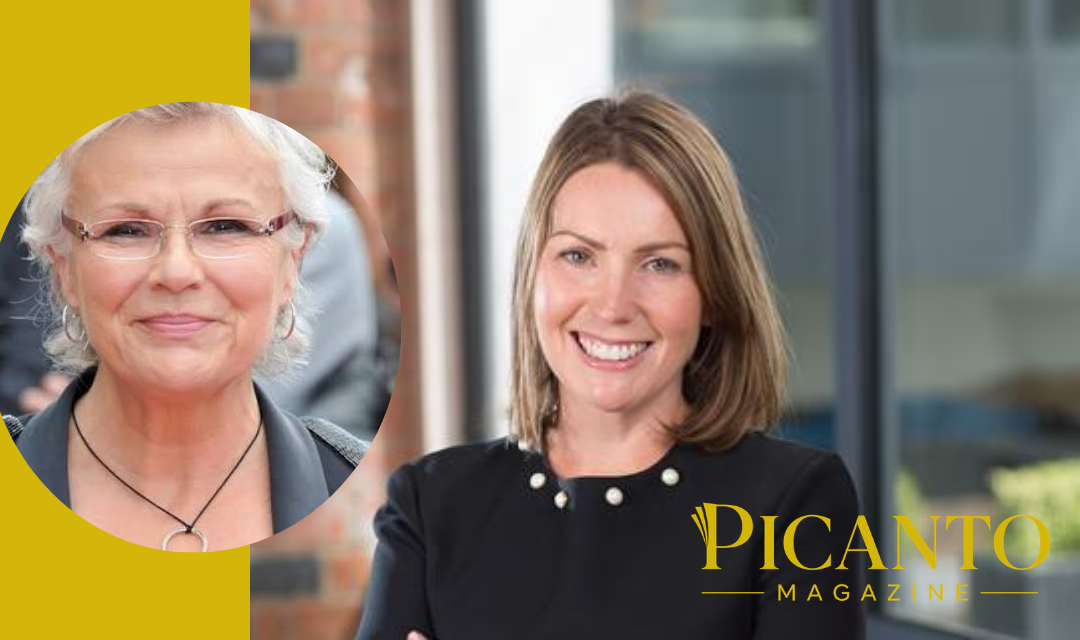
Sarah Lewthwaite has built her career around a simple but important question: Can everyone use the technology around us? She is a researcher at the University of Southampton whose work focuses on digital accessibility, disability, education, and the way people learn technology skills. Instead of simply studying new technology, she looks at something many people forget — whether that technology actually works for everyone.
That may sound complicated at first, but the idea is actually very simple. Imagine opening a website and discovering that you cannot read the words, use the buttons, understand the pictures, or move around the page. Sarah’s research asks how designers, teachers, universities, and technology companies can stop problems like these from happening.
Quick Bio of Sarah Lewthwaite
| Detail | Information |
|---|---|
| Full Name | Dr Sarah Lewthwaite |
| Profession | Researcher and academic |
| Current Role | Principal Research Fellow |
| University | University of Southampton |
| Main Field | Digital accessibility and education |
| Other Interests | Disability studies, higher education, social media research |
| Major Role | Co-Director of the Centre for Research in Inclusion |
| Education | MA in Research Methods and PhD |
| Major Project | Teaching Accessibility in the Digital Skill Set |
| Known For | Research into how digital accessibility should be taught |
| Active in 2026? | Yes |
Her official university profile describes her as a Principal Research Fellow and Co-Director of the Centre for Research in Inclusion at Southampton Education School.
Who Is Sarah Lewthwaite?
Sarah Lewthwaite is a British academic whose research sits between education, disability, and technology.
That combination makes her work especially interesting.
Most people use phones, computers, apps, websites, online banking, and digital services every day. But these tools are not always designed in a way that works well for disabled people or older users.
Sarah studies how that can change.
She is especially interested in digital accessibility.
In very simple words, digital accessibility means designing technology so that as many people as possible can use it.
For example, a blind person may use software that reads a website aloud. Someone who cannot easily use a mouse may depend on a keyboard. A person with poor eyesight may need larger text or better contrast.
Good design thinks about those users from the beginning.
Sarah’s research looks at how people can be taught to create technology in this more inclusive way.
Why Sarah Lewthwaite’s Work Matters
Think about how much of life now happens online.
People apply for jobs online.
They study online.
They book medical appointments online.
They shop, communicate, work, travel, and manage money using websites and apps.
Now imagine that many of those services are difficult or impossible for you to use.
That is why accessibility matters.
Sarah’s work is not simply about making websites look better. It is about making sure people are not pushed out of everyday life because technology was designed without thinking about their needs.
Her research argues that accessibility knowledge needs to be taught properly in universities and workplaces instead of being treated as something people learn only after problems appear.
Sarah Lewthwaite’s Education
Sarah has spent many years studying both education and research.
According to the University of Southampton, she earned an MA in Research Methods with Distinction and later completed a PhD at the Learning Sciences Research Institute at the University of Nottingham.
Her doctoral research looked at disability and online social networks.
One part of that work explored how websites such as Facebook could shape the experiences of disabled students.
This is interesting because social media can do two very different things.
It can help people connect.
But it can also create new barriers.
Sarah wanted to understand both sides.
That early research helped connect several ideas that later became important in her career: disability, digital technology, education, and inclusion.
Her Work Before Becoming a Leading Researcher
Sarah did not begin her career only by studying theories inside a university.
Before moving further into academic research, she worked in roles connected with helping disabled students access education and technology.
Her University of Southampton biography says she worked with disabled students in secondary education, higher education, and the public sector.
That experience matters.
Why?
Because accessibility can look very different when you see the real problems people face.
A rule may sound good on paper. A website may look modern. A piece of software may seem easy to use.
But the real question is: Can the person who needs it actually use it?
Working close to students and technology likely gave Sarah an important view of these everyday challenges.
Her Career at the University of Southampton
Sarah later joined Southampton Education School as a Research Fellow working with the National Centre for Research Methods.
Her career at the university continued to grow.
Today, she is listed as a Principal Research Fellow and Co-Director of the Centre for Research in Inclusion.
Her interests include:
- Digital accessibility
- Higher education
- Critical disability studies
- Teaching and learning
- Social media research
- Inclusive research methods
These subjects may look different from each other, but they are connected by one main idea.
How can education and technology work better for more people?
That question appears again and again in her research.
Teaching Accessibility in the Digital Skill Set
One of Sarah Lewthwaite’s biggest projects is called Teaching Accessibility in the Digital Skill Set.
The name sounds long, but the project has a simple goal.
It wants to understand how people learn to make technology accessible.
The research began in 2019 and has received funding through UK Research and Innovation. Sarah leads the project as a Future Leaders Fellow. Her university profile says her fellowship runs from 2019 to 2028 and is valued at £1.6 million.
The project studies people who teach accessibility in universities, technology companies, and professional settings.
Researchers want to know questions such as:
How do good teachers explain accessibility?
What makes students care about it?
Should accessibility be taught as a separate topic?
Or should it appear throughout technology education?
What skills do workers really need?
These questions are becoming more important as almost every part of life becomes digital.
What Does “Teaching Accessibility” Actually Mean?
Imagine a student learning how to build a website.
The student may learn coding.
They may learn design.
They may learn how to make the website fast and attractive.
But what if nobody teaches them how a blind person will use it?
What if nobody explains how someone with limited movement will press the buttons?
That student may accidentally create a website that shuts some people out.
Sarah’s research looks at how teachers can stop that problem before it starts.
Instead of fixing accessibility after a product has already been built, the better idea is to teach people to think about accessibility from the beginning.
That is one of the biggest messages behind her work.
Sarah Lewthwaite and Artificial Intelligence
Sarah’s research has become even more relevant because of the rapid growth of artificial intelligence.
AI can help with accessibility.
For example, AI tools may help create captions, describe images, translate speech, or make information easier to understand.
But AI can also create new problems.
What happens if an AI system is trained without understanding disabled users?
What happens if a new tool is fast and clever but impossible for some people to use?
Sarah has been examining questions like these.
In 2026, her listed work included research on AI and accessibility skills, including a report about building the accessibility professional of the future.
This shows how her research is moving alongside changes in technology rather than staying focused only on older digital systems.
Her 2026 Oxford Annual Disability Lecture
One of Sarah’s notable appearances in 2026 came at the University of Oxford.
On June 8, 2026, she delivered Oxford’s Annual Disability Lecture.
The title was “Digital Accessibility at the Crossroads: Infrastructure, AI, and the Future We Build.”
The idea behind the talk was powerful.
Technology is moving incredibly fast.
AI is becoming part of work, education, websites, apps, and everyday tools.
But society has a choice.
We can build these systems in ways that include more people.
Or we can repeat old mistakes and create new barriers.
Sarah discussed how accessibility needs to be built into digital systems from the start and how AI may bring both opportunities and risks.
Why AI Makes Accessibility More Important
Imagine a new AI tool becomes popular.
Millions of people begin using it.
Then developers discover that some disabled users cannot use important parts of the tool.
Fixing the problem later can be difficult.
That is why accessibility experts often talk about designing inclusively from the beginning.
Sarah’s work also asks another important question:
Who is teaching the people building these systems?
A programmer may be brilliant at coding but may never have been taught about accessibility.
A designer may create beautiful screens but may not understand how different users experience them.
That is where education becomes important.
Sarah is not only studying technology.
She is studying the people who teach the people who build technology.
That makes her work unusual and valuable.
Sarah Lewthwaite’s Published Research
Sarah has written and worked on many academic publications.
The University of Southampton listed more than 60 publications on her profile in 2026.
Her published topics include digital accessibility education, teaching research methods, disability, assistive technology, social media, and artificial intelligence.
One paper looked at approaches companies use when teaching digital accessibility in workplaces.
Another examined how accessibility education can build stronger skills in universities and industry.
Academic papers are often written for researchers, but the real-world idea behind much of this work is easy to understand:
People cannot build accessible technology if nobody teaches them how.
Is Sarah Lewthwaite a Teacher Too?
Yes, teaching also appears in her university work.
Her Southampton biography says she teaches advanced qualitative research methods and pedagogy development through the National Centre for Research Methods.
She has also contributed to master’s-level education involving digital innovation.
This means she does not only research how teaching works.
She also has direct experience with education.
That combination can be useful.
A researcher can study what works.
A teacher can then see how those ideas feel in a real classroom.
Is Sarah Lewthwaite Married?
There is very little reliable public information about the personal life of Dr Sarah Lewthwaite.
Her official university biography focuses on her professional work, research, education, and projects rather than her marriage or family.
For that reason, it would not be responsible to guess about her husband, children, or private relationships.
This is an important rule when writing about researchers or people who are not entertainment celebrities.
Not every part of someone’s life is public.
How Old Is Sarah Lewthwaite?
Sarah Lewthwaite’s exact birth date and age are not clearly provided in the official academic sources reviewed for this article.
Many websites may be tempted to guess an age using photographs, education dates, or career history.
That can easily create wrong information.
It is better to say the information is not publicly confirmed than to invent a number.
Sarah Lewthwaite’s Net Worth
There is also no reliable public figure for Sarah Lewthwaite’s net worth.
She is an academic researcher, not a celebrity whose business deals and major assets are regularly reported by financial publications.
Websites sometimes publish estimated net worth numbers for almost anyone.
But without real financial records or trustworthy reporting, those numbers are only guesses.
So there is no verified net worth figure that should be presented as fact.
A Name That Can Cause Confusion
There is an important detail readers should know.
There are several people named Sarah Lewthwaite.
Search results may show an academic researcher, a journalist, or professionals working in other industries.
This article is specifically about Dr Sarah Lewthwaite of the University of Southampton, the researcher known for her work in digital accessibility and education.
She should also not be confused with Samantha Lewthwaite, a completely different person whose name has appeared widely in international news.
Keeping those identities separate is important because mixing information from different people can create a seriously inaccurate biography.
What Is Sarah Lewthwaite Doing in 2026?
Sarah Lewthwaite remains active in research in 2026.
Her University of Southampton profile lists continuing work around digital accessibility, education, disability studies, and artificial intelligence. She is also involved in the extended Teaching Accessibility research programme.
Her 2026 work has included research on AI accessibility skills and speaking publicly about how the growth of AI may affect disabled people and accessibility professionals.
That makes 2026 an especially interesting point in her career.
Digital accessibility used to be treated as a specialist subject.
Now, as AI changes how technology is designed and used, accessibility is becoming part of a much bigger conversation about the future of everyday life.
What Makes Sarah Lewthwaite’s Career Interesting?
Sarah’s career is interesting because she works on a problem many people only notice when something goes wrong.
Most of us do not think about whether a website is accessible when it works perfectly for us.
But someone else may be having a completely different experience.
Sarah’s research asks people to think beyond their own experience.
Can everybody read this?
Can everybody control this?
Can everybody understand this?
Can people with different abilities take part?
Those are small questions with very big consequences.
Interesting Facts About Sarah Lewthwaite
Sarah has worked in both disability support and academic research.
She holds a PhD from the University of Nottingham.
She is a Principal Research Fellow at the University of Southampton.
She co-directs the university’s Centre for Research in Inclusion.
Her major research interests include digital accessibility, disability studies, education, and social media.
She leads research into how accessibility is taught in higher education and workplaces.
Her Future Leaders Fellowship is listed as running through 2028.
In 2026, she gave the University of Oxford’s Annual Disability Lecture.
Her recent work also explores the relationship between artificial intelligence and accessibility.
Final Thoughts
Sarah Lewthwaite may not be a traditional celebrity, but her work touches something millions of people use every day: technology.
Her research asks us to remember that a digital world is not truly useful if some people cannot take part in it.
She has spent her career studying disability, education, technology, and the way accessibility is taught. As AI becomes more powerful, those questions may become even more important.
The most interesting part of Sarah’s story is perhaps how simple the main idea is.
Technology should not only be clever.
It should work for people.
And the people building tomorrow’s technology need to learn how to make that happen.
FAQs About Sarah Lewthwaite
Who is Sarah Lewthwaite?
Dr Sarah Lewthwaite is a Principal Research Fellow at the University of Southampton. She researches digital accessibility, disability, education, and the teaching of technology skills.
What is Sarah Lewthwaite known for?
She is best known in academic circles for research into how digital accessibility is taught in universities and workplaces.
Where does Sarah Lewthwaite work?
She works at the University of Southampton and is Co-Director of the Centre for Research in Inclusion.
What did Sarah Lewthwaite study?
She earned an MA in Research Methods and completed a PhD at the University of Nottingham’s Learning Sciences Research Institute.
What is digital accessibility?
Digital accessibility means making websites, apps, software, and other technology usable by people with different needs and abilities, including disabled users.
Is Sarah Lewthwaite involved with AI research?
Yes. Her recent work has explored AI, accessibility skills, and how artificial intelligence may affect inclusive technology.
What was Sarah Lewthwaite doing in 2026?
She continued her research at Southampton and delivered Oxford’s 2026 Annual Disability Lecture about accessibility, AI, and the digital future.
Is Sarah Lewthwaite the same person as Samantha Lewthwaite?
No. They are completely different people. This article is about Dr Sarah Lewthwaite, the University of Southampton researcher.
What is Sarah Lewthwaite’s net worth?
No trustworthy public source provides a verified figure for her net worth.
Is Sarah Lewthwaite married?
Her official academic profiles do not provide reliable details about her private family or marital life.
For more interesting personalities, technology stories, and easy-to-read guides, visit Picanto Magazine.