
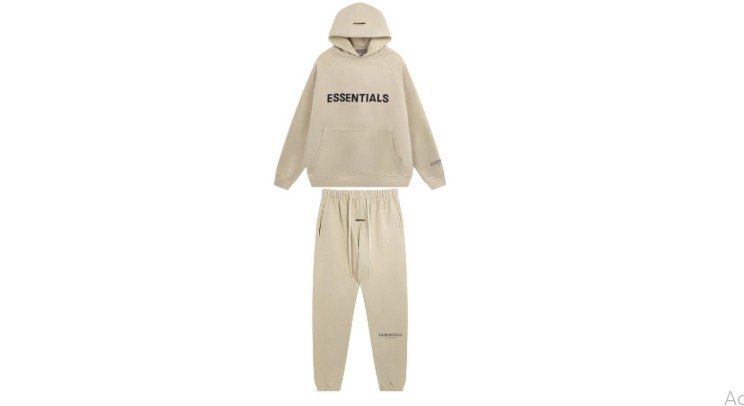
Mid-April in Toronto. You leave at seven in a coat and by two you’re carrying it over one arm like luggage. Roughly ten degrees separate that morning from that afternoon, same city, same day, and that gap is pretty much the whole problem with the in-between seasons here — which is around when people start looking at Essentials Clothing again instead of buying another coat.
Shoulder season hands you two or three climates a day, in an order you can more or less predict once you know your city’s numbers. So let’s use the numbers.
Averages hide the bit that bites
Environment and Climate Change Canada’s 1991–2020 normals put April in Toronto at an average daily high of 12.0 °C, measured downtown at Toronto City. Sounds mild, until you spot the average low of 1.9 °C underneath it. March is harsher in one specific way: 5.0 °C high against −3.8 low, so the afternoon is coat weather and the morning is still properly freezing. May reaches 19.2 and 8.2, and the swing hasn’t shrunk. It has just moved up the scale.
That daily swing averages about 13 °C in Calgary, around 10 in Toronto, roughly 8 in Vancouver — which honestly tells you more about what to wear than the forecast high does, because the high lasts an hour or two and the rest of the day happens somewhere below it.
The same month reads differently in four cities
Vancouver (YVR) barely has a spring in the dramatic sense: 10.1 / 3.3 in March, 13.1 / 5.7 in April, 16.9 / 9.0 in May. Never really cold, never warm, and that narrow band is where a fleece pullover lives. Montreal (Trudeau) does the opposite — March still averages 2.4 / −6.5, winter with a different name on it, then April climbs to 11.3 / 1.1 and May jumps to 19.4 / 8.3. Calgary (Calgary Intl) runs 3.8 / −8.1, then 10.8 / −1.9, then 16.4 / 3.4, so May afternoons there sit in the mid-teens over mornings near freezing.
Stations matter too. Toronto’s November average low is 2.3 °C downtown against 0.2 °C at Pearson — same city, two degrees apart, and the airport figure is the one usually quoted.
Calgary can change its mind in an hour
Chinooks are the extreme version of this. Warm dry air pours off the mountains and lifts the temperature 20 to 30 °C in hours, which nobody dresses for in advance. The record belongs to Pincher Creek, Alberta: on 10 January 1962, −19 °C to +22 °C inside one hour.
Not a normal Tuesday, granted. But it’s why a fleece you can tie round your waist wins there over a parka you’d carry.
Roughly where a hoodie stops being enough
Retailer guidance, give or take a few degrees, puts a hoodie on its own at about 10 to 18 °C. Below roughly 10, or in wind, put a shell over it, and below about 5 you want real insulation with the fleece as your middle layer. Not physics, just a starting point you adjust after you’ve been cold twice.
Wind is the part people underestimate. At 0 °C with a 30 km/h wind, canada.ca puts the wind chill near −6, and Environment Canada only publishes wind chill at 0 °C and below, so on a −3 March morning the posted figure and the feeling part company. Brushed fleece holds still air beautifully and stops moving air not at all. Cotton soaks up water and dries slowly too, which in Vancouver is a season rather than a footnote: 174.6 mm over 19.6 rain days at YVR in November.
| Pro Tip: Rained on? Dry the fleece flat rather than on a hanger, since a soaked knit stretches under its own weight at the neck, and keep it out of the dryer — that heat is what cracks the rubberised chest applique. |
September to November, the same film backwards
Autumn runs it backwards, faster. Toronto City averages 22.0 / 13.8 in September, 14.6 / 7.7 in October, 8.1 / 2.3 in November, first frost downtown usually near 1 November (anywhere from mid-October to the 20th). Montreal gets there sooner — frost around 11 October, snow near the 27th.
September is the month people dress wrong, because Toronto afternoons still average 22 °C, warm enough that an Essentials Short Set hasn’t finished its year while the hoodie is already out for the 13.8 °C mornings. Both in one week. Normal here.
By November it splits regionally. Vancouver sits at 9.3 / 3.6 at YVR, milder overnight than Toronto and much wetter, while Montreal drops to 6.1 / −1.7 and Calgary to 5.0 / −7.6. So in two of those cities the fleece is still your outer layer. In the other two it isn’t.
Dressing for a target that keeps moving
A tee underneath is what makes the whole thing work, and there’s room for one: at Medium the brand’s chart lists a 53-inch garment chest over a 38 to 40-inch body, so thirteen to fifteen inches of ease. Push the sleeves up when the afternoon arrives, drop them when it goes. There’s your thermostat. And pull the hood flat before a coat goes over a 380 GSM pullover, then size that coat up a size or so, since bunched fleece at the collar annoys you for hours.
Colour is worth a thought in mud season. Oatmeal is the friendliest neutral because its undertone leans neither warm nor cool, though it shows every splash off a wet sidewalk; Seal, Iron and Stretch Limo (near-black rather than true black) forgive more. Sizes run S to 4XL at about C$113 to C$117, and shipping takes 8 to 12 business days, so order for October in September.
Frequently Asked Questions
Can I get through a Toronto April in just a hoodie?
Afternoons, yes — 12.0 °C sits inside that 10 to 18 range. Mornings near 1.9 °C don’t, so carry a shell early and expect to be holding it by lunch.
Is cotton fleece a bad idea in Vancouver?
Only unprotected. The temperatures suit it fine, but 19.6 rain days in November at YVR mean something water-resistant over the top.
When does it become a mid layer instead of a jacket?
Around 5 °C. That’s November in Montreal and Calgary, usually December in Toronto and Vancouver, and any windy September day in Alberta.
Should I size up for layering?
Probably not. There’s already thirteen to fifteen inches of ease at Medium, and true-to-size is meant to read oversized. Size down one for a conventional fit; going up mostly buys sleeves you didn’t want.
Spring and fall don’t need more clothes, they need one layer that adapts twice a day. Have a look at the size chart and colours on the product page, and leave the shipping window room before the season turns.