
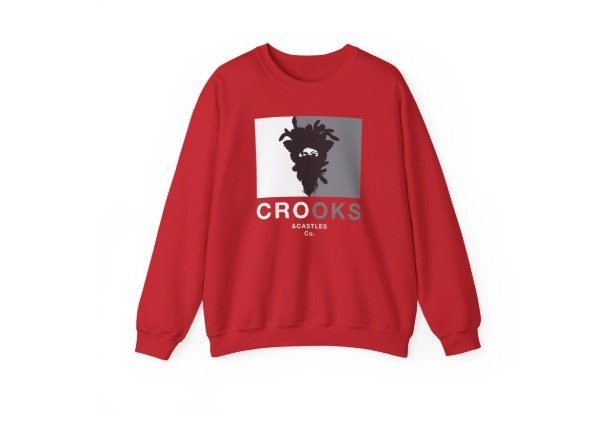
Most clothing ideas get about four good years. Six if they’re lucky, and then they sit at the back of a closet looking like a photo of a person you used to be. This one started in Los Angeles in 2002, and the same shapes are still printed across the fleece and the tees at Crooks and Castles twenty-four years later, which is honestly a little strange when you line up everything that has changed in between.
The name was an argument before it was a logo
Two words, shoved against each other on purpose. Crooks on one side — hustlers, outsiders, people working the edges of a system that never invited them in. Castles on the other: wealth, power, old money, the ones who already had the keys. Set those two nouns next to each other and you’ve basically described a city.
And in 2002 Los Angeles that gap wasn’t abstract. It ran along freeways. It showed up in which neighborhood you could afford and which one you drove through on the way to work. Plenty of clothing from that era borrowed a mood; this started from a sentence about money and access, and then went looking for images to carry it.
The tension did more work than the drawings ever did
There are crowns in the catalog. Chain links, a stone-faced Medusa, castle shapes. What each of those means is a conversation of its own, and plenty of people have had it at length. The part that matters for the history is simpler — all of them are borrowed from the castle side and worn by the crooks side. Luxury symbols, taken down the hill.
That swap is why the graphics never read as decoration. A crown on a hoodie isn’t flattering anybody. It’s a joke with a point to it, and the joke only lands because the two halves of the name are still arguing with each other on your chest.
How it got out of California
Through music first, mostly. The second half of the 2000s was when LA street labels stopped being an LA thing, and the route out ran through hip-hop — videos, tour merchandise tables, the kind of grainy clip people passed around before anybody called it content. If a thing turned up on camera often enough, it turned up in Atlanta and London not long after.
Skating did the rest. Skate culture and street culture had been trading clothes for years by then, and heavy fleece with a bold chest print happens to be good skate kit — it takes a slam, it hides a bruise, it washes. So the aesthetic traveled on two tracks at once, and the two audiences wore it slightly differently. Baggier in one, more fitted in the other, same graphics.
What the 2010s added, and what they didn’t touch
By the middle of the next decade the whole category had grown up. Streetwear got expensive, got written about in newspapers, got taken seriously by people who’d spent the 2000s ignoring it. A lot of labels sanded themselves smooth to fit that. This look mostly didn’t — it kept the parts that had nothing to do with fashion cycles.
- Heavy fleece rather than thin jersey, because clothes that get worn constantly need to survive it
- Embroidery and stitched detail in places where a cheap print would have cracked by the third wash
- Graphics sized for a person standing six feet away, not for a camera
- Boxy, roomy cuts that happened to come back around in the 2020s anyway
You can see all of that in the current range. The Homegrown Sweatshirt and the Rugby Sweatshirt are cut the way sweatshirts were cut before everything went slim, and the Gothic Elite Oversized Sweatshirt is frankly enormous, on purpose.
Why none of it looks dated
Partly because the idea was never tied to a silhouette. Trends age when they’re built on a shape — a specific leg opening, a specific collar — and an argument about money doesn’t age at all. If anything that gap is wider now than it was in 2002.
Partly it’s the materials. Heavyweight fleece looks better after a year of wear than it does new, and stitched graphics don’t crack the way a thin screen print does. Clothing that falls apart quickly always looks like the season it came from. Clothing that lasts ends up looking like nothing in particular, which is the goal.
And there’s the oversize thing. Cuts that read as very 2000s for a while are just normal now. The Flight Script Striped Polo Sweatshirt is a good example of a piece that would have felt like a throwback in 2014 and reads completely straight today.
What that history is worth when you’re actually buying
Mainly it tells you where to put your money. Both stores lean on the same construction notes — heavyweight fleece, double-stitched seams, embroidery meant to hold — and both say somebody checks each piece by hand, weight and stitching and print, before it goes in a box.
Hoodies run $111 to $123 against a $200 list, tees land around $76 to $78, and every garment goes S through XXXL. The hoodies are true to size by the stores’ own reckoning, which matches how the cuts actually fit. Delivery usually lands inside the 7 to 14-day window, a little longer if you live somewhere awkward to reach.
Worth saying: both shops are independent, fan-run operations rather than the label itself, and they mirror the same catalog in two currencies — so anyone reading from Vancouver or Toronto gets the identical pieces at Crooks & Castles priced in Canadian dollars instead of paying in US dollars and waiting at the border.
Key Takeaways
|
Frequently Asked Questions
Did the look really start in 2002?
That’s the year the stores point to, yes, and Los Angeles is the place. The timing lines up with when West Coast street labels were multiplying fast, so it wasn’t operating in a vacuum — it just had a sharper idea behind it than most.
Is this still streetwear, or is it nostalgia now?
Still streetwear. Nostalgia is when you wear something because it reminds you of a year. The cuts here are sized the way people are buying hoodies in 2026, and the graphics haven’t been reissued as a wink — they’re just the same graphics.
Why do these stores sell it if they aren’t the label?
Both describe themselves as independent shops run by people who like the aesthetic, and neither presents itself as the source. The Canadian side exists largely so that shoppers up there stop eating doubled prices and customs surprises on orders from abroad.
A twenty-four-year-old idea that still makes sense is rare enough to be worth a look. Start with a hoodie or a sweatshirt, wear it for a winter, and you’ll get why the thing has lasted.