
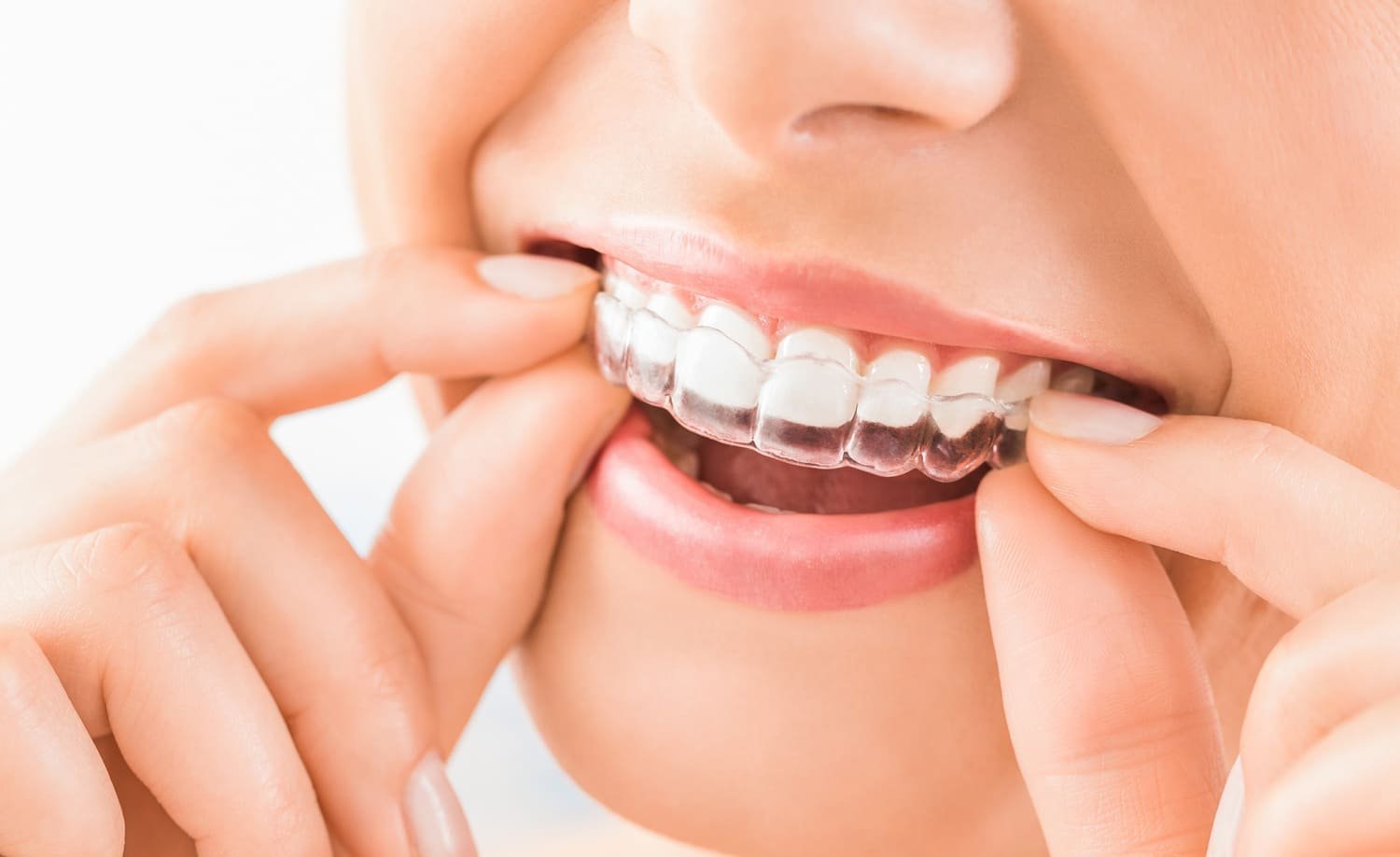
If you’re considering clear aligners, you might be wondering what other people will actually see when you smile or speak. Perhaps you have meetings at work, an upcoming celebration or simply a preference for keeping your treatment fairly discreet. It’s a reasonable question, but there isn’t one answer that applies to every person and every situation.
Transparent trays still have a physical shape, and details such as reflections and attachments can affect their appearance. Understanding those details, along with the limits of photographs, can help you ask more useful questions before treatment and set expectations that don’t depend on a promise of invisibility.
Are Clear Aligners Really Invisible?
Transparent trays can still be visible when you wear them. With aligners, clear does not mean invisible; transparent plastic can still be seen. The trays sit over your teeth, so although your natural tooth colour shows through, there is another surface between your teeth and the person looking at you.
You might examine that surface closely in a bathroom mirror and notice details you hadn’t considered before starting treatment. That view is different from someone speaking with you across a table, although neither situation tells you exactly what another person will notice. Rather than using “invisible” as your benchmark, ask what the proposed appliance looks like on teeth and which visible features could be part of your own treatment plan.
What Can Make the Trays More Noticeable?
The tray surface can change how light catches your smile. Light reflections and attachments help explain what can make clear aligners noticeable, even when the trays themselves are transparent. You might see a shine across the plastic or become aware of its outline when looking closely at your teeth. The edges are another detail to discuss when viewing a sample, since a clear material still has a shape and boundary.
A clean tray and one with visible staining won’t necessarily give the same impression, so follow the care instructions provided for your appliance. Looking in a mirror under ordinary indoor light can help you describe what you’re noticing when you speak to your clinician. However, appearance alone cannot tell you whether a tray is fitting or working as intended. If an edge or gap concerns you, contact your treating clinician rather than trimming, reshaping or trying to correct the appliance yourself, even if the concern initially seems purely cosmetic.
What Do Attachments Look Like?
Attachments can add visible detail to an otherwise clear appliance. Some aligner plans include small tooth-coloured attachments bonded to the teeth. These are small raised shapes used as part of the prescribed treatment, rather than marks on the plastic that you can clean away. Their position and arrangement are therefore useful details to ask about when discussing how your smile may look with the trays in place.
If attachments are planned, ask your clinician to show you a representative example and explain which teeth would have them. Tooth-coloured doesn’t mean undetectable, and a photograph of someone without attachments won’t show every feature of a plan that includes them. Having that conversation before starting gives you a clearer picture of the proposed appliance, while leaving decisions about the attachments needed for treatment with the professional responsible for your care.
Why Can Photos Give a Different Impression?
A photograph captures one view under one set of conditions. Even camera angles can change apparent proportions, which is one reason a photograph is not a neutral record of appearance. A tightly cropped smile also directs your attention towards the teeth in a way that a full portrait may not. Those differences matter when you’re trying to use pictures to imagine how an appliance might look during an ordinary day.
For example, zooming into a photograph gives you an opportunity to study small details that a passing conversation doesn’t offer. A still image also leaves out movement and speech, so it cannot reproduce the whole experience of talking with someone wearing aligners. Treat other people’s photographs as examples rather than predictions, especially when you don’t know whether their appliance includes the same features as yours. A representative sample discussed with your clinician can make the comparison more useful, but even that cannot guarantee what every person will notice in every setting.
What About Conversations and Social Occasions?
Everyday conversation involves more than the appearance of your teeth. At a meeting or dinner, people are also responding to what you’re saying and how the conversation unfolds. That doesn’t guarantee they won’t notice your aligners, and you don’t need to assume they will either. Some wearers experience speech changes while adjusting to trays, which is a separate concern worth raising if your work involves presentations or frequent calls.
If a wedding, interview or other occasion is on your mind, mention it during your consultation so you can discuss practical expectations in advance. Keep following your prescribed wear instructions rather than deciding to leave trays out simply to hide them for an event or photograph. You can also decide how much you want to say if someone asks about treatment; a brief explanation is enough, and visible dental treatment doesn’t require an apology or a detailed personal account.
What Should You Ask Before Treatment Starts?
Your own treatment plan gives appearance questions a useful context. Orthodontic treatment needs a full assessment and regular check-ups with a qualified dentist or orthodontist. That ongoing relationship gives you someone to discuss the proposed appliance with before starting and someone to contact if you have concerns once you’re wearing it.
Ask whether your plan includes attachments, where they would sit and whether you can see an example that reflects those features. You can also ask what the tray edges look like and which changes in appearance should prompt a conversation with the treating team. Find out whom to contact about fit or speech concerns, rather than relying on comments beneath someone else’s treatment photographs. These questions help turn a broad promise of discreet treatment into a more specific discussion about the appliance being proposed for you and the support available throughout your care.
Set Expectations Around Your Own Treatment
Clear aligners can be visible, and individual treatment details matter. Reflections, tray edges and attachments may all contribute to what you see, while photographs show only a particular view of the appliance. Someone else’s experience cannot promise how your trays will look or whether another person will notice them during conversation. Before starting, ask to see representative examples and discuss the details of your own plan, so your expectations come from a practical conversation rather than the word “invisible”.