
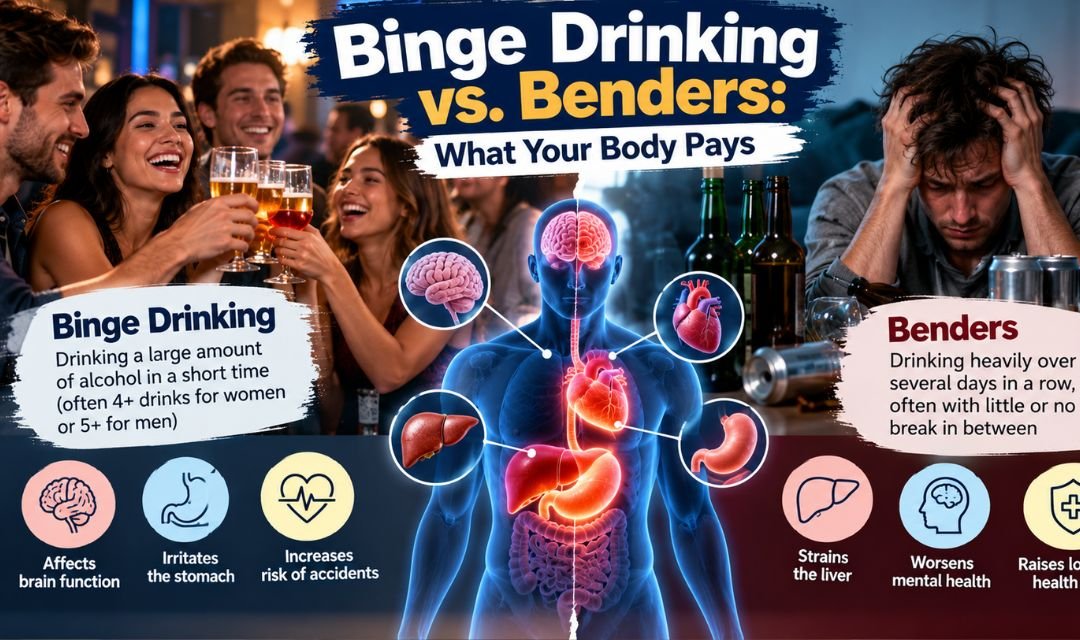
Most people have heard the word ‘bender’ thrown around casually, usually as a punchline or a badge of honor after a wild weekend. But behind the humor sits a genuinely serious pattern of behavior that carries measurable consequences for the brain, the body, and long-term health. Understanding what actually happens during an extended substance use episode, and why it differs from ordinary heavy drinking, matters more than most casual conversations let on.
This article breaks down the physiology of extended intoxication, explains how it compares to single-night binge drinking, outlines the warning signs that separate a rough night from something more concerning, and looks at what the body actually needs to recover. Whether you are curious for yourself or trying to understand someone else’s pattern of use, the information here is grounded in how substance use actually works.
Binge Drinking vs. Extended Use: Not the Same Thing
Binge drinking has a clinical definition. The National Institute on Alcohol Abuse and Alcoholism defines it as a pattern of drinking that brings blood alcohol concentration to 0.08 grams per deciliter or higher, which typically happens when men consume five or more drinks, or women consume four or more drinks, within about two hours. That is a single episode of heavy drinking, usually compressed into one night.
An extended episode, by contrast, involves continuous or near-continuous substance use across multiple days. The person keeps drinking, or using other substances, before the body has had any meaningful chance to process and clear what was consumed before. The liver never catches a break. Blood alcohol levels stay elevated for extended periods. Sleep is disrupted or replaced entirely by unconsciousness. Eating often stops. Hydration falls off. The cumulative load on the body’s systems is categorically different from a single heavy night.
| Factor | Binge Drinking (Single Episode) | Extended Use Episode (Multi-Day) |
| Duration | Hours (typically one night) | Days, sometimes a week or more |
| Liver recovery time | 12 to 24 hours | Minimal to none between doses |
| Sleep impact | Disrupted one night | Chronic disruption or collapse |
| Nutritional risk | Low to moderate | High; caloric intake often stops |
| Withdrawal risk after stopping | Low for most people | Moderate to severe depending on frequency |
| Cognitive effects | Temporary impairment | Prolonged fog, memory gaps, confusion |
What Happens Inside the Body During Prolonged Intoxication
The liver is the primary organ responsible for metabolizing alcohol. On average, it can process roughly one standard drink per hour. When a person continues consuming alcohol faster than the liver can clear it, the excess circulates through the bloodstream and reaches the brain, heart, and other organs. Over multiple days, this sustained exposure creates a cascade of physiological stress.
The Brain Under Sustained Alcohol Exposure
Alcohol acts as a central nervous system depressant. It amplifies the effects of GABA, the brain’s primary inhibitory neurotransmitter, while simultaneously suppressing glutamate, which drives excitatory signaling. During a prolonged episode, the brain begins adapting to this chemical environment. It downregulates GABA receptors and upregulates glutamate receptors to try to restore balance. This adaptation is fast. When drinking stops abruptly, the brain is suddenly flooded with excitatory signals and starved of inhibitory ones. That imbalance is what causes withdrawal symptoms, ranging from anxiety and tremors to, in severe cases, seizures.
The Heart and Electrolyte Disruption
Heavy sustained drinking throws off the body’s electrolyte balance. Magnesium, potassium, and sodium levels can drop significantly when a person is not eating and is losing fluids through vomiting or sweating. The heart depends on precise electrolyte balance to regulate its rhythm. Low magnesium and potassium levels are associated with cardiac arrhythmias, which is one of the reasons prolonged heavy drinking carries real cardiovascular risk. A 2018 review published in the journal Alcohol and Alcoholism noted that heavy episodic drinking is linked to a substantially elevated risk of atrial fibrillation, even in people without pre-existing heart disease.
Warning Signs That Separate a Bad Night from a Crisis
Not every multi-day episode will produce a medical emergency. But certain signs indicate that the situation has moved beyond something the body can manage on its own. Knowing these warning signs can be the difference between calling for help in time and waiting too long.
- Seizures or muscle convulsions after stopping drinking
- Severe confusion, disorientation, or hallucinations (seeing or hearing things that are not there)
- Extreme tremors or shaking that does not settle with rest
- High fever combined with rapid heart rate and sweating
- Inability to keep water down for more than a few hours
- Loss of consciousness that cannot be attributed to normal sleep
- Chest pain or irregular heartbeat
- Yellowing of the skin or eyes, which can indicate acute liver stress
Delirium tremens, commonly called DTs, represents the most severe form of alcohol withdrawal. According to the Merck Manual, it occurs in roughly 3 to 5 percent of people experiencing alcohol withdrawal and carries a mortality rate of up to 5 percent when untreated. DTs typically appear 48 to 96 hours after the last drink, which means a person may feel like they are managing the first day of sobriety before the most dangerous phase arrives. This is why medical supervision during detox from a prolonged episode is taken so seriously by clinicians.
The Role of Other Substances in Extended Episodes
Alcohol is not always the only substance involved. drug and alcohol benders often involve combinations of substances, which complicates the physiological picture considerably. Stimulants like cocaine or amphetamines are sometimes used to counteract the sedative effects of alcohol, allowing a person to drink more and stay awake longer. Benzodiazepines or opioids might be used to manage the anxiety that builds as the alcohol wears off. Each additional substance adds its own metabolic burden and its own withdrawal profile.
Polydrug use during extended episodes creates overlapping timelines of intoxication and withdrawal. A person may be in stimulant withdrawal while still drinking, which masks the symptoms of alcohol withdrawal. When alcohol is finally stopped, multiple withdrawal syndromes can surface at once. This layering of effects is one reason polysubstance detox is generally considered more medically complex than detox from a single substance.
Recovery After an Extended Episode: What the Body Actually Needs
Recovery from a prolonged substance use episode is not simply a matter of sleeping it off. The body has specific deficits that need to be addressed, and some of them take longer to resolve than people expect.
Rehydration and Nutritional Repair
Alcohol is a diuretic, meaning it increases urine output and accelerates fluid loss. After several days of heavy drinking with little food intake, a person can be significantly dehydrated and depleted of B vitamins, particularly thiamine (vitamin B1). Thiamine deficiency during prolonged alcohol use is linked to Wernicke’s encephalopathy, a neurological condition characterized by confusion, loss of muscle coordination, and abnormal eye movements. Medical settings that handle alcohol detox typically administer thiamine intravenously as a precaution for this reason. At home, rehydration with water and electrolyte-containing fluids is a starting point, but it does not replace the nutrient replenishment the body needs.
Sleep and Cognitive Recovery
Sleep quality after stopping a prolonged episode is often poor for days or even weeks. Alcohol suppresses REM sleep, and when use stops, the brain tends to rebound with vivid dreaming, frequent waking, and difficulty staying asleep. This ‘REM rebound’ can feel disorienting and exhausting. Cognitive fog, short-term memory difficulties, and emotional instability are also common in the days following a prolonged episode. These tend to improve gradually, but the timeline varies considerably depending on how long the episode lasted and whether this was an isolated event or part of a recurring pattern.
When an Episode Is Part of a Larger Pattern
A single prolonged episode of substance use can happen to someone who does not have a chronic relationship with alcohol or other substances. Grief, stress, a celebratory situation that spiraled, or a one-time lapse are all real contexts. But when episodes like this recur, when there is a pattern of losing track of time and intention once use starts, or when the intervals between episodes are shrinking, those are signals worth taking seriously.
The Diagnostic and Statistical Manual of Mental Disorders (DSM-5) identifies several criteria for alcohol use disorder, one of which is continuing to use despite knowledge of physical or psychological harm. Recurrent multi-day episodes that produce significant consequences, health, relational, occupational, or otherwise, align with that framework. Recognizing the pattern is the first step. Many people find it useful to speak with a primary care physician as a starting point, since a medical provider can assess physical health, run relevant labs, and provide referrals without judgment.
Understanding the mechanics of extended substance use episodes does not make them less serious. If anything, knowing what the liver is doing, how the brain is adapting, and why withdrawal can become dangerous makes it clearer why these episodes deserve more attention than the casual language around them might suggest. The body is doing a great deal of work during and after these events, and it benefits from care that matches the level of stress it has been under.