
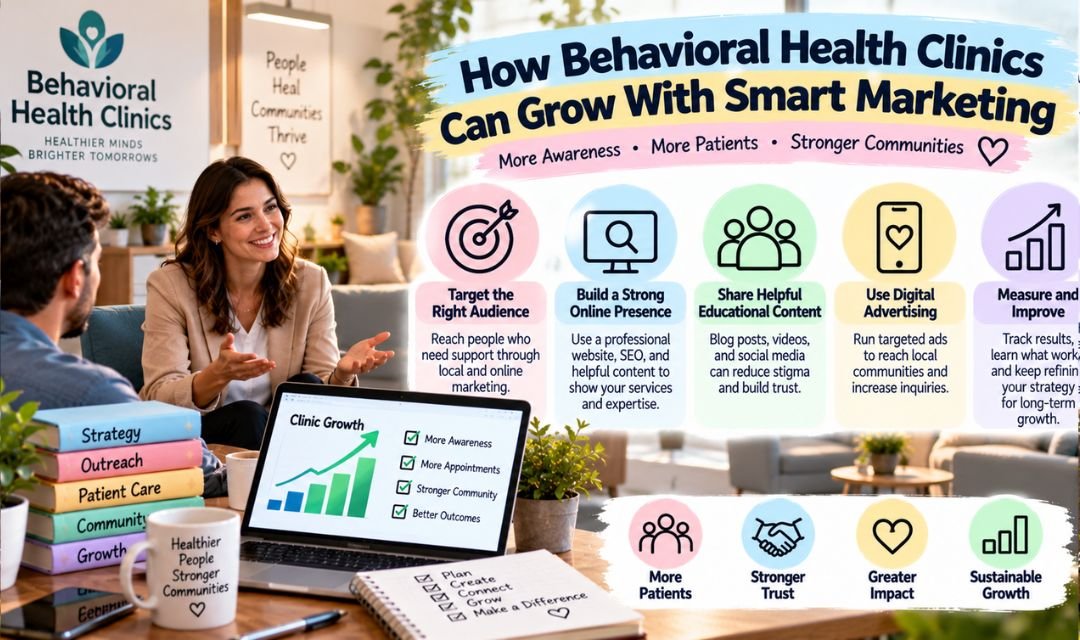
Mental health clinics, addiction treatment centers, and therapy practices face a challenge that most other healthcare businesses do not. The people they most need to reach are often the least likely to seek help on their own. Stigma, confusion about what treatment looks like, and simple lack of awareness all create friction between someone who needs care and the clinic that can provide it. Marketing, done thoughtfully, can reduce that friction. But doing it well requires understanding both the audience and the ethics involved.
This article breaks down the core principles that make marketing work for behavioral health organizations, from building trust through content to the practical mechanics of local search visibility. Whether you run a solo therapy practice or a multi-location treatment center, these fundamentals apply.
Why Behavioral Health Marketing Requires a Different Approach
Most industries market to people who are actively looking for something they want. Behavioral health organizations are often marketing to people who are ambivalent, ashamed, or unsure whether their problem is serious enough to warrant help. That changes everything about how messaging should be crafted.
A consumer shopping for running shoes is in a fundamentally different emotional state than someone quietly researching whether their drinking has become a problem. Campaigns built on urgency, flashy offers, or competitive comparisons miss the mark entirely in this space. What works instead is messaging that reduces shame, provides clear information, and positions the clinic as a safe and credible place to take a first step.
That first step might be a phone call. It might be reading a blog post at midnight. It might be clicking on a Google listing to read reviews. Each of those touchpoints needs to feel calm, credible, and welcoming rather than pressured or clinical.
The Role of Trust Signals in Attracting Patients
Trust is the currency of healthcare marketing, and behavioral health is no exception. When someone is considering reaching out for help with anxiety, depression, substance use, or trauma, they are making a deeply personal decision. They want to know the people on the other side of that door are qualified, ethical, and genuinely interested in helping.
Several elements contribute to trust online. Reviews and testimonials carry significant weight, though clinics must handle them carefully given HIPAA considerations. Staff credentials and professional bios help potential patients evaluate whether a provider is a good fit before making contact. Clear descriptions of treatment modalities, what to expect during an intake appointment, and insurance or payment information all reduce uncertainty and make the decision to reach out feel less daunting.
- Detailed provider bios that include credentials, specialties, and a brief personal note
- Authentic patient testimonials gathered and displayed in compliance with HIPAA guidelines
- Clear explanations of what the intake process looks like, step by step
- Transparent information about accepted insurance plans and self-pay options
- Third-party accreditations displayed prominently, such as CARF or The Joint Commission
- Active, informative social media profiles that demonstrate ongoing community engagement
Each of these elements addresses a specific anxiety a potential patient might have. Removing uncertainty is one of the most effective things a behavioral health organization can do to improve conversion from website visitor to scheduled appointment.
Local SEO: Being Found When It Matters Most
Most people searching for mental health or addiction treatment services start with a local search. They type something like ‘therapist near me’ or ‘outpatient rehab in [city name]’ into Google, and the results they see in that moment can shape their entire decision-making process. If a clinic does not appear prominently in those results, it might as well not exist for that person.
Local SEO for behavioral health clinics centers on a few key areas. Google Business Profile optimization is the starting point. A complete, accurate, and regularly updated profile with photos, service descriptions, and a steady stream of recent reviews signals to Google that the business is active and relevant. Location-specific pages on the clinic website help match searches that include city or neighborhood names. And consistent name, address, and phone number data across all directories prevents the kind of conflicting information that erodes both search rankings and patient confidence.
Specialists who work in behavioral health marketing often emphasize the importance of hyper-local content, meaning blog posts, FAQ pages, and service descriptions written with a specific community in mind rather than generic national audiences. A page titled ‘Trauma Therapy in [City Name]’ will almost always outperform a generic page titled ‘Trauma Therapy Services’ when someone searches from that city.
Content Strategy: Educating Before Asking for Anything
Content marketing is particularly well suited to behavioral health because the audience is often in an early research phase. They are not ready to call yet. They are trying to understand their situation, figure out their options, and assess whether treatment might apply to them. A clinic that produces genuinely helpful content about these questions becomes a trusted resource, which builds the kind of relationship that eventually leads to an appointment.
Good content for a behavioral health clinic goes beyond listing services. It answers the questions patients are actually asking. What is the difference between a psychiatrist and a psychologist? Does anxiety ever go away on its own? What happens if I check into a residential program? These are real searches, and the clinics that answer them clearly and compassionately tend to build organic traffic that converts over time.
Content Formats That Work Well
- Educational blog posts that answer specific patient questions without jargon
- FAQ pages organized around common concerns about starting treatment
- Short explainer videos featuring clinicians discussing conditions or treatment approaches
- Downloadable guides on topics like ‘How to Talk to a Family Member About Getting Help’
- Condition-specific landing pages that describe symptoms, treatment options, and what to expect
What to Avoid in Behavioral Health Content
Tone matters enormously. Content that uses fear tactics, shame language, or overly clinical terminology can push away the very people a clinic is trying to reach. Similarly, making promises about treatment outcomes crosses ethical and legal lines. Phrases like ‘guaranteed recovery’ or ‘cure your depression’ are inaccurate and damaging. The goal is to be honest, clear, and warm. That combination does more than any promotional hook ever could.
Comparing Common Digital Channels for Behavioral Health Outreach
| Channel | Best Use | Key Consideration |
| Google Search Ads | Capturing high-intent local searches | Requires careful keyword selection to avoid wasted spend on non-clinical queries |
| Google Business Profile | Local organic visibility and review management | Must be kept current; outdated info damages credibility |
| Facebook and Instagram Ads | Awareness campaigns and community building | Ad policies restrict targeting by health condition; messaging must be carefully reviewed |
| Organic Blog Content | Long-term SEO and patient education | Results take time but compound; high trust-building potential |
| Email Newsletters | Nurturing referral partners and alumni | Strong for relationship maintenance; not ideal for cold acquisition |
| YouTube or Video | Humanizing staff and explaining services | Effective for trust-building; requires consistent production effort |
No single channel is right for every clinic. The right mix depends on the size of the practice, the budget available, the specific services offered, and the geographic area being served. A small private practice might get excellent results from a well-maintained Google Business Profile and one blog post per month. A larger treatment center with multiple locations might need a more layered approach combining paid search, content, and community partnerships.
Ethical Considerations That Shape Every Marketing Decision
Behavioral health marketing operates under a set of ethical constraints that go beyond standard legal compliance. The National Association of Addiction Treatment Providers and other industry bodies have published guidelines specifically addressing how treatment centers should and should not market their services. These guidelines exist because vulnerable people are often making decisions under significant distress, and unethical marketing can cause real harm.
Patient brokering, which refers to the practice of paying for referrals, is illegal in most states and deeply problematic regardless of legality. Misleading claims about success rates, amenities, or clinical approaches erode trust across the entire industry when they come to light. And aggressive retargeting ads that follow someone around the web after they visited a mental health website can feel intrusive rather than helpful.
Ethical marketing in this space means being accurate, being transparent about what a clinic can and cannot offer, and treating the prospective patient as a person making a difficult decision rather than a lead to be converted. Clinics that build their marketing on those principles tend to develop stronger reputations and more sustainable patient relationships over time.
According to the Substance Abuse and Mental Health Services Administration, fewer than 10 percent of people with a substance use disorder receive specialty treatment in a given year. That figure reflects a massive unmet need, and it underscores why helping the right people find the right care actually matters. Marketing, when it is honest and well-executed, serves a genuine public health function. It connects people who need help with the organizations that can provide it. That is a responsibility worth taking seriously.