
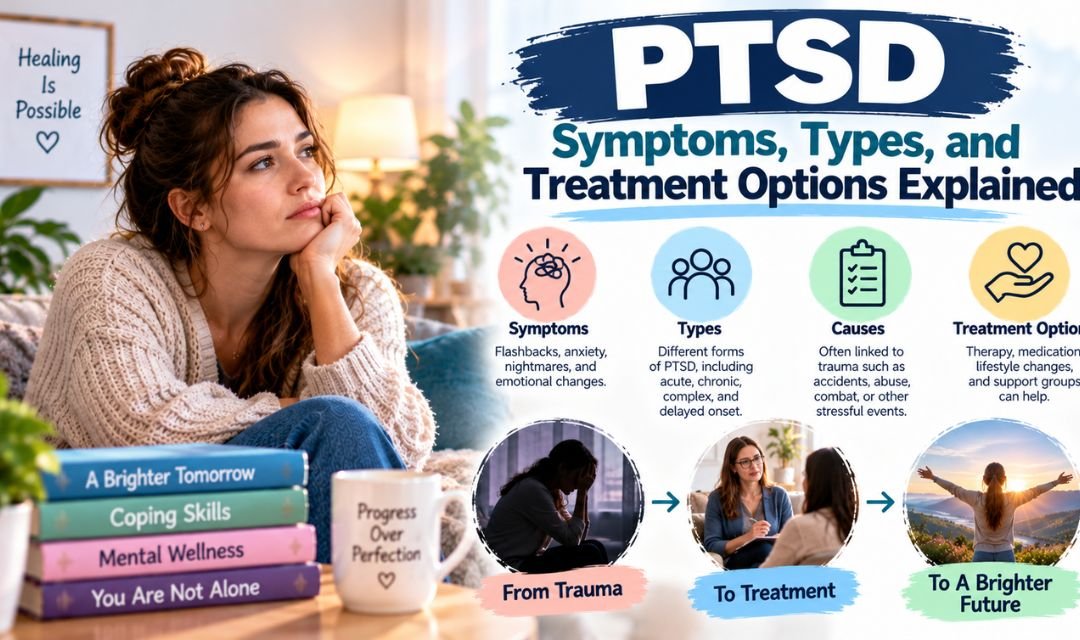
Most people assume post-traumatic stress disorder only affects combat veterans. That assumption is understandable, but it leaves a lot of people confused when anxiety, nightmares, and emotional numbness show up after a car accident, a difficult birth, or years of childhood neglect. PTSD is far more common than the stereotype suggests, and understanding how it actually works can be the first step toward getting real relief.
This article covers how PTSD develops in the brain and body, what distinguishes its main symptom clusters, which evidence-based therapies have the strongest research backing, and what to realistically expect from treatment. Whether you are trying to understand your own experience or support someone you care about, the goal here is clarity without jargon.
How PTSD Actually Develops
Trauma is not just a bad memory. When a person experiences or witnesses something genuinely threatening, the brain’s fear circuitry, centered in the amygdala, fires intensely to encode the event as dangerous. Under normal circumstances, the prefrontal cortex helps process that experience over time, essentially filing it away as something that happened in the past. In PTSD, that filing process breaks down. The memory stays raw, easily triggered, and neurologically treated as if the threat is still present.
Research using neuroimaging has shown measurable differences in the brains of people with PTSD compared to those without it. The amygdala tends to be overactive, the prefrontal cortex underactive, and the hippocampus, which helps contextualize memories in time and place, often shows reduced volume. These are not character flaws or signs of weakness. They are biological responses to overwhelming experience.
According to the National Center for PTSD, roughly 6 percent of the U.S. population will develop PTSD at some point in their lives. Among women, the lifetime prevalence is nearly twice that of men, likely reflecting both higher rates of interpersonal trauma exposure and differences in stress response biology.
The Four Core Symptom Clusters
The Diagnostic and Statistical Manual of Mental Disorders (DSM-5) organizes PTSD symptoms into four distinct clusters. Understanding these clusters helps explain why the disorder looks so different from person to person. Someone might struggle primarily with avoidance while another person’s most disabling symptoms are mood-related.
| Cluster | Common Examples | What It Feels Like |
| Intrusion | Flashbacks, nightmares, intrusive thoughts | The past feels present and uncontrollable |
| Avoidance | Avoiding people, places, thoughts, or feelings related to the trauma | Life gradually shrinks to feel safer |
| Negative Cognition and Mood | Guilt, shame, emotional numbness, distorted blame | A persistent sense that the world or oneself is permanently damaged |
| Hyperarousal and Reactivity | Hypervigilance, irritability, sleep disturbance, exaggerated startle | The nervous system stays stuck in high alert |
For a formal diagnosis, symptoms must persist for more than one month, cause significant distress or functional impairment, and not be attributable to substances or another medical condition. A clinician will also assess whether the trauma exposure itself meets the DSM-5 criteria, which requires direct experience, witnessing, or repeated indirect exposure to actual or threatened death, serious injury, or sexual violence.
Complex PTSD: When Trauma Is Prolonged or Repeated
Single-incident trauma, such as a car accident, tends to produce a somewhat different clinical picture than prolonged or repeated trauma, such as childhood abuse, domestic violence, or captivity. The latter category has led to growing recognition of complex PTSD, sometimes called C-PTSD.
C-PTSD shares all four DSM-5 symptom clusters with standard PTSD but adds three additional features: severe difficulties with emotional regulation, a persistently damaged sense of self, and significant problems in relationships. People with C-PTSD often describe feeling permanently different from others or fundamentally broken. These added layers can make treatment longer and require specialized approaches that address identity and relational wounds alongside trauma-specific symptoms.
The World Health Organization’s ICD-11 diagnostic system formally lists C-PTSD as a separate diagnosis, though the DSM-5 does not yet make that distinction. Clinicians working in trauma-informed settings are generally familiar with the concept regardless of which diagnostic label they use.
Evidence-Based Treatments That Actually Work
Several therapies have strong empirical support for PTSD, meaning they have been tested in rigorous randomized controlled trials. The most well-researched options fall into two broad categories: trauma-focused psychotherapies and pharmacological interventions.
Trauma-Focused Psychotherapies
- Prolonged Exposure (PE): Involves gradually confronting trauma-related memories and avoided situations to reduce fear and avoidance. Developed by Dr. Edna Foa, PE is endorsed by the American Psychological Association as a first-line treatment.
- Cognitive Processing Therapy (CPT): Focuses on identifying and challenging distorted beliefs that developed around the trauma, such as excessive self-blame or the idea that nowhere is safe. CPT is widely used by the U.S. Department of Veterans Affairs.
- Eye Movement Desensitization and Reprocessing (EMDR): Uses guided bilateral stimulation, typically eye movements, while the client recalls traumatic material. The World Health Organization endorses EMDR as an effective PTSD treatment.
- Trauma-Focused Cognitive Behavioral Therapy (TF-CBT): Particularly adapted for children and adolescents, combining cognitive restructuring, gradual exposure, and caregiver involvement.
- Written Exposure Therapy (WET): A briefer, structured writing-based protocol showing promising results in recent trials, often appealing to people who are hesitant about talking-based exposure.
Medication Options
The FDA has approved two medications specifically for PTSD: sertraline (Zoloft) and paroxetine (Paxil), both selective serotonin reuptake inhibitors (SSRIs). These medications can reduce the overall intensity of symptoms and are often used alongside psychotherapy. Prazosin, an alpha-blocker, has shown benefit for trauma-related nightmares in some populations, though more recent large trials have produced mixed results. A prescriber familiar with trauma will weigh individual factors, including other health conditions and medication sensitivities, before recommending a pharmacological plan.
One of the most consistent research findings is that trauma-focused therapy produces more durable gains than medication alone. That said, medication can make it easier to engage in therapy when symptoms are severe enough to interfere with daily functioning.
Finding the Right Level of Care
Not everyone with PTSD needs the same intensity of treatment. Some people do well with weekly outpatient therapy over a few months. Others, particularly those with complex trauma histories, co-occurring depression or substance use, or limited daily functioning, may benefit from more intensive programs such as intensive outpatient treatment, partial hospitalization, or residential care.
Geography matters too. Access to specialized trauma therapists varies considerably by region. For anyone researching PTSD treatment for Palo Alto residents, local options exist that offer evidence-based approaches without requiring a long commute or relocation.
When evaluating any treatment provider or program, a few practical questions are worth asking: Does the therapist have specific training in trauma-focused modalities like PE, CPT, or EMDR? Does the program assess for complex trauma or co-occurring conditions? Is there flexibility to adjust the approach if early sessions reveal a different clinical picture? These questions can help a person find a good fit rather than simply the nearest available option.
What Recovery Realistically Looks Like
Expectations about PTSD recovery are often shaped by cultural narratives that are either too bleak or too tidy. The reality tends to be somewhere in between. Many people experience significant symptom reduction through structured trauma-focused treatment, sometimes within 12 to 16 weeks of consistent work. Research on CPT and PE consistently shows that 60 to 80 percent of participants experience clinically meaningful improvement, and a substantial portion no longer meet criteria for PTSD by the end of treatment.
That said, improvement is rarely linear. Some sessions feel harder than the week before. Certain anniversaries, sensory triggers, or life stressors can temporarily intensify symptoms even after significant progress. This is not a sign of failure. It is a normal part of how trauma processing works.
Longer treatment timelines are common with C-PTSD, co-occurring conditions, or trauma that began early in development. Some people find that a phased approach works best: building safety and stabilization skills first, then moving into deeper trauma processing once the person feels grounded enough to tolerate it.
- Stabilization: Learning grounding techniques, emotion regulation skills, and building a stable therapeutic relationship.
- Trauma Processing: Using structured protocols like CPT, PE, or EMDR to work through traumatic memories and beliefs.
- Integration and Reconnection: Rebuilding a sense of identity, strengthening relationships, and returning to meaningful activities.
Recovery from PTSD is not about erasing what happened. The memory does not disappear. What changes, with effective treatment, is the relationship to that memory. It becomes something that can be acknowledged without hijacking the nervous system, something located firmly in the past rather than bleeding into the present. That shift, while it takes work, is genuinely achievable for most people who engage with the right support.